Interactive Story
Documents

True Crime, Now Playable: Inside Scriptic's Cross-Platform Bet
The interactive entertainment landscape is undergoing a transformation as narrative-driven experiences bridge the gap between prestige television and traditional gaming. By focusing on the true crime genre, developers are successfully capturing mass-market audiences who prioritize immersive storytelling over complex mechanical mastery. This approach utilizes a phone-first design philosophy that mimics real-world digital forensics, effectively removing the barrier of entry created by traditional gaming tutorials. With over 7 million downloads and top-tier rankings on platforms like Netflix Games, this model demonstrates that high-engagement, narrative-heavy content resonates deeply with non-traditional gamers.
To sustain this growth, production strategies are shifting toward a cross-platform model that delivers seamless interactive experiences across mobile, PC, and console. This evolution is supported by a hybrid production framework that integrates AI-driven tools to handle repetitive tasks and background asset generation. By treating technology as an accelerant rather than a creative replacement, studios can maintain premium production values on modest budgets. This efficiency is further bolstered by internal tools that empower non-engineering staff to contribute directly to content creation, fostering an agile, non-siloed development culture.
Looking ahead, the industry is moving toward a convergence of streaming media and playable content. By leveraging viral social media marketing and strategic distribution through emerging channels like YouTube Playables, developers are positioning interactive narratives as the next evolution of prestige drama. The ultimate goal is to blur the lines between passive viewing and active participation, utilizing IP-based storytelling to reach global audiences. Through lean team structures and a focus on scalable, high-quality narrative design, these studios are successfully redefining the boundaries of the interactive entertainment sector.
- Scriptic’s breakout title, 'Scriptic: Crime Stories,' achieved over 7 million downloads and a top 10 ranking on Netflix Games by utilizing a 'narrative play' format that prioritizes intuitive, phone-first storytelling over complex game mechanics.
- The studio leverages a cross-platform strategy that uses a single codebase to dynamically scale games across mobile, PC, and streaming platforms like YouTube Playables.
- Scriptic’s marketing strategy, centered on the true crime genre, generated over 100 million views on TikTok by aligning with existing audience interests and encouraging organic user-generated content.
- To maintain lean production, Scriptic uses AI to automate repetitive 'grunt work' and boilerplate tasks, reserving human creative talent for high-level narrative craft and quality control.
- The studio operates with a 'film studio' model, employing T-shaped, cross-functional teams that work in parallel to avoid traditional waterfall development bottlenecks.
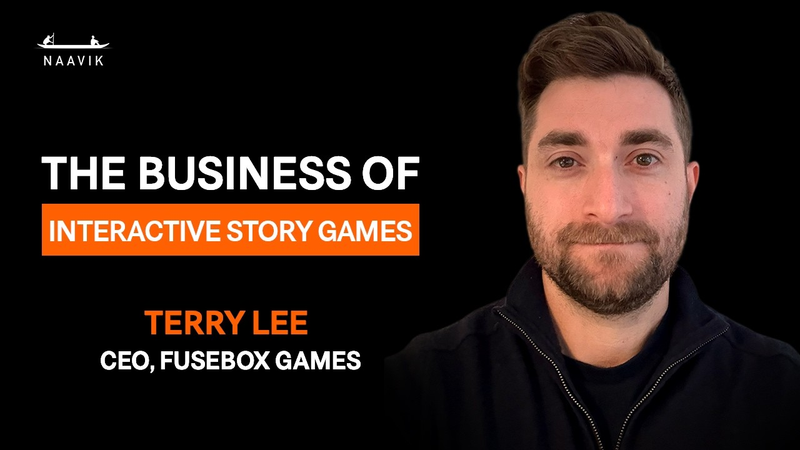
Fandoms, Writing Moats, and the Future of Interactive Fiction (FIX)
Fusebox Games has established a robust business model within the interactive fiction sector by pivoting from annual release cycles to a high-frequency content strategy. By leveraging licensed intellectual properties such as Love Island, Big Brother, and The Traitors, the studio has scaled into a thirty-million-dollar enterprise. This success is underpinned by a twelve percent payer conversion rate, which significantly outperforms the five percent industry standard. This performance is achieved through a data-driven development process that allows for real-time narrative optimization based on weekly player behavior, ensuring that content remains highly engaging and monetizable.
The studio’s primary competitive moat is its twenty-one-person writing team, which accounts for over one-third of the total workforce. By prioritizing bespoke, human-led narrative quality over hyper-casual volume, the company maintains a strong connection with its predominantly female player base. While the studio has successfully expanded its portfolio into diverse group-dynamic IPs, it remains strategically focused on its core demographic, as current data does not justify the investment required to pivot toward male-protagonist content. Furthermore, the studio benefits from a creative advantage over reality television producers, as interactive fiction allows for the design of complex, unrestricted storylines that are not bound by the logistical constraints of real-world casting.
Operational efficiency is maintained through internal tooling and a pragmatic approach to emerging technology. Artificial intelligence is utilized as a supportive tool for productivity rather than a replacement for human creativity, which remains the cornerstone of the studio’s brand identity. Leadership emphasizes that professional growth in this sector requires a commitment to intense periods of skill development, cautioning against rigid stances on new technologies or an over-prioritization of work-life balance at the expense of early-career advancement.
- Fusebox Games has built a $30M+ business by focusing on interactive fiction games based on licensed IP, such as Love Island, Big Brother, and The Traitors.
- The studio transitioned from a one-season-per-year content cycle to a high-frequency model, now delivering three seasons annually with a smaller headcount through internal tooling and operational efficiency.
- Writing is the company's primary competitive moat, with the writing team growing from nine to 21 members, representing over one-third of the total business.
- Fusebox employs a weekly release cadence for content volumes, allowing the team to analyze player data in real-time and adjust the narrative trajectory of the season as it is being written.
- The company maintains high payer conversion rates by targeting known fans of specific IP rather than chasing speculative mass-market installs, while strictly managing user acquisition costs on a weekly basis.

The Future of AI Unscripted Entertainment
The emergence of AI-native entertainment platforms represents a fundamental shift in how digital narratives are produced, consumed, and monetized. By moving away from traditional, high-cost scripted models, developers are creating automated storytelling engines that function as operating systems for perpetual, unscripted fantasy experiences. These platforms leverage artificial intelligence to enforce complex rule sets that generate unpredictable, emergent plot lines, effectively blending the high-stakes tension of live sports with the interactive depth of modern gaming.
This model addresses the inherent predictability of traditional media by positioning audiences as active co-creators rather than passive consumers. Drawing inspiration from community-driven phenomena like Blaseball, these systems utilize simple, high-engagement frameworks—such as combat sports—to allow users to influence micro-dramas in real-time. By removing the labor-intensive bottlenecks of top-down world-building, this approach enables the creation of scalable, interactive universes that are not constrained by the resource limitations or financial risks typically associated with human-led content production.
The long-term viability of this industry segment rests on the ability to balance technological automation with human creative input. While the primary business model focuses on proprietary content and infrastructure licensing, the broader implications involve a transformation in the science of storytelling. As AI-driven content becomes increasingly ubiquitous, the industry faces the dual challenge of navigating execution risks and addressing the potential impact on human attention spans. Ultimately, the success of this new genre depends on fostering deep community participation and maintaining a disciplined approach to digital consumption, ensuring that emergent narratives remain engaging without succumbing to the limitations of purely algorithmic output.
- Evil Plan is developing an AI-native platform for unscripted, interactive entertainment that allows community influence to drive narrative outcomes in real-time.
- The company aims to solve the 'cost problem' and 'manpower problem' in entertainment, where high production costs and human resource limitations currently restrict the development of new intellectual property.
- The platform seeks to combine the unpredictability of sports, the emergent narrative structures of reality television, and the interactivity of gaming to create perpetual, AI-driven story worlds.
- By moving away from traditional scripted content, the company intends to remove the narrative restrictions inherent in established franchises, such as the predictability of character survival in major film sequels.
- The project draws inspiration from community-driven phenomena like Twitch Plays Pokémon, Bandersnatch, Genvid’s MILEs, and Blaseball, which demonstrated the potential for audience-led storytelling.