Concord
Game
29 documents in the library are about Concord, from writers such as Deconstructor of Fun, Sparkers and Jason Schreier. Each has a summary and key insights with the page they come from.
Connections
The documents about Concord on the inner ring, the other games and companies they name on the outer one. Select a cover to see it up close and open it in a new tab; drag to move, pinch or Ctrl + scroll to zoom.
Key figures from the reports
Sony's recent financial performance has been impacted by high-profile failures like 'Concord', which cost over $300 million, leading to a more cautious approach to project development.
Alinea Analytics, 2026 · Sony Divorces Kojima, While Nintendo (Re)unites Fans with Ocarina of Time
Live-streaming performance serves as a predictive indicator for community health; for example, Concord’s viewership dropped from 308K hours during its beta to 107K at launch, signaling a lack of long-term player retention.
Stream Hatchet, 2025 · The State of Live Service Games on Live Streaming
Live-service gaming faces a sustainability crisis, with the cancellation of titles like Suicide Squad: Kill the Justice League, Concord, and MultiVersus resulting in nearly $1 billion in lost development costs.
Sparkers, 2025 · Switch 2 Unveiled, Xbox Expands, and Live Service Games Face Challenges – January’s Gaming Recap
The decision to charge for the game follows the recent market failure of Sony’s $40 title Concord, though it mirrors the success of Helldivers 2, which sold over 12 million units in three months.
Game World Observer, 2024 · Bungie Considers $40 Price Tag for Marathon
Documents about Concord

Sony Divorces Kojima, While Nintendo (Re)unites Fans with Ocarina of Time
This analysis examines recent shifts in the gaming industry, specifically focusing on Sony’s strategic divestment from high-profile partnerships and Nintendo’s reliance on legacy intellectual property.
- Sony has cancelled its partnership with Hideo Kojima Productions for the espionage game 'Physint', leading Kojima to move the project to Xbox.
- Death Stranding 2 has sold 2.5 million copies globally since its June 2025 launch, generating $170 million in revenue, with 1.8 million units sold on PlayStation and 700,000 on Steam.
- Sony's recent financial performance has been impacted by high-profile failures like 'Concord', which cost over $300 million, leading to a more cautious approach to project development.
PlayStation's Live-Service Initiative Could Not Have Gone Worse
PlayStation’s strategic pivot toward live-service gaming, initiated around 2020–2021 with the goal of launching a dozen such titles by 2026, has largely failed to yield the intended results.
- Sony's live-service initiative, which aimed to launch a dozen live-service titles by 2025-2026, has largely failed, resulting in significant resource depletion and the cancellation of multiple high-profile projects.
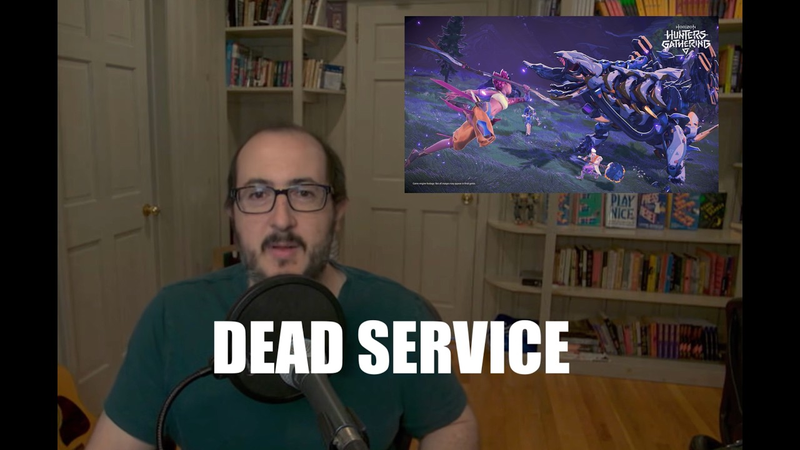
- Guerrilla Games has rebooted 'Horizon Hunters: Gathering' following poor performance in playtests conducted throughout 2026, casting doubt on the project's future.
- Naughty Dog canceled its 'The Last of Us' online project in 2023 to avoid the long-term resource trap of becoming a dedicated live-service studio.
Bungie's Layoffs: The End of an Era?
The recent restructuring at Bungie, characterized by a significant reduction in workforce, marks a critical turning point for the studio following its 2022 acquisition by Sony.
- Bungie has reduced its workforce by approximately 600 positions since its 2022 acquisition by Sony, including a recent round of 400 layoffs that cut nearly 40% of the remaining staff.
- Sony recorded a $766 million impairment charge related to Bungie for fiscal year 2025, indicating that the original integration strategy has failed to meet financial expectations.
- The acquisition thesis—that Bungie would lead Sony's live service initiatives—failed because Bungie’s high-cost expansion model proved incompatible with the microtransaction-heavy frameworks Sony intended to implement.

Why Did PlayStation Buy Bungie in the First Place?
PlayStation’s $3.6 billion acquisition of Bungie in 2022 was fundamentally driven by a strategic imperative to transition from a reliance on traditional single-player experiences toward a sustainable live-service model.
- PlayStation acquired Bungie for $3.6 billion in January 2022 to gain expertise in live service games and leverage Bungie's hit live service game, Destiny, as PlayStation's first-party software business struggled to grow beyond 20-30 million sales for its single-player titles.
- Bungie's recent releases, Destiny 2's 'Monument of Triumph' expansion (June 9th) and 'Marathon' (March), have not achieved high numbers, with Marathon peaking at 2 million players, indicating the acquisition has not yet met expectations for PlayStation's live service ambitions.
- PlayStation's strategy to expand into live service games involved commissioning external studios (e.g., Arrowhead, Firewalk Studios) and internal teams (e.g., Insomniac, Naughty Dog) for new titles, a departure from its historical approach of acquiring studios only after prior collaborations.
Sony Reportedly Ended Destiny 2 Support Over Financial Losses, Not Revenge Against Bungie
Sony’s decision to terminate Destiny 2 live-service support has been framed as a financial calculation rather than an act of retaliation against Bungie.
- Sony terminated live-service support for Destiny 2 primarily due to persistent financial losses and high maintenance costs rather than internal retaliation against Bungie.
- Executive leadership at Sony reached the decision after a formal evaluation of the title's profit-and-loss statement determined that continued investment was unsustainable.
- The decision to cut support is isolated to Destiny 2's performance and is not a punitive measure related to the failure of other Sony live-service titles like Concord.
PlayStation Could Use More Hits, Amid First-Party Game Sales Decline
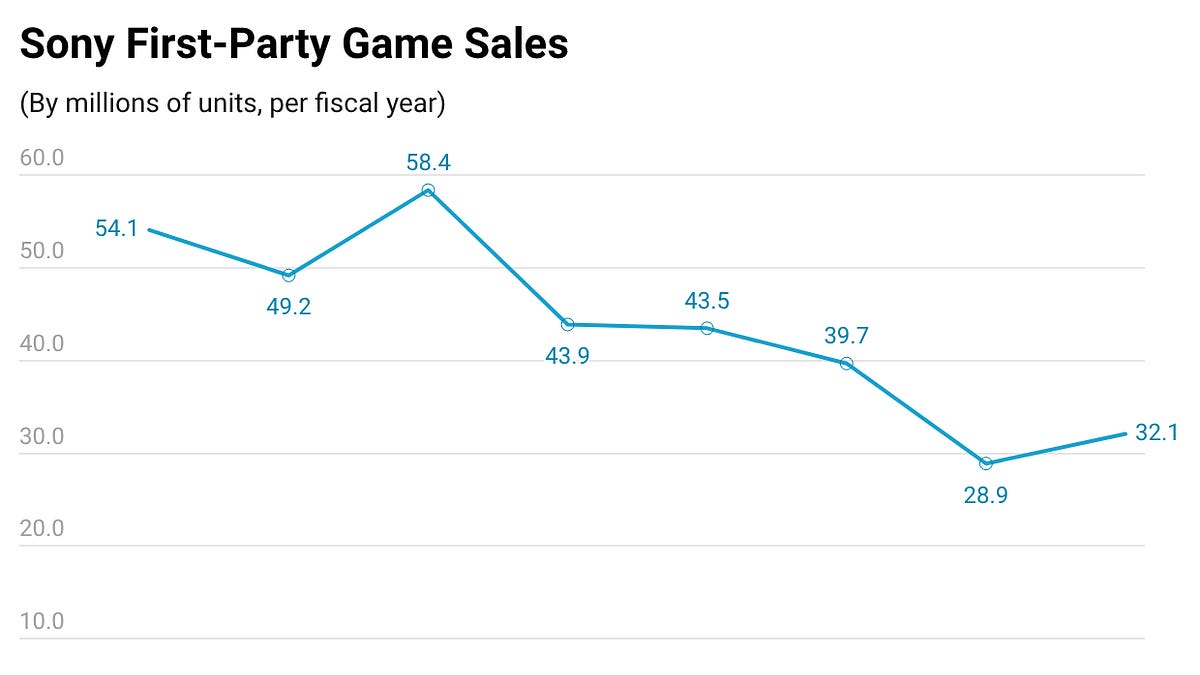
Sony’s recent data reveal a sustained decline in first-party game sales across its PlayStation platforms since 2020, with only a modest rebound in the most recent fiscal year.
- Sony’s first-party game sales have experienced a significant long-term decline, dropping from a peak of 58.4 million units in the 2020–2021 period to less than half that volume four years later.
- The most recent fiscal year (April 2025–March 2026) saw a modest recovery to 32.1 million units, bolstered by the release of 'Ghost of Yotei'.
- The sales slump persists despite Sony’s strategy of studio acquisitions and a heavy reliance on remakes and remasters, neither of which has successfully reversed the downward trend.
Why Video Games Cost So Much To Make
The primary driver behind the ballooning budgets of modern AAA video games is the sustained, high-cost labor required for long-term development cycles.
- Modern AAA game budgets now frequently range from $300 million to $500 million due to the combination of extended five-year development cycles and large team sizes.
- The monthly burn rate per employee in major tech hubs has risen from approximately $10,000 in the mid-2010s to between $15,000 and $20,000 today.
- A 400-person team working over a five-year development window results in hundreds of millions of dollars in costs, with minor fluctuations potentially pushing totals toward the $1 billion threshold.
Why Destiny Died (RIP 2014-2026)
The Destiny franchise, which launched in 2014, is effectively concluding its active development cycle as Bungie transitions Destiny 2 into a maintenance-only state following a final update in June 2026.
- Bungie is ending development on Destiny 2 and initiating significant layoffs following the conclusion of the franchise's long-term content roadmap.
- The development of a potential Destiny 3 has been deemed financially unviable due to the exponential rise in AAA game production budgets, which now far exceed the $500 million investment Activision originally committed to the franchise in 2010.
- Bungie’s transition from an independent studio to a Sony subsidiary in 2022 for $3.6 billion occurred during a period of zero-interest rates, but the studio has since struggled to maintain player engagement as the market for live-service games became increasingly saturated.

Golden TWIG 2025: Gaming's Real Awards Show
The gaming industry in 2025 is defined by a stark divergence between the scaling success of platform-based ecosystems and the systemic instability of traditional high-budget publishing.
- Roblox has become a primary industry growth engine, recording a 70% year-over-year increase in daily active users and challenging traditional high-budget publishing models.
- Established publishers including Ubisoft, Warner Bros. Games, and Amazon Game Studios are experiencing significant commercial and reputational erosion, while high-budget titles like Concord and Splitgate 2 have failed to meet modern player expectations.
- Market success is increasingly driven by smaller-budget titles with innovative mechanics, such as Clover Pit and Animal Company, rather than the speculative, high-capital models that led to instability at firms like Forte, Bungie, Dream Haven, and TheoryCraft.
Sony Reigns in Bungie, Battlefield’s Beta Booms, Nintendo Stays Nintendo | Games For Breakfast
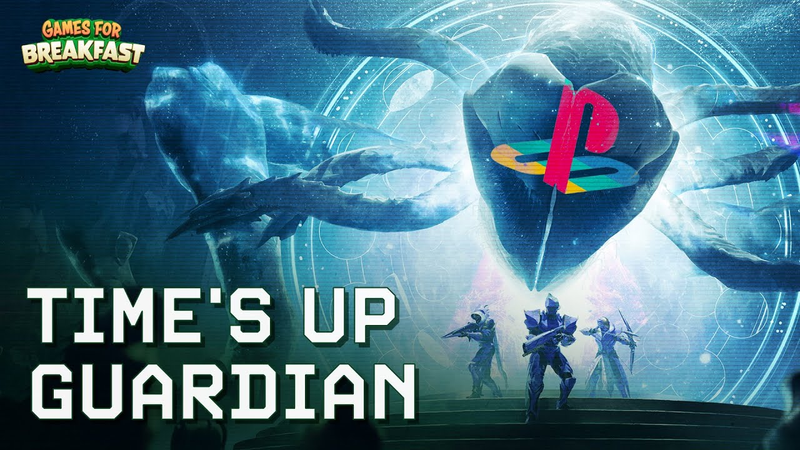
The gaming industry is currently navigating a period of significant strategic realignment, marked by aggressive corporate consolidation and shifting consumer sentiment.
- Sony has officially ended Bungie's independent status, signaling that the developer will no longer receive the special elevated treatment it was granted following its acquisition three years ago.
- Sony's live-service title Concord reportedly cost between $200 million and $400 million to produce but generated only $1 million in revenue, leading the company to downplay its live-service portfolio during recent shareholder meetings.
- Nintendo is surveying customer sentiment regarding its new 'game key cards,' which function as physical license keys rather than containing actual game data, requiring users to download the full software.

Sony Layoffs and Their Impact on the Gaming Industry
Sony Interactive Entertainment has undergone significant organizational restructuring between 2022 and 2025, resulting in the layoff of 1,568 employees globally.
- On February 27, 2024, Sony announced an 8% reduction in its global workforce, impacting approximately 900 employees across the Americas, EMEA, Japan, and APAC.
- Bungie, acquired by Sony for $3.6 billion in 2022, underwent two rounds of significant layoffs: 100 employees in October 2023 due to revenue falling 45% below projections, and 220 employees (17% of its workforce) in July 2024.
- Sony permanently closed Firewalk Studios and cut approximately 210 jobs in October 2024 following the commercial failure of the game Concord.
The State of Live Service Games on Live Streaming
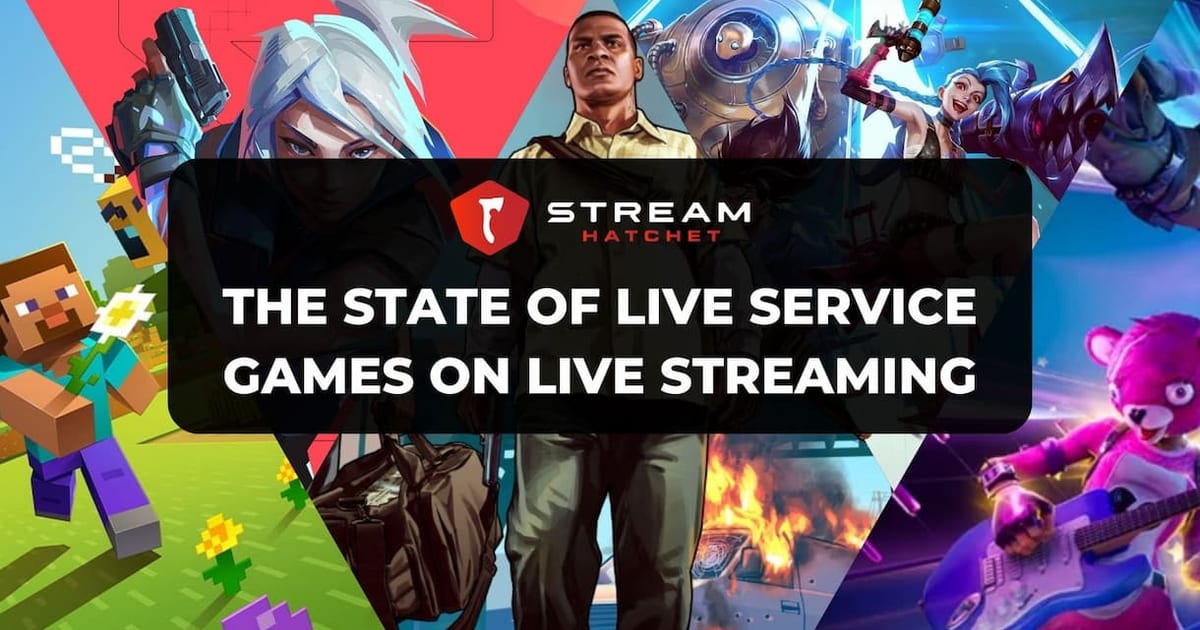
The live service gaming sector remains a high-stakes environment where success is fundamentally tied to the ability to cultivate and maintain a loyal community.
- Live service games account for approximately 84% of total game market revenue, driving publishers to continue investing in the genre despite high-profile failures.
- The top 10 live service games consistently generate roughly 30% of all watch time across live-streaming platforms, underscoring their role as the primary drivers of audience engagement.
- Live-streaming performance serves as a predictive indicator for community health; for example, Concord’s viewership dropped from 308K hours during its beta to 107K at launch, signaling a lack of long-term player retention.
Companies behind it

As the documents state it.