
Clash of Clans
GameBy Supercell · Released Aug 2, 2012
Reports and documents about Clash of Clans
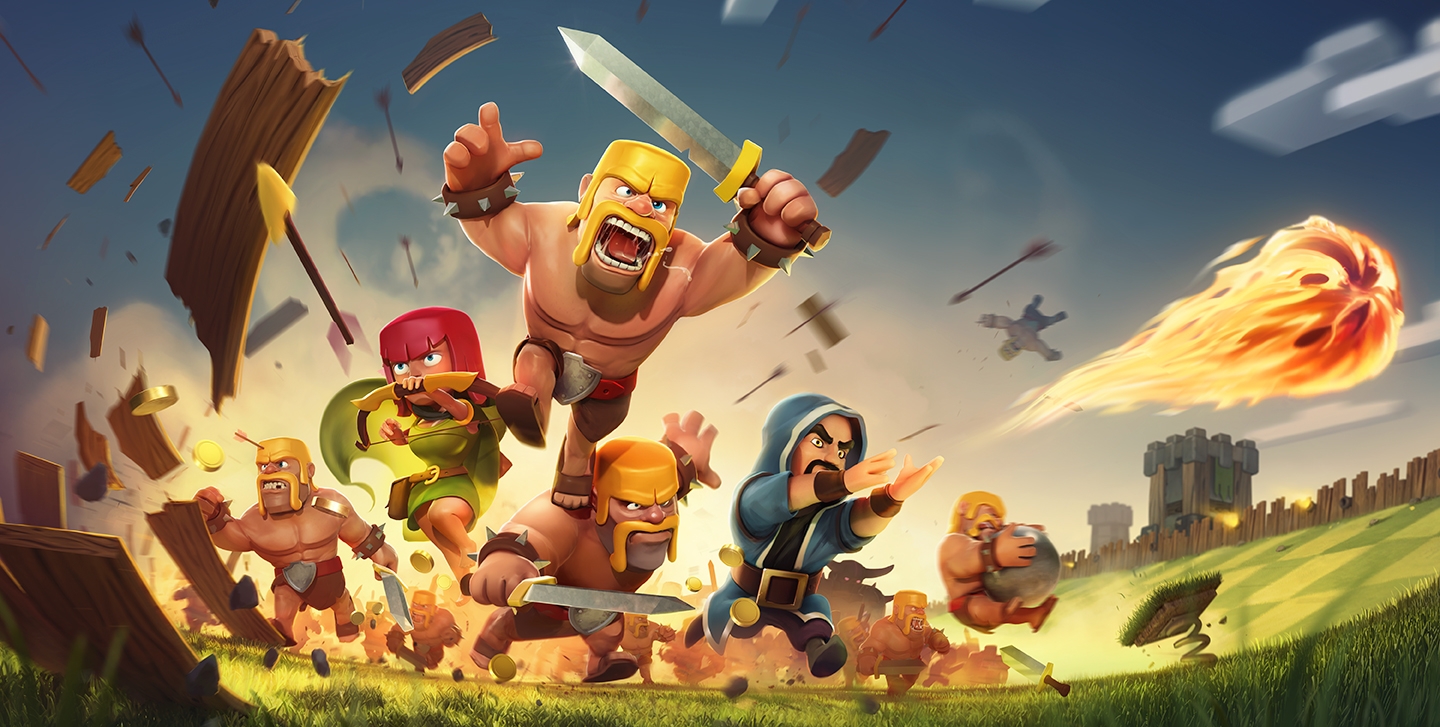
Was the Clash of Clans Super Bowl Commercial About User Acquisition?
The Super Bowl commercial for Clash of Clans, which aired in early 2015, serves as a case study for the strategic shift of mobile game developers toward traditional, high-cost media.
- Supercell paid approximately $9 million for a 30-second Super Bowl XLIX ad spot, excluding production costs, based on NBC's rates of $4.4 to $4.5 million per spot.
- Assuming 28 million viewers saw the ad, the cost per viewer was $0.32, and a 1% conversion rate would result in a cost-per-install (CPI) of $32.08 for 281,000 new users.
- While the ad drove an increase in App Store rankings from 38th to 28th, the primary goal of such high-profile television advertising for mature games is likely brand legitimacy and re-engagement rather than pure user acquisition.

How video is impacting the mobile games biz
The mobile gaming industry is undergoing a significant shift as video content becomes a primary driver for both monetization and user acquisition.
- As of late 2014, approximately one-third of all mobile games have integrated video advertising, marking a significant shift away from traditional banner ads.
- Incentivized video models, where players watch ads for in-game rewards, have proven highly effective for monetization, as demonstrated by Crossy Road generating $1 million through Unity’s video advertising system.
- Developers are increasingly shifting user acquisition budgets from traditional performance-based advertising to influencer marketing on YouTube to achieve lower-cost download spikes.

24 monetization tips in 15 minutes
This analysis outlines a framework for optimizing monetization in free-to-play mobile games, drawing on industry observations from 2015.
- Developers should shift away from generic monetization mechanics toward sophisticated retailing strategies that leverage psychological triggers like reciprocity, social incentives, and permanence.
- Implement specific gating mechanics, such as third-builder slots, to drive initial player purchases and establish a spending habit early in the user lifecycle.
- Utilize VIP status tiers to reward long-term engagement and integrate gacha or wheel-spin mechanics to leverage the psychological appeal of randomness.

Mark Sorrell on behavioural economics and 'ugly brother' pricing
Behavioral economics serves as a powerful framework for optimizing game design and monetization, even when applied unintentionally.
- The 'ugly brother' or decoy pricing strategy, as seen in Hearthstone, uses a poor-value mid-tier option to nudge players toward higher or lower-priced alternatives.
- Behavioral mechanics function independently of designer intent, meaning psychological principles influence monetization and engagement regardless of whether they were implemented consciously or accidentally.
- The MINDSPACE framework—encompassing Messengers, Incentives, Norms, Defaults, Salience, Priming, Affect, Commitment, and Ego—serves as a systematic tool for analyzing and optimizing game design.

Oscar Clark on the potential of Games-as-a-Service
Games-as-a-Service represents a fundamental shift in game development, moving away from a fire-and-forget mentality toward a model defined by long-term player engagement and relationship building.
- Games-as-a-Service shifts development from a 'fire-and-forget' model to a long-term strategy focused on continuous player engagement and relationship building.
- Rising user acquisition costs in mobile gaming, now reaching approximately six dollars per install, make player retention economically essential for a title's viability.
- Successful titles such as Candy Crush, Clash of Clans, and Hay Day prove that consistent delivery of utility and value over time encourages sustained player investment.
China is already the #3 mobile gaming market for iOS
The Chinese mobile gaming market has emerged as a critical global force, securing its position as the third-largest market for iOS revenue as of late 2013.
- As of late 2013, China is the third-largest global market for iOS gaming revenue and the second-largest for iOS game downloads.
- The Chinese Android market is estimated to be at least as large as the iOS segment and is projected to experience faster growth, despite its fragmented ecosystem.
- Domestic giant Tencent achieved top-tier download and revenue rankings within six months of entering the mobile gaming market.

Monetizer: Epic Empire
Epic Empire, developed by Pocket Gems, represents a strategic attempt to innovate within the mobile city-building genre by shifting the primary focus from army management to individual character progression.
- Pocket Gems' Epic Empire pivots the mobile city-building genre away from traditional army management by focusing on individual character progression and light RPG mechanics.
- The game utilizes a hard currency system called 'star stones' with seven distinct in-app purchase price points ranging from $1 to $100.
- Hard currency to soft resource conversion is relativistic, meaning the amount of gold received is scaled based on the player's current storehouse capacity.

Monetizer: Dark District
Dark District, a mobile strategy title developed by Kabam, serves as a case study in the evolution of the city-building genre popularized by Clash of Clans.
- Kabam’s Dark District, released in late 2013, monetizes base development by restricting players to a single construction unit, creating artificial scarcity that incentivizes the use of hard currency to accelerate progress.
- The game utilizes a science-fiction aesthetic to differentiate itself from the fantasy-themed city-building titles that dominated the mobile market during the 2013–2014 period.
- The monetization model features a tiered structure for in-app purchases, ranging from approximately four dollars at the entry level to mid-range options around fifty dollars.

Let your players play against their friends, says Nextpeer
The mobile gaming industry is undergoing a fundamental shift where social integration has become a prerequisite for commercial success.
- Social integration is now a prerequisite for commercial success in mobile gaming, as top-performing titles like Candy Crush and Clash of Clans rely on these features to drive engagement and visibility.
- Games lacking competitive and social interaction tools face significant hurdles in user acquisition because players are less likely to recommend solitary experiences to their peers.
- Social features create a self-sustaining growth cycle by generating organic downloads and increasing the probability of being featured in app stores.

Monetizer: Clumsy Ninja
Clumsy Ninja functions less as a traditional competitive game and more as a gamified Tamagotchi experience, leveraging NaturalMotion’s proprietary character animation middleware to create an intelligent, physics-based digital companion.
- Clumsy Ninja functions as a physics-based, single-player 'Tamagotchi' experience rather than a competitive game, relying on NaturalMotion’s proprietary animation middleware to drive engagement.
- The title achieved significant market success, reaching the number one download spot and entering the top 20 grossing charts in the U.S. following prominent promotion from Apple.
- The game utilizes a dual-currency model of gold coins and premium gems, with in-app purchase price points ranging from approximately £2 to £21.

What Is Supercell’s Strategy with Boom Beach?
Supercell’s release of Boom Beach represents a calculated strategic shift toward user retention rather than portfolio diversification.
- Supercell is prioritizing the retention of its existing high-value user base over portfolio diversification by releasing Boom Beach as an improved, structurally similar alternative to Clash of Clans.
- The strategy aims to mitigate the rising costs of re-acquiring churned players by keeping them within the Supercell ecosystem through familiar but refined gameplay mechanics.
- Boom Beach introduces several mechanical shifts from Clash of Clans to improve long-term retention, including automated resource harvesting, non-consumable troops, and a more complex four-currency economy.

Monetizer: Heroes of Dragon Age
Heroes of Dragon Age represents an attempt by Electronic Arts to adapt the established Dragon Age console franchise into the mobile card-battling genre.
- Electronic Arts adapted the Dragon Age console franchise into a mobile card-battler using 3D graphics to differentiate the title from 2D, text-heavy Japanese competitors.
- The game suffers from high initial user friction caused by lengthy download times and a mandatory, non-interactive tutorial that restricts player agency.
- The monetization model utilizes a dual-currency system of gold and gems, employing reciprocity by gifting initial currency to encourage early store engagement.