
Clash of Clans
GameBy Supercell · Released Aug 2, 2012
Documents about Clash of Clans

Monetizer: Downtown Showdown
Downtown Showdown, a mobile free-to-play title developed by COLOPL’s North American division, functions as a hybrid experience that blends city-building mechanics with competitive strategy elements.
- Downtown Showdown by COLOPL’s North American division is a hybrid mobile title that merges traditional city-building resource management with competitive raiding and defensive mechanics.
- The game’s core progression is gated by population milestones, which force players to engage with city-building and quest systems to unlock new content.
- The title employs a three-tier currency model consisting of gold (soft currency), specialized metal (earned via competitive showdowns), and premium gems.

FTUE: Downtown Showdown
Downtown Showdown, a mobile title from Japanese publisher COLOPL, serves as a case study in the adaptation of city-building mechanics for Western markets.
- COLOPL is utilizing 'Downtown Showdown' as a strategic vehicle to adapt Japanese city-building design sensibilities for Western markets in Europe and North America.
- The game hybridizes traditional urban simulation mechanics with competitive, combat-oriented progression systems similar to 'Clash of Clans'.
- The monetization model relies on standard free-to-play mechanics, specifically using premium 'diamonds' to bypass construction timers and wait times.
iOS Gaming Leaders: December 2015
The mobile gaming market experienced significant growth in December 2015, characterized by a surge in both installation volume and consumer spending on Apple’s App Store.
- In December 2015, worldwide iOS gaming downloads grew 20% month-over-month to approximately 614 million, while total gaming revenue reached nearly $1 billion, an 18% increase from November.
- Clash of Clans reclaimed the top-grossing spot on iOS from Game of War in both U.S. and worldwide markets during December 2015.
- Piano Tiles 2 was the most downloaded game globally and in the U.S. for December 2015, maintaining the No. 1 position in all iPhone categories for the six days leading up to Christmas.

Did mobile gaming peak in 2015?
The mobile gaming industry reached a significant inflection point in 2015, as data indicates a one percent decline in total game session frequency compared to 2014.
- Mobile gaming experienced a 1% decline in session frequency in 2015, marking the first contraction for the category while the broader mobile app sector grew by 58%.
- The 2015 decline follows a multi-year deceleration, as mobile gaming growth slowed to 30% in 2014, consistently underperforming categories like productivity and news.
- Flurry data, derived from tracking 2.1 billion devices across North America, Europe, Japan, and Korea, indicates that the industry's early-stage explosive growth phase has concluded in mature markets.

Can Supercell make mobile MOBAs successful with Clash Royale?
Supercell’s entry into the mobile multiplayer online battle arena (MOBA) space with the soft launch of Clash Royale represents a strategic effort to adapt complex, hardcore genres for a broader, casual mobile audience.
- Supercell is attempting to adapt the complex MOBA genre for casual mobile audiences by blending it with tower defense and card-based deck-building mechanics.
- The game leverages the established Clash of Clans intellectual property to lower the barrier to entry and increase player familiarity.
- The soft launch phase is being used to rigorously test player retention and monetization metrics, consistent with Supercell’s practice of canceling projects that fail to meet internal quality standards.
iOS Gaming Leaders: November 2015
This analysis examines the performance of iOS gaming applications during November 2015, focusing on download volume, revenue generation, and growth trends across both the United States and global markets.
- Ketchapp’s game 'Twist' became the most downloaded iOS game globally and in the U.S. in November 2015, significantly outperforming new releases from major publishers like King and Machine Zone.
- Machine Zone’s 'Game of War' maintained the top position for global and U.S. revenue, while Supercell’s 'Clash of Clans' experienced negative month-over-month revenue growth for the second consecutive time.
- The top 10 revenue-generating games showed a stagnant trend, with half of the titles experiencing month-over-month revenue declines and no new entries appearing on the top 10 lists.
Monetizer: Mobile Strike
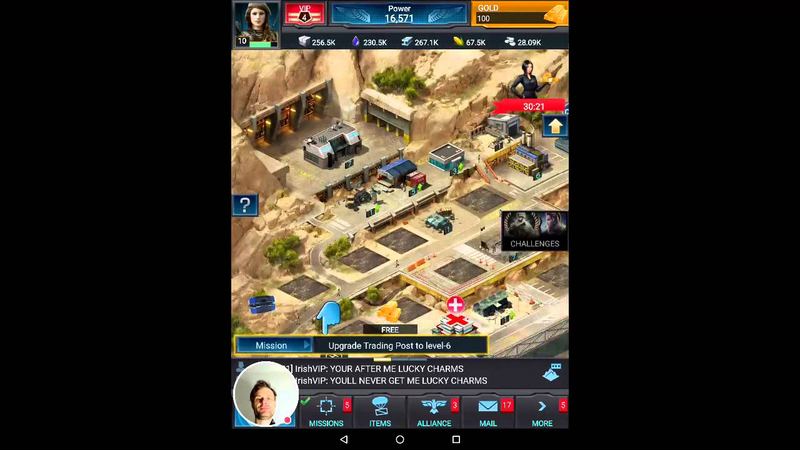
Mobile Strike, developed by Machine Zone, represents a highly aggressive and successful model of mobile game monetization.
- Machine Zone’s Mobile Strike prioritizes an aggressive, data-driven monetization model over high-fidelity graphics or skill-based gameplay to secure its position as a top-grossing title in the North American market.
- The game’s economic structure relies on time-limited retail offers, countdown-driven sales, and complex currency systems designed to incentivize monthly spending that can reach hundreds or thousands of dollars per player.
- Monetization is driven by an alliance-based social architecture where individual microtransactions provide collective benefits, effectively leveraging peer influence to increase player spending.
iOS Gaming Leaders: October 2015
This analysis provides a performance overview of the iOS gaming market for October 2015, utilizing data from the Store Intelligence platform to track downloads, revenue, and growth trends across the United States and international markets.
- Game of War overtook Clash of Clans as the top-grossing iOS game worldwide in October 2015, driven by an 8% month-over-month revenue increase while Clash of Clans saw a 1% decline.
- Smashy Road: Wanted became the most downloaded iOS game in the U.S. for October 2015, gaining nearly four million downloads over the previous month.
- Electronic Arts' Need for Speed outperformed Smashy Road: Wanted internationally by approximately 1.5 million downloads, despite losing the top spot in the U.S. market.
FTUE: The Walking Dead: No Man's Land
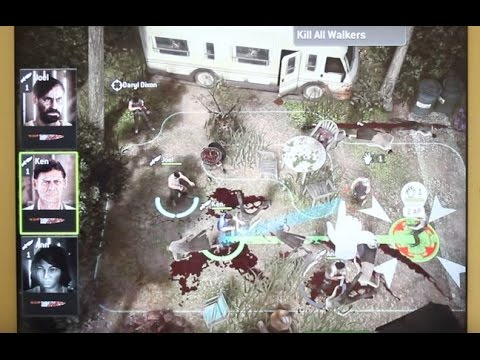
The First Time User Experience (FTUE) for the mobile strategy game The Walking Dead: No Man’s Land demonstrates a structured, multi-layered onboarding process designed to acclimate players to both turn-based combat and base-management mechanics.
- The Walking Dead: No Man’s Land utilizes a multi-layered FTUE to bridge the gap between turn-based combat and base-management mechanics, specifically targeting a mass-market audience drawn by the intellectual property.
- The combat tutorial emphasizes mission objectives over direct engagement, teaching players to manage action points and evaluate the risk-reward ratio of fighting versus reaching exit points.
- The game incorporates a base-building meta-layer inspired by Clash of Clans, introducing resource management, time-gating, and character progression to establish a long-term core loop.

Biz Daily: The $10 billion mobile game franchise
The mobile gaming industry is currently evaluating the feasibility of a $10 billion franchise, a milestone that would represent a significant escalation from the current billion-dollar benchmarks established by titles such as Candy Crush Saga, Puzzle & Dragons, Clash of Clans, and Monster Strike.
- The mobile gaming industry is currently evaluating the feasibility of scaling franchises to $10 billion in lifetime revenue, a tenfold increase over current benchmarks like Candy Crush Saga, Puzzle & Dragons, Clash of Clans, and Monster Strike.
- Reaching the $10 billion threshold will likely require adopting high-efficiency monetization mechanics from the Japanese market, where revenue per paying user can reach hundreds of dollars compared to the lower-spending models common in Western markets.
- The convergence of major regional markets—North America, Europe, China, and Japan—into a more unified global landscape is a primary driver for the potential expansion of mobile game revenue.

Biz Daily: Gumi Berlin's high risk, high reward strategy
Japanese mobile developer Gumi is expanding its global footprint by establishing a new development studio in Berlin, marking a strategic shift from its previous European operations, which were primarily focused on marketing and support.
- Gumi is establishing a new development studio in Berlin to create mobile strategy games specifically for Western audiences, shifting away from the ineffective practice of retrofitting Japanese titles for international markets.
- The Berlin studio will operate with a lean, specialized team of 10 to 15 experienced developers tasked with high-risk design experimentation rather than iterating on established genre formulas like Clash of Clans.
- This strategy reflects a broader industry trend where publicly traded companies are prioritizing disruptive innovation over safe, incremental updates to secure the next billion-dollar franchise.

Two Developers Made 14% of Mobile App Revenues in 2014
The mobile application economy in 2014 was characterized by a highly concentrated market structure, where a small number of dominant players captured a disproportionate share of total revenue.
- King Digital and Supercell combined to control 14% of the total mobile app economy market share in 2014.
- Annualized app revenue across the Apple App Store and Google Play totaled approximately $24.286 billion in 2014.
- Apple paid out $10 billion to developers in the 12-month period ending mid-2015, while Google paid out $7 billion to developers during the 2014 calendar year.
Companies behind it

As the documents state it.