Clash of Clans
Documents about Clash of Clans

Monetizer: CSR Classics
CSR Classics, developed by Boss Alien and published by NaturalMotion, functions as an expansion to the original CSR Racing, utilizing the same rhythm-based drag racing mechanics while shifting the focus to classic vehicle restoration.
- CSR Classics utilizes a dual-currency model of soft cash and hard gold to drive monetization, with top-tier hard currency bundles priced at approximately $100 for 16,500 units.
- The game mitigates friction from pay-to-skip mechanics by framing wait times for upgrades and deliveries as thematic shipping or customs delays.
- Monetization is anchored in psychological triggers like reciprocity and scarcity, starting with an initial soft currency grant to normalize shop interaction before introducing real-money purchases.

Monetizer: Batman: Arkham Origins
Batman: Arkham Origins, a free-to-play mobile brawler developed by Warner Bros., serves as a case study for integrating console-style production values with established mobile monetization mechanics.
- Batman: Arkham Origins employs a dual-currency model featuring upgrade points for character progression and WayneTech points for premium boosts, stamina, and cosmetics.
- The game utilizes tiered pricing bands in its store to incentivize larger real-money transactions by offering increased value at higher spending levels.
- The economic model creates a psychological distinction between currencies by presenting upgrade points as abundant, low-value assets and WayneTech points as scarce, premium resources.
Clash of Clans vs. Candy Crush Saga: Which App Localizes Better?
This analysis evaluates the effectiveness of internationalization strategies for two prominent mobile games, Clash of Clans and Candy Crush Saga, as of October 2013.
- Clash of Clans demonstrates superior internationalization performance compared to Candy Crush Saga, consistently capturing a higher percentage of total downloads across the 10 largest non-US App Store markets.
- Clash of Clans outperforms the overall Games Category in 5 out of 10 international markets, whereas Candy Crush Saga only exceeds the category average in 2 of those 10 markets.
- Both games show their strongest relative localization performance in Italy, where each app achieves its highest margin of success against the broader Games Category.
Monetizer: Gameloft's Total Conquest
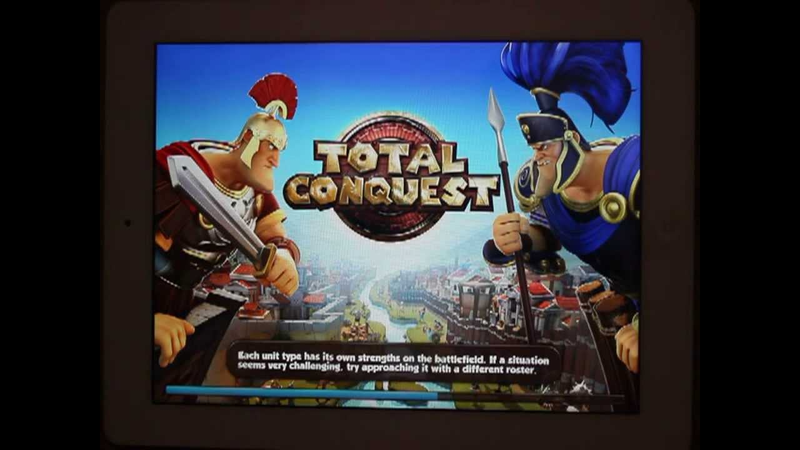
Total Conquest, a mobile strategy title developed by Gameloft, functions as a Roman-themed iteration of the established Clash of Clans formula.
- Total Conquest utilizes a standard six-tier monetization model ranging from $2.00 to $99.99, explicitly highlighting that larger currency bundles offer up to 50 percent more value than the entry-level tier.
- The game employs a dual-currency system that allows players to convert premium 'crowns' directly into soft resources, creating a friction-free path to bypass construction and training wait times.
- Monetization is prioritized early in the user experience by aggressively incentivizing the use of hard currency to accelerate initial base building and resource accumulation.

Monetizer: GREE's Dragon Realms
Dragon Realms, a city-building card-based RPG developed by GREE for Western markets, serves as a case study for analyzing free-to-play monetization strategies and user experience.
- GREE’s Dragon Realms utilizes a hybrid genre approach by combining Western-style city-building mechanics with Asian-market card-based combat systems.
- The monetization model employs a dual-currency system where gold manages resource progression and gems facilitate premium actions like speed-ups and summons.
- To drive revenue, the game utilizes transaction bands ranging from $2 to $100, incorporating a discount currency ratio to incentivize larger real-money purchases.
Why Your Mobile Game Failed: Complexity Kills!
The primary thesis posits that excessive design complexity is a leading cause of failure for mobile games.
- Mobile game success is driven by simplicity, as complex designs frequently fail to resonate with users on mobile platforms compared to console or PC.
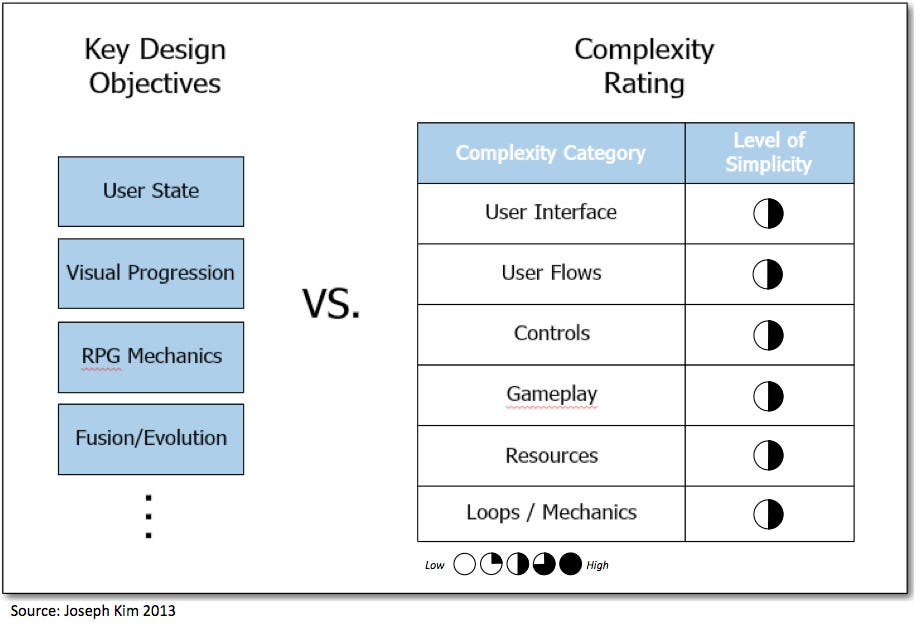
- Designers should evaluate complexity across six core components: user interface, user flows, controls, gameplay, resources, and loops/mechanics.
- Successful mobile titles like Clash of Clans achieved market dominance by actively reducing complexity in UI and HUD elements compared to their predecessors like Backyard Monsters and Edgeworld.

Talking Puzzle & Dragons' success with GungHo Online
Puzzle & Dragons achieved global commercial dominance as one of the world’s most profitable mobile games while maintaining a remarkably lean development structure.
- Puzzle & Dragons achieved global commercial dominance with a lean development team that grew from an initial core of four people to only 20 staff members.
- The studio leverages high-profile collaborative partnerships, such as the June 2013 integration of characters from Clash of Clans and Hay Day, to drive user acquisition and retention.
- Development philosophy balances data-driven analytics with intuitive design, utilizing direct feedback from family members to test game accessibility and engagement.

The +1 Mobile Game Design Strategy
The +1 mobile game design strategy posits that the most effective approach to game development involves taking an established set of core mechanics and introducing at least one significant advancement or improvement.
- The '+1' strategy—improving an existing core game mechanic with one significant innovation—is the most effective approach for mobile game success, as it balances the risk of radical innovation with the limitations of simple cloning.
- Horizontal design, which relies on copying existing successful games, has become less viable due to the high cost of user acquisition and the difficulty of competing with established titles that have already built significant user bases.
- Vertical design, which involves creating entirely new mechanics from scratch, carries a high failure rate and often requires a subsequent '+1' iteration to achieve market dominance and commercial viability.
Q3 2015 Data Digest
The Q3 2015 Data Digest provides a comprehensive analysis of the iOS mobile application market, focusing on global and U.S. trends in downloads, revenue, and advertising strategies.
- Gaming remains the dominant App Store category, generating over 20 times the revenue of the next leading category.
- Clash of Clans maintained its lead in Q3 2015, though Game of War significantly narrowed the revenue gap in the U.S. market.
- Aggressive advertising on the Facebook network, particularly using high-production image and video assets, shows a strong correlation with increased revenue for gaming and lifestyle apps like those from ContextLogic.