Blood
Game
Documents about Blood
The Blood of the Dawnwalker developer: Everyone we spoke to wanted to invest
Rebel Wolves operates on the principle that high-quality, AAA dark fantasy role-playing games are best produced within smaller, boutique environments that prioritize team culture and creative ownership.
- Rebel Wolves maintains a boutique studio model of approximately 160 employees to minimize bureaucratic inefficiency and ensure leadership remains directly involved in creative production.
- The studio secured major financial and operational backing through partnerships with NetEase for funding and Bandai Namco for global publishing.
- Development of the upcoming title, The Blood of the Dawnwalker, utilizes AI-generated voice placeholders to iterate on complex narrative branches before committing to final production costs.

Jason Smith: How He Sold 100,000 Copies Of His Game (w/ Overwhelmingly Positive Reviews) | Ep. #056
The development of the boomer shooter Cultic serves as a case study in the challenges of scaling a solo-led project into a multi-chapter experience.
- Jason Smith achieved success with the boomer shooter 'Cultic' by focusing on long-term project viability rather than short-term trends, aiming for a game with multi-year staying power.
- To address player feedback from Chapter 1, Smith expanded the scope of Chapter 2 by increasing level variety and length, despite the original game already holding a 97-98% positive rating.
- Smith and his collaborator Nick utilized a collaborative level design process where they traded maps back and forth, leading to distinct design styles that were occasionally criticized, such as the open-ended nature of the 'Fairgrounds' level.

Let's Review Your Games — Ep. 005
Indie game success hinges on the ability to communicate a clear, high-concept hook immediately through marketing assets like Steam thumbnails, trailers, and introductory copy.
- The 'Big Butt' principle—combining two seemingly opposed concepts, such as a restaurant simulator and vampires—is highly effective for creating a clear, marketable hook, as demonstrated by Blood Bar Tycoon.
- Steam store thumbnails must communicate the game's core hook instantly without requiring the user to read accompanying text, as many users will ignore written descriptions.
- When pitching to publishers, receiving a request to play a demo is a standard, general response rather than a definitive indicator of interest or a pending deal.
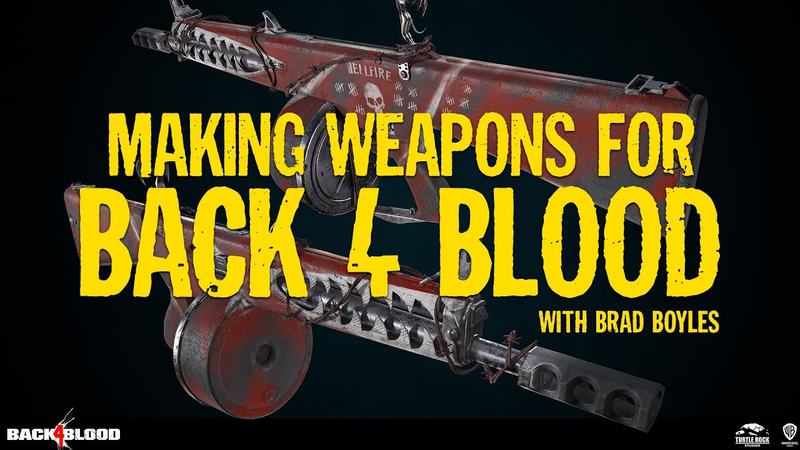
LIVE | Making Weapons for Back 4 Blood with Brad Boyles
Weapon design in modern first-person shooters requires a rigorous synthesis of technical efficiency and mechanical authenticity.
- Weapon design in high-fidelity shooters like Back 4 Blood relies on a synthesis of simulation software and physical references to ensure mechanical accuracy in reload animations and functional movement.
- The production pipeline has shifted from manual, Photoshop-based workflows to procedural texturing tools like Substance Painter, significantly increasing output efficiency for small teams.
- Artists utilize height maps and high-poly baking to simulate complex surface details, while maintaining traditional hard-surface modeling methodologies.
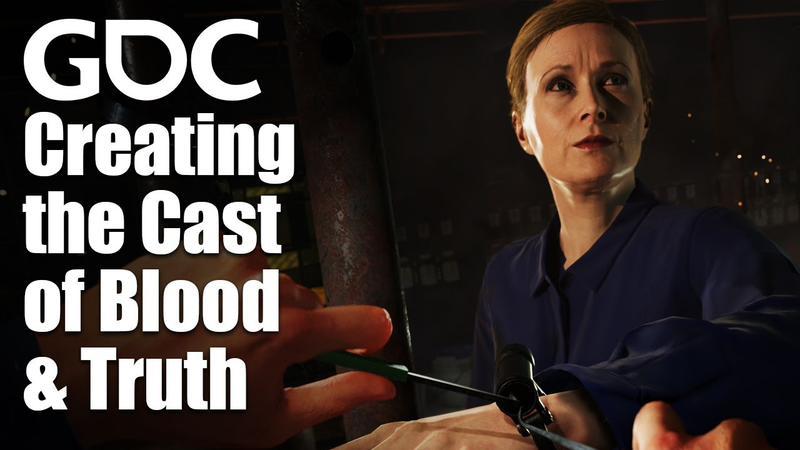
Characters to Get Immersed In: Creating the Cast of 'Blood & Truth'
The development of characters for the PlayStation VR action shooter Blood & Truth focused on overcoming the limitations of virtual reality immersion by prioritizing realistic character interactions and player agency.
- Sony London Studio developed 'Blood & Truth' by prioritizing character interaction and immersion, building on data from 'The London Heist' which showed that direct, physical interactions with NPCs were twice as popular as other VR experiences.
- To maintain high frame rates in VR while achieving realism, the team implemented a two-tier character system: Tier 1 (key characters) featured exact digital doubles with 40,000–50,000 polygons, while Tier 2 (NPCs) used modular, interchangeable parts at 30,000–40,000 polygons.
- The studio utilized photogrammetry and 3D scanning to create digital doubles of actors, partnering with 3Lateral for high-fidelity head scans and specialized facial rigging to meet quality requirements.

Adding Blood Splatter To My Game
Implementing blood splatter effects in 3D game development requires a systematic approach to decal projection within the Universal Render Pipeline (URP).
- Implement blood splatter in URP by using a decal projector component oriented downward to project textures directly onto floor geometry.
- Configure the decal projector to a 5x5 unit area to achieve an appropriate visual footprint for blood pools.
- Optimize performance and prevent memory bloat by implementing a cleanup mechanism that automatically destroys decal objects after 120 seconds.
The Holy Grail of Multiplayer Level Design: Casual and Competitive Maps
The design of multiplayer maps requires balancing the distinct needs of casual and competitive players, a challenge often referred to as the pursuit of a "holy grail" map.
- Successful multiplayer map design requires balancing the needs of casual players, who seek recreational play, with competitive esports players who prioritize strategic depth and tournament viability.
- Designers should categorize player skill progression into layers: basic mechanical movement and shooting, map-specific tactical knowledge, and high-level meta-game strategy such as character bans and team compositions.
- Casual-friendly maps often rely on 'single-scan' layouts that allow players to process the entire environment quickly, whereas competitive maps require complex, multi-option layouts that prevent stale gameplay.

VR Lessons Learned in the Level Design of 'Blood & Truth'
The development of virtual reality (VR) action-adventure titles requires a specialized approach to level design that prioritizes player comfort, spatial awareness, and intuitive interaction.
- To minimize motion sickness, implement easing in and out for movement and vary speed based on distance, as moving short distances quickly is a common comfort trigger.
- Establish strict cover metrics to ensure players can comfortably see over cover, duck to feel safe, and reach interactable items like ammo or weapons.
- Utilize a rail-based traversal system with 'snap zones' to automate approximately 90% of movement, which helps maintain a consistent, comfortable experience for the player.
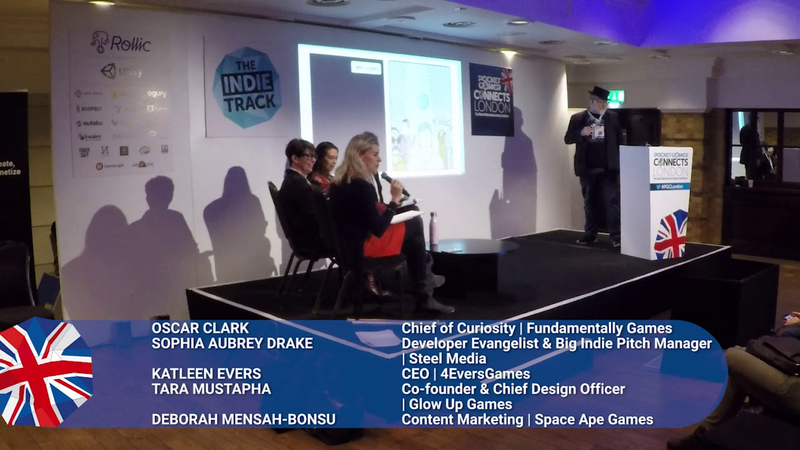
Panel: Fantasy Pitching
The creative process of game design relies heavily on the ability to synthesize disparate themes into cohesive, engaging mechanics.
- Successful game ideation often relies on pairing high-concept or absurd narrative hooks with established, robust management systems.
- Rapid iteration and the ability to synthesize disparate themes into cohesive mechanics are essential skills for developers navigating the competitive indie landscape.
- Innovation in the indie sector frequently emerges from unconventional premises, as demonstrated by titles like God of Gym, Cutie-Wootie, Pets Attention, and Adorable Home.

World of Warcraft Epidemiology - The Corrupted Blood Plague (And Why It Matters) - Extra Credits
The 2005 Corrupted Blood incident in the massively multiplayer online game World of Warcraft serves as a significant case study in epidemiology and human behavior during a pandemic.
- The 2005 World of Warcraft 'Corrupted Blood' incident serves as a critical case study for epidemiologists because it provided rare, observable data on human social behavior during a large-scale contagion.
- The outbreak was triggered by a programming oversight in the Zul'Gurub raid zone, allowing a lethal contagion to escape containment via player pets and spread into major virtual population hubs.
- The simulation revealed a spectrum of human responses to pandemics, ranging from altruistic efforts like establishing healing stations and informal quarantines to malicious intentional spreading of the disease.
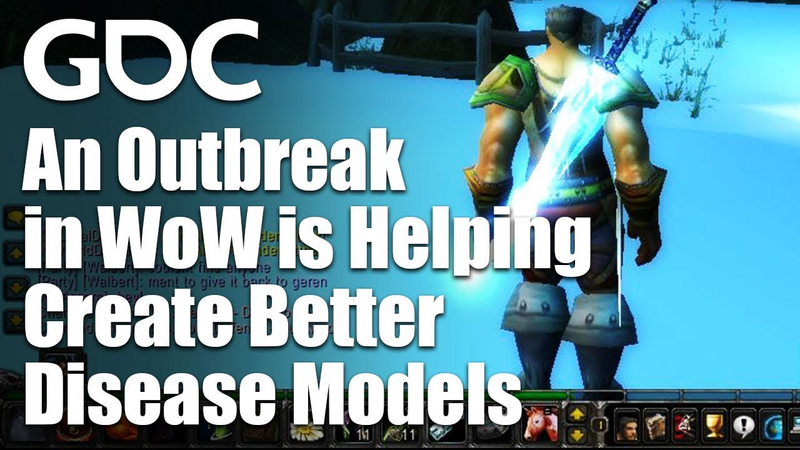
How an Outbreak in WoW is Helping Epidemiologists Create Better Disease Models
The 2005 Corrupted Blood plague in World of Warcraft serves as a foundational case study for modern epidemiological research, demonstrating how virtual environments can provide unique insights into human behavior during public health crises.
- The 2005 'Corrupted Blood' plague in World of Warcraft, caused by a design flaw in the Zul'Gurub raid, provided epidemiologists with a unique, real-world dataset to study human behavior during an infectious disease outbreak.
- Traditional epidemiological models often fail because they rely on static assumptions about human behavior, such as how individuals will react to quarantine orders or emergency information.
- Virtual environments like World of Warcraft allow researchers to observe diverse, unscripted human responses to a crisis, including altruism, curiosity-driven risk-taking, malicious griefing, and the spread of misinformation.

Building Beauclair in The Witcher 3: Wild Hunt - Blood and Wine
The development of Beauclair for The Witcher 3: Blood and Wine centered on creating a dense, vacation-inspired urban environment that balanced high visual fidelity with rigorous technical performance constraints.
- To manage performance in the dense city of Beauclair, the team used Umbra to optimize rendering by limiting the number of visible meshes based on the player's line of sight, significantly reducing triangle counts for complex structures.
- The development team implemented a custom blend shader that used monochromatic textures combined with color tints and pattern overlays to create unique visual variations for assets while minimizing memory usage.
- Designers controlled player navigation and visibility by bending streets and using landmarks like the Gorgon Mountain and the palace to break lines of sight, which helped hide asset popping and streaming latency.