Apex Legends
Documents about Apex Legends
EA Quarterly Report: Q2 Fiscal Year 2021
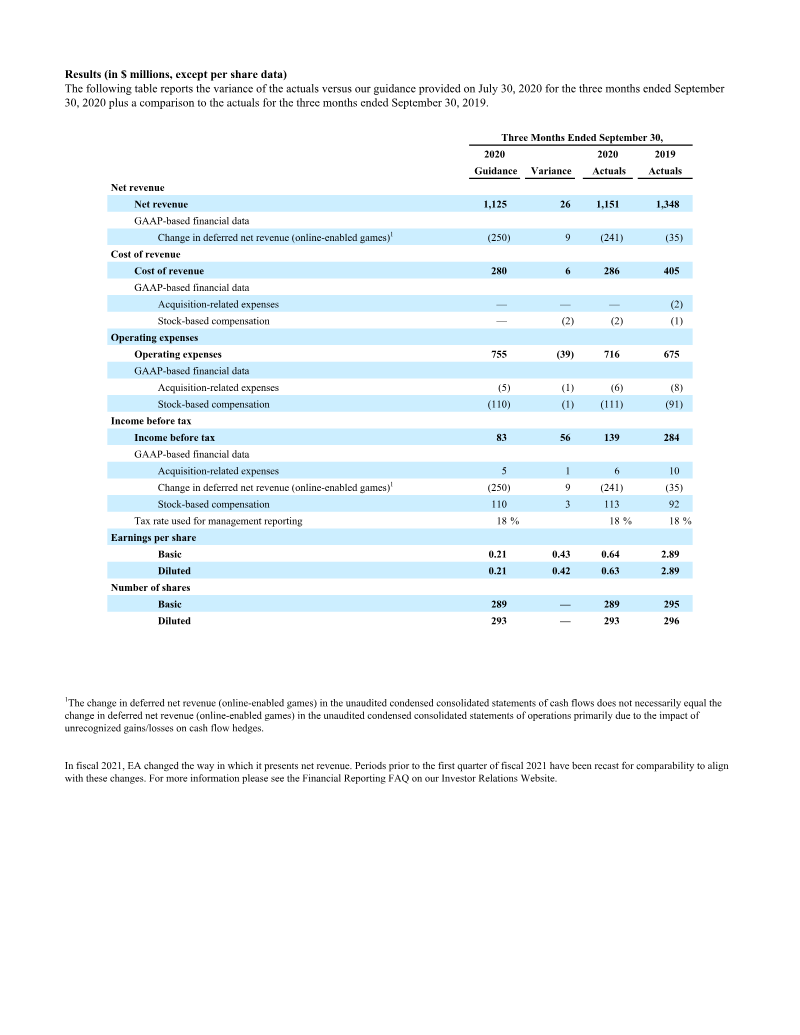
Electronic Arts reported a mixed performance for the third quarter of fiscal 2020, with net revenue of $1.15 billion for the three-month period ending September 30, 2020—down 15% year over year and 11% on a constant-currency basis.
- EA reported Q2 fiscal 2020 net revenue of $1.15 billion, a 15% year-over-year decline primarily caused by changes in live-service revenue recognition windows.
- Despite the quarterly revenue drop, gross margin improved to 75.2% due to the strong performance of digital titles and live services like Apex Legends and FIFA Ultimate Team.
- Operating cash flow for the quarter rose 65% to $439 million, while the company maintained a strong liquidity position with $4.06 billion in cash and $1.97 billion in short-term investments.

Electronic Arts Q2 FY 2021 Results
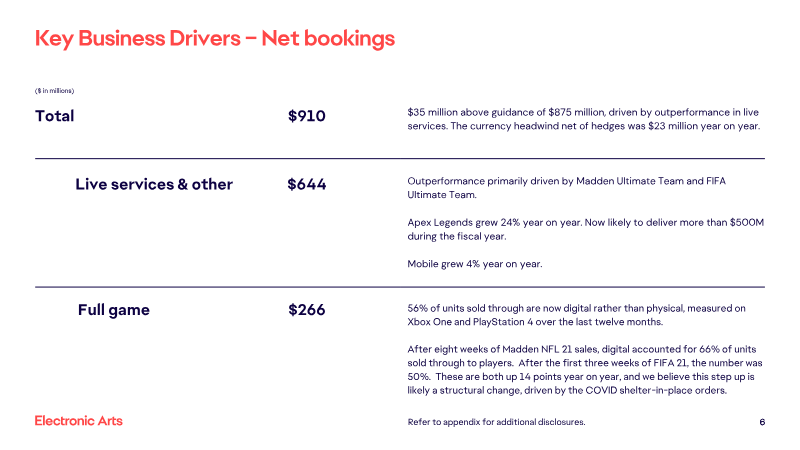
Electronic Arts’ second-quarter fiscal year 2021 results demonstrate strong financial performance, characterized by the company exceeding top and bottom-line expectations.
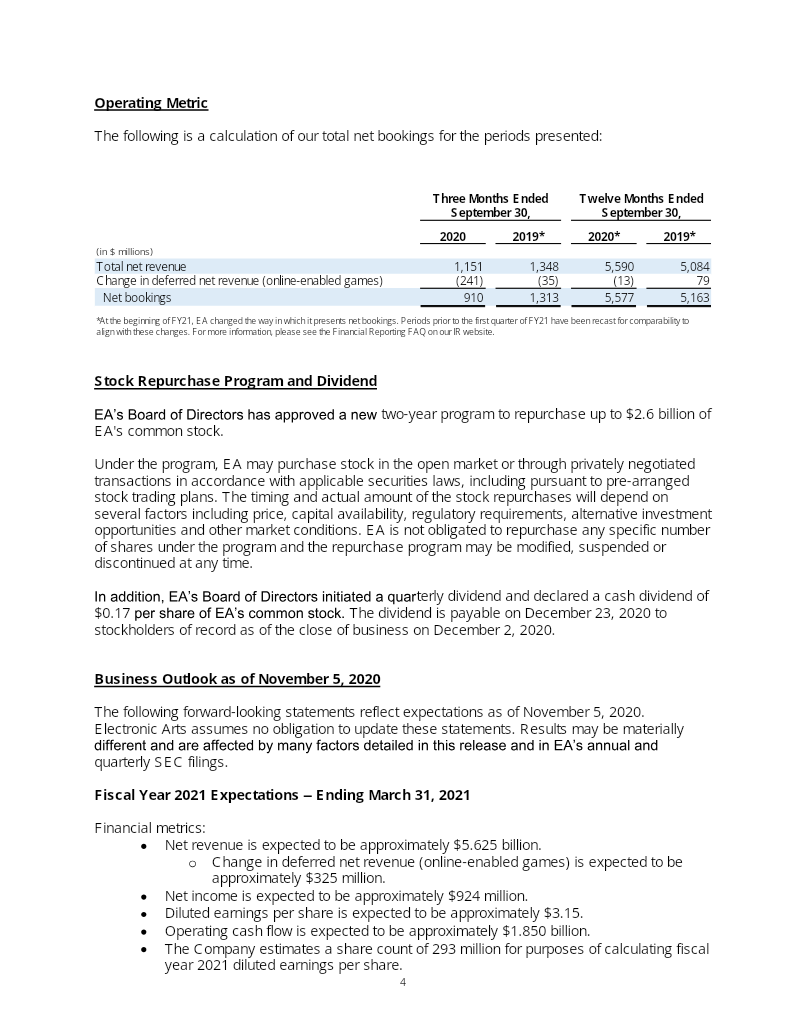
- Electronic Arts achieved a record trailing twelve-month operating cash flow of $2.04 billion, leading to the initiation of a quarterly dividend and a $2.6 billion share repurchase program.
- EA SPORTS Ultimate Team player counts grew 25% year-over-year, surpassing 30 million total players and serving as a primary growth engine alongside Apex Legends.
- Digital adoption of full-game units reached 56% over the trailing twelve-month period, driven by structural shifts in consumer behavior during the COVID-19 pandemic.
Electronic Arts Q2 FY21 Financial Results
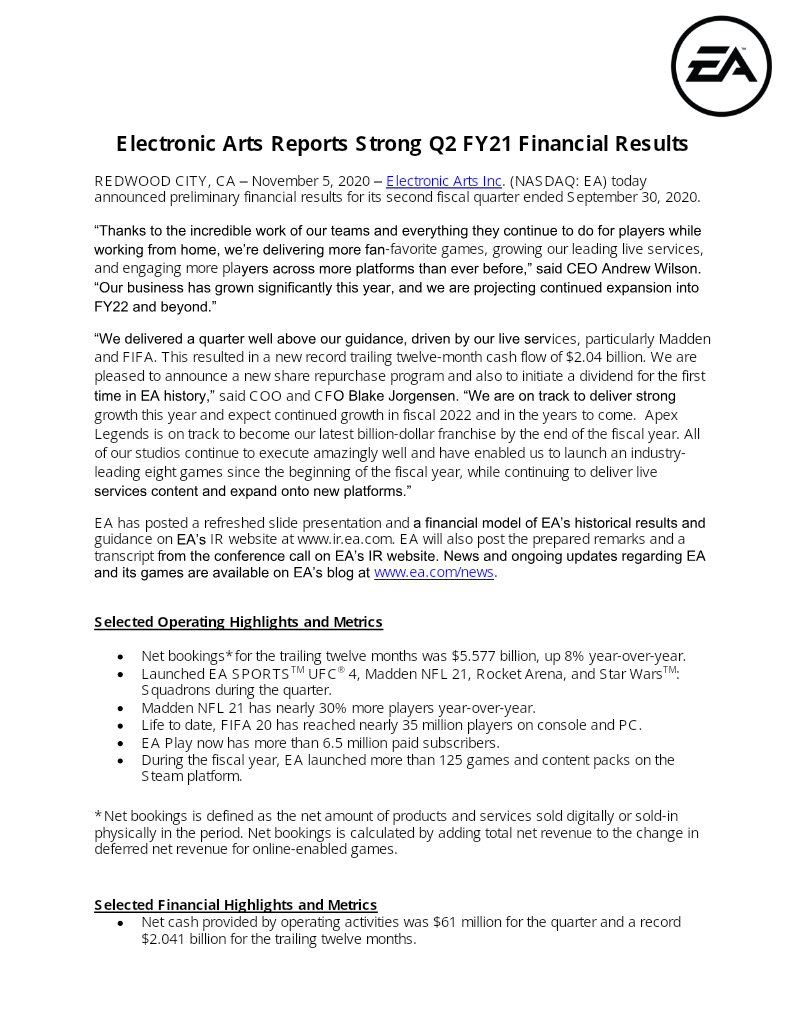
Electronic Arts reported strong financial results for the second fiscal quarter of 2021, ending September 30, 2020.
- Electronic Arts achieved a record trailing twelve-month operating cash flow of $2.04 billion, marking a 17% year-over-year increase.
- Live services and other digital revenue streams now account for 75% of the company's total net revenue, totaling $869 million for the quarter.
- The company initiated its first-ever quarterly cash dividend of $0.17 per share and authorized a new two-year, $2.6 billion stock repurchase program.

PocketGamer.biz Podcast Episode #7: iOS 14 reactions, Pokemon reveals, and more!
Apple’s 2020 software updates and evolving App Store policies represent a significant shift in the mobile ecosystem, as iOS 14 introduces features that align Apple’s interface more closely with Android standards.
- The Pokémon Company is aggressively expanding its mobile portfolio with titles like Pokémon UNITE, Pokémon Smile, and Pokémon Café Mix, positioning mobile as a primary growth pillar.
- Nintendo is de-prioritizing mobile revenue, which accounts for only 4% of its total earnings, and is shifting its strategy to use mobile apps primarily as marketing tools for its console business.
- Supercell’s Brawl Stars demonstrated the continued profitability of the mobile market by generating $17.5 million in its first week following its launch in China.

Apex Update | Games ReCAP Episode 018
The modern gaming landscape is defined by the transition toward games-as-a-service models, where titles like Apex Legends and Fortnite utilize persistent, evolving maps to sustain long-term player engagement.
- The transition to games-as-a-service models, exemplified by Apex Legends and Fortnite, requires persistent map updates to sustain engagement but risks employee burnout and competitive imbalance.
- Developers can mitigate the pressures of constant content cycles by implementing multi-team rotation models and establishing satellite studios in major industry hubs to improve talent retention.
- Marketing strategies have shifted from traditional media to influencer-led promotion, though this approach carries risks of unsustainable development and deceptive industry practices if not balanced with stable, player-focused builds.
E3 2019 Market Analysis
This analysis provides a strategic preview of the 2019 Electronic Arts Expo (E3), contextualized within the broader business landscape of the global games industry.
- The Call of Duty esports league has reached significant scale, generating an estimated $500 million in franchise sales.
- Microsoft is positioning its cloud ecosystem by implementing $50 to $100 price cuts on Xbox hardware to accelerate user adoption.
- The global games industry is undergoing a structural transition toward cloud-based services and the expansion of gaming into non-traditional platforms like smart vehicles and Apple TV.

Games You Might Not Have Tried - ep 20 - April 1st Edition! - Extra Credits
This presentation serves as a satirical April Fools' Day commentary on the gaming industry, framing well-known, mainstream titles as obscure "hidden gems."
- Modern game design frequently prioritizes player retention, microtransactions, and repetitive loops over traditional innovation.
- Mainstream titles like Madden NFL, World of Warcraft, Fortnite, and Apex Legends are often structured around cynical monetization strategies rather than novel gameplay experiences.
- The 'hidden gem' genre of gaming journalism is often used to recontextualize ubiquitous, commercially successful titles, highlighting the industry's reliance on established tropes.
Nexon Sale: A Rare Opportunity to Buy a Business That Has Several Fat Years Ahead of It
The potential sale of South Korean publisher Nexon represents a pivotal moment in the gaming industry, characterized by a shift toward consolidation and the entry of non-endemic players like telecom firms.
- Nexon’s flagship title, Dungeon Fighter Online, serves as the primary valuation driver by generating approximately $150 million in monthly revenue from the Chinese market.
- The potential sale of Nexon has triggered a bidding war among major global entities, including Tencent, Electronic Arts, and Comcast.
- Nexon’s acquisition is viewed as a strategic entry point for non-endemic firms like Comcast to secure high-performing intellectual property and establish a foothold in the Asian gaming market.

The Problem With the 30% Platform Fee on Mobile in Three Charts
The mobile app ecosystem faces a critical juncture regarding the standard 30% platform fee imposed by Apple and Google.
- Platform owners like Apple and Google face increasing pressure to justify their 30% fee as developers find ways to bypass in-app payment systems, exemplified by Netflix removing registration support on iOS and Google Play.
- Declining smartphone shipment growth, driven by market saturation and high device quality, forces platform owners to rely more heavily on services revenue, making developer retention critical.
- The rise of cross-platform engagement services allows major titles to achieve massive scale independently of platform stores, as seen with Apex Legends reaching 25 million installs in seven days.

What's Next for Sony's PlayStation: New Revenue Models, Content, and Cloud Gaming
This analysis examines the strategic positioning of Sony’s PlayStation division during a transitional period for the gaming industry in early 2019.
- Sony is struggling to reconcile its traditional hardware-centric business model with an industry-wide shift toward recurring service revenues and digital ecosystems.
- Internal leadership remains hesitant to pivot toward 'games-as-a-service' and esports, preferring to maintain the company's established success in high-quality, single-player titles.
- Despite public claims of being 'open for business,' Sony continues to restrict cross-platform play to protect its 'walled garden' and platform exclusivity.
2019 Predictions #9: Say Hello to the New Breed of Battle Royale Games
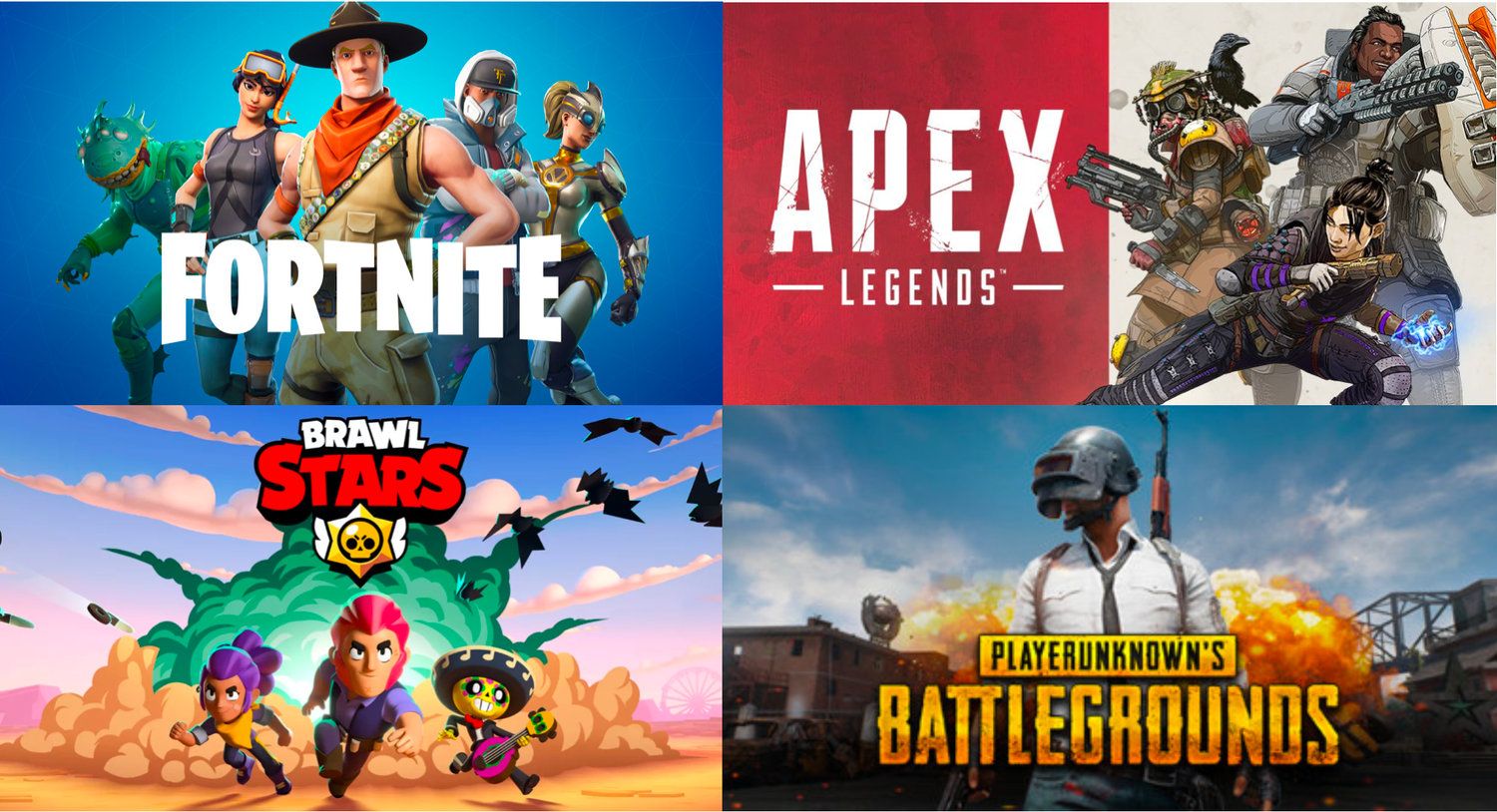
The Battle Royale genre underwent a period of explosive expansion throughout 2018, fundamentally altering the mobile mid-core market and compelling established publishers to overhaul their development strategies.
- Success in the Battle Royale genre requires a massive, multi-platform launch strategy, as evidenced by Apex Legends reaching 1 million concurrent players in 8 hours and 10 million players within three days.
- Traditional publishers are increasingly forced to integrate Battle Royale modes into existing franchises to maintain performance, with EA specifically citing the lack of such a mode as a factor in its lower-than-expected financial results.
- Effective monetization in the genre relies on a combination of battle passes, cosmetic-focused loot boxes, and item shops to balance profit maximization with player retention.
Live Events Are Changing the Music Industry
The emergence of virtual live events, exemplified by Marshmello’s Fortnite concert, signals a fundamental shift in how younger generations consume music and shared cultural experiences.
- Gaming platforms are emerging as primary venues for music consumption, evidenced by a single 10-minute virtual concert in Fortnite attracting 10 million viewers.
- Gaming video content has reached a global audience of nearly 700 million people, establishing gamers as the primary drivers of new cultural and technological consumption patterns.
- Major publishers like Electronic Arts and Take-Two Interactive are shifting their financial models away from unit sales toward long-term recurring revenue through subscriptions and content updates.