ArticleGame Production Alchemist
Clair Obscur Lost Its Indie Awards to a Placeholder Texture Nobody Was Tracking
6 Oct 20261 pages~13 min full read
Key insights
7 slides
Awards Revoked
Sandfall Interactive lost two Indie Game Awards.
The studio's game, 'Clair Obscur: Expedition 33', had its 'Game of the Year' and 'Debut Game' awards rescinded.
The Declaration
The studio signed a declaration stating no generative AI was used.
However, a prior interview with a producer had acknowledged the studio's experimentation with AI technology.
New Risk
AI-generated assets can evade standard QA detection.
Unlike traditional 'ugly' placeholder art, AI outputs can appear high-quality.
It's like a wolf in sheep's clothing, blending in where it shouldn't.
Growing Adoption
Approximately 35% of developers are now using generative AI.
This trend increases the likelihood of accidental inclusion of AI assets in final builds.
External Risks
Outsourced work presents a significant vulnerability.
External vendors may use AI without the client's knowledge. This necessitates that provenance records and contractual disclosures cover all third-party deliveries.
New Controls
Studios should implement a mandatory 'placeholder register'.
This register would track asset origin, creator, and removal milestones. It should be paired with a strict 'ship gate' requiring manual sign-off for temporary assets.
Traditional Methods
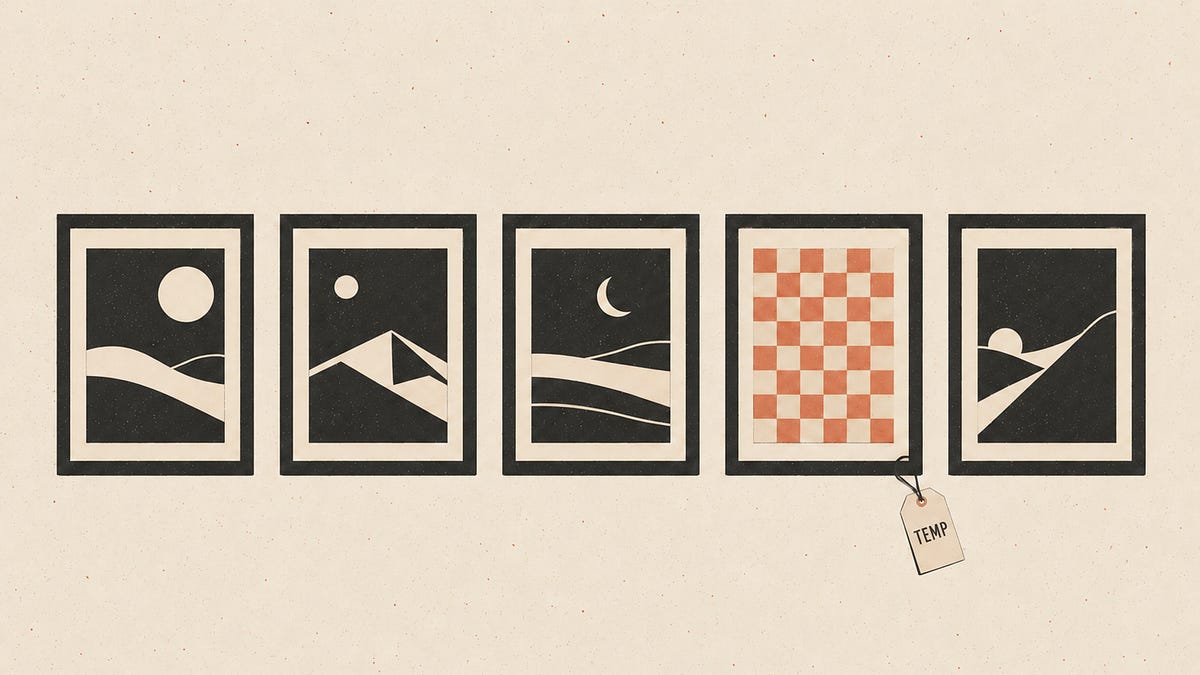
Visually distinct placeholders remain the most effective.
Forcing placeholder assets to be visually distinct, such as using neon pink textures, ensures they are identified.
Effective Strategy. Visually distinct placeholders are the most effective for identification and removal.
1 / 7
Ask AI about this report