1 free read left. Create a free account for unlimited reading + AI research.
Create free account
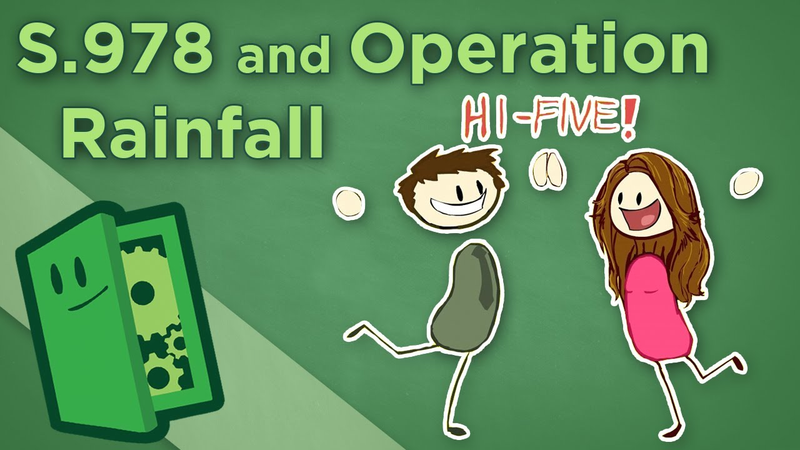
S.978 and Operation Rainfall - Major Industry Events in 2011 - Extra Credits
Key insights
6 takeaways- 01The 2011 S.978 bill proposed classifying unauthorized streaming of copyrighted content as a felony if the stream value exceeded $2,500 or the licensing value surpassed $5,000.
- 02Operation Rainfall served as a landmark case study in consumer advocacy, demonstrating that organized fan bases could force direct communication with major publishers and influence global product availability.
- 03The events of 2011 highlighted a growing tension between intellectual property enforcement and the creative freedom of digital content creators within the gaming ecosystem.
- 04The S.978 legislation faced significant opposition due to its broad language, which threatened to criminalize individual content creators and impose severe penalties, including the loss of civil rights and deportation.
- 05Major corporate entities like Google played a critical role in opposing S.978, as the bill's regulations posed a fundamental threat to their existing business models.
- 06Operation Rainfall successfully pressured Nintendo to localize three specific Wii titles—Xenoblade Chronicles, The Last Story, and Pandora’s Tower—for the North American market after the company initially claimed there was insufficient demand.
Ask AI about this video
Transcript
[Music] hey guys today we've got a double public service announcement for you yep that's right we've got not one but two major events we want to talk about first we want to talk about that s 978 bill now this bill is bad news and we should object to it because it's both Broad and really unclear but I'm not sure it's the world crushing catastrophe a lot of people are making it out to be so let's talk about what that bill is actually supposed to do this bill makes it a felony to stream copywritten content for the sake of public performance if the value of the public performances exceeds $2,500 or the value to license the material in question would exceed $5,000 okay now let's parse that a little first to stream copywritten content for the sake of public performance simply means that while it's not going to be a felony to watch a stream of an episode of Game of Thrones under this law it certainly would be to post the stream next if the value of the public performances exceeds $2,500 that means people post in Minecraft videos
for free without ads or any other way of making money off of it they're probably okay but guys like total biscuit who have to make money off their ads in order to host tournaments or keep servers running those guys are probably out of luck then comes the big question the third part or the value to license the material in question would exceed $5,000 what does that mean well that's something that no one knows nope not even the people who wrote the Bill you see most intellectual property doesn't have a fixed license value licensing Agreements are often done on a case-by Case basis if you're wanting to license we are the the champions for your soda ad it's going to be a totally different deal than if you're wanting to license We Are the Champions to play at halftime in your Arena so this creates some very murky territory and it's something that'll almost certainly have to be determined by courts if this law is ever going to be used on individuals all right so overall this law is unclear limits are freedom and drastically cuts into the creativity that open licensing is produced beyond that it's completely Draconian a felony is pretty serious business you get a felony in the United States and they can take away your right to vote they can prevent you from getting a license to practice law or medicine they can cut you off from well
they can even Deport you if you're not a citizen we're still every job you ever apply for will ask if you've ever been convicted of a felony and guess what it's legal for employers to discriminate against felons in the United States so pretty horrible all around but despite all that we're actually not that worried about it why well two reasons first because we're not alone in this fight while the recent Supreme Court case singled out games this bill affects all types of media Google certainly have to fight this law because essentially it shuts down YouTube the same is true for everyone from live stream to Pandora and turntable FM although they might be protected under an exemption from the Digital Millennium Copyright Act not something we have time to get into today long story short a lot of money and a lot of heavyweight lawyers are going to be tearing this bill apart second I'm pretty sure s 978 is actually aimed at Mega video and similar sites at first that $5,000 number seems like an arbitrary relatively low figure but there would be absolutely no legal difficulty in proving that Mega video has displayed content that has a license value in excess of $5,000 and has made profits in excess of 2500 there's pretty
much no way they aren't culpable under this law so while it would be a terrible thing to have this on the books I'm fairly certain this law isn't aimed at individuals or even the type of media that Justin TV does that said again horribly worded Draconian law we should fight it we should definitely be writing our Senators and informing our friends about the implications of this bill I'm just not totally sold on the it's going to end gaming hysteria that's been going around if you're interested you can find a link to the Bill's text and another link to a place where you can send an email protest in the description below the video if I've done my job properly personally I'm more concerned with the protect IP act and we'd be talking about that if Ron widen hadn't already blocked that sucker like a champ go Oregon so on the PSA number two operation rainfall for those of you not in the know operation rainfall is a consumer-driven effort to get Nintendo to localize Xenoblade The Last Story and Pandora's tower for North America it's remarkably wide- ranging and well organized for a consumer campaign in fact it's been a well enough run campaign to force Nintendo to respond fundamentally we applaud the effort we would love to see consumers this passionate and motivated to open a dial with game Publishers more
often unfortunately Nintendo seems to have spoken and it's looking like the answer is no essentially what they've said is that they simply don't view the Wii as a hardcore product in North America and they don't place any value on the hardcore game consumer in this territory personally I think that's a pretty big misstep on their part especially since they've been touting the upcoming Wii U as a more hardcore platform they're going to be needing that early adopter support soon and this move hasn't won them any favor now to be fair all Nintendo said was we have no plans to bring these titles to the Americas and it's possible that I'm reading a amount into those words but basically that's the sentiment I see written all over their response still if you want to support the effort you can find a link to operation rainfall headquarters below the video again if I've done my job thanks again and I hope some of that was useful or at least interesting to you if not well there's always next week I encourage you to check out those links write your senators and make yourselves heard see you next [Music] week the island got to protect this place do it for my
I'm just going to stay knuckled up in a deep cut and whoever want it bring it I don't care can do this don't let it hit your Mo the Green Hill Lain Hilltop ice
Summary
The landscape of the gaming industry in 2011 was significantly influenced by legislative threats and grassroots consumer activism. A primary concern during this period was the introduction of the S.978 bill, which proposed making the unauthorized streaming of copyrighted content a felony. The legislation targeted public performances where the value of the stream exceeded $2,500 or the licensing value of the material surpassed $5,000. While the bill was criticized for its broad, ambiguous language and potential to criminalize individual content creators, analysts suggested its primary intent was to target large-scale piracy platforms like MegaVideo. Despite the severity of the proposed penalties, which included the loss of civil rights and potential deportation, the industry remained resilient due to the involvement of major corporate entities like Google, whose business models would be fundamentally threatened by such regulations.
Simultaneously, the industry witnessed the rise of Operation Rainfall, a highly organized consumer-led campaign aimed at persuading Nintendo to localize specific titles—Xenoblade Chronicles, The Last Story, and Pandora’s Tower—for the North American market. This movement demonstrated the growing power of dedicated fan bases to force direct communication with major publishers. Although Nintendo initially signaled a lack of interest in bringing these titles to North America, citing a perceived lack of demand for hardcore gaming products on the Wii platform, the campaign highlighted a disconnect between publisher strategy and consumer desire.
These events underscored a pivotal moment for the gaming community, illustrating the tension between intellectual property enforcement and the creative freedom of digital content creators, as well as the increasing influence of organized consumer advocacy in shaping global product availability. The period served as a case study in how political awareness and collective action can serve as essential tools for protecting the interests of the gaming ecosystem.















Comments