VideoDeconstructor of Fun
Google & Epic: From Mortal Enemies to BFFs? Judge Calls BS
21 Nov 202510 min video
Transcript
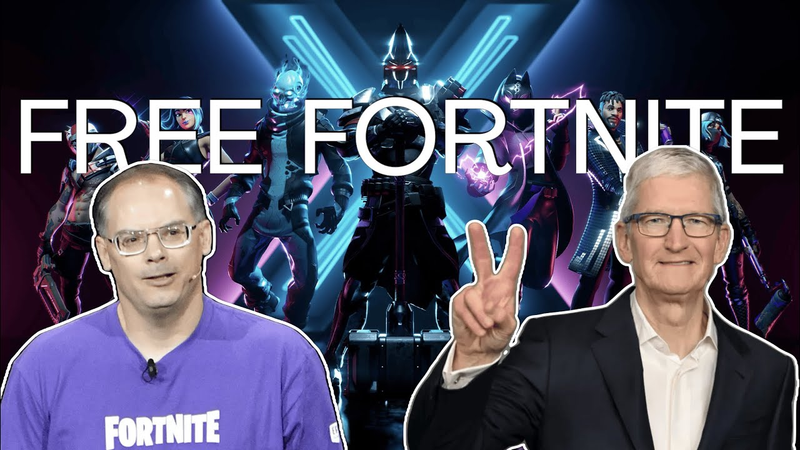
We don't exactly have any corrections. We're perfect. Although, we've got to go through the Epic versus Google settlement again. So, let's go ahead and start there. Let me give you the facts. So, of course, we record every Wednesday morning. So, today's November 12th. All these news items come in at like, you know, 10:00 the night before. So, hopefully this is all still accurate. I read a multiple number of news sources and they're all citing Law 360, which is a legal news publication that covers court proceedings. Uh, the US court is currently not satisfied with the settlement between Google and Epic Games. We talked a lot about that last week. We'll get into some of the details again today. Apparently, the judge was just like not buying it. Judge Donado is withholding approval of the proposed settlement, saying he wants to ensure the agreement truly addresses Google's antitrust violations. He made the pointed comment, this is my favorite,
the only change circumstance that I can see right now is Epic and Google, two mortal enemies, have pounded each other relentlessly in this courtroom for many years, are suddenly bffs. A a that was pretty funny. Then he also suggested that Google's appeals have been designed to drag out the case. So yet another year of harvesting its illgotten games. A hearing is scheduled for December, maybe January to review the matter further. So as of now, we are not in any place where this is going into effect. However, I think we still want to talk about it because it's the biggest news in mobile gaming. Personally, my take is I appreciate what Google and Epic are trying to do. I think they're trying to find a solution, trying to do what's right. However, I'm really glad that the judge asked for clarification. When we were doing our podcast, I was like, "Oh my god, am I getting this right or wrong?" And then afterwards, I realized that thousands of game industry professionals felt like me and couldn't figure out exactly what was going on from the document. So, this is just not
ready for prime time. There's not a single explanation, as you will hear us argue about and as we were arguing about before the podcast, as to what is the 9%, what is the 20%, how do alternative payments work, where is hard currency calculated? Is it done through an API? Do you have to change the game level? Do you have to make a new app? In my humble opinion, I don't understand why cosmetics and game impacting AP should be charged at different rates. I mean, that's just like a whole philosophy. I'm like, I don't understand what that is. Crest, please. What are you hearing? give me your take. I know you've been talking to Archie and a bunch of folks.
Yeah, Archie had a piece on LinkedIn and Andrew Patrick was and I were going back and forth in Slack and so I think you know Archie kind of wrote a good piece on this pretty quickly. It's like you know this is more of a sweetheart deal for Epic and a parachute for Google than a win for devs. And I think that kind of sums up like the whole take on this. But I will admit there are some different interpretations that need to be made in
terms of how this thing was brought down. But nonetheless, you know, basically this selective fee reduction based upon the type of transaction it is, whether it's cosmetic or non-cossmetic or I think what the word that they use specifically is dimminimous gameplay advantage.
Oh,
okay. Dominous gameplay advantage is kind of the big needing defining term needed. So anyway, the way I interpret what was said is that basically the 9% fee is only for benefits Fortnite and in in a lot of ways because there's not many games that are just cosmetic only that do not have non- dimminimous gameplay advantage. So this is a challenge. And then the other part that Archie actually suggested was that it is basically changing the nomenclature from payment fee to distribution fee. And so fundamentally that they will still command the nine to 20% regardless of whether you're using Google Play pay or
not if it's downloaded on the Google app store. So this may actually undermine the direct to consumer models according to Archie. And the only people that would benefit were those with developed app stores that customers are downloading the game specifically and then those fees are lowered. So for him it's a boon for Epic's platform ambitions. not really necessarily a good deal for the rest of the game developers. And Exola said that kind of a similar thing. While it formalized alternative payments in third party app stores, it does so under Google's continued control and introduces a new service fee of 9 to 20%. For many studios, especially smaller ones, this undermines the independence the industry has been fighting for. So, at the end of the day, this all feels like a huge benefit for to Epic and not necessarily a benefit at all to the rest of the ecosystem.
We talk about what Archie said. What did Henry's kids say about this? [laughter]
Yeah, exactly.
Let's get them on the cast. [laughter]
Yeah. I think they understand this as well as we do to be honest. [laughter]
I know. May maybe the segment is I bring in his kids to explain intro all of the news articles and then we banter about it. But Phil, I think you brought up some of the settlement language here. What do you have for us?
So I'd say first just to reiterate what we talked about last week. The whole idea that you're going to separate gameplay and non gameplay affecting items is completely asinine. And the only thing that I would say is beneficial is that hopefully Google hires an army of monetization consultants. I'm available. Give me a call. We can make a committee a jury to determine this. But it's impossible. And I very confused on Epic's position because literally today we're already seeing V-Bucks in UFN Islands. And again, those V-Bucks can be spent for gameplay affecting items. So what a gameplayaffecting or non-gameplayaffecting item isn't determined at the point of sale. It's determined when you spend hard currency in many games. So that's going to be impossible to disambiguate. So no idea if Tim was involved, the lawyer's involved, Tim knows what's happening
inside of his own product. So I say that's point number one is this remains absolutely baffling and confusing. The other thing is I take issue I think a little bit with Archie's statement here which is whether or not Google is going to be able to crawl back this direct to consumer revenue. The Google spokesperson when they were speaking to the Verge this gentleman named Jackson mentioned that if a user chooses to pay through an alternative billing system the developer pays no billing fee to Google. I find it very hard to believe that if I go into Monopoly Go and use the Exola web payment system that suddenly Google's going to want to crawl back all this direct to consumer that's been happening. I find that impossible that's going to happen.
Yeah, but again they'll do that.
But they changed the nomenclature. They changed it from billing fees to service fees, [laughter] right? So like yes, they're not going to pay any billing fees, but they're going to pay this service fee. You know,
how are they going to enforce that, Eric? How are they going to enforce that? We've been doing web direct to consumer forever. I mean Plato is doing this what 2018 now suddenly it's going to be back on the table for Google. I I just I do you
again the whole controversy around this particular ruling is that this is a ruling for Epic. It's not a ruling for everybody else, right? This is like making Epic happy but nobody else because in this circumstance it seems like Epic only cares about themselves. And so the only pause I have and the pause that I work with when I was talking with Andrew Patrick is that they just announced that UFN is going to allow these type of purchases, right? This pay to win.
Yes. I'm working on them right now. I'm implementing them. You can do loot boxes in Fortnite again.
Yeah. And so like this seems to be counterintuitive to this agreement that they've signed with Google. Having said that, if you believe what I believe is that they will just basically do it at the product level, right? Like it doesn't matter what you buy for hard currency. It's just you do it at the product. It's either a one or a zero. You're either doing it or not doing it. They can basically designate whatever game they want anyway they want. Right. And so as part of this agreement, they basically say, "Look, Epic's in the clear for anything that they do." Right.
Done. You know?
Yeah. I also read that like you could go and relaunch your app in a sense. So what if they put Fortnite out without UFN so that they disentangle those two things and they could be like look clearly this entire app is just 9%. And they take that out. I mean obviously they were working on that path and they didn't think they would get to where they were going to get to but it's going to require a lot of people to go back and rework their apps. But I also I just don't understand because most games to your point Chris aren't cosmetic only especially in the West. So, what does this mean for everybody else? And the key [clears throat] question I think you guys are raising is are web shops going to be hit by this fee or not? And people are arguing and this is I mean when you have a rule that is going to impact the industry, I think we just need more clarification and they I would love for them to really think through all of these things before it just gets like decided on by one judge in one city. That feels like a lot. If Google and Epic are happy, then together that means
everyone else is pretty much I mean, that's kind of that seems pretty obvious, you know. [laughter]
Ironically, I think we're going to agree with Tim. Well, I actually agree with Tim a little bit later when we talk about AI voices, but all right. So, we'll leave this one for now. Likely we'll come back and have a lot more news on there. So, just really quick, the Game Awards are coming. So, this is basically the industry's Academy Awards. It's going to be airing on December 11th. So, new this year is that it's coming to Amazon Prime Video and also Twitch. It's already been on Twitch. I think this is an addition to YouTube. I usually watch it on YouTube. They're doing a big Fallout season 2 collaboration. That was an awesome show. Best trans media, right, Phil? Better than Halo. I think this is also on on TikTok. It just shows you that the big tech companies are they love themselves some media, but they don't love themselves some video game teams amidst all the layoffs we talked about last time. [music]
Auto-generated captions from YouTube — names and numbers may be misheard.

















Comments