1 free read left. Create a free account for unlimited reading + AI research.
Create free accountArticle Game Production Alchemist
1 free read left. Create a free account for unlimited reading + AI research.
Create free accountArticleGame Production Alchemist
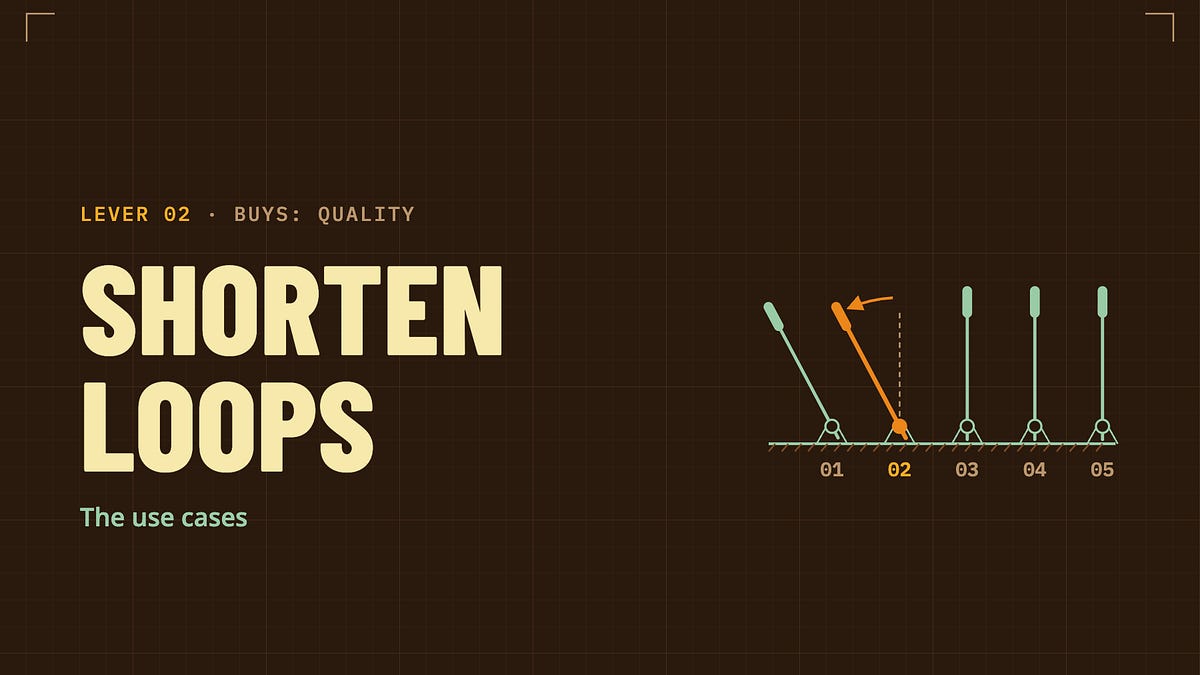
These gaps include coordination tax, late feedback, needless waiting, drifting inputs, and unseen problems. Addressing them can reclaim capacity and improve quality.
Key levers. AI agents can be deployed across five specific levers to address common project delays in game production.
The integration of AI agents into game production serves as a strategic framework to mitigate project delays and inefficiencies. By addressing five specific production gaps—coordination tax, late feedback, needless waiting, drifting inputs, and unseen problems—producers can leverage AI to reclaim capacity, improve quality, increase speed, ensure continuity, and enhance predictability. The core thesis posits that while AI agents handle the labor-intensive legwork of production, human oversight remains essential for decision-making and final approval.
The methodology centers on a structured, agent-led approach where AI tools are integrated with existing project management ecosystems, such as Jira, Confluence, and version control systems. Practical application involves orchestrating specialized agents—including roles for design, QA, and publishing—to execute complex tasks like scope changes. For instance, a scope adjustment that traditionally requires a full day of manual effort can be completed in under an hour when managed by an agent team. Success relies on a foundation of clean data, established process rules, and clear guardrails to ensure that AI amplifies efficiency rather than existing organizational disorder.
The scope of this approach covers the entire game production lifecycle, emphasizing that AI utility is maximized when integrated into established workflows. Key recommendations for implementation include starting with a single, repetitive, and time-consuming administrative task to measure baseline performance before scaling. The framework draws on established lean development principles and agile metrics, suggesting that AI’s primary value lies in its ability to make high-level production flow more economical and predictable. Ultimately, the transition to agent-assisted production allows producers to shift their focus from administrative maintenance to high-level judgment and team leadership.
Game Production Alchemist · 2026

Game Production Alchemist · 2026

Game Production Alchemist · 2026

Game Production Alchemist · 2026

Game Production Alchemist · 2026
Game Production Alchemist · 2026

Game Production Alchemist · 2026

Game Production Alchemist · 2026

Game Production Alchemist · 2026

Game Production Alchemist · 2026

Game Production Alchemist · 2026

Game Production Alchemist · 2026