VideoPocketGamer.biz
Session: Re-Engagement In 2026: How To Design & Scale Winning Retargeting Campaigns - Joseph Iris.
10 Feb 202619 min video
Transcript
We're going to move on to Joseph uh from personally. Um, sorry, I'm I'm sure there's a better way of saying it, but it sounded like a good way to say at the time.
No, you're good. You're good.
And, um, Joseph is going to talk to us about re-engagement in 2026. How to design scale-winning retargeting campaigns. Go for it, Joseph.
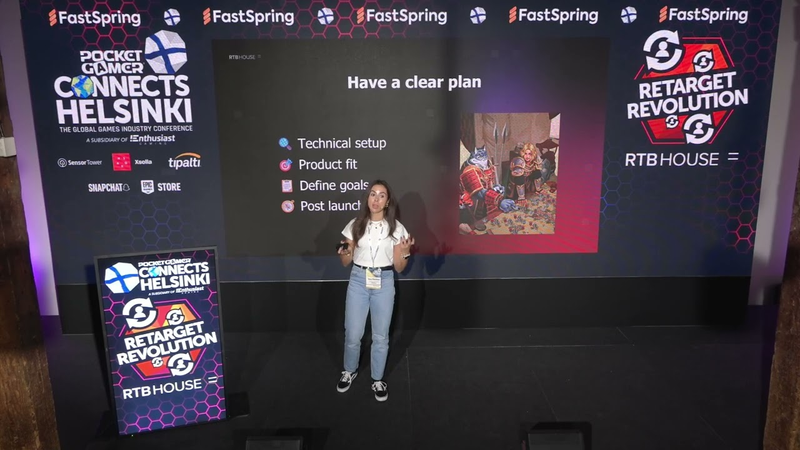
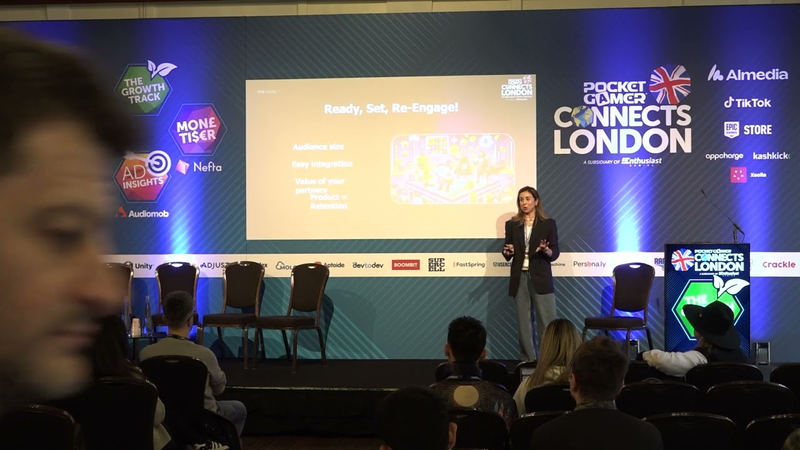
Thank you. There are seats available for the people in the back. I'm excited to say this, but there are seats. Yeah. Uh, nice to meet everyone. I'm Joseph from Personally. We're a DSP focused on mobile doing both UA and retargeting
for almost a decade now. I've been in tech for way too long. Uh but it's been fun. Uh I lead our machine learning teams uh focusing on driving incremental growth both in retargeting. Uh what I'm going to talk to you about today uh is why retargeting is so important, how you can make it work. I'll try to remove some of the misconceptions you might have and hopefully we'll have some time for Q&A. Uh retargeting has become very significant uh over the past few years. Uh almost 30% of UA of all the marketing spent on apps uh is now retargeting. There are a bunch of reasons for that. Apply our friends who just got off stage reported this pretty recently. Um what drove it is a bunch of things. Um, first of all, people are with even shorter attention spans. It's not enough that we
have, you know, Tik Tok winning our lives. Now we have all the dramas, the short dramas and stuff like that. Uh, people jump around between different types of content. Uh, your competition for their screen time is just becoming harder every day. Um, you probably all know this if you're here in the conference. You're looking for better UI solutions that are cheaper. those basically don't exist anymore. Uh UA is becoming increasingly expensive as time goes by. Uh most of the performance teams we work with already have uh retargeting in mind. They start off with it. They build it into their BI uh and all their evaluations because measurement can be uh tougher. So this increased all the uh spend we have there from like the bigger teams across the industry. Um and yeah, competitors are there. Uh the biggest uh clients we have work with five or six different DSPs to do the retargeting campaigns and they scale pretty
aggressively. I'll explain how that works across a lot of DSPs later. Uh the last thing that drove a lot of the growth in the past year is uh probabilistic retargeting on iOS. That's something that's been more or less figured out figured out at this point. It's by matching IPs to your actual users the same way you would do it for UA. Uh if you've been doing UA on iOS for a long time, you know that to some degree your UA campaigns are retargeting as well. Uh because you can't control who you're targeting. And if you're uh using the DSPs or the platform's capabilities to target, you would naturally land on your audiences. Uh so this solution uh that allows you to specifically run retargeting lets you actually measure things correctly. That's something that scaled like 600% across uh the industry and for us as a DSP as well in the past year. Um let's talk about how measurement looks like here because again a lot of the teams
when they go into this are scared uh of like how measurement looks like. Uh because the core concept of retargeting uh is scary uh because you're basically paying for something you could have gotten organically. Uh you're reactivating users that are valuable. 90% of retargeting activities is not about converting users that are non-payers to become payers. It's about taking inactive pairs and targeting them. Uh so there are three key factors that we did some jokes with here. First one being the inactivity window. Uh this is basically how long it takes you to consider a user to be dormant and eligible for retargeting. Uh I'll show you in a bit like how that looks like across different genres, but it's basically a reflection of your LTV curve. Uh if a user needs to recoup within 90 days and he dropped off at 30, you're not going to recoup. Maybe it's the right time to try and do something.
If your recoup uh is shorter, god forbid, if you're still in hyper casual, don't do retargeting and change your business. Uh but the inactive window uh reflects that. The re-engagement window is how long you attribute the performance that's derived from the retargeting campaigns to the retargeting campaigns and not to the original UA campaign that brought you the user. This is the trickier part. Uh the MMPs attribute to both channels by default, the UA one and the retargeting one. There are parameters on the MMPs that allow you to look at it differently. This is something I would understand with your BI team and figure it out. Um and yeah, retattribution is basically bringing someone back in. Uh one other thing we're seeing uh recently, there's more testing around it for the user's first attribution. Uh because when you start retargeting, there's multiple
attributions for the same user. Uh you shouldn't re-engage too soon. You should let your CRM do the work. all the things that are happening inside the game uh to actually drive the user to towards action towards paying. So that's something to consider we're seeing more and more testing trying to do it sooner. Yeah. Uh this is a distribution of the inactivity days we're seeing across the board. So to remind you this is like when do you define a user as dormant? We've been seeing a shift towards shorter u windows. ones that were at seven are moving towards four or that one at 28 are moving towards 14. Uh but as I said before this kind of captures the way your game behaves. If your LTV curve is shallow then you would see a longer inactivity window. This shift towards shorter ones is just because of more increased competition inside retargeting as well. um to remind you what a DSP does uh just because you you should understand how we're actually able to do this. Uh we
participate in auctions uh to show the ads everything that's outside of the closed gardens and we have something like 300 millisecond is optimistic. A lot of them is like 100 where the supply side lets us gives us time to actually figure out if you want to target the user. When it comes to retargeting, we have identifiers of users. So we can say okay this is from that audience, this is from this audience. Um at at that point we also enrich it with data that we have about the user in general as well as data specific for the advertiser. One thing that we did in the last two years uh was to actually introduce the inapp features I mean the inapp events as features inside our models. So our models can detect these patterns of payments and churn. Uh so we have this transformer model that figures out if the user paid seven days ago stopped being active uh 6 days ago it makes sense to target them.
All of this data enrichment happens in one millisecond because tech is cool and then we have a lot more time to actually run the machine learning models uh that give us the probabilities of user coming back how much LTV they're going to generate. Uh and all of this happens 4 million times a second. Uh so it's basically burning hard drives for us. Another thing that Stuffer is actually predicting predicting the price of the auction. uh users have a value assigned to them uh by the nature of supply and demand. Uh so we need to make sure we're not overpaying. Uh so we everything is a first price auction now. So we need to predict the second price to not overpay. Uh now what I was saying earlier this concept of am I attributing things I shouldn't to my retargeting campaign is called cannibalization because they're basically eating into your revenue uh that you're getting through UA. It's a scary name. Uh so that's why I think a
lot of people are staying away from retargeting to some degree. Uh here's me trying to tell you why it's a myth. So first of all, very biased. Obviously, I want you guys to do retargeting with a lot of DSPs so we can compete with them. So take it with a grain of salt, but my job is to convince you. Anyway, first off, if you know anything about the supply path in programmatic, uh I wouldn't trust you because it's basically impossible to understand. Uh if you do monetization, uh you know, you have one SDK that does the mediation across all the other SDKs that go to 10 different auctions and somehow magically you should get the highest CPM out of this. In reality, there are deals in between. It's very intricate. In some cases, the highest bidder won't win because it's blocked somewhere in this path. So, a lot of the requests that we get, these four millions per second, these auctions to show impressions are inflated. They're multiplied, but there's a lot of supply
to go around still. Uh, so that's my key takeaway here is that there's a lot of supply. Even if we're talking about a small group of payers that you want to retarget, there's probably hundreds of thousands or millions of opportunities every week to reach them. Uh the second thing is about internal auctions. Uh before you go to the actual auction uh where all the different uh DSPs are competing for the same impression, you have an auction inside each DSP. I'll show you how that works in a slide later. The next one is about uh free meals bonapetit by the way. Um, valuable users are expensive. There's no place where you can get them for cheap. Uh, if you see that place, you should be suspicious. I'm saying this because the CPMs uh with identifiers on Android or on iOS when the user consents drive the prices incredibly high when we're talking about
very valuable users. We're seeing CPMs that if you would have told me 5 years ago, I would punch you because they don't make sense. $1,500 CPMs for VIPs. Some crazy averages I wouldn't think we're seeing before. So this happens because the supply of these users is limited and very competitive. So each opportunity you can get you should try and latch on to it. Uh about these internal auctions, [snorts] let's imagine this scenario where there are only two DSPs in the world. uh if you're going to a DSP where you're the first social casino that they're doing retargeting for, you're not going to have uh that internal competition. You're basically going to get 100% of all bids on your relevant users. Uh but as soon as the other DSP has several ones, you're basically going to get cut in half. Uh you're sharing valuable users with a lot of different apps. As we said before, people are spending their time across games, across apps,
across uh different content that they subscribe to. Uh so when you're working even with seven different DSPs, uh you're not going to reach the actual auction in some cases through none of them. So expanding your reach is a positive thing. And uh in reality because all of these DSPs know the value of the user you're not really increasing it by doing that. Uh moving on um to actually understand if you're drive driving value uh you need to test uh incrementality is that are we actually having incremental uh contribution from the campaigns we're running. H this is also something that sounds scary and complex to do. It's a buzz word that's thrown around. In reality, you can simplify it and measure it uh pretty effectively. You split your users to two uh groups, treatment and control. The control users are not exposed to ads. We see their inner
performance. The treatment users are exposed. We see their performance. We expect to see a lift. The thing you need to consider is the side of the groups. Both need to be statistical, but the treatment one needs to be bigger. We're usually seeing 80 20 splits or 7030 splits. and the control needs to be at least 4,000 users, something like that. Uh you need to factor in the real reach of the DSP. Uh they won't necessarily be able to reach all of the users on both groups. This is why we do an AA testing to make sure they can actually reach both groups at similar rates. You need to sanity check it in the same way. And you need to consider that when you're doing this, the users uh become more inactive over time. You don't refresh these lists. They're static. So the performance is going to deteriorate anyway. It's going to be slightly better than it is slightly worse, sorry, than it is a normal activity. Um, the nerdy stuff here is just some statistical tests to make sure the results are not random. There's just these aren't things
we made up. These are just normal statistical tests we apply here. Uh, this is a quick demo of like how results would look like. Basically, when you run a campaign, you split it. You have a duration. You control which type of ads you show. And you will see some sort of u metric about the lift across different time across different groups. Uh what the demo shows here is something that we've been seeing a lot. Uh the boost is driven a lot by which type of ads you use. Uh if you're using banners for retargeting, you're probably lying to yourself. uh because it's all viewful attribution and users are just coming back organically without really exposing them to an ad that's substantial. Uh so we see much better incrementality when we're running interstitials. We basically run exclusively interstitials at this point. Uh deep linking is a short one but it's very important. This is like the only technical thing you need to do from your side in order for to make this work. Pretty
straightforward. When you have the deep link working correct with the MMP, clicking it sends the user directly into the app. You all know funnels, less clicks, happier marketers, better conversion rates. This is huge because this is the impact on the IPM. Uh so if you don't have it integrated in your apps, work with the MMP. It's not hard. Just need to make sure it works. Uh the last bit I have a couple more minutes is more around like what to avoid, how to look at it critically. Uh because by the nature of retargeting, because we're already retargeting valuable users, it can look too good to be true. In some cases, it is. Um the things to look at is what we call imposter syndrome here. Um is again when the activity looks good, but it's basically completely organic. you're just uh labeling the users as ones that you returned, but it's all viewful for attribution or some engaged view or whatever. So, I would really look
critically at what type of attributions are driven. I would in most cases even limit the viewful to not exist or be very short. Um you need to make sure that the inactivity window is actually enforced. In some cases, we heard from our partners that there were cases where users that were still active being targeted again inflating the ROIs. So, you just need to make sure that that's enforced well. Um, the rest is still coming back to the same point. uh if you're seeing attributions that tell you the user is not really engaging with the ads but you're still getting the attribution like viewful or you're seeing that most of the inventory being bought is banners I'm pretty sure an incrementality test would fail uh so uh we encourage you to do both focus on non-banners full screen interstitials and do this incrementality testing and uh to leave you with some tips when you're talking to a DSP and you're
trying to consider if you want to use them for retargeting, make sure they have enough reach. A lot of demensory platforms, uh, they need to settle on the inventory they're actually bidding on because it's expensive. Uh, they can't read all of the requests that they get to understand if it's a device ID they want to target. So, they have some model that tries to determine it. They could be throttling like 50% of the traffic because it doesn't seem valuable. Uh we have an infrastructure that allows us to look at everything because it's not on the cloud because cloud costs are crazy. You can ask that. Um again performance here looks good basically from day one. Um this is why some channels would abuse this and take a higher margin. This is a transparency you need with your clients anyway. We use fixed margins. They're transparent in dashboards but that's us. Uh, and lastly, you need to see that an incrementality test doesn't scare the channel that you're working with. If it does, that's a bad sign.
Uh, and yeah, words to live by because I'm obsessed with edtech. Uh, but in reality, you need to look at like how much incremental value is being added. uh you need to think about is this activity actually contributing on top of the UA is it supporting the UA in the right way and don't get blinded by the fact that ROI is very high and uh yeah that's it thank you
thank you very much [applause]
Auto-generated captions from YouTube — names and numbers may be misheard.
Key insights
7 takeaways · ~3 min read- 01Retargeting now accounts for approximately 30% of all mobile app marketing spend, driven by shorter user attention spans and the maturation of probabilistic retargeting on iOS.
- 02Probabilistic retargeting, which matches IP addresses to users, has seen a 600% growth in industry adoption over the past year as a primary method for measuring iOS campaigns.
- 03Inactivity windows—the time before a user is considered dormant—are trending shorter, with many apps shifting from 7-day windows to 4-day windows or 28-day windows to 14-day windows to remain competitive.
- 04High-value user retargeting is extremely competitive, with some VIP-targeted campaigns reaching CPMs as high as $1,500.
- 05To avoid 'cannibalization'—paying for organic users—marketers must conduct incrementality tests by splitting audiences into treatment and control groups to measure actual lift rather than relying on view-through attribution.
- 06Deep linking is a critical technical requirement for successful retargeting, as it reduces funnel friction and significantly improves the Install Per Mille (IPM) metric.
- 07Marketers should avoid relying on banner ads for retargeting, as they often result in misleading attribution; interstitial ads are recommended to drive genuine incremental engagement.
Ask AI about this video
Cite this video
Citation
Generating citation…





















Comments