Viking
Company
Documents about Viking
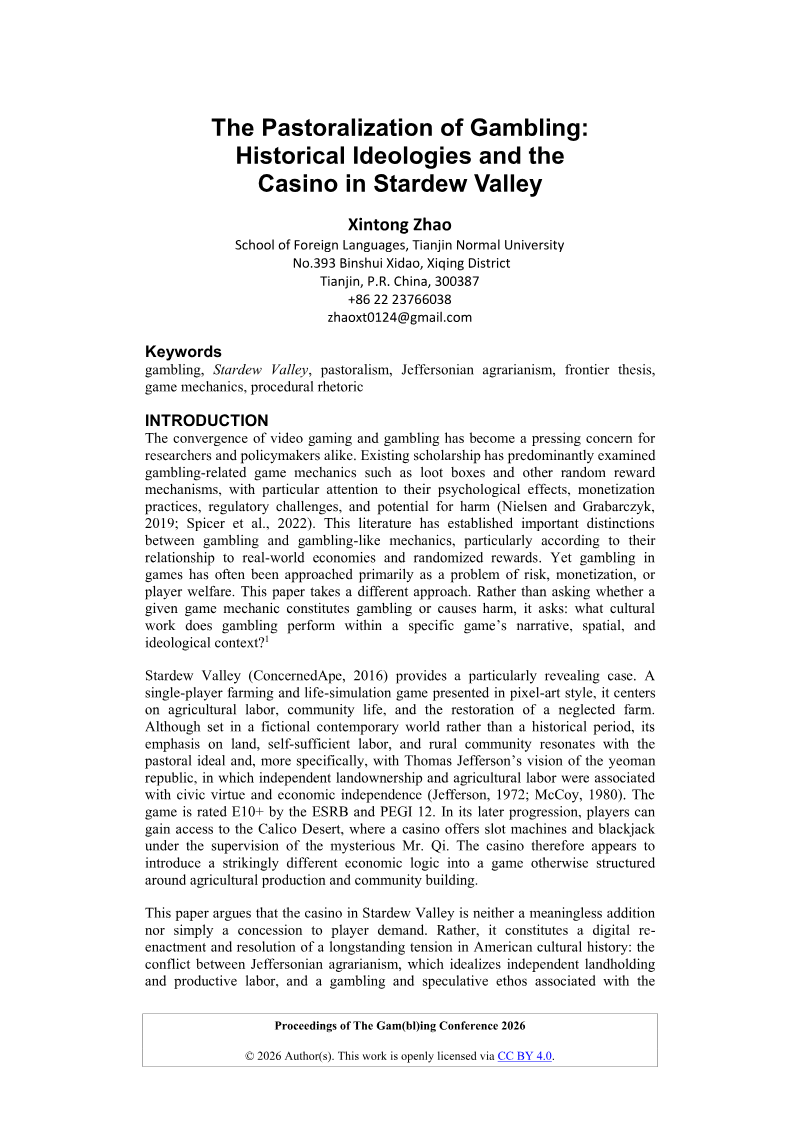
The Pastoralization of Gambling: Historical Ideologies and the Casino in Stardew Valley
This paper argues that the casino in Stardew Valley, a farming simulation game, performs a cultural function that goes beyond its role as a gambling feature.
- The paper argues the casino in Stardew Valley "pastoralizes" gambling: it contains speculative desire and redirects it into a logic of productive agrarian labor rather than letting it disrupt the game's order.
- The analysis draws on American intellectual history, including Jeffersonian agrarianism, Turner's frontier thesis, and the tradition of "something for nothing" speculation, and treats game mechanics as procedural rhetoric rather than merely technical systems.
- The desert casino is spatially isolated from the town and farmland, mirroring the frontier as a bounded zone of risk outside established order.
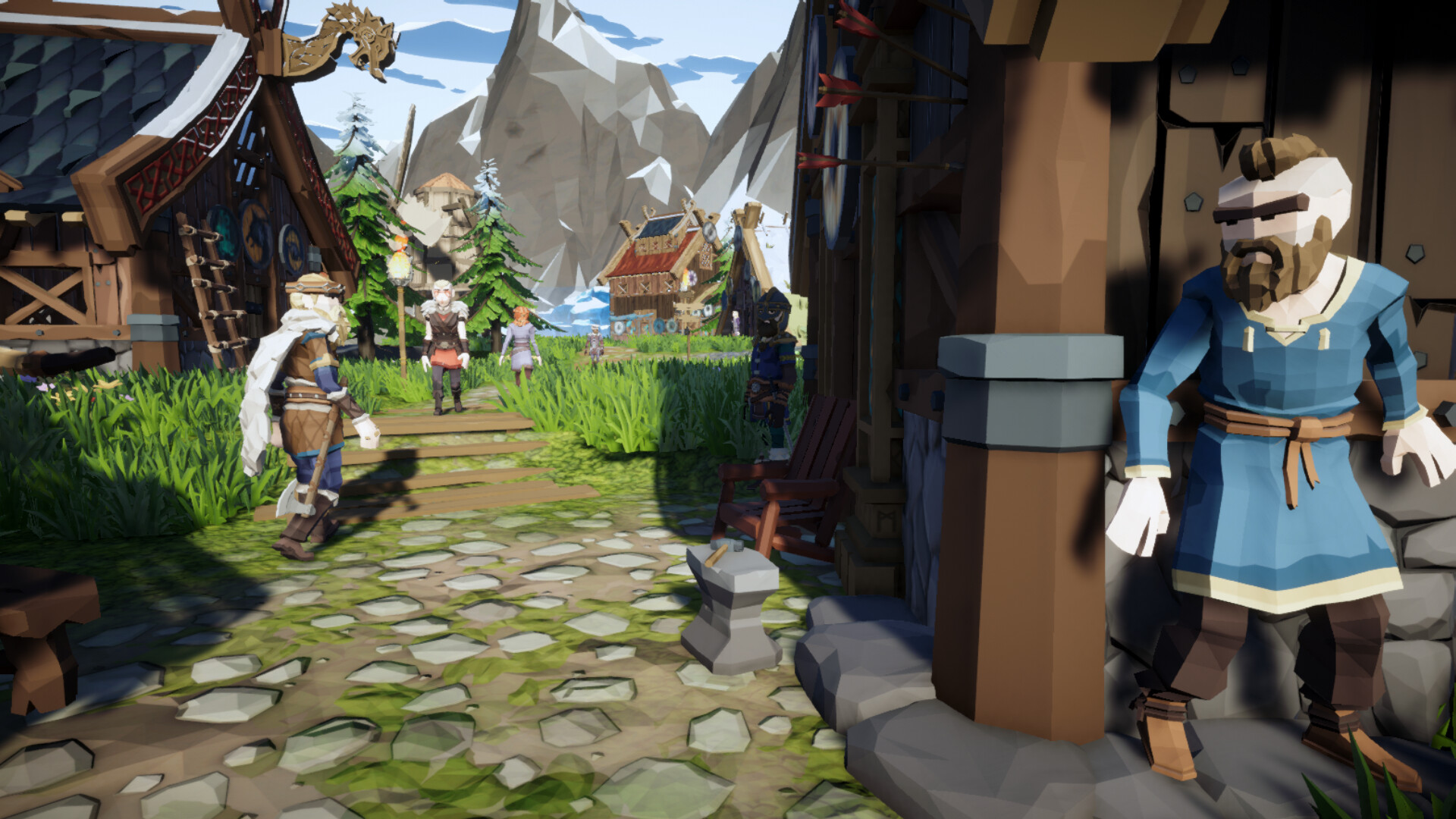
NewGen Builds on West Hunt Success with Ambitious Viking-Era Followup
Tunisian indie studio NewGen is transitioning from a single-hit developer to a multi-project studio with the upcoming April 2026 Early Access launch of North Hunt.
- Tunisian indie studio NewGen will launch its Viking-themed social deduction game, North Hunt, into Early Access in April 2026.
- North Hunt is designed to scale the core social deduction mechanics of the studio's 2022 hit, West Hunt, into a more competitive multiplayer market.
- The studio is transitioning from a single-hit developer to a multi-project entity by balancing new development with ongoing live-service support for West Hunt.
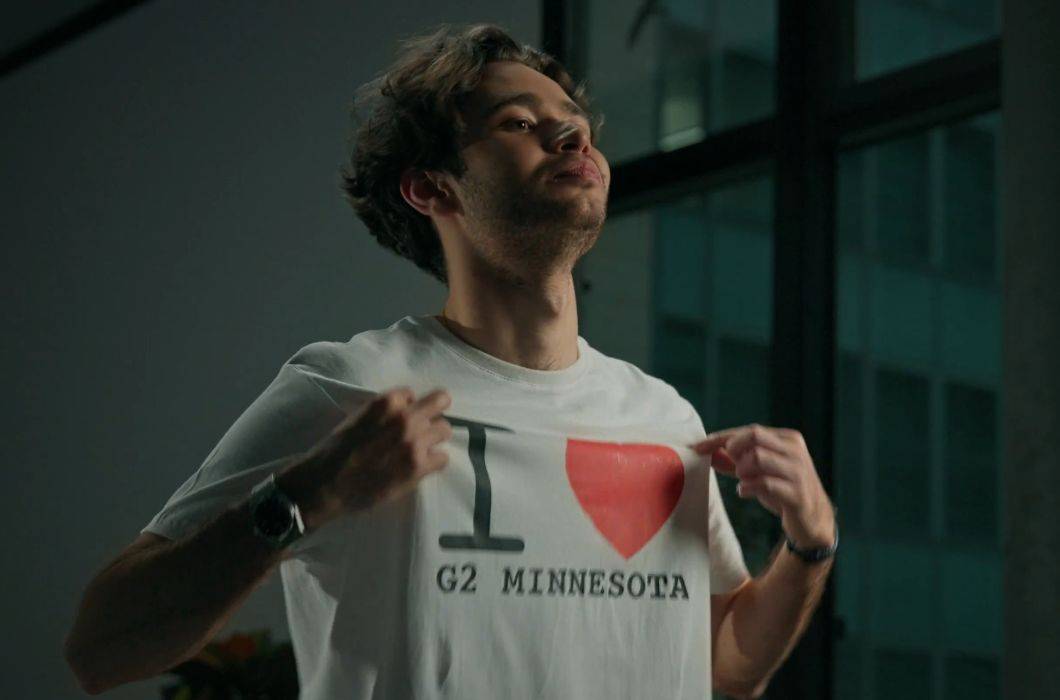
G2 Esports Rebrands Call of Duty League Team Minnesota ROKKR
G2 Esports has officially rebranded its Call of Duty League (CDL) franchise, formerly known as Minnesota ROKKR, to G2 Minnesota. The team will begin competing under this new moniker starting with the 2026 season.
- G2 Esports has officially rebranded its Call of Duty League (CDL) franchise, formerly known as Minnesota ROKKR, to 'G2 Minnesota' for the 2026 season.
- While adopting the G2 branding, the team will retain specific legacy iconography from the Minnesota ROKKR identity, including the purple Viking helmet.
- G2 Esports originally acquired the operating rights to the Minnesota ROKKR franchise and the assets of Version1 in December 2023.
Plus: Kingdom Hearts, Shin Megami Tensei Top Quiet Steam Debuts
Analysis of recent market activity reveals a period of relatively quiet Steam debuts, largely attributed to the overlap with Steam Next Fest.
- Shin Megami Tensei V: Vengeance led recent Steam debuts with 16,200 concurrent users (CCU), while the Kingdom Hearts series maintained approximately 8,000 CCU across its titles.
- Steam release activity was notably quiet due to the overlap with Steam Next Fest, with only six new titles surpassing 300 CCU during their first week.
- The upcoming week is expected to see a surge in activity with ten titles launching that have over 5,000 followers, led by the social sandbox MMO Pax Dei with over 75,000 followers.
Deep Dive: Inside Strange Horticulture's Delightful Steam Success
The commercial success of the indie title Strange Horticulture serves as a primary case study for effective niche marketing and community engagement on Steam.
- Strange Horticulture outperformed the industry median by 500% in its first week despite a modest pre-launch wishlist count of only 20,000.
- The game maintains long-term commercial viability with a consistent sales floor of at least 300 units per day.
- Targeted community engagement in niche subreddits for houseplants and cartography proved more effective than broad-spectrum developer forum promotion.
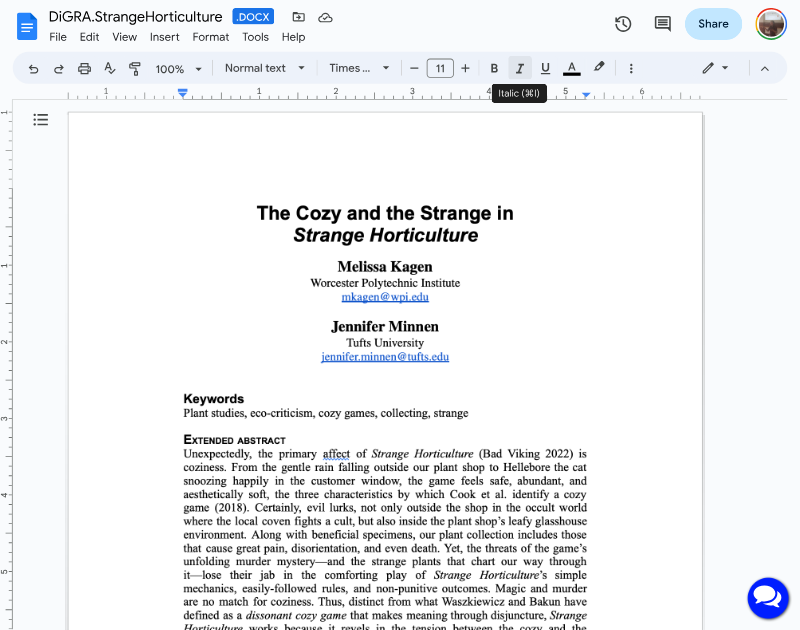
The Cozy and the Strange in Strange Horticulture
The document is an analytical paper by Melissa Kagen and Jennifer Minnen examining Strange Horticulture (Bad Viking, 2022), a plant-shop management game, and its unexpected combination of coziness and unsettling content.
- The paper's central thesis is that Strange Horticulture (Bad Viking, 2022) has coziness as its primary affect, even though it contains a murder mystery, occult cults, and plants that cause pain, disorientation, and death.
- The authors argue that simple mechanics, easily followed rules, and non-punitive outcomes blunt the menace of the game's unsettling elements, letting the strange be domesticated into comfortable play.
- The analysis situates the game within plant studies, eco-criticism, and cozy game scholarship, using the framework Cook et al. (2018) proposed for identifying cozy games.
Plus: Analyzing a Hot Week for Steam Launches
Analysis of recent market performance on Steam reveals a significant surge in successful launches, validating the predictive utility of the Steam Hype scoring system.
- Steam launches in late July 2021 demonstrated strong commercial viability, led by Tribes of Midgard with 22,000 concurrent users, The Ascent with 10,000, and Starbase with 7,500.
- The Ascent achieved top-tier Steam best-seller status despite being simultaneously available on Xbox Game Pass, indicating that platform overlap does not necessarily cannibalize Steam revenue.
- GameDiscoverCo’s Hype scoring system, which benchmarks 2,000 points as noteworthy and 5,000 as a major contender, accurately forecasted the commercial performance of recent high-wishlist titles.
A Game on the Edge: An Attempt to Unravel the Gordian Knot of Tafl Games
The tafl family of board games, once common across Viking-age Scandinavia, the British Isles, and parts of northern Europe, has long suffered from confusion over its names, rules, and history.
- The tafl family, once widespread across Viking-age Scandinavia, the British Isles, and northern Europe, suffers from confusion over its names, rules, and history, much of which stems from interpretation and translation of the sources rather than the sources themselves.
- Old English 'tæfl' may have referred to as many as seven distinct games, yet scholarship has often flattened them into one category or rendered them as 'chess,' obscuring real differences between them.
- Archaeological finds of 7x7 peg boards and 6x6 stone boards from Ireland and Scotland, dated roughly to the 7th–12th centuries, point to a shared design tradition linking these games to the Viking-associated hnefatafl.