1 free read left. Create a free account for unlimited reading + AI research.
Create free accountArticle DiGRA
1 free read left. Create a free account for unlimited reading + AI research.
Create free accountArticleDiGRA
The paper argues the casino performs a cultural function beyond its role as a gambling feature.
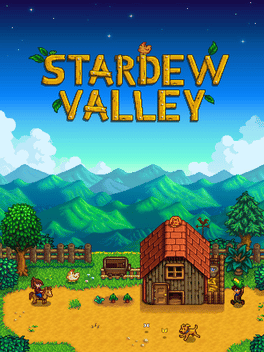
This paper argues that the casino in Stardew Valley, a farming simulation game, performs a cultural function that goes beyond its role as a gambling feature. Its central thesis is that the game "pastoralizes" gambling: rather than allowing speculative desire to disrupt its agrarian order, the game contains, quantifies, and redirects that desire into a logic of productive labor. The analysis draws on American intellectual history, particularly Jeffersonian agrarianism, Turner's frontier thesis, and the historical tradition of "something for nothing" speculation, and it frames game mechanics as a form of procedural rhetoric rather than merely as technical systems.
The argument is developed through three lines of analysis. The first concerns the spatial logic of the desert casino, which sits physically apart from the town and agricultural spaces, mirroring the frontier as a bounded zone of risk outside established order. The second examines the figure of Mr. Qi, through whom chance becomes observed, quantified, and controlled within a rule-bound managerial system. The third addresses the game's random-number mechanics and closed currency system, which convert gambling into a contained cycle of repetition and delayed reward that functions more like grinding than open-ended speculation. Because casino winnings cannot be converted into real-world money, the paper positions the casino outside the main concerns of research on monetized loot boxes and gambling-like mechanics.
The study is a close reading of game mechanics and does not draw on developer interviews, player surveys, or empirical data; its method treats game rules themselves as interpretable cultural texts. Its scope is therefore interpretive and limited to a single game, though its framework is offered as a model for analyzing how games may reproduce, negotiate, or resolve broader cultural contradictions through rules and player action.
Each row is a game or company this document names, each column a document, oldest first. A mark means that document names it. Select a row to see those documents.

DiGRA · 2026

DiGRA · 2026



DiGRA · 2026
European Conference on Games Based Learning (ECGBL) · 2026