1 free read left. Create a free account for unlimited reading + AI research.
Create free accountArticle DiGRA
1 free read left. Create a free account for unlimited reading + AI research.
Create free accountArticleDiGRA
Distilling the key insights…
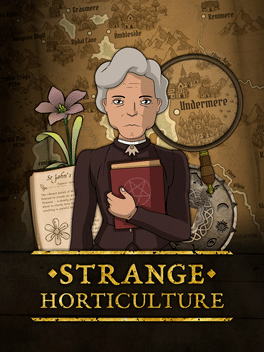
The document is an analytical paper by Melissa Kagen and Jennifer Minnen examining Strange Horticulture (Bad Viking, 2022), a plant-shop management game, and its unexpected combination of coziness and unsettling content. The authors' central thesis is that the game's primary affect is coziness, characterized by safety, abundance, and aesthetic softness, even as it contains threats such as a murder mystery, occult cults, and plants that cause pain, disorientation, and death. Their argument is that the game's simple mechanics, easily followed rules, and non-punitive outcomes blunt the menace of these elements, allowing the strange to be domesticated into comfortable play.
The paper situates its analysis within plant studies, eco-criticism, and cozy game scholarship, drawing on the framework Cook et al. (2018) proposed for identifying cozy games. Its focus is a single title and its core themes of collecting and the strange in horticulture, rather than a broad survey of the industry or a quantitative sample of players. The analysis is interpretive, relying on close reading of the game's environments, characters, and mechanics rather than on statistical data.
Key observations include the way the plant shop's glasshouse becomes a site where beneficial and dangerous specimens coexist within a single collection, and the way the cat character and atmospheric details such as gentle rain reinforce a sense of safety. The authors suggest that the juxtaposition of horror-adjacent content with cozy presentation is a deliberate design strategy that reframes unsettling material as something to be collected, tended, and enjoyed. The paper thus contributes to understanding how games reconcile dark narrative elements with comfort-oriented play.
Each row is a game or company this document names, each column a document, oldest first. A mark means that document names it. Select a row to see those documents.
DiGRA · 2023
DiGRA · 2023
DiGRA · 2023
DiGRA · 2023
DiGRA · 2023
DiGRA · 2023
DiGRA · 2023
DiGRA · 2023
DiGRA · 2023
DiGRA · 2023
DiGRA · 2023
DiGRA · 2023
Thomas Brush · 2025