Time
Company
Documents about Time
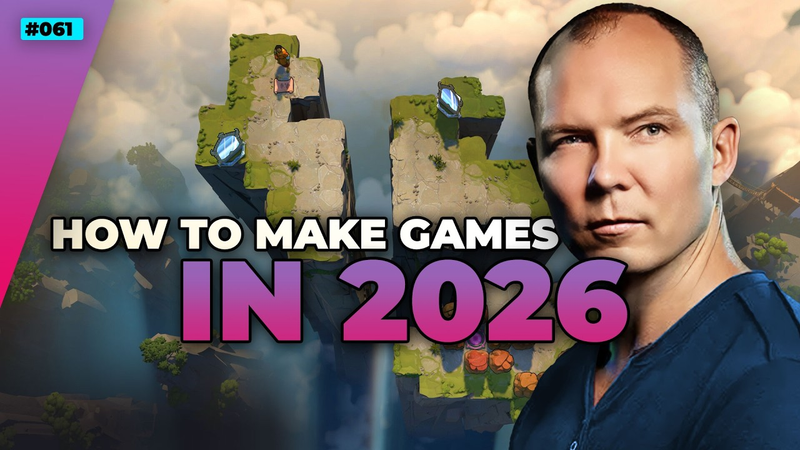
How To Make Indie Games In 2026 w/ Jonathan Blow — Full Time Game Dev Podcast Ep. 061
The modern indie game landscape is defined by intense competition and a precarious pricing environment, necessitating a strategic shift toward long-term discoverability.
- Jonathan Blow’s upcoming game, Order of the Sinking Star, represents a 10-year development cycle that involved building a custom game engine and a custom programming language from scratch.
- Steam remains the most accessible platform for indie developers to reach a large audience, though developers must still navigate the difficulty of standing out in a crowded marketplace.
- Large Language Models (LLMs) are effective for debugging specific issues by scanning multiple controllers and systems, but they struggle to maintain complex, multi-system constraints in larger codebases.
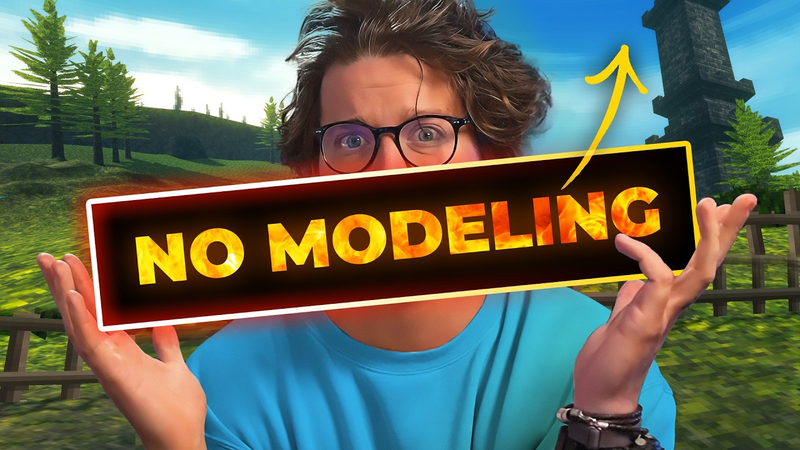
Making A 3D Game Is Way Easier Than You Think (Retro 3d Game)
The process of developing a retro-style 3D game, specifically one capturing the aesthetic of late-1990s titles like The Legend of Zelda: Ocarina of Time, can be achieved efficiently without advanced 3D modeling skills.
- Retro-style 3D games can be developed without traditional modeling skills by utilizing free assets, basic geometric primitives in Unity, and simple texture mapping.
- Visual cohesion in retro games is achieved by manually color-matching assets—such as grass, dirt, and water—to a unified palette and using a consistent skybox.
- To achieve a retro aesthetic, developers can apply post-processing effects like posterization to reduce color depth and use pixelation filters on textures to mimic early 2000s graphics.
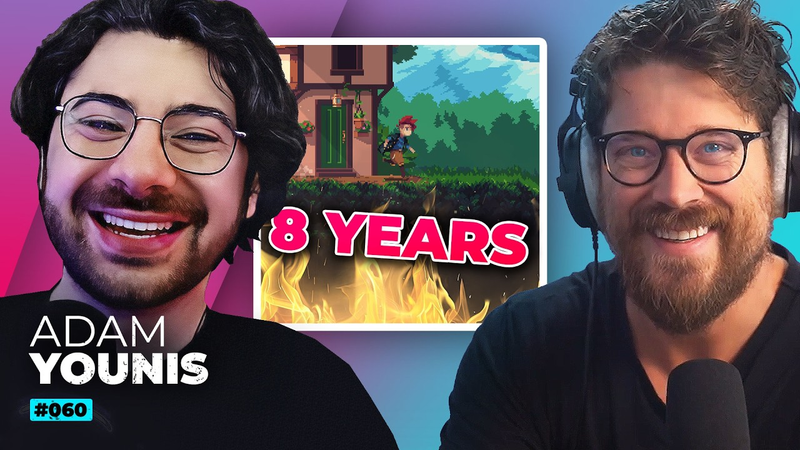
How To Make Games Full Time (in 2026), 8 Years On One Game, Slop vs. Polished Games (Adam Younis)
Achieving long-term financial sustainability in independent game development requires a shift away from traditional publisher reliance toward a diversified income model.
- Long-term game development requires a sustainable financial model, often involving a hybrid approach of 50% contract work and 50% original IP development to maintain cash flow.
- Accepting large publisher funding can be counterproductive for solo or small-team projects, as it often forces developers to prioritize rapid delivery milestones over the time needed to iterate and discover the game's true identity.
- Developers with an established audience (e.g., 300,000+ subscribers) may not need the platform-specific traffic provided by Kickstarter, as they can leverage their existing community for launch support.
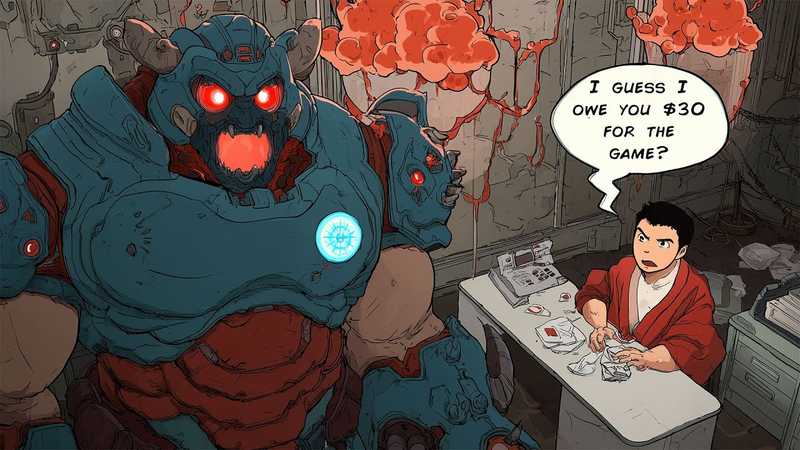
Confession Time: I Owe John Romero $30!
The current landscape of the video game industry is defined by a significant shift toward nostalgia, characterized by a surge in remakes and a growing appreciation for the development methodologies of the 1990s.
- The current game industry is experiencing a 'nostalgia period' characterized by a surge in remakes and a return to retro-style development, driven by a desire for the manageable, two-to-three-year development cycles of the past.
- Modern AAA development is viewed as having undergone an 'overcorrection' that has negatively impacted developer passion and team communication compared to the smaller, more collaborative team structures of the early 1990s.
- Successful side-project development while working full-time requires rigorous time-blocking, with developers often dedicating specific, limited windows (e.g., one to two hours) to tasks to maintain progress.

Why is NCSoft entering the hyper competitive live service shooter market?
NCSoft is undergoing a fundamental strategic pivot, transitioning from its three-decade legacy as a dedicated massively multiplayer online game developer toward the hyper-competitive global shooter market.
- NCSoft is executing a strategic pivot away from its 30-year focus on MMOs to enter the global live service shooter market with titles such as Cinder City and Time Takers.
- The company is diversifying its portfolio through seven new projects, utilizing a mix of internal development and external studio partnerships to mitigate risk.
- NCSoft aims to differentiate its shooters by combining its expertise in open-world architecture and server infrastructure with distinct Korean aesthetics and narrative-driven gameplay.
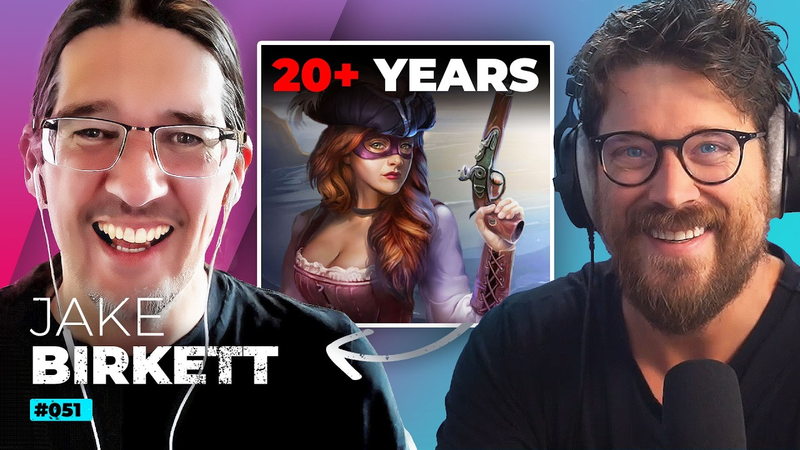
Jake Birkett: How To Make Indie Games Full Time, Unity vs Custom Engine, Indie Survival | Ep. #051
Achieving long-term financial sustainability in the independent game industry requires a shift away from chasing viral trends toward building a diverse catalog of smaller, profitable titles.
- Indie developers should prioritize building a sustainable, long-term business model over chasing viral hits, as 95% of games fail to achieve significant commercial success.
- Consistent income can be generated by building a portfolio of games and leveraging a loyal fan base that purchases bundles and subsequent titles in a series.
- Game feel and player feedback—such as sound, visual effects, and intuitive mechanics—are more critical to long-term success than academic gray-box design or complex meta-systems.
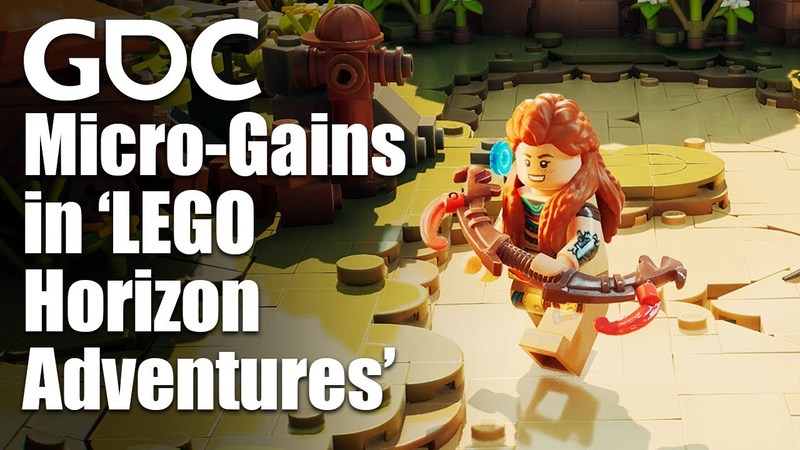
Building Big Impact, One Brick at a Time: Marginal Gains in 'LEGO Horizon Adventures'
The philosophy of marginal gains, popularized by British cycling’s transformation into a dominant global force, serves as a powerful framework for game development.
- The principle of marginal gains suggests that if you improve a process by 1% every day, you will be 37 times better after one year due to the compounding effect of incremental improvements.
- Studio Gobo implemented a 'feedback tracker' on Confluence for each game biome to capture minor 'toe stubbers'—small friction points that were not significant enough to be classified as formal bugs.
- Small, cross-functional teams, such as the three-person 'boss pods' used in LEGO Horizon Adventures, demonstrated significantly faster iteration speeds compared to larger development teams.

291. AI in Games: Innovation or Ethical Time Bomb? With George Ng, CTO of GGWP
Artificial intelligence is fundamentally reshaping the gaming industry by acting as a powerful catalyst for operational efficiency while simultaneously introducing profound ethical risks.
- AI is currently serving as a supplementary tool for operational efficiency in prototyping, asset creation, and narrative design rather than a replacement for human creative vision.
- The industry expects only incremental efficiency gains over the next two years rather than a total paradigm shift in game development.
- AI-driven monetization strategies, such as hyper-personalized matchmaking and variable drop rates, pose significant ethical risks by potentially prioritizing engagement over player well-being.
The Evolving Future of User Acquisition with Mistplay's CCO Aaron Thandi
The mobile gaming loyalty sector is undergoing a strategic shift toward long-term engagement, moving away from traditional offer-wall mechanics in favor of AI-driven matchmaking.
- Mobile gaming acquisition is shifting from short-term retention metrics like D1-D7 to long-term lifetime value (LTV) and high-value user cultivation.
- Platforms are replacing traditional offer-wall mechanics with AI-driven matchmaking to provide personalized game recommendations that foster sustainable engagement.
- Strategic success is increasingly measured by time spent in-game rather than session frequency, as the former serves as a more reliable predictor of future player spending.
How To Make Games In 2025 (Jabrils) — Full Time Game Dev Podcast Ep. 041
The game development industry currently faces a critical inflection point regarding the integration of generative artificial intelligence.
- The game industry is shifting away from the generative AI hype cycle as the technology currently lacks the deep-task competence required to produce production-ready 3D assets.
- A significant disconnect exists between the massive capital investment in generative AI and the actual productivity gains realized in game development pipelines.
- Market dynamics are expected to bifurcate, with human-authored experiences likely increasing in value as consumers learn to distinguish them from mass-produced AI content.
Why He Spent 8 Years On A Single Game (Adam Younis) — Full Time Game Dev Podcast Ep. 040
The development of independent games is increasingly defined by a tension between traditional marketing metrics and the cultivation of long-term community engagement.
- Live-streaming the creative process serves as a sustainable alternative to traditional marketing, fostering accountability and building a dedicated audience that values handcrafted development.
- Solo developers often rely on a hybrid financial model to maintain creative autonomy, combining personal savings, contract work, and government grants rather than seeking external funding that necessitates rigid deadlines.
- Human intentionality is a primary market differentiator, as AI-generated content lacks the cohesive, meaningful, and authentic experience that players seek in modern indie titles.
How To Make Indie Games In 2025 (Thomas Mahler) — Full Time Game Dev Podcast Ep. 040
The modern indie game development landscape demands a shift away from trend-chasing and bureaucratic production models toward a focus on core gameplay mechanics and distinct creative vision.
- Prioritize core gameplay mechanics and responsive, polished controls through extensive prototyping before committing to final art assets.
- Achieve success through relentless iteration and a willingness to fail early rather than relying on innate talent or trend-chasing.
- Challenge established genre conventions by pursuing significant mechanical leaps, such as moving from point-and-click systems to direct, animation-based controls.