Scopely
CompanyUnited States · Founded 2011
Documents about Scopely

TWIG #319 Scopely 💰 Niantic, Marvel Rivals Drama, and Xbox in Downfall?
The gaming industry is currently navigating a period of significant structural realignment, characterized by aggressive consolidation, shifting consumer demographics, and the struggle to maintain growth in a stagnant market.
- The console market has shifted into a zero-sum environment where Sony is consistently gaining market share at the expense of Microsoft.
- Niantic’s gaming division is currently the subject of acquisition rumors at a valuation of $3.5 billion, highlighting the ongoing struggle to sustain growth in the location-based augmented reality sector.
- Chinese firms like NetEase are pivoting away from costly Western satellite studios, signaling a broader industry-wide shift toward lean operations and away from speculative expansion.

Week in Mobile Games E41 - How Scopely made $10bn, and 2025's big stories to watch
The mobile gaming industry is currently defined by a tension between established giants achieving record-breaking scale and a volatile market environment that demands constant innovation.
- Scopely reached $10 billion in lifetime revenue, a milestone driven by the seven-year development cycle and strategic refinement of Monopoly Go.
- Established intellectual property remains a primary monetization driver, evidenced by Pokémon Trading Card Game Pocket generating $400 million in its first ten weeks.
- Major gameplay overhauls can drive significant revenue spikes, as seen with Zenless Zone Zero reaching $8.6 million in daily revenue following content updates.

TWIG #309: EA’s AI problems, Monopoly GO’s decline, and Pokémon Pocket’s success
Electronic Arts is navigating a complex transition toward generative AI by isolating development initiatives from its core creative studios to mitigate internal friction.
- Embracer Group has divested its mobile division, Easybrain, to Miniclip for $1.2 billion, a move that successfully eliminated the company's primary corporate debt.
- Pokémon TCG Pocket generated over $100 million in revenue within its first three weeks, driven by a monetization model that effectively utilizes the Pokémon brand to normalize loot box mechanics.
- Scopely is shifting Monopoly GO! toward high-budget, celebrity-led marketing campaigns to combat user churn and address market saturation in North America.
TWIG #304 Supercell's Marketing Shakes Up while Web3 Shoots Back!
The gaming industry is currently undergoing a period of strategic recalibration characterized by platform diversification, technical transitions, and a cautious re-evaluation of blockchain integration.
- Stillfront Group has experienced a 96% decline in stock value since 2021, highlighting the severe financial volatility currently affecting established gaming companies.
- Supercell is undergoing significant leadership changes, including the departure of its CMO, following the underwhelming market performance of Squad Busters.
- The industry is shifting toward platform diversification, evidenced by Halo Studios moving to Unreal Engine and Xbox enabling direct game purchases on Android devices.
Scopely Co-CEO, Javier Ferreira, on the Gaming Industry's Future and Strategies for Success
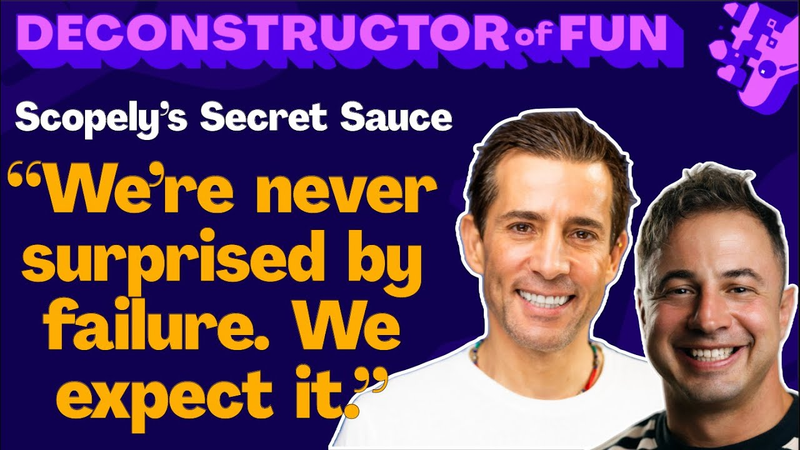
The gaming industry is currently defined by a shift toward long-term engagement, where success is predicated on deep product-market fit rather than superficial reliance on intellectual property.
- Commercial success in the current gaming market is driven by high retention rates and robust social loops rather than reliance on intellectual property, as evidenced by Monopoly Go! achieving $3 billion in lifetime revenue.
- Operational success requires a leadership model that balances team autonomy with rigorous, iterative oversight to mitigate the risks inherent in the creative development process.
- Corporate growth should be managed through a disciplined M&A strategy that defaults to rejecting deals, prioritizing high-conviction partnerships and testing potential acquisitions through collaborative projects before formalizing ownership.
Week in Mobile Games E32 - Google Play's Judgement Day
The mobile gaming industry is currently navigating a period of intense regulatory scrutiny and strategic consolidation.
- A US antitrust ruling mandates that Google must allow third-party app stores and alternative payment systems on the Google Play Store for the next three years, potentially disrupting the $5.3 billion US mobile market.
- Roblox faces allegations from Hindenburg Research claiming the platform inflated its user engagement metrics by as much as 42% through bot activity.
- Epic Games has reached 70 million monthly active users on its store, signaling strong growth despite broader industry volatility.
Week in Mobile Games E31 - The Top 50 Mobile Game Makers 2024 revealed!
The global mobile gaming industry is currently navigating a complex landscape defined by economic volatility, shifting regulatory environments, and a strategic pivot toward sustainable growth.
- Scopely is the top mobile developer of 2024, driven by Monopoly GO! generating $3 billion in revenue within its first 15 months.
- Epic Games is aggressively competing for developer loyalty by reducing Unreal Engine royalty fees to 3.5% and offering 100% net revenue for new titles launched exclusively on its store.
- The mobile market is shifting from hyper-casual to hybrid-casual business models to prioritize long-term profitability and improved player retention.

Monopoly Go! and Baldur’s Gate III: The Hasbro Perspective
Hasbro has solidified its position as a dominant force in the video game licensing sector, generating $3.25 billion in revenue over the past year.
- Hasbro generated $3.25 billion in revenue over the past year through its video game licensing strategy, significantly outperforming industry competitors.
- The company’s growth is driven by a strategic pivot toward high-quality digital partnerships that translate legacy physical intellectual property into virtual experiences.
- Hasbro utilizes a dual-pillar strategy of brand familiarity to lower user acquisition costs and creative autonomy to ensure genre-expert developers handle their franchises.
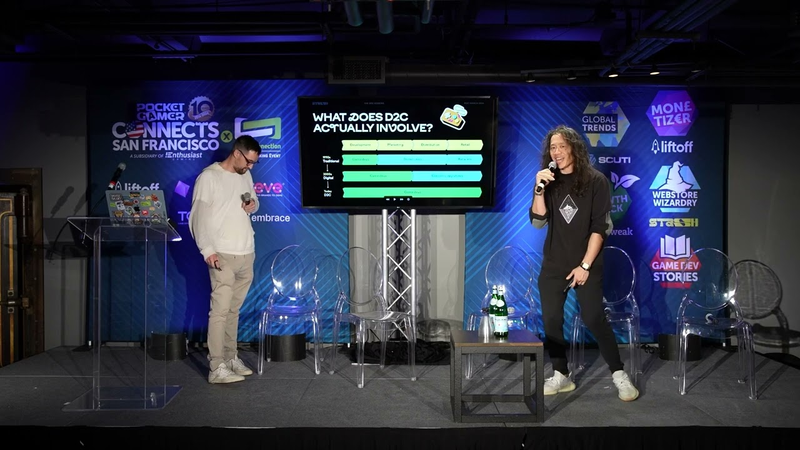
The D2C Iceberg: How top Games hit Record Profits Despite the ATT Crash (And how you can Too).
The gaming industry is currently undergoing a structural shift toward direct-to-consumer (DTC) models as developers seek to bypass the limitations and costs associated with traditional third-party app stores.
- Top-tier developers are bypassing 30% platform fees and mitigating the impact of Apple’s App Tracking Transparency (ATT) by shifting toward proprietary direct-to-consumer (DTC) web shops.
- Huuuge demonstrated the efficacy of this model by increasing its DTC revenue from 3% to 10% of its total intake in 2023, enabling record profits despite an overall decline in revenue.
- Major publishers including Scopely, Krafton, Tencent, Rovio, and Playtika have adopted web-based distribution to reclaim margins and gain ownership of first-party customer data.
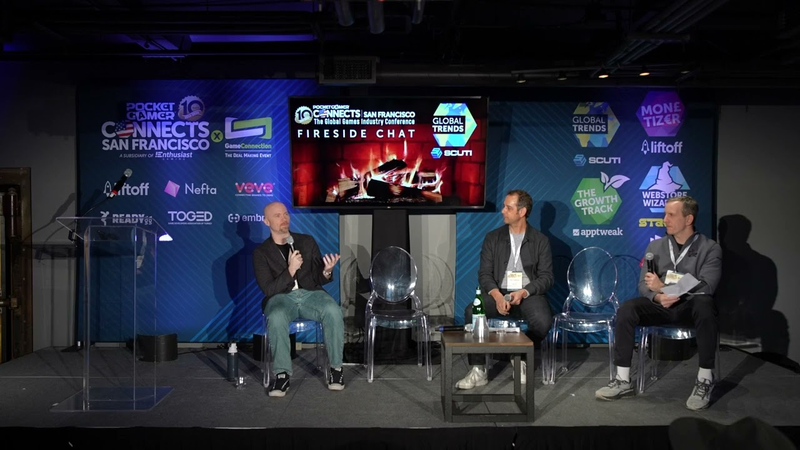
Fireside Chat: Great User Experiences vs. Successful Monetization: Perspectives From Industry Vets.
This discussion explores the tension between delivering high-quality user experiences and implementing effective monetization strategies within the mobile gaming industry.
- The core mobile game business equation is LTV (lifetime value) > effective CPI (cost per install), and if this flywheel falls out of balance for any user cohort, the game's commercial viability fails.
- Successful game development requires building mechanics that fit the monetization model from the start, such as optimizing for turn frequency in asynchronous games or transaction velocity in strategy titles.
- Engineering stability metrics, such as ANRs (Application Not Responding) and crash rates, are critical KPIs that directly impact user retention and store rankings; poor performance can lead to immediate user loss and negative reviews.

Fireside chat: How Scopely Fuels Growth and Outpaces Rivals with Jen Donahoe & Jamie Berger
The success of Scopely’s mobile gaming portfolio, particularly the 2023 breakout hit Monopoly Go, is driven by a strategic synthesis of intellectual property (IP) integration, social mechanics, and a disciplined approach to performance marketing.
- Monopoly Go generated $800 million in revenue during Q4 2023, providing the financial scale necessary to fuel aggressive user acquisition while maintaining operational discipline.
- Scopely treats intellectual property as a platform for authentic gameplay rather than a guaranteed success driver, exemplified by adapting the traditional Monopoly board game into a real-time social experience.
- Community management is treated as a core marketing function, resulting in significant engagement metrics including 8 million Facebook followers and 500,000 Discord members for Monopoly Go.

Mobile Gaming OG Eric Futoran: (Scopely) War stories, Algorithm Manipulation, Growth strategies, ANR
The mobile gaming industry has evolved from the early days of Facebook canvas development into a highly sophisticated ecosystem defined by aggressive user acquisition, data-driven monetization, and complex intellectual property management.
- Mobile game success requires treating technical performance and ad-tech integration as core business pillars rather than secondary development concerns.
- Developers must aggressively manage third-party ad SDKs to prevent App Not Responding (ANR) errors, as these technical failures directly degrade store rankings and long-term viability.
- Growth strategies rely on 'pegging' store algorithms by front-loading marketing spend and utilizing high-quality creative assets to trigger organic discovery.