VideoDeconstructor of Fun
Scopely Co-CEO, Javier Ferreira, on the Gaming Industry's Future and Strategies for Success
14 Oct 202435 min video
we speak about this at the company all the time and try to make sure that everybody understands that we are on a learning journey and the faster we can learn the faster we can change our opinions with better ones the better our country we're going to be able to deliver [Music] [Applause] [Music] Javier F co-o of scop Welcome to the podcast thank you m good to uh great to be here that's interesting point on on having that internal team that brings the knowledge from one team to another yeah because often times like just having the connection between the two GMS is not enough enough not that no it's and because they have big teams etc etc yeah people are busy you know people are busy and they have yeah that's what I've noticed in big Corporation is like
it gets siloed really quickly the more autonomous they get so it's kind of like the good and bad come at the same time well talking a little bit about the um products the games that you have so at the time of this recording Monopoly go has surpassed 3 billion in liftime revenues yeah and um another billion came in in just four months $250 million a month yeah that's pretty impressive we were impressed like what are I mean everybody has allies till to nauseum Monopoly go but what do you consider are the sort of a pillars of that game's Commercial Success the commercial success of the game has first of all been driven by some incredible kind of retention numbers I mean we're talking about kind of retention numbers that I hadn't seen for maybe a decade in kind of uh in mobile games you know we're talking about well over 20% the 30 retention uh and it's not just the3 retention I think uh the other thing that that we saw on on Monopoly was just the return rates
and what we call the regularity right of of uses that was just uh through the you know through the through the roof um coupled with you know very strong kind of monetization so that was that was on the kind of on the kind of game experience side of things the second thing that drove the success of the title in a very meaningful way was uh the the social kind of aspect uh of the game and uh and that drove the kind of a success through two kind of fundamental kind of ways right ones was you know in the game itself the fact that you were playing with not just with strangers but with actual friends and family of course supported the kind of Engagement numbers that I you know that I'm talking about and of course when you come into a game because your friend has invited has invited you your retention and your engagement and mation are very different than if you see a UA ad right the third one and I think this a lot of people have speculated about this you know has been I think you were
referencing it all the kind of all the infrastructure that we built both on the data and on the kind of marketing side that allowed us to uh you know scale the game with a level of efficiency and with a level of success that I don't think has been achieved in free to play uh mobile games before you know Monopoly is the fastest game in the history of mobile games to achieve 3 billion revenue and we were able to scale the game incredibly fast based on the kpis of the game and the the audience that we knew was there given the given the product and the IP we did Lean in you know very hard on marketing the game because of the infrastructure and the teams and the technology that we had built you know we were able to drive recu rates uh at launch that were uh at the beginning in less than a week for multiple months we were recouping our marketing Investments L than a month and by the way we're not talking about spending a million dollars a month we were spending you know dozens of millions of dollars we were able to kind of you know really build a highly kind of uh you know highly scale kind of tital wave players into the game and we
were able to activate all these kind of community and social Loops that we were talking about was at the same time doing it at levels of profitability that uh that were crazy and I think the game was kind of uh you know profitable after three or four months uh life and has generated incredible kind of profitability since then yeah I mean looking at the success of the game just just the numbers it is a textbook hit it was hit on every category even even myself when it was like first of all like the retention and engagement of course and and that's what you usually hear about the top games is like the D30 is well above 20% and for some people it's like well what goord what this like no just just overall like it's hard for them to even believe that and then the monetization of course it had a very proven monetization mechanic but also the type of monetization that that allows significant spending is huge and that's often forgotten for somewhat reason in our gears because it's not only as you said the the sort of a factor that brings in players but there's also the element of monetization
and engagement with social because if you're ahead then I need to catch up if I catching up there's exactly there's more engagement there's some moonization and then yes the marketability with the IP but also the platform and the resources that you have because at that point there were a big company you were able to spend dozens of millions of dollars on on marketing a month it still takes a level of organizational kind of conviction right to deploy that amount of capital uh be because there's a bunch of kind of data people telling you that everything is going to be okay right everything that we had learned you know through the launch of kind of other the games and the confidence that we had built in our own kind of tools and data accuracy and data science was uh you know was important I think it was also a moment of conviction you know uh of the organization kind of saying we're going to go and do this and we're going to go and maximize that opportunity it's it's interesting that that Monopoly go launched and scaled after the acquisition I'm going to talk about that a little bit later but uh but yeah it's
kind of a you know good for for both parties I think it's perfect for everybody yeah Monopoly go was in soft launch uh when we were going through those kind of conversations and Savvy and ourselves we spent a lot of time talking about the potential of that game and you know the timing was kind of very very intentional and to your point you know we wanted to make sure that the acquisition was going to be a great outcome for our shareholders of War most importantly for our employees but also that was going to be a great outcome for for Savvy you know that really matters put the acquisition on a good start I think everybody has really great about the journey that been on at the uh at the company particular investors I think have all that really well especially since because had they AC like had somebody acquired a company that has a booming product then they expect that product to grow now they acquired before that the biggest product launched so now it's kind of all on the bonus and you don't have the same type of pressure there is pressure but you're already out delivered we are we the pressure comes the pressure we put we put the pressure on ourselves uh always but yeah I think as I said the best type of acquisition
is one where all the stakeholders are happy and I think that's exactly what we achieve let's talk about the games a little bit more before the acquisition part um because scop has acquired a ton of Studios as well so that's an interesting to hear but but I wanted to ask about like Monopoly go has an IP then we talked about Star Trek there's yatsi Scrabble multiple different games they all have great IPS what makes sculle so good at working with IP because clearly this is the pillar of your strategies to work with big IPS it's not big IP right uh that uh that uh that does the work um as an example there was a yatsi game before we launch Yi I think uh the game was doing uh $100,000 a year and uh and obviously our games that's multiples of that a day right uh and you can say the same with kind of Star Trek I think it all kind of starts first with of course choosing the right IP and with IP what we've always focused on is the audience and when I say an audience I would even kind of take it further and I would say a fandom
component for example IPS that might be very well known um there's no real fandom and when I say fandom I'm talking about the desire to exist in that Universe you know for long periods of time hopefully with your friends and family right for example a lot of movies can be huge right and they can be huge IPS but people don't really want to spend time in those unit like H games yeah exactly yeah we've always tried to kind of look for IPs that have this kind of fandom appeal that's the first thing and then the second thing is it willing the right game you can get Star Trek but if you make a you know start Trek match three game I struggle to think that you're going to be successful uh and so you go to kind of couple with the right kind of product strategy and I think we've always been very deliberate not in just okay we're looking for fandom but also we are going to service the fandom we're not going to write the IP we're going to make the the game that we think the fandom wants the most so for example in the case of Star Trek we thought that the fantasy of star Tre was to be able to live in that
Galaxy and to kind of conquer the Galaxy and to kind of enter into alliances and kind of fight other alliances because we thought that was the cool fantasy of uh of the AP so I think that's the second thing that uh you got to nail and I think we've done well and the third one is even if you get both of those things right you're still at the beginning having an IP and the right kind of product strategy supports a great outcome that's not necessary it's not s it's not sufficient uh to deliver a great outcome I think Studios and the game industry sometimes have seen IP as a shortcut uh generally our experience has been that to get it right it's more like a long cut you know and that uh and that you need to get a lot of things right you know for example in the case of Monopoly that is a free toplay game you know it's like we need to kind of invent that that we couldn't just kind of say oh we didn't just want to make put the Monopoly board game on a phone we wanted to put the fantasy of Monopoly we've always been very patient and very deliberate making sure that uh we got the right kind of fandom you know that
we we had great product strategy but that we were also kind of building you know a great gate yeah and since you're delivered consecutively for these top IPS it's probably easier for you to sign almost any IP now because you are you know looking at Hasbro numers a great partner for any IP licenser yeah one of the most important IP set within the Hasbro kind of board game family right and so we didn't start with Monopoly we started with yatsi you know and uh with yatsi we built the digital games business that was way way bigger than the actual yatti business that they had right and so we built that relationship and we did scravel and then we did Monopoly you know so it's it's about it's about kind of building those relationships but it's really about building the trust as you build trust they allow you to service those three three pillars that we mentioned sometimes they also have their own kind of you know pres and ideas I think very effectively and I think this credit to our kind of BB and kind of cor Deb organization we've been able to structure the deals um in ways that are
supportive of the outcome the deal making is is a tough part yeah the IP is just kind of one component but then ultimately is how there is the game how much are you investing in making it better investing in marketing are you thinking about a six Monon horizon or are you thinking about with building a business for the next 10 years you know sophisticated LS to a lot of those kind of uh conversations or Horizons uh and um and that has allowed us to kind of find a lot of repeatable success and that gradual approach as you said long term Partnerships with holders where they have trust towards what you're doing do you see your scop making a game with his own IP we are uh making right now a number of games with our own IP uh as well as we have a number of games in development and we never we thought about the business in in in that way and I know it sounds maybe kind of counter intuitive looking from the outside we got to build something that uh that is really going to resonate in deep ways with uh with the audience and and the
audience needs to have a magnetism towards discovery of the experience but we have a lot you know a couple of kind of great teams within the company that are that are going after answering that kind of question uh through original Ip for sure you know when we took over kind of stumble guys the game had been built by couple of people right and they were kind of great people and Incredibly creative and we've uh we've done kind a great job of uh making that the kind of preminent kind of party game you know within within mobile there's more than kind of you know 50 million kind of uh players playing that game every month uh which is a huge kind of it's a huge number we've invested a lot in kind of build that community and elevating that uh that uh that IP we see that for sure as you know part of the kind of uh scopely journey and the scopely success and and you know just now we were talking about you know where are we going to take that IP next and as I said before we've learned a lot about IP building different types of relationship with Community ways of marketing that kind of uh those kind of games that I think we're going to apply to a lot of the uh original Ip efforts that we have
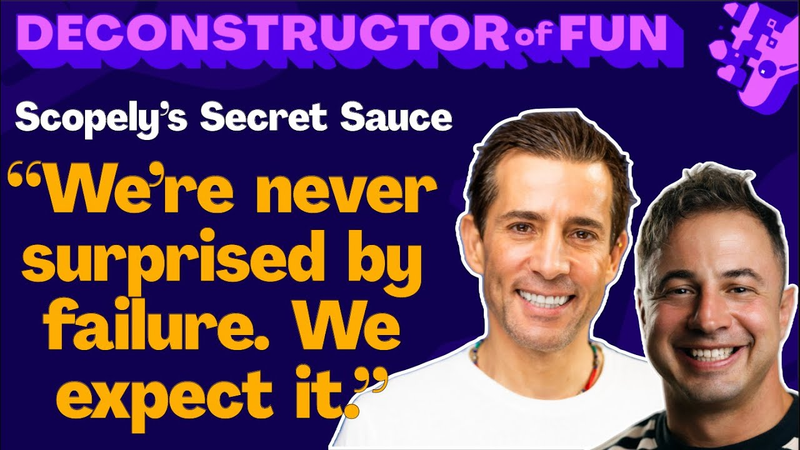
going forward one thing that I'm when I'm thinking about like if there's one objective to use with scop to me it's um I would say tenacious and it's because of the way you've launched your games and developed them so like using let's say Monopoly go as an example to my understanding that game had quite of a big over pivots and that has seemed to happen with a lot of your different games where the soft launch period is really really long where you're just trying to figure out like who now would the you know how to make it how to launch this because especially working with an IP there's minimum guarantees there's the ipb holders there's all that stress coming from the outside there's the stuff internally where you see that the game is not calling anywhere or it's not delivering what it should be there's years in development like how do you have those difficult conversations how you justify investing more where you kind of don't see the results from it and you have pressure yeah we're never surprised by failure you know we expect it right I think this is important this kind of
important concept if you think that you're going to make a game and that is going to be a journey of uh success then do not like abandon abandon that Journey you know CU you're going to be disappointed the potential of a game based on where it's at at any one particular moment that is oh it's succeeding well we know it might be succeeding right now in the development cycle but you know six months from now every single game that we have kind of made has gone through you know every successful game that we have made has gone through kind of you know what we call the kind of dark tunnel kind of period where it feels that there's no you know uh uh lad on the tunnel so making sure that that that's the expectation that we all have that is the game team needs to have that expectation uh but also the rest of the company within a company like ours people have an opinion uh well we should kill this game we should invest more in this game this game has massive potential this game is going to is going to going to win this one is going to fail that debate uh was always alive you know and that did 100% of the company believe that that game was going to be successful absolutely not I think for me
game m is a process of conviction it's about building conviction and having the resilience to kind of Follow Your conviction how do we kind of build that conviction first do we believe in the product strategy in the case of Monopoly we always thought that we did around the kind of power of the IP the kind of the desire to see that game as a kind of life service in Mobile which had never been done right so that's the first thing that I focus on or that we focus on the second thing is the team do we believe in the team great teams do some great things and they also do some stupid things of course I include myself in the in the doing stupid things I think the third one and this might be the most important does the game team believe in the game mhm this is very difficult one to kind of ascertain because the team has always a bias to tell you that they believe in the game they have a bias right they they they jobs yeah they jobs Dynamics reputation all kinds of things so it's something that you have to investigate
and research but when you do when you find that the team is great and that great team of truly exceptional people still believe on the what they're trying to do uh that to me kind of uh you know builds uh builds a lot of conviction those three things are in place what you just need is time just need time time is expensive time sometimes can be painful as well right because nobody wants later everybody wants now uh or yesterday again going back back to the kind of what is the responsibility of the leadership team and of the CEOs yeah you got to protect the organization from pain we try to make sure that we give our teams uh the time and the space to you know continue on the journey if we believe in the product we believe in the team and the team believes in the product every single time that we have done that time has been a uh and the problem is that when you're on the journey time feels like you're enemy you know uh but ultimately time turns out to be over I'm asking this question because a lot of time people don't understand
the role of an executive in this in these situations because if you don't do anything and this game ends on burning you know in development ton of money the IB holder is not happy nobody's happy the team is not team team leaves and soth it becomes a disaster like in all possible way if you haven't done anything that's your fault and that's why the the the question is about like when do you intervene and how do you intervene is a very interesting one because if you intervene too early you might be the fault of wi failed if you intervene too late again your it's your fault so it's like the question is more is like what is the right time and the right way to intervene I intervene all the time yeah and I think we tried to kind create a process in forms where not just myself but other people intervene all the time the intervention is not top down the intervention is not I know yeah but the intervention is more hey team do you have the right product Str
next Monday is the product strategy really good then next Tuesday uh you know what about what about your team is it really good I'm not sure that that that this person or what about we we still have a gap here and then on Wednesday you know it's about tell me how you feel about the game what are your concerns what are your fears and so it's not it's not like oh we're going to a grand green night meeting and here comes kind of a couple of kind of Executives saying oh we like the game well we don't like the game it's kind of ongoing intervention but the intervention is not in the service of our own opinions but in the service of some core beliefs that we collectively hold right and it's about kind of questioning all of us you know questioning ourselves all the time do we have the right answers for those three things and if we do uh and we never do right the answer is always getting a little bit better get a little bit better that's that's that's for for what what for us kind of intervention I think maybe I would add the fourth one which is I said that that protection uh uh for the team have the own opinions right um and as I said before 50% of scopely at some point would have maybe said what are we doing with this
said this is the best that's to us then you have the IP holder you have you know stakeholders and so making that intervention is also about mostly about protection it's about iterative process of us working together I don't bring truth but I bring a different perspective what we always demand from our teams is that they need to be open to those kind of different perspectives right I I see a different perspective that allows me you know in that from the perspective from where I'm kind of looking at things there's some things that I don't see and I'm not well equipped to have an opinion not of those things but there's other things that I see better than anybody else and so they also need to be open to the and I think that's a really important point because you're talking about your relationship with the with the GM in this case and and there's um like what sometimes developers don't understand is the role of responsibility so you are responsible of the commercial success of the game just as much as they are and the role of a GM is not only to lead the team not only to have the right product strategy the right team um and create the belief inside of the teeth you got to be open
and of course in some cases take take kind of valuable feedback and inject it into how you you know running that organization I think that's really valuable information how you run your GM organization because I know that there's sense that people sometime think that it's best when the studios are left alone no and to me it's like when studio is left alone that studio is about to be shut anybody that's left alone is going to is going to in my opinion always underd deliver versus the potential that they have if they are surrounded by graap people well so I was kind of going back to these three pillars that you me mentioned around what builds conviction and resilience uh product strategy team composition let's put it this way or talent talent density yeah yeah Talent density exactly and the game Tee's belief in in in the game itself I think these are really good because like I've seen these used by them own by by just them in many companies like if you believe in what you're doing then you can continue to do it and that can often lead to
delusion products that have no audience then have just have a great team and you will win kind of like the sort of a real Madrid type of approach it's like no Real Madrid has a coach and like strategy like it's not just put great people together and they deliver and the galacticos did nothing I mean Barcelona we destroy them you know uh so of course you need much more than just a B Team yeah but there's this sort of approach where you would say oh they just have the best players and that's why they always win and then the product strategy is like that is for somewhat reason what I often feel with a lot of mobile gaming companies especially they don't want to even talk about strategy and they start off with that sort of a like 2010 2012 type of approach let's just prototype some fun stuff that's fine what works and then let's build on top of that and there's many success cases I mean the whole supercell portfolio is basically built like that and and that's almost seen as the one right way but but you have this uh this approach of like no we we have a strategy we know what we're
building who we're building for what is the competition like we know everything around us and we constantly look at it has this changed if it has changed is the strategy still viable if the strategy is not viable it doesn't matter if you have a great team and you have a team that believes in what they're doing we have to change the strategy to be able to execute on what we correct yeah I said the beginning with this uh awareness that even if you have all of those things in place it's going to be it's going to be a tough kind of Road you're going to fail on that uh on that road and I think also when you encounter that failure I think that's when uh that's when a lot of teams and companies kind of fall apart and um you need to kind of make sure that when you encounter that failure you use that as a great opportunity to get to come out of it strong so kind of switching topics and talking about the acquisition of sculle by savy so 4.9 billion in 2023 correct yes what has this type of acquisition enabled like what has changed with scopely how you operate like I don't
think internally but probably externally like what has really changed there were a number of kind of parties interested in kind of um in acquiring kind of scopely at at that time and um you know for us uh we chose savy right we chose it because first we believe that the type of mission that we were on the type of experience that we want to have was both best served by staying as you know private company what the savision has allowed us to do is to stay private without by the way the kind of pressure of valuations and maybe raising more money and also this is really important for a startup and it's okay to talk about it which is and also allowed people to remove the downside of a startup right scopely uh started being worth nothing and then it ended up being $4.9 million well there's a lot of people that accumulate a lot of wealth were here for five 8 10 years right when you're going to have an exit like this it just removes a lot of the fear what has allowed us to have is you know to
stay private in a really kind a solid uh you know really solid platform where we are thinking about the upside you know what what can we do kind of uh from here uh we have an investor who is very long-term oriented um who has been you know incredibly respectful of our um strategic and operational kind of autonomy and who is kind of focused on how they can help us rather than how they can changes and that has changed how we think about the future and how you know how ambitious we can be and fundamental thing is that I think it's allowed us it has allowed us and the team to feel more ambitious and to think bigger because we have a platform that is incredibly solid very protected and very very long term that that really makes sense because kind of like thinking about other potential acquirers that you would have scopely would have either become like a mobile arm of a of a large uh mobile uh a large game development power house or it could have become you know enabler of somebody else
but now you're being enabled by having essentially change like switched the many investors that you had multiple funding rounds to just only one who has a lot of capital and who was you know very patient in terms of their investment they put you in the driver seat yeah and also very strategic in how they see the kind of gaming space they want to make a strategic contribution to the space but yes the way that uh the way that you're framing I think it's uh it's it's accurate the Acquisitions generally can be dilutive to organizations in this case it really has been an enabler uh of what we try to do and I think it's really going to accelerate uh our our path moving forward over the next few years is there a risk with the increased Capital like I'm just thinking about this way so you have big Ambitions and you have a gigantic game you're generating multiple billions dollar a year so you have to make bigger games yeah and now you have have no abundance of capital you can go
for big screen games triaa easily can you end up in a situation where you bite more than you can chew yeah here's here's what I would say yeah risk risk is always there you know uh it just manifests itself in different kind of ways back in the days he was like oh are you guys going to be able to going to be profitable are you guys going to be able to make a game are you guys going to be able to going of go to Barcelona there's no there's no value Creation with r it's not not going to happen uh because if there's no risk it's because all the value has already been created right I think what we need to be aware is of the risks like what you need to be self-aware of what are the risks that you're facing at any one particular point in the journey I think the successful organizations are the ones that try to go after that but at the same time are self-aware these are the things that we don't know in order to kind of go after this market and to achieve these kind of goals how do we learn those things who can teach us what are the capabilities what is the evolution that we need to have in our conversation to go after that and I think we are having those conversations
all the time and trying to make sure that uh that that risk gets navigated you know the products that we're working on kind of on a go forward basis are incredibly exciting uh in some cases they're very expensive not only are they very expensive some of them are going to fail and we just going to have to kind of uh move on and I came the important things that we know that and at the same time believe me that we work very very hard to kind of uh make sure that it doesn't happen but I think we have a really kind of strong and solid strategy and um now it's a question of growing into that grow to that strategy like strategy always needs to be ahead of your capabilities if your strategy is not ahead of your capabilities then then you follow this something L talking about m&a and growing so scoly has done a lot of m&a in in the past yeah but you've never been the sort of um big spender in the m&a market and you also haven't had the typical fails of an m& because normally when you're acquiring a company no matter what the industry the fail rate is between 70 to 90% just
because the integration is so difficult to be a part of the organization and then the value is not created was when intended yeah so talking about your growth are you changing the way you're viewing m&a cuz if I understand correctly before the way you started game projects is like you know product strategy that usually is an IP then you have an internal team that is stacked with with tal density yeah and then you quite often had an external team that had expertise in the strting genre that that team was was executing against and then when the the team reached the position where that game was launched globally you made the acquisition of the external team so that your goals were aligned correct and they would continue to execute against live operations instead of you know sandbagging whatever may happen when when the actual growth is needed yeah has that changed or that's one of the ways that we kind of uh you know make games uh in the case for example of Monopoly it 100% kind of developed by kind of uh internal teams
uh but yes we continue to kind of partner with uh with teams that again know things that we don't know when um uh or can kind of meaningfully make that game team or that game franchise you know better you know collection of a lot of scop Le kind of uh people uh partnering with uh people that are not employed at scopely and to me the key thing is that they need to kind come together as a team have a you know shirt kind of uh goals and purposes and share incentives and that's why we structure the deals the way that we structure them winning means the same for both parties this is yeah yeah you I mean I'm just mentioning that because you've been very successful with your m&a where it's been accredi but it hasn't been as big you know he haven't been on a spending spree as as some of the developers but been on a on a tear in that sense of course integration is never kind of is never easy but I think I think a lot of the m&a deals fall not because of failed not because of integration but because of
diligence I've seen some deals in the mobile kind of mobile gaming space large ones it's like how did this happen because because as an outsider from a th miles like you could see it we have a team and an operating system that is doing m&a every single day and uh sometimes we joke man like [ __ ] we go into this kind of m&a meetings it's like how is that after 10 years we're still doing so much m&a it's always incredibly active it's part of our operating system and so we have conviction around that and we believe in that strategy but having said that the orientation is always no because uh uh what we need to do is be convinced to you know being a yes I think a lot of the times when the m&a G of goes wrong is because you're desperate about the yes uh and you start ignoring all the warning signals about a no and no and no no it's helped us you know significantly on a couple of uh Crossroads where we could have made some pre L and you know meaningfully and of bad decisions yeah yeah they are costly
when they go sideways exactly yeah talking about today like couple more questions like like you've been very vocal about why the game industry especially nowadays to be more optimistic uh during the difficult time what's your advice for for the folks who are in the industry while being laid off like there's now tens of thousands of them already and for them it seems like the worst time ever which is understandable from their own you know person personal perspective it's it's layoff news every every week um what's what's your advice for uh for people who are on you know in a very unfavorable and unlucky position yeah the games industry is continues to be a thriving ecosystem is one of the kind of largest entertainment kind of categories uh in the world I think uh both in terms of Revenue and audience of course a very creative industry but it is also very technology driven industry and I think it's a industry that has proven that it leans in kind of Technology kind of disruption and advances uh faster than
than anybody I would say that it's a kind of space uh really you know continue to work worth kind of continue to invest in at the at the individual level look I also think that one of the thing about the one of the great things about the games industry is that is people L people driven I think there's very few Industries where Talent can have such a direct impact on the outcome not of a game of a company one person a team of five a team of 10 can basically kind of change the trajectory of a company like scopely you can build an amazing kind of career and you can have huge impact uh you can have a great outcome and yeah I think the the future is still very bright for the industry and uh it's a lot of great things still to come yes yeah that's that's a that's that's well put so kind of ending in this on a on a something more positive what else are you excited about of course scope's growth and and apart from from scop in the games industry like what else is exciting when when looking in the future a community of players
that have you know passion for an experience really elevating a game and the group of people behind that game they cannot be manual active it is something that only the community can can do so I think I think that's a really kind of exciting kind of dynamic again going back to the state of gaming I think something that we should be you know very proud of I think there's very few media categories where that happens if any I think also related to that uh user generated content it's exciting there is so much technology and tools that happening in that space that are going to empower companies do not make games people make games teams make games and I think it's going to be very exciting when people and teams can be built truly outside of companies in a very kind of flexible ways and I am certainly as I said before excited about continue to evolve these games as a service and and we say games service games as a service to players right because in the freeto play games of service kind of model you can only build a business uh and you can only make Revenue if
you're making your your players happier every day har thank you so much thank you m I really enjoy it we talked last time four years ago let's talk again four years ago I don't even can't even imagine how big the company is then with the rate of speed hope everybody enjoyed the uh the the podcast I I think there's uh there's a lot of learnings so thank you thank you for being counted thank you thank you thank you everybody for listening thank you
Auto-generated captions from YouTube — names and numbers may be misheard.
The gaming industry is currently defined by a shift toward long-term engagement, where success is predicated on deep product-market fit rather than superficial reliance on intellectual property. The rapid ascent of titles like Monopoly Go!, which achieved $3 billion in lifetime revenue, demonstrates that high retention rates and robust social loops are the primary drivers of commercial viability. By leveraging data-driven marketing infrastructure and fostering a culture that views development as a persistent learning journey, companies can navigate the inherent uncertainty of the creative process to produce sustainable, large-scale hits.
Operational success relies on a combination of high talent density and a leadership model that balances autonomy with collaborative, iterative intervention. Rather than imposing top-down mandates, effective management provides teams with the necessary space to execute while maintaining rigorous oversight to mitigate risks. This philosophy extends to corporate growth, where a disciplined approach to mergers and acquisitions—prioritizing a default rejection of deals to ensure only high-conviction partnerships proceed—prevents the pitfalls of desperate expansion. Strategic alignment is further secured by testing potential acquisitions through collaborative projects before formalizing ownership.
Despite recent industry-wide contractions and layoffs, the sector remains a vibrant, technology-driven ecosystem with significant potential for future growth. The evolution of games as a service, coupled with the increasing empowerment of player communities and the integration of user-generated content tools, suggests a trajectory toward more immersive and community-centric experiences. As the industry matures, the ability to maintain operational stability while pursuing ambitious, long-term projects will distinguish market leaders. Ultimately, the future of gaming lies in the intersection of sophisticated technical infrastructure and the capacity to cultivate genuine fandom through persistent, high-conviction development.

Deconstructor of Fun · 2026

Deconstructor of Fun · 2026

Deconstructor of Fun · 2026

Deconstructor of Fun · 2026

Deconstructor of Fun · 2026

Deconstructor of Fun · 2026

Deconstructor of Fun · 2026

Deconstructor of Fun · 2026

Deconstructor of Fun · 2026

Deconstructor of Fun · 2026

Deconstructor of Fun · 2026

Deconstructor of Fun · 2026

Deconstructor of Fun · 2026
The Game Business · 2026

Deconstructor of Fun · 2025
Deconstructor of Fun · 2025
Deconstructor of Fun · 2024

The Game Business · 2026

Deconstructor of Fun · 2026

Deconstructor of Fun · 2026

Deconstructor of Fun · 2026

Naavik · 2026

Deconstructor of Fun · 2026

Deconstructor of Fun · 2026
Comments