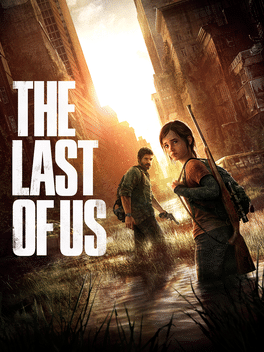
Naughty Dog
CompanyUnited States
Documents about Naughty Dog

The Hidden Way Video Game Companies Exploit Workers
The video game industry frequently utilizes a tiered employment structure that creates a significant divide between full-time staff and agency-hired contractors.
- Video game companies frequently use external agencies to hire 'contractors' who perform the same full-time, long-term roles as permanent staff but are denied equivalent benefits, paid time off, and company perks.
- The use of agency workers allows companies to bypass significant employment costs, including expensive healthcare premiums and mandatory severance packages during layoffs.
- When major companies like Xbox announce large-scale layoffs, the figures often exclude agency workers, meaning the actual number of people losing their jobs is significantly higher than reported.
Why Video Game Studios By Big-Name Developers Fail So Often
The frequent failure of independent game studios founded by veterans from major AAA companies stems from a disconnect between the resources of large organizations and the realities of smaller, independent operations.
- New studios founded by AAA veterans often fail because they lack the specialized infrastructure—such as dedicated marketing, cinematic teams, and administrative support—that large companies like Blizzard or Rockstar provide by default.
- Founders frequently struggle to adapt to modern market realities, such as the necessity of Early Access, community building via Discord, and iterative beta testing, instead relying on outdated 'surprise launch' strategies that are no longer effective.
- Excessive venture capital funding, common during the 2021–2022 zero-interest-rate period, often leads to 'scope creep,' where studios artificially inflate project size and headcount to match their inflated budgets, resulting in complacency and unmanageable complexity.
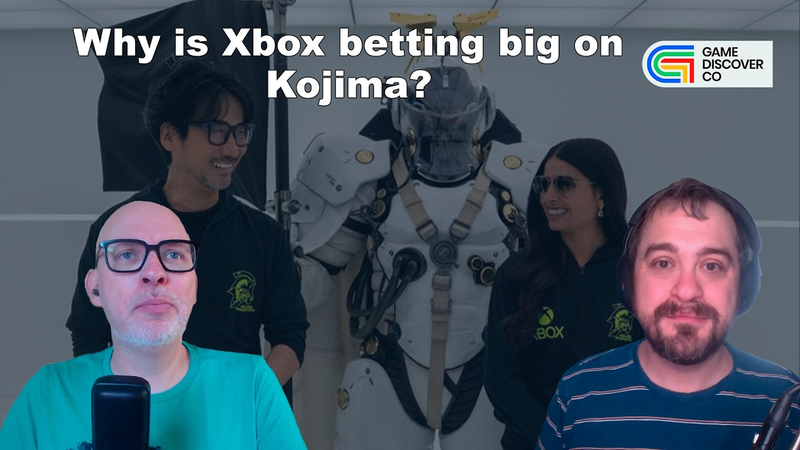
Why is Xbox betting big on Kojima?
The gaming industry is currently undergoing a structural transformation as the dominance of proprietary PC launchers wanes and the financial viability of massive, high-budget single-player projects faces intense scrutiny.
- Sony’s decision to drop Hideo Kojima’s 'Physint' project is likely driven by the financial risk of high-budget titles, as games like 'Death Stranding' require sales of 6 to 7 million copies to justify production costs estimated at $150 million to $200 million.
- Ubisoft is beginning to scale back its intrusive PC launcher on Steam, testing the removal of the requirement on 'Prince of Persia: The Lost Crown' as part of a broader strategy to improve user experience.
- The AAA game industry is facing a structural shift where the traditional model of massive, high-cost investment is becoming unsustainable, leading to calls for a period of 'faceplanting' to force a transition toward more unconventional and cost-effective development methods.
PlayStation's Live-Service Initiative Could Not Have Gone Worse
PlayStation’s strategic pivot toward live-service gaming, initiated around 2020–2021 with the goal of launching a dozen such titles by 2026, has largely failed to yield the intended results.
- Sony's live-service initiative, which aimed to launch a dozen live-service titles by 2025-2026, has largely failed, resulting in significant resource depletion and the cancellation of multiple high-profile projects.
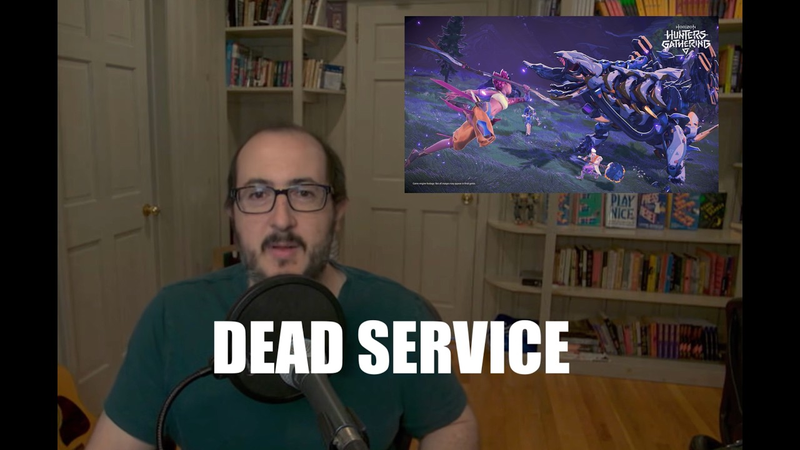
- Guerrilla Games has rebooted 'Horizon Hunters: Gathering' following poor performance in playtests conducted throughout 2026, casting doubt on the project's future.
- Naughty Dog canceled its 'The Last of Us' online project in 2023 to avoid the long-term resource trap of becoming a dedicated live-service studio.
How One Game Studio Wasted Six Years Trying To Beat Grand Theft Auto
The collapse of Lightspeed LA’s ambitious project, Last Sentinel, serves as a cautionary tale regarding the challenges of replicating the success of established industry giants.
- Lightspeed LA, founded in 2020 by former Rockstar San Diego head Steve Martin and backed by Tencent, failed to deliver its open-world cyberpunk game 'Last Sentinel' after six years of development.
- The project was cancelled and 80 staff members were laid off following a failed 2026 playtest that resulted in an unmet ultimatum from Tencent.
- The studio struggled to bridge the production gap between its team of a few hundred employees and the 2,000-person workforce typically required to build high-fidelity, open-world titles like Grand Theft Auto.
Naughty Dog co-founder Jason Rubin on Crash Bandicoot, trying to save THQ, and the state of VR
The evolution of the video game industry is defined by a persistent tension between creative autonomy and the logistical constraints of corporate oversight.
- The success of the Crash Bandicoot franchise demonstrates that high-quality design and strategic platform targeting can overcome restrictive management environments and manufacturing bottlenecks.
- Efforts to revitalize legacy publishers like THQ reveal that deep-seated operational and financial systemic issues often negate the output quality of individual development teams.
- The industry-wide shift toward edgier content and increased production budgets was largely driven by the competitive pressure to match the market success of titles like Grand Theft Auto.
Can PlayStation’s Housemarque repeat the FromSoftware story?
Housemarque is currently navigating a strategic evolution as a first-party PlayStation studio, aiming to elevate its historically niche, arcade-inspired design philosophy into the realm of major, top-tier gaming franchises.
- Housemarque is transitioning from a niche arcade developer to a major first-party PlayStation studio by scaling its high-intensity, flow-state gameplay for a broader, mainstream audience.
- The studio currently employs approximately 120 people and is leveraging Sony’s internal resources, user testing, and collaborative infrastructure to support this growth.
- Housemarque aims to replicate the success trajectories of established studios like Naughty Dog and Insomniac Games by treating new intellectual properties as long-term foundations for player engagement.
Sony’s Showcase / Capcom’s Resurgence / NVIDIA’s AI Demo
The modern gaming industry is undergoing a fundamental transition as major publishers pivot from traditional, high-cost annual sequel cycles toward long-term, live-service ecosystems and transmedia expansions.
- The gaming industry is shifting from discrete, high-cost annual sequels toward 'always-on' live-service ecosystems to secure recurring revenue and sustained player engagement.
- Capcom has achieved a tenfold increase in stock value over the last decade by modernizing legacy franchises through proprietary technology and in-house development.
- Studios specializing in single-player experiences, such as Naughty Dog, face high operational risks and frequent project cancellations when attempting to pivot toward multiplayer-focused development.
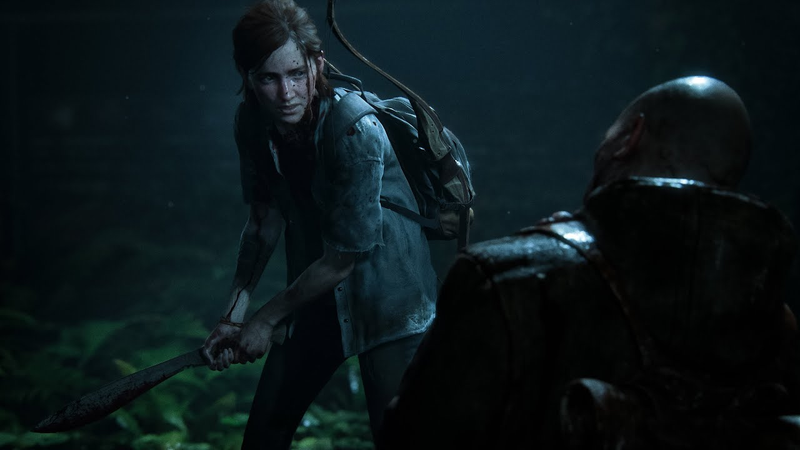
Tough Times at Naughty Dog and the State of Contract Work with Shora Farahani | Game Dev Unchained
The modern game development industry faces a critical sustainability crisis driven by an over-reliance on short-term contract labor.
- The game industry is facing a sustainability crisis driven by an over-reliance on short-term contract labor, which studios like Naughty Dog use to manage overhead and development cycles.
- The current reliance on temporary workers creates a high-pressure environment where junior staff engage in self-imposed crunch to prove their value, leading to high turnover and eroded team synergy.
- Studios are prioritizing short-term cost-cutting over long-term talent retention, a trend mirroring the visual effects sector that weakens the creative foundations of game development.

Last of Us Part 2 Delayed Indefinitely | Games ReCAP
The indefinite delay of The Last of Us Part 2, originally scheduled for a May 2020 release on PlayStation 4, serves as a primary case study for the logistical challenges facing the video game industry during the COVID-19 pandemic.
- Sony Interactive Entertainment indefinitely delayed the May 2020 release of The Last of Us Part 2 due to the logistical inability to guarantee a synchronized global launch.
- The decision to delay was primarily driven by disruptions in physical distribution chains and concerns that global internet infrastructure could not support a purely digital-only rollout.
- Naughty Dog confirmed the game was in its final stages of development, focusing on bug fixes, when the pandemic-related constraints forced the postponement.

WFH Orders, Magic Leap Selling, Naughty Dog Crunches, Gamestop | Game Dev Unchained Episode 219
The global pandemic served as a catalyst for a forced, rapid transition to remote work, exposing significant infrastructure vulnerabilities within major AAA studios.
- The gaming industry is transitioning toward a service-oriented model, yet remains hindered by traditional development habits that prioritize short-term output over long-term workforce sustainability.
- Systemic crunch culture at high-profile studios like Naughty Dog persists because commercial success and critical acclaim are used to justify unsustainable labor practices.
- The rapid shift to remote work during the pandemic exposed significant infrastructure vulnerabilities in AAA studios, specifically regarding VPN security and hardware shortages.
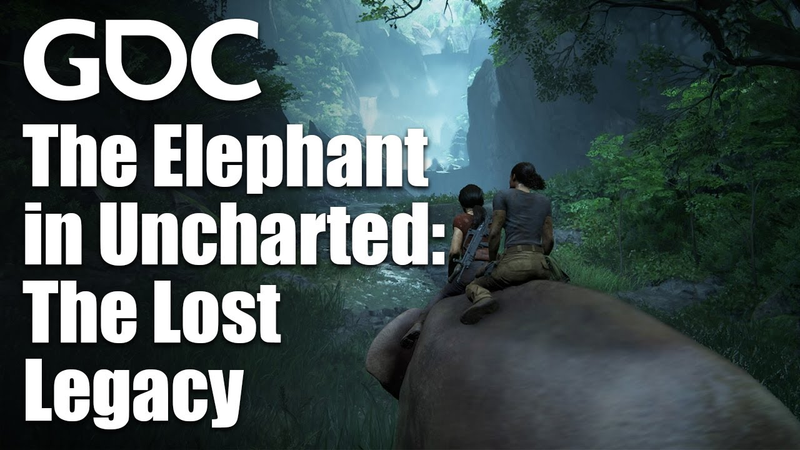
Design vs. Story: How Uncharted: The Lost Legacy Addressed the Elephant in the Room
The development of the elephant-riding sequence in Uncharted: The Lost Legacy serves as a case study in the iterative collaboration between design and narrative teams at Naughty Dog.
- Naughty Dog successfully transformed a static background asset into a core gameplay sequence in 'Uncharted: The Lost Legacy' by responding to playtester feedback requesting interaction with elephants.
- The development team operated under a constrained production timeline of less than one year to deliver a ten-hour game, necessitating a streamlined, cross-departmental workflow.
- To maintain narrative grounding, the team restricted player control to specific splines and replaced standard combat mechanics with subtle interactions like feeding the elephant.