VideoThe Game Business
Naughty Dog co-founder Jason Rubin on Crash Bandicoot, trying to save THQ, and the state of VR
30 Jun 202662 min video
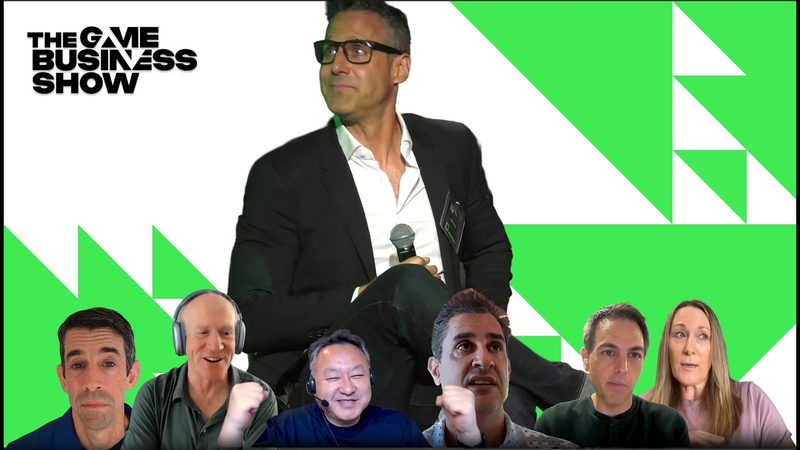
[screaming]
Hi, I'm Jason Rubin from Naughty Dog. I consider him one of my best friends in the industry.
I mean, we were friends since we were 12 and we were roommates for like 10 years. I mean, [music] and we work together. It's very much like a brother relationship.
Hello and welcome to the game business show. Today we have our final recording from the game business life for you and it's a special one. It's with Jason Rubin, the co-founder of Naughty Dog and one of the brains behind Crash Bandicoot. He's had an incredible career and not just with the famous PlayStation studio. He famously made a last ditch attempt to save THQ before holding numerous leadership roles at Meta in a bid to grow and establish the VR industry. But more than that, he's clearly a well-regarded legend of the business. In this episode you'll hear not just from Jason, but Naughty Dog co-founder Andy Gavin, Insomniac founder Ted Price, former PlayStation Studios boss Shuhei Yoshida, and long-term collaborators of
Meta execs Jason Kay and Mike Doran, plus former THQ product director Kathleen Nichols. It's a really special episode this one, filled with stories and insight and I do hope you enjoy it. Here it comes. Please welcome Jason Rubin.
[applause]
Jason, hello. When researching your career, we're quite close, aren't we? Um, we're researching
[laughter]
Yeah, well, there's the shift over here and the closeness and
Yes, it's quite quite intimate. When when researching your career, I found it interesting there were several points where you sort of moved out of games. There was a special effects company in the '90s, there was Flextronics after Naughty Dog. What is it about this industry that keeps pulling you back in? It's touching people and giving people a moment that is special to them
that I'm film does this as well music does this as well so that I'm not saying the game industry is the only one but as far as my ability to create this is the only place where I found that home the ability to touch somebody in a way that makes a difference in their life and to give you an example I have no tattoos yet almost it's gotten down to maybe once a month now but there was a period where it was almost every day I get someone DMing me with a tattoo that has one of my characters that they've put on their body and that's powerful to me and I move out of the industry cuz I I have a short attention span and something else well I have a long attention span but I shift and something attracts me and then I kind of look back and I go no I want to go back there cuz that's where you can really make a difference for somebody and make and really you know touch them in a special way I think that's that's the reason
What was your earliest gaming memory?
Well the earliest gaming memory would have been in the late 70s it would have been in the arcade and I mean I remember Pong I don't know if that's the first one that I actually played I remember Space Wars when it came out I don't think I ever played that one in the arcade uh but you know in the late 70s gaming was hard to find and incredibly basic and so the thing that actually got me interested in the industry was Star Wars the movie in 77 not gaming and it you know my friends were smacking each other with sticks they wanted to be Luke Skywalker we I was seven and I was like I I want to be Lucas right and there wasn't that much cuz it touched me he he did that thing that I kind of wanted to do which was put me in another world and and had me go wow that like those minutes that I spent on that that that was special and so, I wanted to be a video maker. I asked my dad for a movie camera and I asked him for, you know, all I'm 7, 8 years old and
VHS back then, you wanted video camera was the size of a VHS. VHS, you know, was this There was no way it was happening. So, I just asked and asked and asked and by the time he said yes to something, I had I had switched to a computer because I convinced him it would help me with school. And that was 13. And so, it was video games, it wasn't movies. And yeah, 2 years later we were published.
Well, we're going to take a trip through your career and all began when you met a young man called Andy. Here is part one of your story.
Okay.
Yeah, we were like 12, 12 and 1/2, something like that. And we met like Sunday school like in I guess this was the '82, maybe early '83 or something. And we both had [music] Apple II's. And those days, software cost like I mean, like games cost like $70 in 1982 [music] dollars. Not like a kid could buy those. So, we were all swapping software.
If you were [music] trying to make games, you needed to make art and you needed to make the code. And my code was pretty good. My art was terrible. His art was really good and his code was kind of buggy. [music] So, we quickly discovered this in like looking at each other's stuff. We were like, "Well, why don't we should we join forces?" [music] But we started [music] writing our first professional game when we were 14. And we we officially incorporated at 15 in 1985. Our very first game, almost insanely that we never published, was in attempt to write an Apple II version of Punch-Out, which was the Nintendo arcade game. We didn't really realize about copyrights, so we just like
copied the game and wrote our own version. And then later, like Jason's dad who was like a lawyer [music] was like, "You can't really do that because they own those characters." We're like, "Oh."
[laughter] [music]
The first one that I actually got published is a game called Math Jam. This like quick little cutesy math game. We then published ourselves in little baggies with color photos. Then there's the skiing game, Ski Craze. So we wrote that in, I mean, really like [music] two or three weeks. And then we found this small publisher in Michigan called Baudville. They were sort of a mid-level publisher at this period. We sent it to them. And they're like, "We can publish it for you." And we're like, "Cool." And so, you know, they did the box and published it and it was in computer stores. We actually did two games for them, so we did that one and then we did Dream Zone, which Jason and I designed together, a much more ambitious game that took us like, I don't know, 6 months or
something, 8 months. That was a pretty complex like adventure game. We published it with them. But we were disappointed that we could go into computer stores and not see it all the time. Like a 50/50 whether you'd see it. So then Jason and I were like, we just started like the thinking first, not a sequel, but a new game that eventually became Keep the Thief. We began that, we're like, "Well, we need a better publisher. Why don't we call EA?" So we called EA and sent them a copy of Dream Zone and some notes on the thing we were working on. They're like, "Oh, that's really cool. [music] We'll give you a contract." They sent us a contract. And we started making Keep the Thief. So that was an EA game.
[music] [music]
So Jason was drawing this comic in like maybe like '85 or something like of this dog character that was like kind of a It's like a teenage dog party animal cartoon character [music] that he named Naughty Dog. He drew on the cover of the comic the dog character in this like logo [music]
that said Naughty Dog. And we're like, "Oh, why don't we just use that for the game company? It's a great game." EA had a finite amount of manufacturing capacity for those cartridges. It was like X number per month that [music] they could actually make. And we shipped like a month before Madden 1 the first [music] Madden did. And Madden like cost less to make and was [music] really easy to sell. So they just stopped making more. Apparently there was at least another 60,000 worth of orders like sitting but they just never filled them because they were busy [music] making Maddens.
[music] [music]
Well, that was that was fun. It's good it's good story. Thank you for coming. Um
so Andy went to MIT.
He did.
You went off
smart one.
You went to surf? Is that right?
I went to Michigan undergrad and then I went to yes, ostensibly learn to surf after Michigan undergrad at Newport Beach but I never got in the water with a surfboard.
Oh, really? Well, how were you feeling coming off Andy told us how he was feeling but how were you feeling coming off those EA projects?
Well, every game we made was getting better. There was no question about that. And you know, development is hard. Developing a game is hard. And you get to the end and if the market decides it's not good, that's hard for you but it it's fair. The market decided. That's not what happened. Andy mentioned what happened. They we sold out in like 3 weeks. We got a call, "Good news, you sold out. Bad news, we're not reprinting any." And the 60,000 extra copies, you know, now you think 60,000 extra copies. Back then, you know, we're talking early '90s. That was a lot, especially for two kids in college. That would have been a a lot of money. And the reason EA's made the
right decision, like trying to artists at that time, but they made the right decision was simply it's cheaper to print these other cartridges and this Madden thing kind of looks like it's going to take off. And so that made sense, but it it hurt because we had spent 3 years making this game and people liked it and we had touched them. They wanted to play it, but we couldn't get it to them. So we just quit and that was basically the cartridge that was forcing us to quit. And then time moved on and things changed, but I went to learn to surf, ended up uh deciding, look, I can remember that movie game thing we talked about earlier. I'm going to do special effects. It's the same kind of thing as making games and using computers, whatever. And I actually 6 months later I had convinced uh the movie was called Wolf. It has Jack Nicholson and Michelle Pfeiffer. And I was going to do the transition effect as Jack Nicholson turned into the wolf. And I was about to do that when we got back into the industry. And the effect sucks in that movie and I'd like to think I could have done better.
[laughter]
Well, well, come back to that. Well, let's go back to the beginning. Your father came up a couple of times um during my research and whether that's advising you about Punch-Out you mentioned earlier, working in
intellectual property attorney that said, "You can't do this. You just can't release this Nintendo title." And Andy and I were like, "Oh, that sucks."
Well, Ted Price spoke you spoke to him. He brought up um his support on Insomniac as as well. Were your parents particularly encouraging of this career path?
So I was going to show this to my father afterwards, but now it's going to be So here's the true answer to that. Absolutely and absolutely not at the same time. They bought me a computer at 13 when that was 2 and 1/2 months of my father's salary. And that was the last computer my father ever bought because every computer subsequently up until the time we sold Naughty Dog was but it was bought based on the success of my work on that computer. So my my parents created this opportunity
and it wasn't a cheap low-risk thing for them to do.
[clears throat]
At the same time, they subsequently started taking away the monitor cables from me as a punishment because they thought that was a way that they could get me to clean my room or do whatever they were wanting to do and the whole time it was kind of like this game thing is neat but you're going to be a lawyer, right? I mean, absolutely at the end of this there's actually law and etc. etc. So absolutely, my fundamentally my parents gave me the opportunity to sit on this stage today and at the same time tried to take it away from me.
It must have been unusual then to meet someone else who had a computer in in Andy.
Very rare, which [clears throat] is why we ended up sitting in the back of the class we were in together and doing nothing but talking about it. There was no internet. There were very few books to teach you how to do things like programming. If you ran into a problem which you couldn't solve, which quite often happened to two teenagers, you would go to you know, they were these kind of computer fairs and you'd find someone that looked like Gandalf. They always did sitting in the back corner and you
would ask the problem Have you tried that? It would be useless. And you'd go home and you'd figure it out. And so having someone to talk to about these problems was was night and day. And as he said, my programming sucks. So that ski game you saw, I started that. That was me, Andy. And going down the hill it got slower as you went farther downhill cuz I didn't know how to fix that. And Andy's like, "What the hell are you doing? You can't you can't fix that." And we published it.
Yeah.
Okay, so fast forward, you're 22 years of age, you've wandered away from games. What or who entices you back?
Yeah, so EA was a at the same time as they didn't reprint our game as I said, it was a good decision financially for them. I don't blame them for them. But the relationship with EA was excellent. And Trip Hawkins and Bing Gordon, who were the two people, you know, running the the the program at the time, um they had an affinity for the two youngest kids that were working with EA. Both of us had to have their father up until a certain point. Uh fathers or mothers
signed their contracts. We were underage. We couldn't do this stuff uh without parental approval. They had a lot of affinity for us. So, they were I'm sure as they were making the right business decision, also sad that this was happening to us. So, as soon as Trip Hawkins decided he was going to make the 3DO, um he called. And he said, "Oh, no, no, no, you guys got to come back." And we're like, "Psh, to do that to us again?" And he's like, "No, no, no. CD-ROM. Infinite memory.
Mhm.
A buck or less per CD." Cuz the cartridge was $20. That was the problem. They had to get it made in Japan in very few places. CD, anyone can make it.
Mhm.
Buck a piece. Infinite memory. And we're like, "Ooh,
[laughter]
we're in."
Uh you then made Way of the Warrior, which is a fighting game.
That's right.
Why did you want to What did you Why did you want to make one of those, a fighting game?
So, i- Andy and I early in our career, fortunately based a lot of our decisions based on the things we were playing that we cared about. And Street Fighter and more importantly
Mortal Kombat at the time were doing really well. And we always had a passion for the content we were making. But we also, and sometimes this isn't the case with developers, we always had a business sensibility. And we were always looking to find a hole in the market and fill it. And it looked pretty clear that Street Fighter and Mortal Kombat were going to come out for the Nintendo Nintendo systems that I think it was Nintendo and Sega that existed at the time, but the 3DO probably wouldn't have them because it was this new upstart and it had capabilities that they weren't necessarily best put So, we just decided to make a game that was very similar to those games, but for this hardware that wouldn't have a game thinking there's got to be a market there. And sure enough, everybody else was making interactive story games with video for the first time, which was one thing that CD-i barreled. No one wanted those games. They wanted a an arcade game at home.
Mhm.
And there we were. And we had made it ourselves with our own money.
Yeah, I was going to say you funded it yourself, didn't you?
We funded it ourselves. I at one point during Way of the during Way of the Warrior, the light bulb went out in my
room. I had moved to Boston where Andy was in MIT and it was this expensive bulb that was $15, so I lived in darkness in my room for the next 6 months. We couldn't afford a green screen, so we had a gray screen, which meant I had to do a lot more work to you know, it was photo-based stuff. It We were broke.
Mhm.
We were broke.
Well, you seem won't be. Um you returned um to recap, you returned to video games with Way of the Warrior.
Way of the Warrior became a bidding war.
Yeah. Yes.
Because it was a game and everything else wasn't a game and we we were a developer not a publisher making something. So, 3DO wanted to publish it and this new company not new company, but a company new to the game industry, Universal uh wanted that to be one of their first games.
Well, shall we move on to part two? It's a bit of a longer one this one. Here's part two of your story.
We were both pitching Universal Studios on our games at about the same time
[music] and I vaguely recall walking into a bungalow with Al Hastings and Brian [music] Hastings, who are my partners, as Jason Rubin and Andy Gavin were walking out having just presented Way of the Warrior. [music] We were presenting Disruptor, and I think we we may have said hi, but several months later we were actually both working side by side, [music] and that's where we really started to get to know each other.
Round one, fight.
[music]
So we in those early days, it was
basically in this tiny little office zone that was like Jason and I and Mark Cerny and like Ted and Alan Bryant. But basically we got to lunch together every day, and we were making not at all competitive games at that time. So we were just friends.
And I think there was this sense of solidarity for both teams. Since we were small, we were the underdogs fighting against much larger, better funded teams, and as a result, we wanted to help each other. We shared code, we shared builds to test, we went to each other's parties, and we all became good friends.
Crash was formed in this juncture, like literally conceived on the road by Jason and I as we drove to California and we're talking about our next game. And we were like, think about it in the context of the new docs we had for the
Sony PlayStation. [music] And like we're like, well they don't have any platform game and we really really like Donkey Kong Country which had just come out that year. And we'd always been big, you know, like Mario and Sonic fans. And so we're like, "What about platform? Like a character platform game. Like instead of fighting, you attack other characters in these type of games." Like, "What would that be like in 3D?" And we were thinking about how virtual fighting had taken the 2D fighting game and put it in 3D. And then we're like, "Well, what would it be like for a character game?" And if you were Sonic the Hedgehog or Donkey Kong Country or whatever. And so we jokingly kept calling that the Sonic's ass game because we're like, "Well, what would Sonic be like if you're in 3D? It would be awesome because it had we have this roller coaster like thing of the camera moving through. But [music] then you'll be always looking at his back."
Sony Computer Entertainment America sold the game. And they funnily enough, and they struck a deal, publishing deal with Universal Studio. So, it was licensed product from Universal Studio to Sony Computer Entertainment America.
[music] [music] [music] [music] [music]
The company announced a price drop of $199 for the PlayStation and a new character-based action game called Crash Bandicoot. Crash is an Australian marsupial dressed in shorts and tennis
shoes.
We [music] wanted to create a mega hit. It was our design intention to create a mega hit and to
[music]
slip into this place that Sony had left vacant for our character mascot games on PlayStation. But, the fact that it happened was fairly miraculous. It was by design but lucky, I guess. Right place, right time.
[music]
We were the second highest grossing product in the [music] entire 1997 Universal slate after Jurassic Park 2. So, it was the only thing that made more money than we did. And we had cost 2.7 million of which Sony had prepaid them $5 million. So, the ROI was like infinite.
[music]
Universal's had a bunch of like people just didn't get games. It's very frustrating. I remember after Crash 2 had shipped, you know, like we didn't get any respect at all. They shoved us in this like awkward corporate office like in the corporate tower building that was not at all suited to like video game development. Didn't even have enough power. We had to go buy extension cords and run them and plug it under the lawyers' desks and draw power back from other circuits in the building just to keep our our section of the building [music] running. Yeah, so we got our own space [music] in Santa Monica, which was great.
Hi, I'm Jason Rubin from Naughty Dog. PlayStation Underground asked me to tell you a little bit about Crash Bandicoot 3: Warped.
It looks amazing. The game came out every year.
[laughter]
The development cycle was like sports
game. And the Crash Bandicoot 3, the third game, became the second [snorts] ever Western game to sell over 1 million unit in Japan. And I thought on what was the first game, maybe Tetris. That made Andy and Jason really proud. Crash Bandicoot [music] IP was owned by Universal Studios.
So, during Crash 1, it was pretty good and Mark was there and so on. But the CTR, our market left. Universal sold itself. Naughty Dog had sold it to Seagram's, like the beverage company. And then like all the management had changed [music] and they didn't get games at all. And they weren't doing anything on the game, but they were like collecting a ton [music] of the money.
And when we was finishing Crash Bandicoot the racing and we are looking [music] to move to next generation, PlayStation 2, we felt that [music] we have to break away from that setup.
That's how Jak and Daxter was essentially born. [music] Like there just wasn't enough room for the parties. At one level I didn't want to leave behind. The other level I was really sick of like working 24/7 on exactly the same game. Production costs were going don't don't don't don't. Like
[music]
it was 1.6 million for Crash 1, 2 and 1/2, 2.something for Crash 2, close to 4
[music]
for Crash 3, like 7 or 8 or something for CTR. Like, because the team size is getting bigger, basically. And then,
[music]
with the PlayStation 2 games, it was looking like it was going to be 15 or 20 million. And Jason and Andy were like fronting this out of pocket, basically, in these economics. And then you get it sort of like paid back, [music] basically. Like, but it was getting very, very stressful.
[music]
During the development of Jak and Daxter, the first game, Jason and Andy suggested that they [music] are open to be acquired by PlayStation. We were like, yes, let's do it.
[music] [music]
They had developed an instancing system for their environments that was really
clever. And Jason said at one point to me, "Hey, are you guys interested in checking this out?" And I said, "Yes, absolutely." And so, we were able to learn a lot [music] from what they had already done to build these beautiful expansive environments in Jak [music] and Daxter very efficiently. And we incorporated a lot of those techniques in Ratchet & Clank. I always give Jason credit for this because he was the one who said, "Hey, let's let's do this. Let's share."
[music]
I mean, that's a complex story, too. But first I was kind of a little burnt out. And Jason was definitely burnt out. But we ran it for Sony for 4 and 1/2 years after the acquisition. And it was going great. And everybody was like, it's still great. And it's still pretty much the same company and so on. But we also had there was a new generation of guys like right under us who are like senior management who were like [music] ready
really to take over. So like most prominently, you know, Evan Wells, Stephen White, and Christophe Balestra. So it was very natural like Evan was already
[music]
Jack 3 like Evan and I co-ran the production and he had pretty much run Jack 2 as well as sort of director.
They managed the transition [music] so well. So you know, as a part of acquisition, you know, they agreed to [music] stay at least, you know, for another three game. So we are so happy and grateful
[snorts]
that they set up such a, you know, great leader behind them, you know, when they left Naughty Dog.
Well, um that's a lot of time with a lot going on in that period.
There was a lot.
I we tried to keep that down cuz we went through a few iterations of that. It was 20 minutes at one point. Um I didn't just realize how closely aligned the Naughty Dog and Insomniac stories were. I Ted talked extensively about your
friendship. He even told us there was a joint GDC talk you did where you had to pretend to be rivals cuz people expected it. Was there really no Spyro and Crash sort of competitiveness at all?
Well, the way I always looked at it is on the court, competitors to the end. Off the court, best friends. Like think about a basketball player and another basketball player on two teams who love each other dearly, but when they are on the court, they're trying to win. And that's pretty much how we treated the relationship from the moment we met. Um and as Andy said, when we met, they were making a shooter. We were making a character action game. It it got closer as they started making character action games. Um and there was space in the industry for two of them. There was always. And so I always looked at it as more happy gamers, more gamers better for both of us. Um and yes, the relationship was that close off the court. We were going to each other's homes, going out to dinner with each other. We were very close friends. Still are.
Yeah, I can tell. Shuhei Yoshida told us
that Crash was such a big hit in Japan, as you said. First game, second game, they hit a million. But it was presented very differently there, wasn't it?
Yeah, it it definitely was. Um Japan is a very special place with a very special culture. And at least back then, and still foreign things are foreign. And they hadn't really had a character action mascot game, if you will, come in from a foreign country. They were used to Mario, Nintendo, and Sonic with, you know, Knuckles Sonic created. And the the very concept First of all, the very concept that two people who had made Way of the Warrior would next make Crash Bandicoot, and that would be a mascot for Sony, is insane. But the idea that they would then go on to succeed in Japan a country that, for the most part saw things as foreign as otaku, a geeky thing. It was it was crazy thinking. Beyond the almost harder than doing Crash and
making it a mascot for Sony was having that work in Japan. I was very aware of this. I spent a lot of time in Japan. I spent a lot of time studying Japan, Japanese culture, the Japanese game industry, what they liked, everything like that. And realized the more I learned the more I realized I would never understand it. So we asked their marketing teams and others, like, what do we need to do? And there were changes to the character, there were changes to the art, there were changes to the way that the character died, the way that we presented things. There were a lot of changes that we made. The Japanese version was different. Um and the marketing was very different. And those two things, and I give a lot of credit to Sony Japan, managed to push it over the edge where it was foreign but cool.
I asked Andy this question. You heard his answer to that. Was it hard to say goodbye to Crash?
It was extremely hard to say goodbye to Crash. Um they were being very nice. Uh the relationship with Universal was abysmal. Um [laughter] Uh
I mean, to give you an idea, at one point, one of the people there put a target that he had gone and shot with real bullets on the wall, went to Andy and said, "Your partner ought to look at this." I'm not a bad shot about something. It was abysmal. They had us working in a building Andy said was very corporate. He didn't mention that most of our desks were in a hallway. At night, on the 30-some-odd floor of this building is on Universal Studios, the heat would rise as it does in buildings at night, but they turn the AC off at 6:00. Our normal hours ended at 4:00 a.m. That was the Crash Bandicoot hours. So, by 4:00 a.m. on a summer day on the 34th floor, it was over 100° in the building, and I'm not exaggerating. I know that to be a fact because our servers would shut down at about 105. Wouldn't let us bring in air conditioning on our own. They wouldn't put the air conditioning on, so we had to bring in ice and a fan and a to keep Cr- uh Crash Team Racing going. Now, I want to point out that that game made them well over $100 million in the first few weeks, and that yet they were still doing this with us. So, when we talk about a bad relationship, the the
relationship was abysmal. And the bottom line, the reason for this was they realized they added nothing but owned the license. And to be very clear, cuz I want you know I don't want I don't want to miss Mark by that time was not part of Universal. Mark Cerny, as far as I'm concerned, he was always the n plus one Naughty Dog. I don't include him in that in any way. But beyond that, there was there was no value we were getting, and they were openly hostile to us. Our offices were being built as they were doing this. So, it wasn't that we were, you know, asking them to do something that they shouldn't have done. They had a obligation to house us that was in the contract, and they realized that they could put us in the hall on the 34th floor and you know, do all these things. So, uh you know, there could be a movie about this. It was a crazy time. It was a crazy time.
So, although it was but it was hard to say goodbye to Crash, but not say goodbye to the
Right. It was not hard to say goodbye to Universal, but um the fact that CTR even existed was Sony's um Sony stepping up to the plate and doing the right thing
uh by all of the parties and it wasn't going to happen again.
Mhm.
Uh you know, to to jump off that, Crash Bandicoot Universal. Through About a month ago, I took my daughter to Universal CityWalk. I live in LA and we went to uh a comic book store that had Sonic comics in it and then we went to um what's it called? It's a it's a mall store um Hot Topic and they had a bunch of Sonic stuff all over the place. And then we went down the uh strip and there was a Nintendo store and as most of you know, there's a big Mario theme park thing. I built Crash with Andy and Mark 500 yards from that point. And they are borrowing the other IP now when Crash was bigger than both of those for 5 years running.
Mhm.
And that's crazy to me. Had the relationship worked out better, there might be a Crash ride at Universal. They would have the Crash IP and Crash would be what Crash was, but they they just
didn't see it.
The first Jak and Daxter was a great game and a real evolution of what you'd done at Crash. But the second game was notably more edgy. Um you know, there was guns, there was attitude. What what prompted that?
Well, the world changed. Um so, stepping back a bit, Naughty Dog's goal with Crash was to merge story and game in a way that mhm would blend seamlessly. We utterly failed on the story because we ran out of time and the hardware itself didn't allow us to do that. Jak pushed forward with that, but what happened simultaneously is Grand Theft Auto came out. You know, you were talking about Grand Theft Auto today, well, Grand Theft Auto mattered then, too. GTA 3 came out, and all of a sudden, the audience changed. I remember testing Jack and Daxter. We had a bunch of 8-year-olds in the room cuz I was the youngest audience we went to, and I had them sitting around the table, and I was like, "So, what do you guys think?" "Well, it's pretty good, but, um, you know, graphics are amazing. It's really good, but, you know, I think it's probably for my younger brother."
You're 8. "Yeah, [clears throat] yeah. What are you into?" "GTA." And the world had just changed, and what gamers wanted had just changed. And so, we thought we should change. And Sony had invested a huge amount in Jack and Daxter and wanted to continue that investment, and also wanted to keep a broad, uh, you know, number of titles that were on the shelf, including things for eight that 8-year-olds should be playing. Um, and so, it was the right thing to do to continue Jack and Daxter, but we wanted to adopt whatever parts of GTA we could into that audience. And so, being the business-minded people we always were, looking at our competition, trying to find a hole, the idea was, let's take character action and bring in some of the elements of GTA. And that literally is what Jack and Daxter 2 was trying to solve, the problem it was trying to solve.
It's interesting cuz my first, I said to you earlier, my one of my first stops in the video games industry was testing, and I tested the first Uncharted. I remember thinking, this is very different for a Naughty Dog game. But, actually, I can see the journey now.
Uncharted was adult, photorealistic. Those changes were probably driven by GTA, but other than that, that was the game we wanted to make. It was a linear story with you in control.
I asked everyone I spoke to to tell me stories about you, and she way brought up the Tara Reed talk at DICE at 2004. And this talk, if you can feel the anger. If you don't know it, it's around game developers being disrespected by the industry in a million ways, not having logos on the box, not being invited to their own parties. And you you know, unlike Hollywood where talent was the center. And then you said this, which caused you a lot of problems. PR and marketing departments in our industry are not the power. Two planes take off, one has the entire PR and marketing department in the industry in it. The other one has the entire product development in it. PR and marketing department plane goes down, product ends up on the shelves a few months late. The development plane goes down, I think it's a decade before we get a good games again. Sure, he was laughing when he was
counting this and there was a lot of there was a lot of angry PlayStation people coming off that.
Yes.
[laughter]
As you can tell, I'm very passionate. And and I say things that sometimes are stronger worded than the intention. And that was one of the cases where I probably should have looked into the language. What I meant was, at the time, game industry was changing from kids are playing games to adults are playing games. And that change brought a different way of marketing and perceiving things in a different like kind of way of doing things. And what the industry was doing at the time was trying to focus on the product as opposed to focus on the developer. And I felt this was a DICE was a developer conference, remember? That developers were the value. In the same way that movie makers are the value. Developers are the value. Vince is the value, right? Like these these
people are the value because they're the ones whose vision is making the thing important. It was it was all fine until the publishers started simultaneous and I was also at the time on the IGA IGDA board, started trying to There was a moment where there was a wrestling match. And the question was were developers going to have any place at the table. And to give you an example, uh there were companies that were sending people to DICE at the time uh and GDC who were not allowing the people from their companies' names to be put on the screens as they were speaking, just their title and their company they were working with because they didn't want the people to be the the power or the the import. Likewise, there were Hollywood parties that were being thrown because the rest of the world was looking at the game industry and developers were not getting invited to their own launch parties. Yeah. And
yet, the marketing, the PR part departments, et cetera, et cetera, they were sending all of their staff to these parties. And my point was developers are important. If you look at the import of them in the industry versus the people and it was specifically about parties. I mean, we're cutting out all the other slides.
Yeah.
What's the difference here between losing one or the other? It was not suggesting that anyone should be harmed in any way. That was never Right? It wasn't a plane should go down. It was Were this to happen
Yeah.
where is the value in this industry? And I put it in front of this room and I I I have held this belief for the entire time. It is that talent making the games that is touching people that is the value here in the same way that it is in film and in the same way that it is in music. It's not that distribution isn't important. It's not that the hardware isn't important. It's not that it is that that was important and that that was the long-winded way of explaining why what
is easily quotable as I wanted to harm the marketing department. [snorts] Every absolutely never that.
Do you think the power balance is right now?
I think it's shifted over time and I think it's it's gone in different directions. Um I think it's better than it was at that point for sure. That was a a moment in the industry where the industry was on a pivot and I wanted to stand up for the development community. Um I think it depends on what part of the business you're looking at. Is Is it a indie title? Is it self-published on Steam? Is it a large publisher? Is it a well-known IP? Is it not a well-known IP? I think the industry has changed in such a way that the question is almost not as relevant anymore. But at that time, almost every game was a console
or PC game made by a single developer and released in that same way.
So, it's 2004. You're getting on a bit now. You're the ripe old age of 34. And you're a leader of a studio in the most powerful games organization in the world. Why leave?
I was burnt out, too. Um You know, there there the idea that you would release a game like Crash Bandicoot and it would be, you know, I they said 5 million units. We ended up selling nine, so of Crash 1. And at the time, that was incredible. And then 1 year later, you would release its sequel. Not with another team doing it. The same people. And then 1 year later, you would release its sequel. And then 1 year later, you would release an entirely new engine with an entirely new uh you know, mechanic. And then you have your next title. There were years where my computer, at the time the computers were were tracking our our time in office. There were years where I didn't leave the office except for a day I had the flu. 1 day.
Aw, yeah.
And I was just burnt out. And uh as Andy said, we had incredible talent and at at at Naughty Dog, and we didn't
rage quit. We announced we were going to transition and spent 2 years on that transition before the day we left. So, for 2 years, Evan went from not being in charge of the company to being in charge of the company slowly in a linear way
[clears throat]
so that it was a completely natural transition.
So, we've come to the end of the Naughty Dog story, but now we're near the end of the Jason Rubin story. The next 20 years would feature startups and attempt to save a beloved publisher and the return of virtual reality. Here is the third part of your story.
[music] [music]
And I had met them both when I was at Activision. I worked for Mitch Lasky in business development. And after Crash came out, we said, "We got to meet these guys. We got to be in business with them somehow."
[music]
But the funny story around that is, of course, they were on the Universal lot, so it was not possible to just show up
at their office. I remember just being in a staff meeting and saying, "Hey, we need to [music] get in touch with these guys, and I don't know how to do it." And this woman raised her hand and says,
[music]
"I went on a date with Jason Rubin once. I think I have his cell phone." I said, "Great." So, I just called him. And I think his first response was, "How'd you get my cell phone number?" And I said, "It's a long story."
[music] [music]
And then Jason and I had a startup with some of our Flextor colleagues that Andy
[music]
was actually focused on opening a restaurant at that point, and he opted out of
[music]
The way that I understood it was they had been brought in to lead the company forward, and then they had kind of unearhed that the company
was in a much worse financial position than they knew when they were coming in.
My memory of that time and how I've described other people is a little bit like being in one of those airplane disaster movies from the 1970s. You know, where like [music] the flight attendant says, "Is there a doctor on the plane?" And I sort of naively rang my call button [music] and then you come up to the cockpit and they're like, "Well, the pilots are dead, the plane is running [music] out of fuel, there's a bomb on board. Do you know how to fly a plane?"
We [music] were in one of these meetings and Trey was really quiet and we went through all of our, you know, administrative things or whatever and then he goes, "Okay. So, I had this great idea. We're totally redoing the the fight mechanic. And we're going to change it all and it's going to be a fart mechanic." Almost [music] every meeting it was like, "I had this
great idea and I'm going to completely blow up the schedule."
[music]
Given that it was in a much worse state than I think even people realized or were willing to admit internally, I feel good that we preserved a large number of jobs.
Just I had like four businesses together and before he he settled in at Meta for a long stretch.
[music]
What we started with was we cast a really wide net. We signed up a bunch of small games with a big roster of developers and the strategy was
[music]
let's do lots of experiments. None of these have to be full-size proper games. We're just trying to learn about what the mechanics are that make sense and what's special in VR. [music] And one of those early experiments was a game from Crytek called The Climb. And every VR game today that has
climbing as a mechanic, which is an obvious natural thing to put in your game. [music] They really owe Crytek and the climb for paving the way there and proving that out. And and that's what we were doing under Jason. We had dozens of games going at once across all different genres and we were experimenting. It was a great time.
[music]
I gave him a call and said, "Hey Jason, you know, we've been talking about virtual reality out here. We now have a very large team that is [music] ready to move on to something different. What do you think?" Jason flew down. I think it might have been the next day [music] to hear pitches that we had for the Oculus platform and he was he was fantastic. And because of our long relationship, I think there were [music] a lot of mutual trust there and he said, "Let's go for it." But the Oculus games, you know, working with Jason [music] was crucial, crucial to our survival within the industry and our later [music] success.
I consider him one of my best friends in the industry.
I mean, we were friends since we were 12 and we were roommates for [music] like 10 years. I mean, and worked together. Like, so he is very much like a brother relationship.
For me, this whole experience it was like being Ron Wood in the Rolling Stones. Like, I never had to be Keith Richards or or Mick Jagger. Like, that was Andy and Jason. But it's pretty good to be Ron Wood, too.
He tells the truth. I mean, that's what's wonderful [music] about Jason. He doesn't He just he gets right to the heart of any matter and he just tells you the truth. And that's [music] to me why one of the reasons he has been so successful in the games industry and beyond the games industry. People love working with them. He's got such natural charisma
[music]
and they respect him, right? Because he's just salt of the earth kind of guy.
Wow.
Woo!
Repeat the last [cheering] line. I don't I
[applause]
I don't want to show my tears.
You know, we didn't fit it in there, but uh other Jason described your relationship with Andy as being like Kirk and Scotty. I don't know what he meant by that, but um
[laughter]
A- Andy and I have been a perfect pair in every company we've worked on together.
Mhm.
Um you know, I'm 56. I'm at the point where I'm starting to say, "Do I have regrets in life?" If one regret I have in life is I didn't spend more time with more companies with Andy. Like there were there were there have been periods I haven't and I should have.
No. Um well, actually that it was odd to go back through that story, but I interviewed you just as the THQ auction happened, I think. Um and I didn't have really appreciate the time how close you were to saving the entire organization. There was a stalking horse bid that could have kept THQ together. Even though most of the studios ended up somewhere good, at least at least for a while. Um it must have been pretty heartbreaking that you were so so close.
Yeah, that was hard. Um
Jason and I had gone through an attempted acquisition of a major publisher that was in very good shape with a private equity company. Uh it was the second large publisher private equity uh takeover that I had kind of been involved in, both of which didn't go through. Um and so the private equity company, when it fell through, they said, "Well, is there anything else out there? Cuz this this one we can't get to a price agreement with the current owner." Is is there anything else out there? And I was like, I'm not sure. And they're like, "What about THQ?" And I was like, "Well, you know, this one is doing incredibly well. THQ has a market capitalization in the stock market of $25 million right now."
Mhm.
That was a multi-billion dollar company. And they're like, "Well, you should you should just look at it." And I went in and I looked at the company and again, go back to the teams, the developers. There was so much talent and they were working on that South Park
game which ended up I think tripling our rosy prediction for it when it finally came out. Um just had wonderful, wonderful teams 4A. Yeah. Um and they had already gone through a pretty significant process of reducing the stuff that wasn't working. So the private equity company we went in with, this was too small for them. So another group came in, another bunch of investment bankers. And we looked at it and it was it was way under valued. And it's complicated cuz it sounds like $25 million. You're not buying $25 million company. There's debt that has to be paid off. There are these obligations here. There's, you know, international distribution money. This stuff gets very complicated. Um but it looked like a good deal. And so we went in and then we saw the part of the stuff that they didn't even understand what was going on internally. Um and it was bad. Like the the the plane analogy is the one that we used at the time. We went in thinking we would take the plane down. It's definitely
doing poorly but we pull back on the stick. The wheels would touch but we would be able to do this and if we could do that man, we had the right products and the right plan and everything else. But it turned out we had half the fuel we thought we were having half the altitude and traveling three times as fast down and the pilot was dead. And so like the whole thing was Yeah. really rough and you know, eight months later it had it had sold off its parts.
Yeah. Well, I won't even bring up U Draw. Um I interviewed um well, oddly though hearing stories about that short period, I was struck by you know, I I picture you fire fighting and and sort of do dealing with a losing battle but then I hear the ones that Trey Parker and Matt Stone and the fart mechanic or of you going to Ukraine and meeting 4A and getting desk chairs for everybody. Um it's
They couldn't get the [clears throat] desk chairs, but yes, I tried.
Oh, you tried to get desk chairs. Oh my goodness.
They were They were working at card tables with, you know, the kind of chairs you have for an outdoor wedding. I don't know how to explain them, but they're metal and you open them up.
Developer hours. And I just looked at that. I was like, "We can't have this team doing that. We have to get you chairs." And then it turned out you couldn't get Aeron chairs in the like in Ukraine at that time. And getting it over the border, there was bribery issues and other stuff. And it's just It was a mess. It was a mess. But visiting 4A was amazing. Again, the people were there. The talent was there.
So, I was going to say, um maybe isn't the right word, but it seems like they were quite a lot of fun times during that period, too.
They were absolutely were fun times. It was just, you know, I I telling, you know, there's Matt and Trey and they'd worked for, I think, 2 years at that point and they had I asked, "How long do you think this game will be?" It was pretty linear, about 20 hours. "Okay, best I can tell you is 9 minutes." And there was just silence in the room. And I I think Matt is a mathematician by training. He did the math on that. He's like, "Oh boy." I'm like, "How many scripts worth is this to get to the full thing?" Cuz it's narrative driven. So, they know it's this amount of script per minute.
So, we think it's this number of scripts. Again, he Matt is very good at at at math. I'm like, "Okay, how long is a script for one of your shows?" "Okay, it's two and a half seasons." "Okay, I'll give you a month and a half to write that
[laughter]
because I can't take this any longer. THQ doesn't have the money. Well, we're doing this Book of Mormon thing right now. You're seeing them actually rehearse behind us as we're talking about this. Yeah, I get that. You got a month and a half." They did it.
Wow. Well, let's move on quickly. Conscious of the time. I remember when you joined Oculus and you entered the world of VR. You believed this was the future. Uh you were adamant this is where things were heading. But did that belief ever waver over the 12 years?
Um Well, clearly we never quite got there in the time I was at Meta. And so, I don't want to discount the future. We had a three-part problem. We had the price of the device, we had the hardware capabilities, and
then we had a content problem. And those three things had to come together. Price we played with very easily cuz we could, you know, subsidize the the hardware. Getting the content when did up being the hard thing because you did a hardware leap, now you need a new content cuz the hardware had different functionality. So, every time we up the hardware quality, we would have to rewrite the code and re- rewrite all the content. And we never quite got there. Um I believe that immersive will be the future. I think it'll probably come through AR before it comes through VR. Stepping back, I'd say there was a belief that there was going to be VR, then AR, then AI would empower all of them. That as I entered Meta, that was the belief. VR took longer than we thought. Let's just put it that way. AR and AI came a lot quicker. And so, I think what you're seeing is the industry say we don't need the VR stepping stone right now and heading more towards Apple has certainly made
this this decision. We're going to head towards augmented reality glasses that let you see through and the AI that powers it is what makes it interesting now cuz the screens themselves are not good.
What was it like working with Mark Zuckerberg? I mean, I know you kept producing these manifestos or presentations for for him on where you thought things were heading or where we should go. It did seem for a while at least that he was fully bought in on the on the dream.
Yeah. First of all, I I I love Mark. I loved working at Meta. I loved the people there. I left because I didn't feel that what they were working at the time was interesting to me. And as you can see from the way this goes, I've done that multiple times in my career where wonderful things that I truly enjoyed, like Naughty Dog, just weren't what I had a passion for in the moment. That's a super strength or a super weakness of mine, depending on which era of my of my life you look at, but I do tend to change things. I loved working with Mark. Um I think, you know, this is a game business, so let's talk about the business for a second.
When I read the press, and this is mostly not the game press, this is the broader press, saying the metaverse failed. Whoa, whoa, whoa. Look at Matthew Ball and his take on and what he said about Roblox. And what Roblox is doing to the business that we are discussing here today and how much that has become the business. The growth right now of the business is quite a lot of it is Roblox. If you look at the most concurrent users, I think of the top five, three of the games and then the top 10, eight of the game I don't Whatever it is, are Roblox. Roblox is a metaverse. Mark was right about the metaverse. Was he right about VR as part of the metaverse? That one I think is a little bigger a stretch, but the metaverse itself was important. And if you look at this as a social media company, my daughter is not that interested right now in texting or I mean, she texts her friends, but it's mostly to get into
Roblox. She's My 12-year-old's not that interested in Instagram. She's not that interested in video. And if you think of where that's going, I think Roblox is going to be a greater and greater percentage of their future. So as a social media company looking at that, I think he got it all right. Where we failed was the actual implementation. We didn't implement, but he's right about the business.
I'll ask a couple more questions before we wrap up. And one is What do you What is the I will I will think career you've had so far, what has been your proudest achievement?
That's a hard one. As I said, the thing that ends up mattering to me is touching somebody in such a way that it is very obvious that I have made a positive difference in their life. I like providing joy.
Yeah.
And I
[applause]
And I think I've done that at multiple times and multiple ways. The question
then is is scale relevant to me, in which case obviously the early Naughty Dog career would be, you know, the point at which I had the most people reacting to that. But there were moments at Meta watching people use VR and lose themselves and be truly immersed and take off the headset and be like, "Holy that was that was unique. I've never done something like that." There were moments at Flector where people were able to mash up video and that was acquired by MySpace, by the way. It wasn't said there and I worked at MySpace for 8 months. Um that much smaller audience cuz we had just launched, but there were moments where that mattered. Like it's hard to say what that moment is. It's every time somebody comes back and say, "You made a difference um in my life with something you worked on." And there's been I've been lucky. There's been a lot of that.
Of all of these industry legend interviews I've done, um you're by far the youngest. So, yeah. So, what's next Peter Molyneux, Reggie, I've got Ken
Kutaragi coming on later in the year. Um so, what's next for Jason Rubin?
You know, that that that's a really good question. Um I didn't leave Meta because I had something I really wanted to do. I left because the things that are being worked on right now didn't speak to my personal passions. Not that they're wrong. I actually think that they're right things for them to work on. I just they didn't speak to my personal passions. And I had intended to go do a lot of photography. Wildlife photography is probably the one thing I do in my life where my brain can be empty and that's not a problem. Um but that's hard when you have kids and the like. So, I started messing around with cloud code, messed around with, you know, some of the movie and video generation, messed around with you know, I I know there's a lot of diciness around AI right now, but I think it's going to enable things that have been been enabled in the past. And in so much as those things touch people, and that's the most important
thing. It has Someone at at the end of the day is a is AI valuable? Is a AI generation good or bad? The answers to that question will be not the industry. Not philos- philosophy. It will be a user saying, "That touched me. That was valuable." And if someone can use AI to create that moment, awesome. If AI cannot create that moment, it will kill itself because there's no market reason for anyone to use it. And I think that is the most important thing to to realize, and there's bits of that that have gotten me excited. I do not want to downplay the economic consequences of of AI that I find separate to is AI a good thing to use. You asked earlier, will AI accelerate development? The answer to that question is actually a market question to answer. Yes, no. It will for some developers who choose to use it for that. It won't for other developers who instead want to spend the same amount of money or the same amount of time to do more. And another set of developers will decide not to touch it at all.
And if all three of them find markets, then the answer it will do all of the above. If one or the other of those doesn't find a market, that answers the question. Does a user at the end of it, does a gamer say, "This is good."? That's what matters.
Still got opinions on the industry. You're not giving up. Jason, thank you for your time. It's been an absolute pleasure.
[applause]
So, that's it for today's episode of The Game Business Show. Thank you for joining us. If you like that and enjoyed the format, let us know. We'd actually love to do more of them. We will be back with more news, analysis, insight, and interviews in the days and weeks ahead, but until next time, thank you for tuning in.
Auto-generated captions from YouTube — names and numbers may be misheard.
The evolution of the video game industry is defined by a persistent tension between creative autonomy and the logistical constraints of corporate oversight. Early development efforts were frequently hampered by manufacturing bottlenecks and a lack of institutional support, forcing independent creators to navigate hostile partnerships to bring their visions to market. The success of the Crash Bandicoot franchise serves as a primary case study in this dynamic, illustrating how strategic platform targeting and high-quality design could overcome restrictive management environments. This era underscored a broader industry shift, where the pressure to compete with mature, trend-driven titles like Grand Theft Auto necessitated a pivot toward edgier content and increased production budgets.
Strategic leadership remains a critical factor in navigating these industry shifts, though even high-level interventions face significant limitations. Efforts to revitalize legacy publishers like THQ demonstrate that operational and financial systemic issues often outweigh the quality of individual development teams. Furthermore, the push toward emerging technologies such as virtual reality highlights the disparity between long-term visionary goals and the reality of consumer adoption rates. While the concept of the metaverse continues to find validation through successful user-generated content platforms, the path to mainstream integration remains complex and dependent on sustained engagement.
Ultimately, the trajectory of game development is increasingly influenced by the integration of artificial intelligence. Rather than relying on technological capability or industry philosophy, the success of these tools will be determined by consumer reception and the ability to deliver genuine value to players. As the industry moves forward, the primary objective remains the creation of immersive, joyful experiences, with creative talent serving as the essential driver of innovation against the backdrop of evolving market demands and shifting corporate priorities.

The Game Business · 2026

The Game Business · 2026

The Game Business · 2026

The Game Business · 2026

The Game Business · 2026

The Game Business · 2026

The Game Business · 2026

The Game Business · 2026

The Game Business · 2026

The Game Business · 2026

The Game Business · 2026

The Game Business · 2026

Naavik · 2026

The Game Business · 2026

The Game Business · 2026

CD Projekt · 2026

Deconstructor of Fun · 2026

The Game Business · 2026
The Game Business · 2026
The Game Business · 2026

The Game Business · 2026

Everplay Group · 2026

Take-Two Interactive · 2026

Deconstructor of Fun · 2026
Comments