1 free read left. Create a free account for unlimited reading + AI research.
Create free accountWhitepaper European Conference on Games Based Learning (ECGBL)
1 free read left. Create a free account for unlimited reading + AI research.
Create free accountWhitepaperEuropean Conference on Games Based Learning (ECGBL)
The study proposes integrating independent video games into Spanish secondary education over three years. It aims to strengthen teachers' video game literacy and students' ethical and socioemotional development.
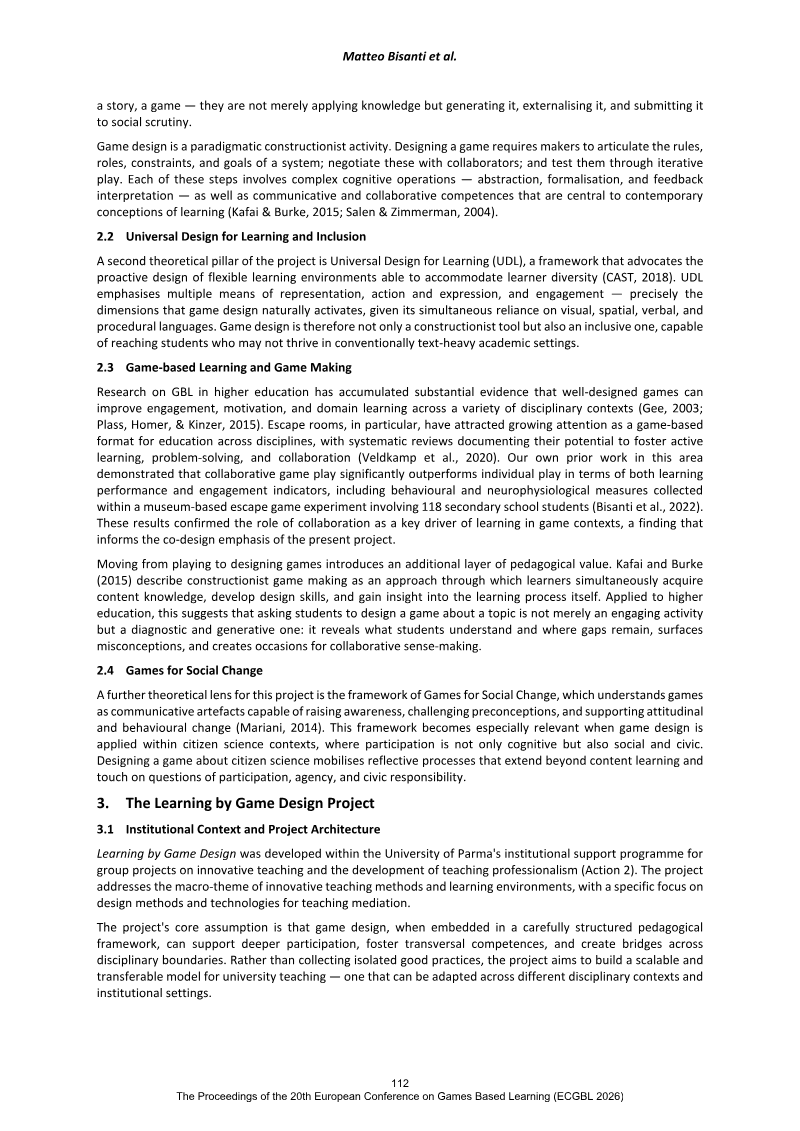
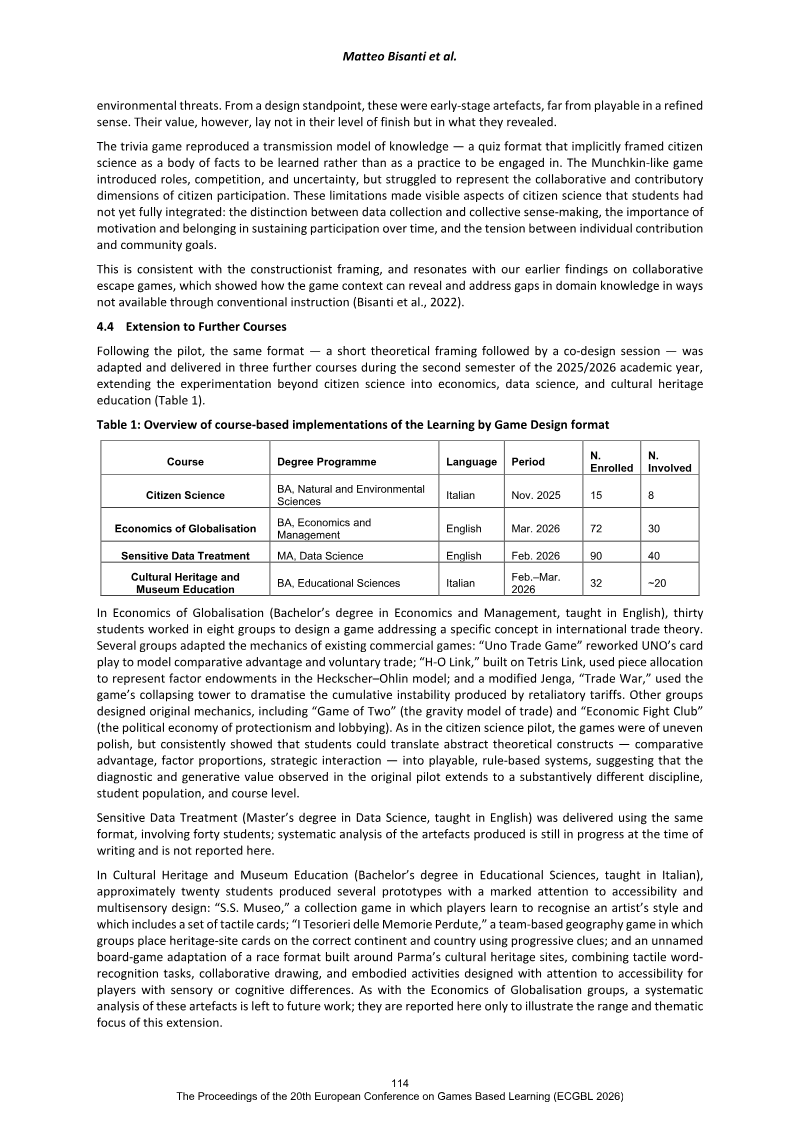
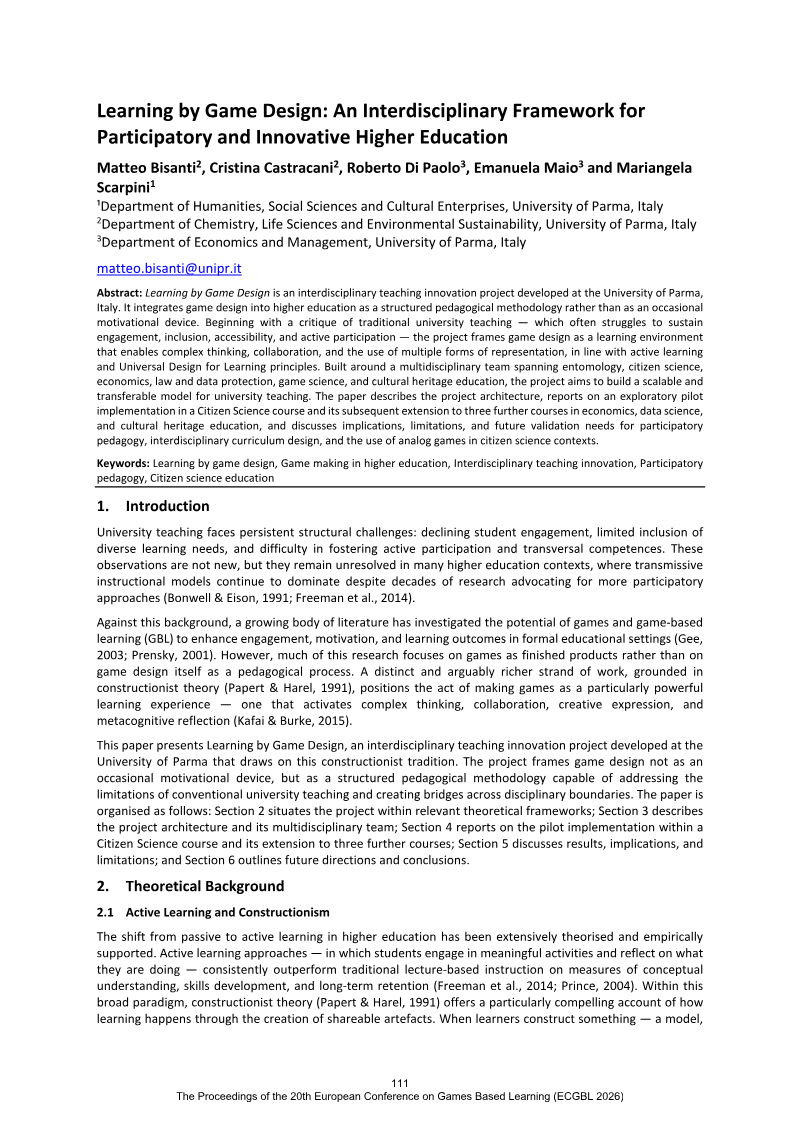
This work-in-progress study, conducted by researchers at the Universitat de les Illes Balears, proposes a three-year project to integrate independent video games into Spanish secondary education in order to strengthen teachers' video game literacy and students' ethical and socioemotional development, specifically European key competences 5 (personal, social, and learning-to-learn) and 6 (citizenship). The authors argue that indie games, produced by small studios with greater creative autonomy, offer richer possibilities for dialogical, sociocultural learning than commercial titles used in conventional game-based learning or gamification approaches. The project is framed as a combination of design-based research and mixed methods, with three objectives: mapping teachers' and students' perceptions of learning through games, designing and training teachers in a measurable program of classroom activities, and evaluating the program's impact on students.
The planned design is organized in phases. Initial questionnaires and focus groups will examine beliefs and practices among a proposed sample of 32 teachers and 640 students across four Spanish schools in Cantabria, the Balearic Islands, Andalusia, and Catalonia, with sampling described as accidental and nonprobabilistic. Four indie games, including Braid and Gris as examples of previously used titles, are to be selected according to criteria such as artistic value, explicit relevance to the competences, PEGI rating, price, and accessibility. Teachers will receive a six-session, twelve-hour training modality and implement five activities per game, with a quasi-experimental pretest-posttest design comparing experimental and control groups of 320 students each, assessed through validated instruments such as the Bar-On Emotional Quotient Inventory: Youth Version and the Child and Adolescent Scale of Participation.
The authors anticipate gains in students' competences 5 and 6, enriched game literacy among teachers, and broader benefits for critical digital literacy, citing prior meta-analytic evidence that social-emotional programs improve attitudes toward school, reduce disruptive behavior, and raise academic performance. As the project is still in its early stages, no empirical findings are yet reported; the work currently serves to establish its theoretical rationale, design, and evaluation plan.
Each row is a game or company this document names, each column a document, oldest first. A mark means that document names it. Select a row to see those documents.



European Conference on Games Based Learning (ECGBL) · 2026



European Conference on Games Based Learning (ECGBL) · 2026



European Conference on Games Based Learning (ECGBL) · 2026



European Conference on Games Based Learning (ECGBL) · 2026



European Conference on Games Based Learning (ECGBL) · 2026



European Conference on Games Based Learning (ECGBL) · 2026



European Conference on Games Based Learning (ECGBL) · 2026



European Conference on Games Based Learning (ECGBL) · 2026



European Conference on Games Based Learning (ECGBL) · 2026



European Conference on Games Based Learning (ECGBL) · 2026



European Conference on Games Based Learning (ECGBL) · 2026



European Conference on Games Based Learning (ECGBL) · 2026
European Conference on Games Based Learning (ECGBL) · 2026



European Conference on Games Based Learning (ECGBL) · 2026



European Conference on Games Based Learning (ECGBL) · 2026