HoYoverse
Company
Documents about HoYoverse

Games on iPhone Duo, Lego builds mobile arm, more App Store news, August’s top performers and more
The mobile games industry is currently navigating significant shifts in hardware, corporate strategy, and market performance.
- Apple's new iPhone Duo features a 7.6-inch Super Retina XDR display, an A20 Pro chip with a seven-core GPU, and performance metrics claiming up to 40% faster graphics and 35% better sustained performance than the iPhone 17 Pro.
- Reports indicate that new Apple leadership, including App Store boss Eddy Cue and CEO John Ternus, are seeking to increase App Store revenue, a strategy that reportedly contributed to the departure of former head Phil Schiller.
- LEGO Digital Play has acquired Offroad Games, the developer behind Chrome Valley Customs, as part of an expansion of its London-based mobile gaming division.

TWIG #398: Gaming's 2026 Reality Check, The GTA 6 Leak Nightmare and Why Jobs Are Still Vanishing
The global gaming industry is entering a period of stabilization and consolidation, with total revenue projected to reach $214 billion by 2026.
- The global gaming industry is projected to reach $214 billion in revenue by 2026, maintaining a steady six percent growth rate despite market cooling and workforce reductions.
- Console spending is forecast to surge by 17.5 percent, a growth trajectory heavily influenced by the anticipated release of Grand Theft Auto 6.
- Venture capital investment is shifting away from traditional game development, prioritizing AI infrastructure and project-specific financing instead.

Gamescom reaction, Clash Royale drama, Rovio's studio closure, Google's AI hypeman and more
The mobile games industry is currently experiencing a significant shift in market dominance, as evidenced by the recent Gamescom event in Cologne.
- Supercell’s internal review of Clash Royale revealed that aggressive changes, such as removing the season shop, caused significant community backlash due to poor communication and lack of transparency.
- Rovio is closing its Copenhagen studio and cancelling the hybrid card-action game Sonic Blitz, impacting approximately 20 employees.
- Gamescom 2024 was dominated by Chinese publishers like Tencent, Hoyoverse, and NetEase, who are successfully launching cross-platform titles on mobile, PC, and console simultaneously, while Western studios increasingly lag in mobile integration.

Direct-to-consumer banks $17 billion and Google rolls out fee changes | Week in Mobile Games podcast
Direct-to-consumer (DTC) platforms have emerged as a critical pillar of the mobile gaming economy, currently generating $17 billion in annual revenue and capturing 15% of the global market.
- Direct-to-consumer (DTC) platforms now generate $17 billion annually, accounting for 15% of the global mobile gaming market.
- While 92% of publishers expect DTC growth, only 25% of organizations currently possess the mature infrastructure required to scale these operations.
- The mobile gaming industry is experiencing a period of significant contraction, marked by recent layoffs at Electronic Arts, operational consolidation at Kabam, and anticipated restructuring at Xbox.

🚨📢 BREAKING NEWS: New Hoyoverse game, D2C stuff, layoffs and a WhatsApp game
The current state of the mobile gaming industry is defined by a significant shift toward direct-to-consumer (D2C) monetization, ongoing corporate restructuring, and the integration of artificial intelligence in operations.
- Mobile game direct-to-consumer (D2C) revenues are projected to reach $17 billion this year, driven by 53% of publishers planning to port titles to browser platforms to bypass traditional app store billing.
- AppsFlyer secured over $1 billion in funding at a $2.7 billion valuation, signaling continued investor confidence in mobile infrastructure despite broader industry volatility.
- Corporate restructuring persists as Electronic Arts continues workforce reductions during a $55 billion acquisition process, alongside notable layoffs at Netmarble subsidiary Kabam.
Google Play store fees, Kingshot's World Cup ads, AppsFlyer gets $1bn, Kabam layoffs, more
The mobile games industry is currently navigating significant shifts in platform policy, investment trends, and studio operations. A primary development is Google’s adjustment of Play Store fees, effective June 30.
- Starting June 30, Google Play is lowering store fees for most developers in Western markets, effectively reducing the standard 30% fee to approximately 25% for in-app purchases.
- AppsFlyer secured a $1 billion investment from Google, Meta, Unity, and Moloco, a move analysts suggest is intended to bolster the company's independence and measurement capabilities against AppLovin's market dominance.
- Queen Digital Entertainment, a startup founded by former King executives that raised up to $50 million in VC funding, has ceased operations after failing to scale its casual puzzle game portfolio.

The Onslaught of Summer Games Fest, Steam Deck price go BRRRR & the Logo Wars! | Games for Breakfast
The modern gaming industry is currently navigating a period of significant structural and ethical turbulence, characterized by the oversaturation of promotional events and the aggressive consolidation of corporate power.
- Summer Game Fest (June 1–8) has been criticized for its cluttered schedule, with organizers grouping diverse showcases into single days rather than spreading them out, which risks sidelining niche and identity-focused game presentations.
- Take-Two Interactive has effectively shut down RageMP, a prominent multiplayer modding platform for Grand Theft Auto V, by asserting that it is the only authorized platform for the game.
- Rising hardware costs, specifically regarding the Steam Deck, are being driven by persistent component shortages that impact even newer iterations of the hardware.
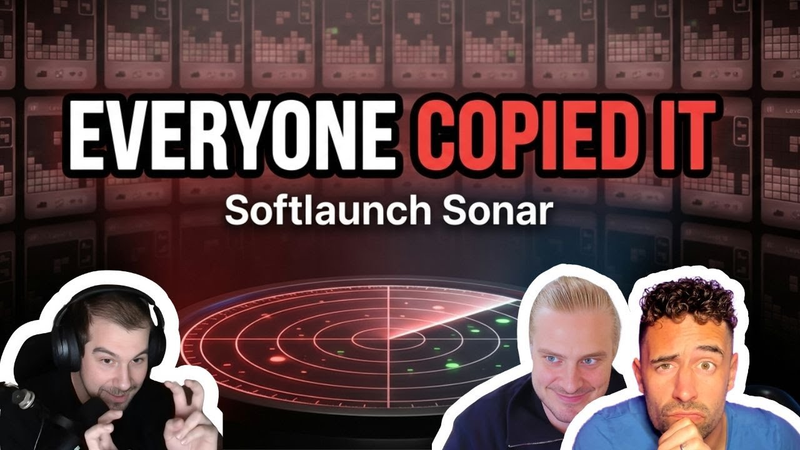
Softlaunch Sonar: Why everyone is cloning Pixel Flow! (and still missing the point)
The mobile gaming industry is currently defined by a pervasive clone-first mentality, where developers prioritize rapid production cycles and cost-efficiency over original design.
- Direct cloning of successful titles like Pixel Flow is an unsustainable strategy because derivative products fail to capture market momentum and struggle to achieve long-term player retention.
- The match-three genre functions as a high-barrier environment where non-major developers rarely secure sustainable lifetime revenue, making it an ineffective target for rapid replication.
- Success in the current mobile market is driven by strategic timing and the development of unique gameplay hybrids rather than high production polish or simple aesthetic variations.

Week in Mobile Games E69 - The big AWS crash and Google delays Android regulation
The mobile gaming industry is currently navigating a period of significant structural and regulatory transformation, characterized by a push toward open ecosystems and a diversification of game genres.
- The mobile gaming industry generates approximately $120 billion in annual in-app purchase revenue, driving intense competition for user engagement.
- Google has been granted a one-week extension regarding a legal injunction that would require the company to permit rival payment options on its platform.
- Studios are increasingly adopting direct-to-consumer strategies and unified commerce dashboards to manage cross-platform operations independently of traditional platform gatekeepers.
Week in Mobile Games E31 - The Top 50 Mobile Game Makers 2024 revealed!
The global mobile gaming industry is currently navigating a complex landscape defined by economic volatility, shifting regulatory environments, and a strategic pivot toward sustainable growth.
- Scopely is the top mobile developer of 2024, driven by Monopoly GO! generating $3 billion in revenue within its first 15 months.
- Epic Games is aggressively competing for developer loyalty by reducing Unreal Engine royalty fees to 3.5% and offering 100% net revenue for new titles launched exclusively on its store.
- The mobile market is shifting from hyper-casual to hybrid-casual business models to prioritize long-term profitability and improved player retention.

TWIG #302 Epic Legal Showdowns, Ubisoft Woes, and MMO Thrills
The global video game industry is currently navigating a period of significant structural volatility, characterized by shifting consumer ownership rights, evolving hardware paradigms, and the struggle to balance profitability with creative output.
- Western AAA publishers are struggling to replicate the dual-skew mobile and PC development models mastered by Eastern firms like HoYoverse, whose title Genshin Impact has generated over $4 billion in mobile revenue.
- The industry is shifting from aggressive expansion to cautious portfolio management as developers face audience cannibalization and the rising costs of maintaining high-fidelity gaming experiences.
- Major publishers are increasingly leveraging artificial intelligence to reduce headcounts and bolster profit margins, contributing to a period of structural volatility and internal instability at firms like Ubisoft.

Week in Mobile Games E30 - Ubisoft's woes and Genshin Impact hits $6bn in four years(!)
Ubisoft currently faces a period of profound instability characterized by a 20 percent decline in share price, driven by the strategic delay of Assassin’s Creed Shadows and the underwhelming commercial performance of Star Wars Outlaws.
- Genshin Impact has generated $6.3 billion in lifetime revenue over four years, demonstrating the long-term viability of mobile live-service titles despite a recent dip in annual earnings due to market saturation.
- Ubisoft is facing significant financial instability, marked by a 20 percent share price decline following the delay of Assassin’s Creed Shadows and the poor commercial performance of Star Wars Outlaws.
- Dungeon & Fighter Mobile has emerged as a major revenue driver, securing over $800 million in gross revenue within its first four months in the Chinese market.