Creative
Company
Documents about Creative
Roguelikes And Narrative Design With Hades Creative Director Greg Kasavin - GDC Podcast
The transition from game journalism to development offers a unique perspective on the industry, emphasizing the importance of analytical rigor in creative production.
- Supergiant Games maintains a small, stable team structure to preserve the long-standing personal relationships and collaborative synergy that define their development process.
- The studio prioritizes the element of surprise in game design, intentionally avoiding sequels to ensure each project offers a distinct and novel experience.
- Supergiant Games utilizes Early Access to shorten the feedback loop, allowing them to test core ideas and validate narrative resonance with players long before a full release.
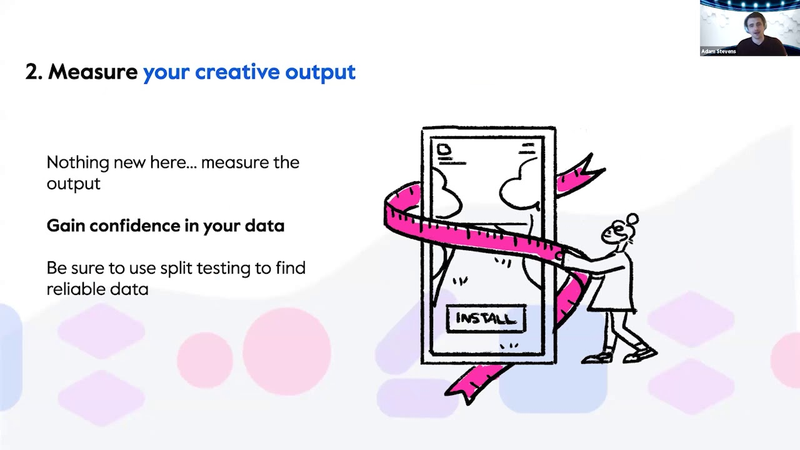
We’re Only as Good as Our Last Creative: Creative Automation Can Transform Your Growth Strategy
Creative production serves as a primary competitive advantage in the modern mobile gaming landscape, necessitating a transition from subjective decision-making to a structured, data-driven framework.
- Creative production must shift from subjective decision-making to a structured, data-driven framework that isolates specific variables like character design and layout to identify emotional drivers.
- Creative automation is essential for scaling operations, as it allows teams to iterate on high-performing concepts rapidly while offloading repetitive production tasks.
- To maintain effective user acquisition amidst increasing constraints on user-level tracking, studios must utilize granular performance metrics to replace traditional black-box testing.
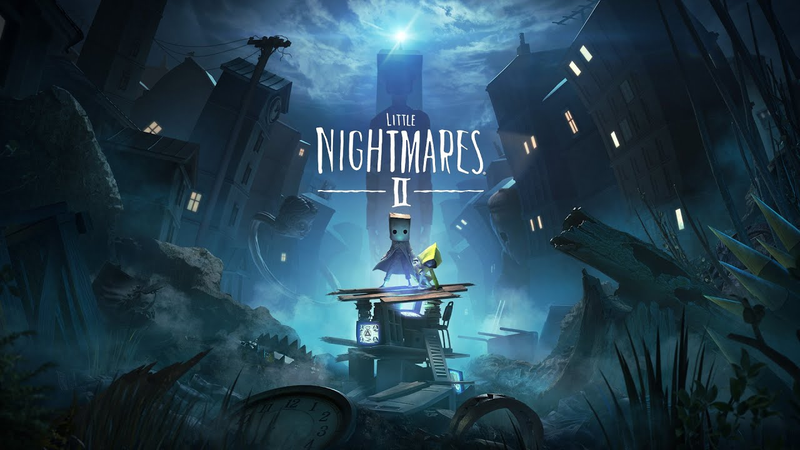
Getting Creative after World Changing Events with Dave Mervik | Game Dev Unchained Episode 255
The game development industry has undergone a fundamental transformation in response to the COVID-19 pandemic, shifting from traditional, office-centric models toward a flexible, output-based culture.
- The game development industry has transitioned from office-centric models to a flexible, output-based culture that prioritizes developer well-being and global talent acquisition over rigid nine-to-five schedules.
- Remote work has introduced the risk of 'self-crunching,' where the lack of physical separation between home and office leads to burnout and a narrowing of the personal experiences that fuel creative inspiration.
- Global crises, including the pandemic and social unrest, have shifted the industry's creative focus toward themes of social fragility, systemic failure, and the complexities of human experience under pressure.
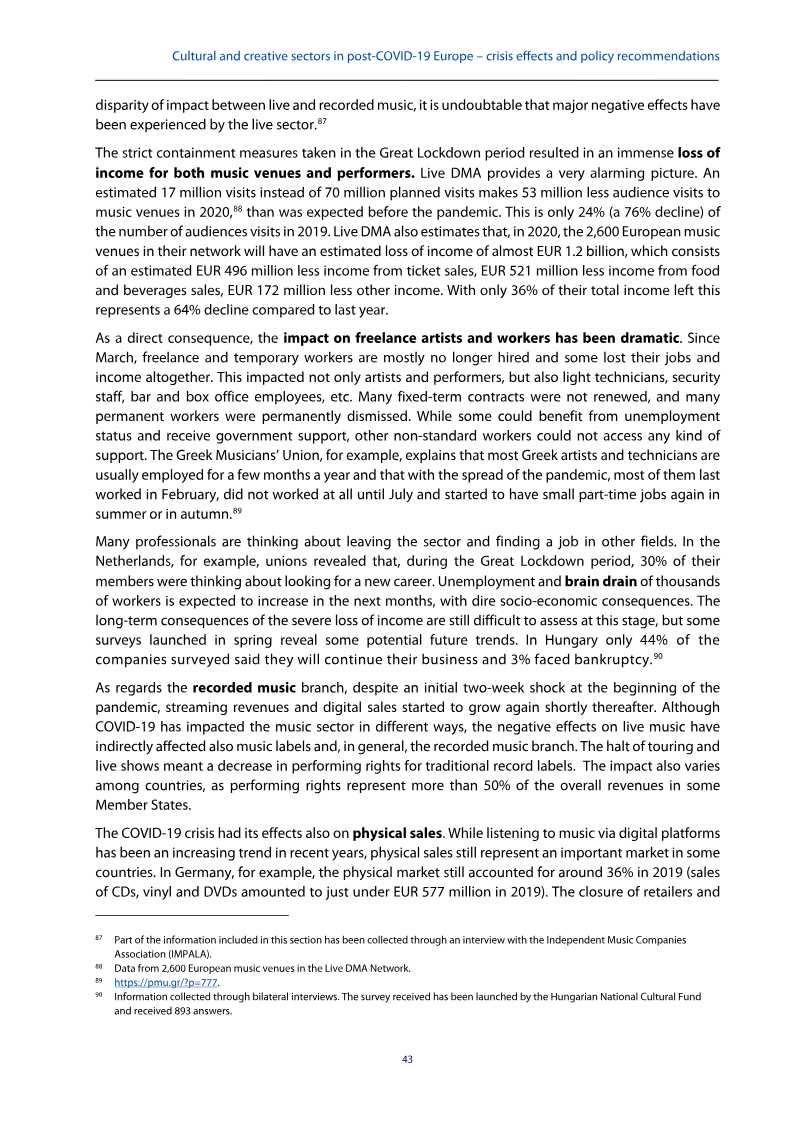
Cultural and Creative Sectors in Post-COVID-19 Europe: Crisis Effects and Policy Recommendations
The COVID-19 pandemic served as a profound stress test for Europe’s cultural and creative sectors (CCS), exposing deep-seated structural vulnerabilities that existed long before the crisis.
- The Cultural and Creative Sectors (CCS) in the EU-27 were economically fragile before COVID-19, characterized by over 1.1 million enterprises (5% of non-financial businesses) generating EUR 145 billion (2.3% of the non-financial business economy) in 2017, with growth rates slightly above the overall non-financial business economy (1.5% vs 1.4% annually between 2012-2017).
- The COVID-19 pandemic severely impacted the CCS through measures like halting non-essential business, banning public events, and restricting movement, leading to significant income loss for suppliers (e.g., sound/lighting, caterers) and local economies dependent on festivals and events.
- Freelance performing artists, who often rely on multiple income streams and networking at events, were particularly hard hit by movement bans and social distancing, with many unable to access public support.
Steam 'prologues'… Do They Really Help?
The practice of releasing standalone Steam prologues—short, free excerpts of a game hosted on a separate store page—serves as a common but debated marketing tactic for independent developers.
- Standalone Steam prologues are supplementary marketing tools that do not consistently drive high-quality conversions or significant sales spikes for the full game.
- Releasing a prologue after the full game has already launched is ineffective and yields minimal impact on total sales.
- The most effective prologues function as short, focused teasers rather than extensive gameplay demos that risk satisfying player curiosity entirely.
The State of Mobile Game Advertising 2021
The report examines U.S. mobile game advertising in 2021, focusing on ad network share of voice (SOV), creative formats, genre-specific trends, and demographic alignment.
- Gaming-centric networks including Chartboost, Unity, Adcolony, ironSource, and Vungle maintained over 90% share of voice (SOV) for mobile game advertising on iOS and Android throughout 2021.
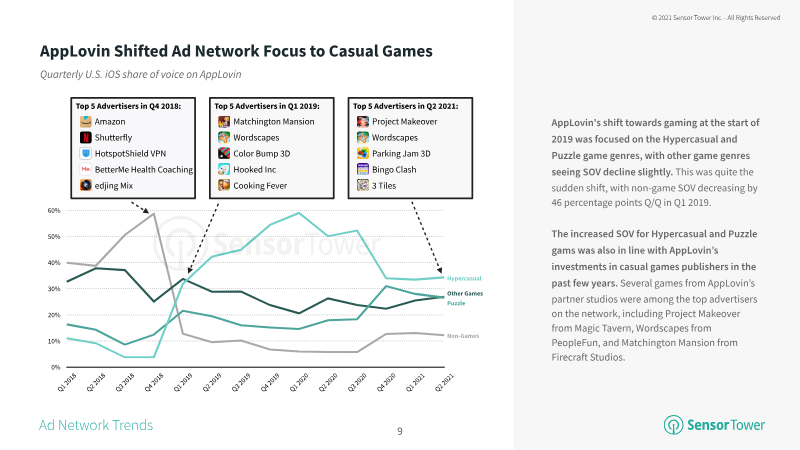
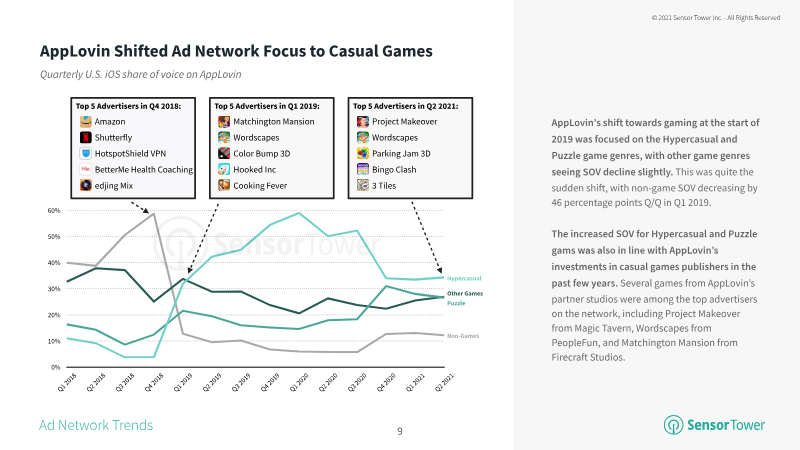
- AppLovin and MoPub aggressively pivoted toward hypercasual publishers, increasing their game SOV to approximately 90% on iOS and 80% on Android by early 2021.
- AdMob increased its focus on Google Play titles, raising its game SOV from 60% to 80% by Q2 2021.
Mobile Ad Creative Report: August 2021
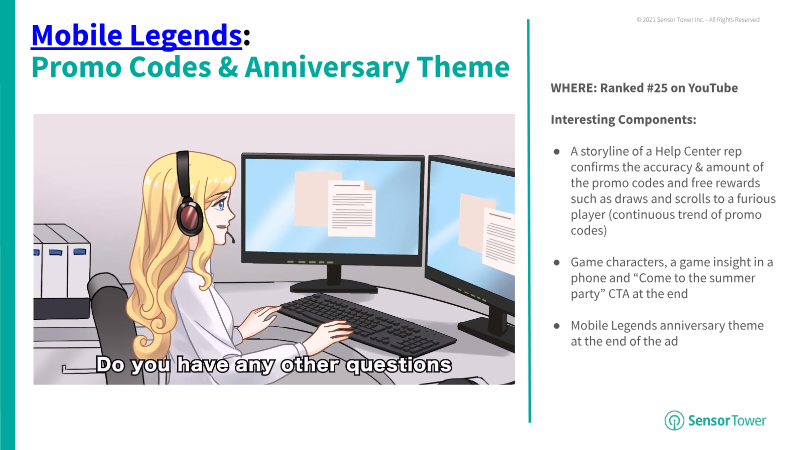
Mobile gaming creative trends in August 2021 centered on humanizing digital experiences and leveraging high-profile cultural partnerships.
- Mobile gaming ads in August 2021 shifted toward high-fidelity, narrative-driven content featuring real-world celebrity partnerships, such as Garena Free Fire’s collaboration with Dimitri Vegas & Like Mike and Call of Duty Mobile’s integration of Ozuna.
- Top-performing creatives are increasingly moving away from pure gameplay footage in favor of cinematic storytelling, anniversary-themed promotions, and interactive elements like Buzzfeed-style quizzes.
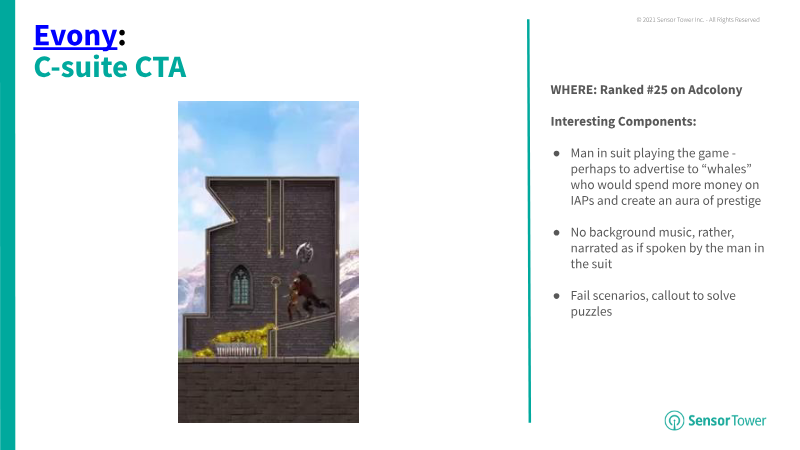
- Psychological triggers remain a core engagement strategy, with 'fail-state' ads—demonstrating a player losing a level—continuing to drive performance for titles like Royal Match and Evony.
The State of Mobile Game Advertising: An Analysis of U.S. Mobile Game Advertising Trends in 2021
Mobile game advertising in the United States remained resilient through the first half of 2021, showing no immediate negative impact from privacy changes such as the deprecation of IDFA.
- Mobile game advertising in the U.S. remained resilient through H1 2021, showing no immediate negative impact from the deprecation of IDFA.
- Playable ads have become a dominant creative format, accounting for over 40 percent of the gaming share of voice on AppLovin.
- Specialized ad networks like AppLovin, Chartboost, and Vungle maintain a gaming-focused inventory exceeding 90 percent share of voice, while platforms like Facebook, TikTok, and YouTube provide broader audience reach.
3 Successful Creative Trends for Mobile Gaming Ads
Mobile game publishers are increasingly relying on innovative creative strategies to secure user acquisition in a highly competitive market.
- Major publishers like Zynga and Rollic Games are successfully using intentionally misspelled ad copy, such as 'Only %1 poeple can pass this,' to drive engagement across platforms including TikTok, Facebook, and Snapchat.
- Playrix has shifted its creative strategy for Homescapes toward character-focused narratives involving infidelity and heartbreak, mirroring themes previously popularized by competitors like Matchington Mansion and Lily's Garden.
- KamaGames' Pokerist achieved a No. 1 ranking for Chartboost casino creatives in November 2020 by using a 'pause' button mechanic to surprise viewers and pivot into a multi-product showcase.

5 Creative Skills for Jewelry Ads: Case Study
This 2020 analysis examines effective creative strategies for jewelry advertising during the COVID-19 pandemic, a period marked by heightened market competition and shifting consumer behaviors.
- In a two-month window during 2020, over 1 million jewelry-related advertisements appeared on Facebook, highlighting the extreme market saturation brands faced.
- Nearly 90% of successful jewelry advertisements analyzed prioritized high-quality product details to capture consumer attention.
- Men represented 42.9% of the audience engagement for jewelry-related keywords, suggesting a significant opportunity for targeted masculine lifestyle imagery.


Creative Vision for Our Games: Remedy Capital Markets Day 2020
Remedy Entertainment’s 2020 Capital Markets Day presentation establishes a creative framework centered on the development of immersive, atmospheric game worlds.
- Remedy Entertainment’s 2020 strategy centers on developing immersive, atmospheric game worlds where environmental storytelling is integrated directly with specialized mechanical systems.
- The studio prioritizes high-concept fiction by creating cohesive, surreal settings like the Oldest House and the Astral Plane that function as both narrative backdrops and interactive playgrounds.
- Technical design philosophy emphasizes functional depth, exemplified by the Service Weapon’s architecture, which integrates specific components like barrels, triggers, and power sources into the broader world-building.
6 Creative Skills for Clothing Ads: Case Study
The analysis identifies six distinct creative strategies employed in contemporary clothing advertising, each illustrated with specific case examples.
- Creative ingenuity in clothing advertising is a primary driver of sales performance and long-term brand vitality in competitive markets.
- Trend-driven campaigns targeting specific demographics, such as Japanese and Korean styles for Vietnamese youth, are highly effective at generating high traffic and maximizing conversions.
- Environmental and sustainability messaging, as demonstrated by Makara Wear, serves as a cost-effective differentiator for swimwear brands across diverse markets including the U.S., Thailand, and Mexico.