Creative
Company
Documents about Creative
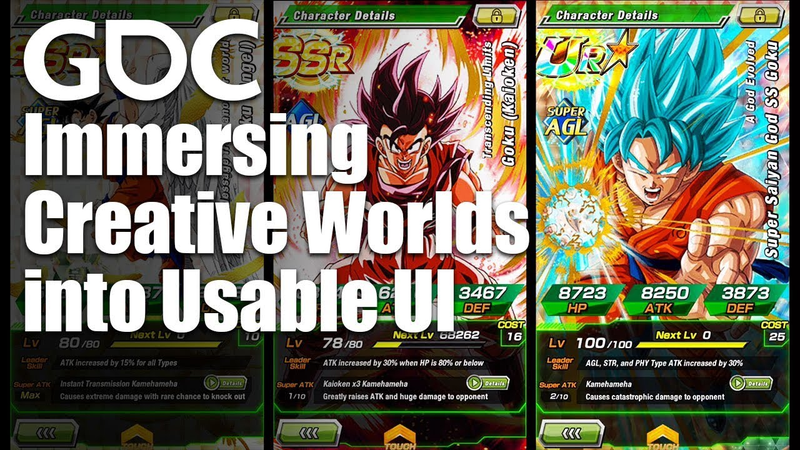
Immersing a Creative World into a Usable UI
Effective user interface design in gaming hinges on the delicate equilibrium between narrative immersion and functional clarity.
- Effective UI design requires balancing narrative immersion with functional clarity by ensuring visual elements like typography and iconography act as extensions of the game world.
- Designers should follow a three-phase process of research, exploration, and iteration to maintain an intuitive interface that reinforces the game's aesthetic identity.
- The choice between diegetic UI, which exists within the game environment, and non-diegetic UI, which is often better for managing high cognitive loads in complex games, is a fundamental strategic decision.
Extract Immense Value from Creative Optimisation
Creative optimization serves as a critical lever for user acquisition managers to improve campaign performance by increasing installs per mille (IPM).
- Creative optimization directly improves campaign performance by increasing installs per mille (IPM), which allows advertisers to win more network auctions or reduce costs while maintaining competitiveness.
- Automated, self-optimizing playable ads use machine learning to conduct real-time iterations of variables like animation speeds, color schemes, and end-cards without manual intervention.
- Shifting from manual A/B testing to automated systems enables rapid performance gains, with some campaigns achieving double-digit percentage increases in click-through rates and IPM within days.
Creadits: Scaling Creative for User Acquisition
The primary objective of this presentation is to shift the focus of user acquisition strategies from mere creative optimization to creative maximization.
- Creative maximization must replace creative optimization to expand the total addressable market beyond core audiences and combat the performance degradation that occurs as mobile games scale.
- Modern ad platforms like Facebook and Google require high-volume creative assets to feed their automated backend segmentation algorithms, which struggle to find diverse user sub-segments when provided with limited content.
- Marketers should shift from basic look-alike modeling to mapping creative concepts directly to specific psychological drivers and gamer motivations.
A Rebuilding Year - Navigating the Ups and Downs of Creative Careers - Extra Credits
The concept of a rebuilding year serves as a strategic framework for navigating personal and professional crises.
- A 'rebuilding year' is a strategic framework that shifts focus from immediate success to intentional resource renewal and experimentation when original goals become unattainable due to crisis.
- Reframing a period of failure as a deliberate rebuilding phase mitigates the psychological impact of shame and regret, allowing for low-risk exploration of new career paths or skill development.
- Successful organizations, such as Nintendo, have historically utilized periods of market struggle to pivot toward innovative product development rather than adhering to failing legacy models.
Conquering the Creative Challenges in Marvel's Spider-Man
The development of Marvel’s Spider-Man centered on the ambition to craft a definitive superhero experience that balanced high-stakes action with the grounded, human struggles of Peter Parker.
- Marvel’s Spider-Man achieved record-breaking commercial success as the fastest-selling PlayStation title at launch, moving 3.3 million units within its first three days.
- The development team prioritized the core character tension between Peter Parker’s personal life and his superhero responsibilities to ensure emotional resonance and narrative depth.
- The studio moved away from traditional superhero tropes by reimagining the protagonist as a 23-year-old, focusing on situational humor and authentic character development rather than forced quips.
Art Direction Bootcamp: Building a Creative Future with Artificial Intelligence
Artificial intelligence represents a critical evolution in game development, functioning as a transformative tool to mitigate industry-wide burnout and unsustainable production costs.
- AI integration shifts the artist's role from manual execution to high-level creative direction, allowing for faster iteration by automating repetitive technical tasks like fluid simulations, lighting, and texture generation.
- The adoption of assistive intelligence serves as a solution to the industry's sustainability crisis by reducing the unsustainable production costs and technical complexity that currently stifle creative risk-taking.
- AI acts as a force multiplier for smaller teams, enabling them to produce high-quality content and achieve results that previously required large, resource-heavy workforces.

Creative Life in Game Dev: It’s Not Personal with Emily Grace Buck | GduX.me
The game development industry is currently undergoing a critical shift as professionals move away from a culture that conflates personal identity with professional output.
- The game industry’s historical 'family' culture is frequently used to normalize excessive crunch and exclusionary social dynamics, leading to high rates of burnout and attrition.
- Data shows that productivity significantly declines after 55 hours of work per week, proving that the industry's traditional reliance on long hours is counterproductive to project quality.
- Academic settings often condition students to accept unsustainable labor practices as a standard requirement for entry, perpetuating a cycle of overwork early in a developer's career.
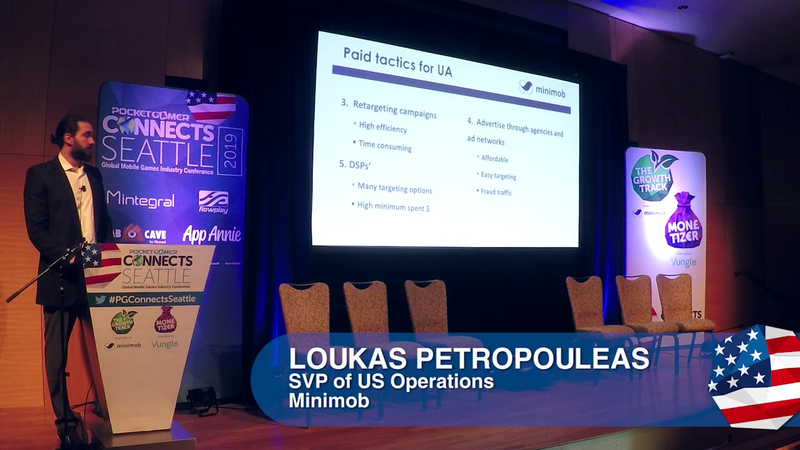
Creative user acquisition tactics for mobile apps
Effective mobile user acquisition requires a disciplined, data-driven approach that balances aggressive growth with long-term retention.
- Prioritize user retention over acquisition, as acquiring a new user is four to ten times more expensive than retaining an existing one.
- Adopt a 90/10 budget allocation strategy, dedicating 90 percent of funds to proven acquisition channels while reserving 10 percent for testing new sources to mitigate risk.
- Implement sophisticated user segmentation based on geographic data, purchase behaviors, and interaction timelines to trigger personalized re-engagement campaigns, such as targeted discounts for abandoned purchases.
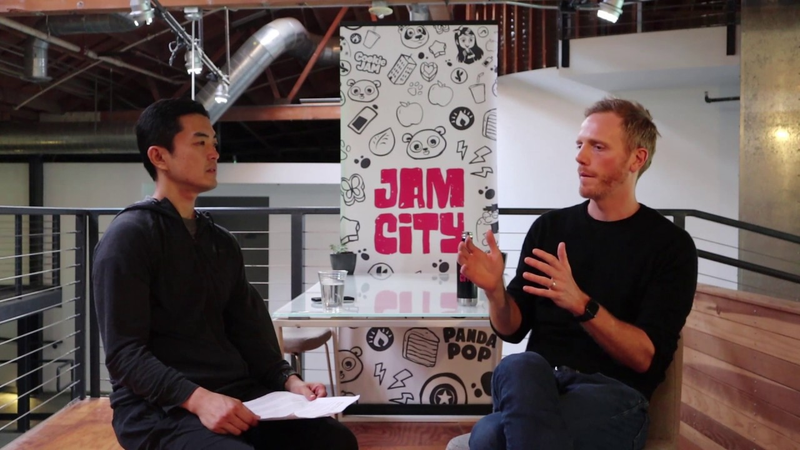
How to get 40M installs? Mobile Games Marketing | Brian Sapp VP User Acquisition at Jam City
User acquisition (UA) in the mobile gaming industry functions as a data-driven performance marketing discipline, distinct from brand marketing in its reliance on measurable key performance indicators (KPIs) such as cost per user and return on investment.
- User acquisition (UA) at Jam City is a performance-based discipline where marketing budgets are strictly allocated based on projected payback periods and the specific lifecycle phase of each game title.
- The UA process follows a structured R&D path: starting with technical stability in soft launches, moving to retention metrics in secondary markets, and concluding with predictive lifetime value (LTV) modeling in primary territories.
- UA departments should be organized into cross-functional 'supercells' consisting of media buyers, analysts, and creative strategists to ensure ownership and alignment between marketing and game production.

Real Time Rendering for Feature Film: Rogue One
The integration of real-time rendering into the production of Rogue One: A Star Wars Story represents a pivotal shift in visual effects workflows, proving that high-fidelity game engine technology can meet the rigorous aesthetic standards of feature film production.
- The Advanced Development Group successfully integrated Unreal Engine into the production of 'Rogue One' to render the character K-2SO, proving game engine technology can meet high-end feature film aesthetic standards.
- The workflow utilized open standards like Alembic and Material X to import complex ILM assets into a real-time environment without requiring custom rebuilding.
- By employing custom solutions for geometry caching and temporal super-sampling, the team achieved film-quality beauty renders at 9K resolution.
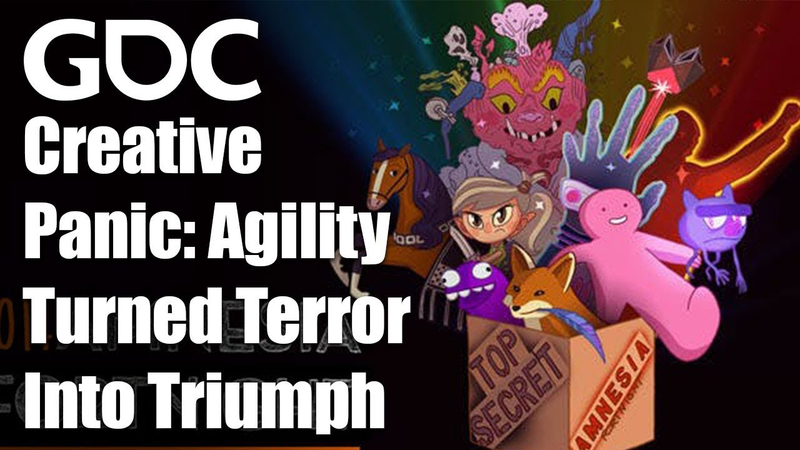
Creative Panic: How Agility Turned Terror Into Triumph
Double Fine successfully navigated a period of significant financial instability and project cancellation by adopting an agile, multi-team organizational structure.
- Double Fine transitioned from a single-project model to a flexible, multi-project organization by adopting an agile structure that empowered small, autonomous teams to lead their own concepts.
- The studio implemented 'Amnesia Fortnight,' a recurring two-week internal game jam, to serve as both a professional development pipeline and a source for new intellectual property.
- Operational efficiency was maintained through an 'economy of design' strategy, which prioritized core mechanics and the strategic reuse of existing assets to maximize output under tight constraints.
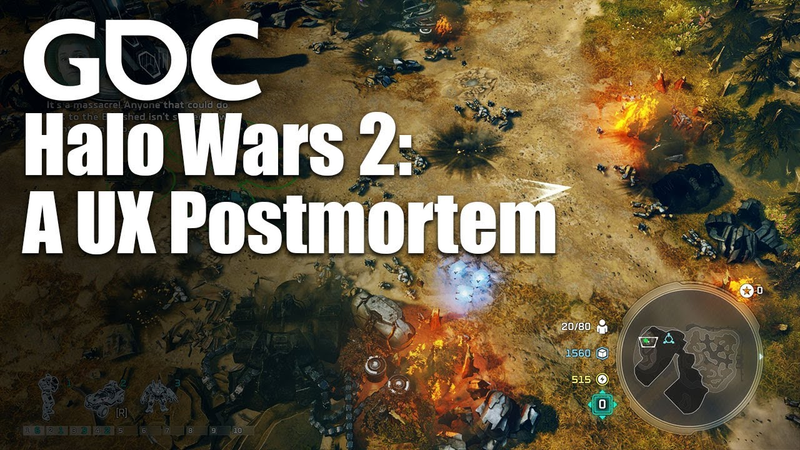
Halo Wars 2: A UX Postmortem
The development of Halo Wars 2 required a complex user experience (UX) strategy to bridge the gap between a legacy console-based real-time strategy (RTS) franchise and the demands of a modern, cross-platform audience.
- The development of Halo Wars 2 required a collaborative partnership between 343 Industries and Creative Assembly to adapt the legacy RTS franchise for a modern, cross-platform audience.
- To lower the barrier to entry, the team introduced Blitz mode, which successfully integrated card-based strategy with RTS mechanics.
- Iterative design testing for Blitz mode revealed that initial interfaces were too cluttered for console play, leading the team to adopt a simplified 12-card deck system with a streamlined horizontal interface.