1 free read left. Create a free account for unlimited reading + AI research.
Create free account
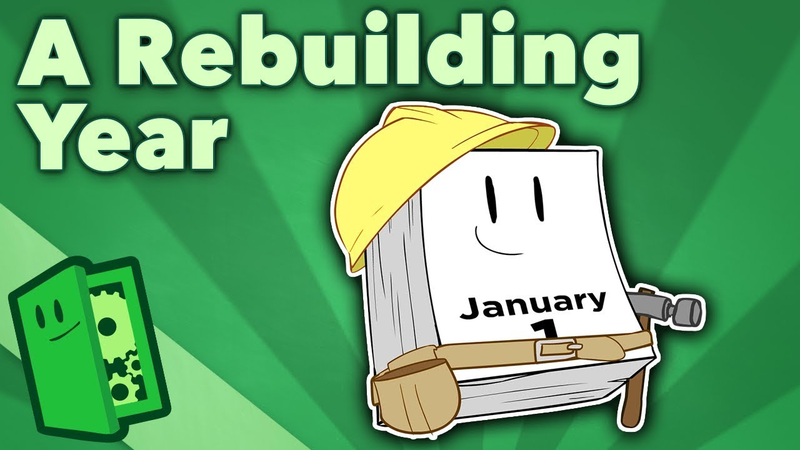
A Rebuilding Year - Navigating the Ups and Downs of Creative Careers - Extra Credits
Key insights
6 takeaways- 01A 'rebuilding year' is a strategic framework that shifts focus from immediate success to intentional resource renewal and experimentation when original goals become unattainable due to crisis.
- 02The primary barrier to recovery is the refusal to accept changed circumstances, which leads to professional burnout and stagnation.
- 03By consciously declaring a rebuilding period, individuals create the necessary space to recalibrate ambitions and test new variables to regain momentum for long-term objectives.
- 04Successful organizations, such as Nintendo, have historically utilized periods of market struggle to pivot toward innovative product development rather than adhering to failing legacy models.
- 05Effective recovery requires establishing achievable subgoals to track progress while deliberately allocating time for self-care and the acquisition of new, latent skills.
- 06Reframing a period of failure as a deliberate rebuilding phase mitigates the psychological impact of shame and regret, allowing for low-risk exploration of new career paths or skill development.
Ask AI about this video
Transcript
Not every year is going to be your best year. Some years not everything's going to go according to plan. And other years, things really aren't going to be all right. But when that happens, how we face it is one of the biggest tests of who we are. And here, there's something we can learn from games that might help. Sometimes you don't get into the school you wanted, you lose your job, or someone close to you gets very sick. All of the sudden, you're reeling. All those goals, all those plans you had, go out the window. And in these moments, sometimes you need a rebuilding year. And that's okay. What's a rebuilding year? Well, in sports, when something devastating happens, maybe you lose your best quarterback, or your striker blows out a knee, and suddenly you're not going to be winning any championships that year. Instead of giving up or trying fruitlessly to reach a goal that's become nearly impossible, the coaches acknowledge this and take a step back and try to answer this question. What can we do now to have the best
chance at winning the championship next year? That year you take preparing to get there, that's a rebuilding year. The first important lesson to be taken from the rebuilding year is simply that those goals, those dreams you had, they're not gone. They're almost never suddenly made completely impossible. They may have taken a slightly different shape or involved different people, but there are still good things out there. And even when faced with catastrophes, there's still some possible future that could be incredible. So, we focus on figuring out what that future is and how we might get there. Of course, this doesn't mean that you don't take the time to take care of yourself after a terrible thing happens. That's an important part of rebuilding. It just means that you don't accept defeat. You don't give up or stay in a loop of shame, self-pity, or regret, because those actually aren't taking care of you. Instead, you recognize that it's time to reframe your journey in a different light. You have to take the first step of the rebuilding year and ask yourself, what is it you really want? Is it still the same thing? Is it
something slightly different? Or did your world change enough to make you want something totally divergent out of your future than before? Because once you have a goal, you can start to figure out how to get there. This is the core idea of the rebuilding year. Instead of giving up on your dreams, or continuing to pretend that everything is the same as it was before, and then blaming yourself when you don't live up, ask yourself what your best life could look like now, and start to aim for that. You're going to ask yourself what you can do, instead of fixating on what you can't. You're going to renew your resources, grow your abilities, and get to the point where you have the tools you need to take another run at the thing you want from life. And there's no shame in that. But this step, figuring out how to start to get back on track, is often the hardest. It's the easiest place to give up, to just throw your hands in the air, and say you don't even know where to begin. But here is a lesson we can take from games. You are allowed to be wrong. In fact, if you take a look at sports again, often a reason that team takes a rebuilding
year, where they're not even trying for a championship goal, is because they don't know how to get there yet. But if you're now unburdened of the great weight of having to stay on track, or to get to your goal right away, you can start trying things that you think might be right, and see if they seem to be leading you in the right direction. Risks that you couldn't afford to take before become nearly zero cost. Once you say to yourself, this isn't the year where I'm going for the gold. It's a rebuilding year. To go back to our sports analogy one more time, if you're trying for the playoffs, you need to know the quantities on the field. People that you're sure can perform to a certain level. But in a rebuilding year, teams will often try out their rookies, giving lots of time to the new people who might be exactly what the team needs to build around for the next year. And who cares if they fumble a ball or throw a game? Because the championship wasn't in the cards this year anyway. Learning who might be a breakout star, and giving them experience and time to grow is way more valuable than winning an individual game. Or an everyday life example, let's say you lose your job. Now you might as well
apply to all of those jobs you always thought you might want to. Maybe hop industries, go for a job in something you always used to love or have always been curious about. Because when you were 8 years into your last career, that would have seemed like a huge risk. But now, who cares if you hate it and quit after a month? It costs you almost nothing. Sometimes losing something you think is essential is like a reset button. You become free to take a step back and really try out some of the things that would have cost too much before. And even game companies do this. Take Nintendo. Remember when everyone was saying they were going to go the way of Sega and never make a console again after the GameCube? They took a step back, tried things they never would have tried if the GameCube had been a huge success, and started rolling out products like the 3DS and the Wii. But once you're pretty sure you've figured out the path toward your goal, make subgoals. Things that are achievable and that you can verify to yourself. A team taking a rebuilding year may identify that it's weak at bat and decide that they need at least three players with
over a .280 batting average. They'll train for this, they'll trade for this, and when it's done, they'll know they're one step closer to their ultimate goal. But perhaps the most important thing of all is simply to acknowledge when it's a rebuilding year. I've known too many people who have had something catastrophic happen to them and instead of admitting that they're just not in the same place that they were a few months back, they frantically try to achieve the same goals that they had before, only to become more and more overwhelmed, never giving themselves space to build back up. And both James and I have struggled with this in our own lives because it's hard. There are all sorts of people with expectations of you, and you have expectations of yourself. It can feel like you're failing everyone when you're not going to hit the goal you've been aiming at for so long. But if you're really going to recover and succeed, you have to allow yourself time to build back up when you've hit a major loss. So, as tough as it is, it's okay. Because there's going to be rebuilding years in your life. There'll be times
when something hits you out of left field, and the path you thought you were on will disappear. Yeah, right there, that moment. Take a year, marshal your resources, try new things, rebuild. There's nothing to be ashamed of in that. Because for all of us, to really achieve what we want in life, sometimes the most effective thing to do is to acknowledge that this is a rebuilding year.
Summary
The concept of a rebuilding year serves as a strategic framework for navigating personal and professional crises. Drawing parallels from sports management and game design, the core thesis posits that when catastrophic setbacks render original goals temporarily unattainable, individuals should pivot from a pursuit of immediate success to a period of intentional resource renewal and experimentation. This approach encourages shifting focus from what is lost to identifying new, viable paths forward, thereby transforming a period of crisis into a foundation for future achievement.
The methodology emphasizes the psychological necessity of reframing failure. By acknowledging that a specific timeframe is dedicated to rebuilding rather than immediate victory, individuals can mitigate the paralyzing effects of shame and regret. This transition allows for low-risk experimentation, such as exploring new career paths or developing latent skills, which would otherwise be deemed too risky under normal circumstances. The strategy mirrors the behavior of successful organizations, such as Nintendo, which utilized periods of market struggle to pivot toward innovative product development rather than adhering to failing legacy models.
Key recommendations include the establishment of achievable subgoals to track progress and the deliberate allocation of time for self-care and skill acquisition. The analysis concludes that the most significant barrier to recovery is the refusal to accept that one’s circumstances have changed, which leads to burnout and stagnation. By consciously declaring a rebuilding year, individuals grant themselves the necessary space to recalibrate their ambitions, test new variables, and ultimately regain the momentum required to pursue long-term objectives with renewed capacity.

























Comments