BioWare
CompanyCanada
Documents about BioWare

Electronic Arts (EA) Layoffs: 1,900 Jobs Lost
Between 2023 and 2026, Electronic Arts underwent a significant period of corporate restructuring, resulting in the loss of approximately 1,900 jobs across its global operations.
- Electronic Arts (EA) reduced its workforce by approximately 1,900 employees between 2023 and 2026 as part of a broad corporate restructuring and cost-cutting initiative.
- A major layoff event occurred on March 29, 2023, when the company cut 6% of its total workforce, amounting to roughly 775 employees.
- EA shifted its corporate structure by splitting into two distinct verticals, EA Sports and EA Entertainment, to streamline operations and prioritize owned intellectual property over high-risk licensed projects.

GamePass Shifts, FIFA’s New Partner, and EA’s Record-Breaking Quarter: Gaming Industry Highlights Weeks 42-45
The article examines key shifts in the gaming sector during weeks 42-45 of 2024, focusing on subscription strategy changes, licensing realignments, and financial performance.
- The day-one release of Call of Duty: Black Ops 6 on GamePass resulted in a 69% drop in Xbox unit sales compared to Modern Warfare III, despite setting new day-one player records and boosting subscription numbers.
- EA reported an 8% year-on-year revenue increase, bolstered by the performance of EA College Football 25 and Dragon Age: The Veilguard, which became BioWare’s fastest-selling title on Steam.
- FIFA has entered a partnership with Konami to operate on the eFootball platform, while EA continues to hold exclusive league and player licenses under its EA Sports FC brand.
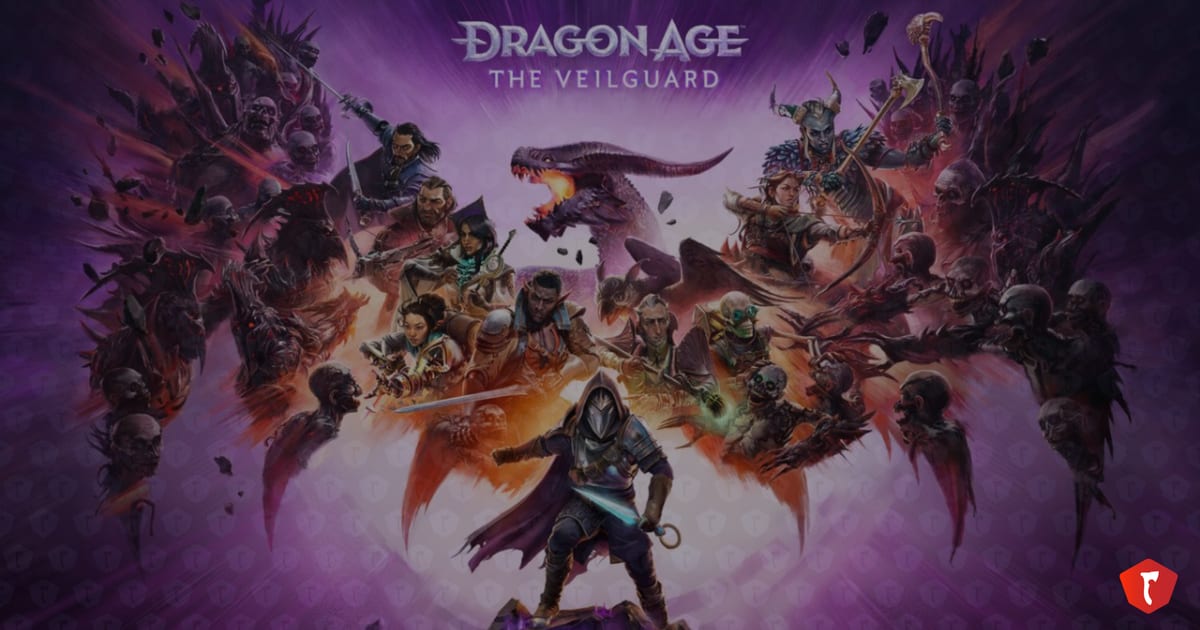
Dragon Age: The Veilguard Unleashes on Live Streaming
The release of Dragon Age: The Veilguard represents a significant milestone for EA and BioWare, marking the return of a storied franchise after a decade-long hiatus.
- Dragon Age: The Veilguard generated 4.7 million hours watched and a peak viewership of 207,000 during its debut week.
- The game achieved a peak concurrent player count of 89,000 on Steam, surpassing EA’s previous record of 68,000 set by Star Wars Jedi: Survivor.
- Viewership was driven primarily by a small number of top-tier Twitch streamers, with creators zackrawrr and CohhCarnage accounting for 430,000 and 244,000 hours watched, respectively.

Interview: CD Projekt RED Has Learned Its Lessons for the Next Cyberpunk
CD Projekt RED is applying the operational lessons learned from the development of the Cyberpunk 2077: Phantom Liberty expansion to its upcoming sequel.
- CD Projekt RED’s development of the 'Phantom Liberty' expansion cost $63 million and utilized approximately 400 in-house developers, serving as a blueprint for the studio's future production processes.
- Game director Gabe Amatangelo attributed the successful turnaround of 'Cyberpunk 2077' to a shift toward cross-disciplinary teams and increased developer autonomy, rather than top-down micromanagement.
- Activision Quality Assurance United, a union of 600 game testers across California, Minnesota, and Texas, has been officially recognized by Microsoft, marking the largest game worker union in the U.S.
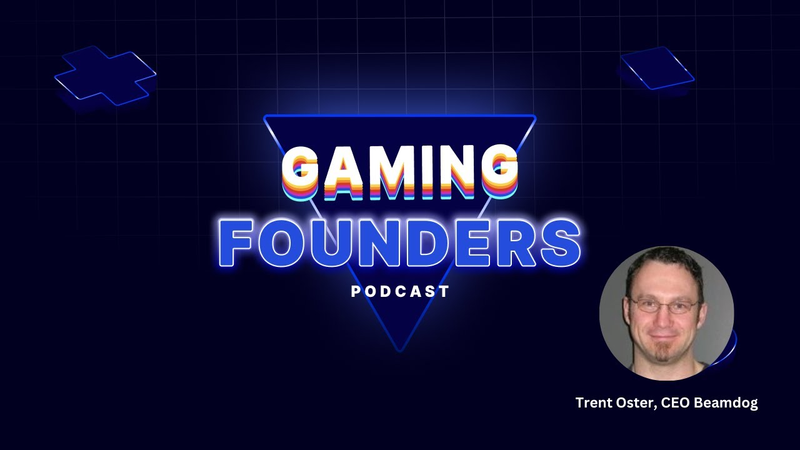
Game Designer to Player Advocate: Trent Oster of Beamdog
The evolution of the gaming industry from the shareware era to the modern live-service landscape is best understood through the career trajectory of Trent Oster, a co-founder of BioWare and current leader of Beamdog.
- Modern game development efficiency is best achieved by adopting standardized engines like Unreal rather than building proprietary technology from scratch.
- Scaling a studio to approximately 70 employees requires a transition from micromanagement to strategic advocacy, specifically focusing on protecting staff from unsustainable labor practices.
- Studios can maintain creative independence from corporate publishers by using the revitalization of legacy titles to generate the cash flow necessary to fund original intellectual property like MythForce.

Quad Mesh Simplification in Frostbite
The Frostbite engine’s quad mesh simplification technology, developed in collaboration with BioWare starting in 2012, addresses the limitations of traditional triangle-based level-of-detail (LOD) generation.
- Frostbite’s quad-based simplification technology, developed with BioWare since 2012, preserves intentional edge flow in character models to prevent deformation issues common in traditional triangle-based LOD generation.
- The system utilizes 'poly-quad' collapse operators that treat sequences of adjacent quads as atomic units, ensuring the structural integrity of the mesh is maintained during reduction.
- Artists can exert granular control over the simplification process through a priority-painting system and sub-poly-quad collapse capabilities, which allow for local refinement in critical areas like faces.
Empires to Ages: Storytelling Lessons Learned in 14 Years at BioWare
Narrative design in large-scale game development requires a fundamental shift from purely creative writing toward a focus on production logistics, cross-disciplinary collaboration, and adaptive project management.
- Build trust with the development team by being transparent and vulnerable, actively inviting feedback from other disciplines to remove the 'ivory tower' stigma often associated with narrative designers.
- Implement a 'ditto' feedback system during peer reviews where participants cannot repeat previous notes, allowing the team to quickly identify consensus on what is working and what is failing.
- Account for production volatility by assuming at least 25% of your schedule will be lost to rewrites, staff turnover, or unforeseen issues, and increase this buffer to 50% for games with a tightly enmeshed critical path.
BioWare Embedded QA: Your Support Class
The embedded quality assurance model represents a strategic shift from traditional black-box testing toward a collaborative, peer-to-peer relationship between QA and development teams.
- The embedded QA model transitions testing from a reactive, isolated function to a proactive, system-integrated partnership by embedding specialized analysts directly into scrum teams.
- Embedded analysts require access to source code, game editors, and design documentation to build custom tools and scripts that significantly reduce manual testing time.
- Success in this model requires hiring specialized personnel organized by discipline—such as narrative, art, or gameplay—rather than relying on entry-level staff.
DOTA Underlords, Anthem Still Alive, Blizzard Departures | Games ReCAP Episode 008
Valve’s recent launch of Dota Underlords demonstrates the enduring power of established franchises, as the title secured 174,000 concurrent users on Steam within its first 24 hours.
- Valve’s Dota Underlords achieved 174,000 concurrent Steam users in its first 24 hours, proving the market demand for streamlined, tactical gameplay adaptable to mobile.
- Major publishers are facing a critical juncture where the high financial risk of $200 million-plus AAA budgets is driving a necessary shift toward smaller, more agile, and highly replayable development strategies.
- The failure of projects like Anthem highlights the unsustainable nature of crunch culture and technical instability, prompting industry-wide calls to reduce project scope to mitigate financial and creative risk.
How BioWare’s Reaction to the Kotaku Report Went Wrong
The analysis examines the critical industry response to a 2019 investigative report regarding the troubled six-year development cycle of BioWare’s title, Anthem.
- A 2019 Kotaku report revealed that the development of Anthem was plagued by six years of indecisive management, constant changes to core mechanics, and the use of the Frostbite engine, which was ill-suited for the game's design.
- Anonymous accounts from 19 former and current BioWare employees described a toxic work environment characterized by understaffing and high rates of stress-related illnesses, leading to widespread depression and anxiety.
- BioWare’s official response to the report was widely criticized for being defensive, failing to address specific allegations, and dismissing the reported instances of crunch as non-existent.

Contrastive Juxtaposition: Contrast and Context in BioWare Story and Cinematics
BioWare establishes narrative depth and emotional resonance by employing contrastive juxtaposition, a design philosophy that places opposing elements in direct proximity to manipulate player perception.
- BioWare utilizes 'narrative polarity'—a two-dimensional coordinate system of opposing themes—to create meaningful player choices and emotional engagement, such as the conflict between chaos and order in Mass Effect 3.
- To ensure narrative consistency across departments, developers should avoid overwhelming teams with massive documentation and instead use simple, contrast-based communication to define core themes early in production.
- Removing 'neutral' dialogue options in Mass Effect 3 forced players to commit to polarized choices, preventing them from sitting on the fence and ensuring that decisions had a more significant impact on the game world.
Worlds Collide: Combining Story and Systems in Dragon Age: Inquisition
The transition of the Dragon Age franchise into an open-world format required a fundamental shift from traditional linear storytelling to a system-driven design philosophy.
- To manage the scale of a 20-to-200-hour experience, BioWare restructured its level design team into specialized groups—exploration, technical, multiplayer, and narrative—to minimize gear-switching and increase focus.
- The development team utilized a 'World Master' system that dynamically managed object spawners based on player location and narrative plot conditions, allowing story decisions to physically alter the game world.
- BioWare implemented a 'Judgment' system as an extensible framework that reused existing cinematic stages, cameras, and lighting assets, providing a cost-effective way to integrate narrative consequences into the game's systems.


