Dragon Age: Inquisition
6 documents in the library are about Dragon Age: Inquisition, from writers such as Game Developers Conference, the newest from 2021. Each has a summary and key insights with the page they come from.

Dragon Age: Inquisition is a role-playing game and the third main game in the Dragon Age series. It is set in the Thedas continent, the same fantasy world as the two previous games. It consist of two large countries: Ferelden (from Dragon Age: Origins) and Orlais, as well as the land inbetween. True to the spirit of the series the character can be customized for appearance, sex, class and race. The available races are dwarf, elf, human, and Qunari and the classes are mage, rogue, and warrior with three specializations each. To grow the Inquisition experience needs to be earned by completing quests, which allows the player to further define allegiances and pursue romances. A custom party can be defined and each member benefits from experience as it opens up access to better weapons and more abilities. Power points open up new areas and Inquisition points define the influence over the region; each new level provides a perk that benefits the entire Inquisition.
- Released
- Nov 18, 2014
- Developer
- BioWare Edmonton
- Publisher
- Electronic Arts
- Genres
- Role-playing (RPG), Strategy, Tactical, Adventure
- Platforms
- PlayStation 3, PlayStation 4, PC (Microsoft Windows), Xbox 360, Xbox One
- Links
- Wikipedia
Game data from IGDB.com
Documents about Dragon Age: Inquisition
World Design for Different Player Types
World design requires a strategic, audience-centered approach that prioritizes specific player motivations over the attempt to satisfy every possible demographic.
- Designers should utilize the Gamer Motivation Model to categorize players into specific clusters—such as immersion, social, or mastery—to avoid feature creep and over-scoping.
- Immersion-driven players respond better to cohesive, narrative-linked zones rather than the disconnected, excessive content that caused fatigue in titles like Dragon Age: Inquisition.
- Multiplayer world design must balance activity friction, utilizing low-barrier mechanics for public spaces while reserving high-coordination, trust-based tasks for self-organized groups like raids.
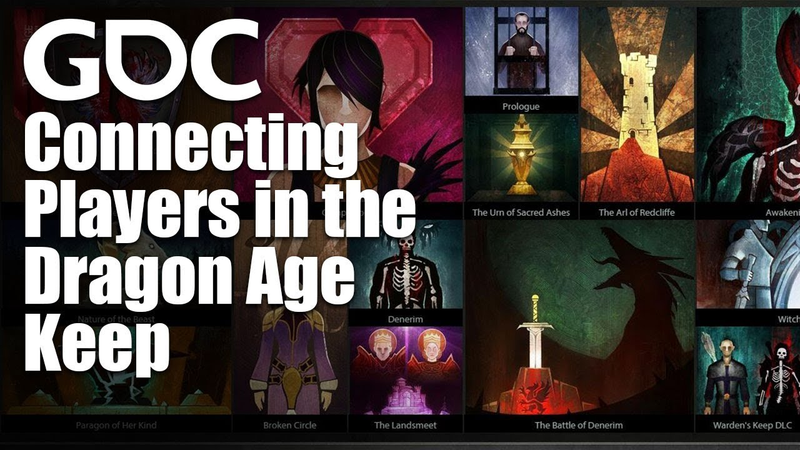
Connecting Players and Franchise Across Console Generations in the Dragon Age Keep
The Dragon Age Keep serves as a strategic solution to the technical limitations inherent in traditional save-game imports, effectively decoupling narrative logic from specific game clients.
- BioWare developed the Dragon Age Keep as a web-based 'World Vault' to solve the technical failures of traditional save-game imports, which were prone to errors and difficult to patch across console generations.
- The system uses a centralized web service called 'Orbit' to abstract plot logic and player choices from the game client, allowing developers to update story states and fix bugs without requiring client-side patches.
- By moving the world state management to the web, the team enabled players to maintain continuity and emotional investment across multiple games, novels, and comics within the franchise ecosystem.
Getting Inquisitive About the AI of Dragon Age Inquisition
The development of Dragon Age: Inquisition necessitated a fundamental shift in artificial intelligence architecture to accommodate the transition to the Frostbite engine and the demands of an expansive, open-world environment.
- BioWare utilized a decision tree architecture with a visual node editor to manage complex combat logic, allowing party members to evaluate and select from over 90 unique abilities dynamically.
- To handle ability selection, the combat system uses a scoring-based evaluation where each potential action is assigned a value, allowing the AI to choose the most effective move regardless of the order in which abilities are processed.
- The AI system incorporates 'fear zones' and 'tether zones' to manage creature movement and combat boundaries, ensuring NPCs avoid environmental hazards like fire while preventing them from being kited indefinitely by players.
Frostbite: Implementing a Scripting Solution for Your Editor
The Frostbite engine addresses the complexities of large-scale game production by implementing a custom scripting solution built on IronPython and .NET.
- Frostbite implemented a custom scripting framework using IronPython and .NET to automate repetitive tasks and optimize asset management for large-scale titles like Need for Speed: The Run and Dragon Age: Inquisition.
- The architecture utilizes a REPL-based interface that exposes engine editor functionality, such as asset selection and property manipulation, directly to technical artists and designers.
- By using a thin wrapper around .NET assemblies, the system enables the execution of complex batch operations across thousands of assets, significantly reducing iteration times.
Worlds Collide: Combining Story and Systems in Dragon Age: Inquisition
The transition of the Dragon Age franchise into an open-world format required a fundamental shift from traditional linear storytelling to a system-driven design philosophy.
- To manage the scale of a 20-to-200-hour experience, BioWare restructured its level design team into specialized groups—exploration, technical, multiplayer, and narrative—to minimize gear-switching and increase focus.
- The development team utilized a 'World Master' system that dynamically managed object spawners based on player location and narrative plot conditions, allowing story decisions to physically alter the game world.
- BioWare implemented a 'Judgment' system as an extensible framework that reused existing cinematic stages, cameras, and lighting assets, providing a cost-effective way to integrate narrative consequences into the game's systems.
The Art & Inspiration of Dragon Age: Inquisition
The art direction of Dragon Age: Inquisition centers on the core thematic premise that magic is a corrupting, dangerous force.
- The art direction for Dragon Age: Inquisition was heavily influenced by Northern Renaissance masters like Hans Holbein the Younger, focusing on realistic material representation—such as the texture of fur and skin—rather than pure photorealism.
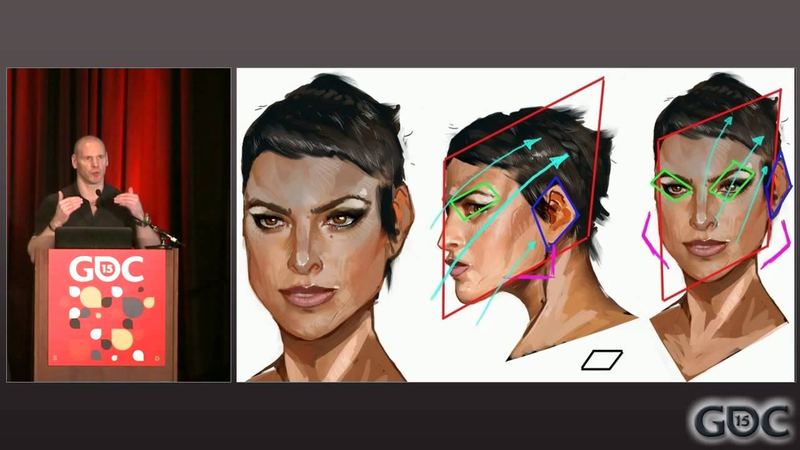
- To maintain a cohesive visual identity, the team used character design to reflect personality, such as using sharp, angular facial features to convey Cassandra’s spiky, aggressive temperament.
- The development team utilized the Frostbite engine to achieve high-quality surface responses to light, while intentionally choosing to hand-craft character models rather than using the photorealistic scanning techniques common in other Frostbite-based titles.