BioWare
CompanyCanada
Documents about BioWare

EA shuts down BioWare and Supercell buys Metacore | Week in Mobile Games
The mobile gaming industry is currently navigating a period of significant structural change, characterized by studio closures, strategic acquisitions, and a shift in how developers approach user acquisition and market viability.
- Electronic Arts is closing BioWare and laying off approximately 400 employees to prioritize established live-service franchises like Apex Legends and Battlefield over high-budget single-player projects.
- Supercell has fully acquired Metacore, the developer of Merge Mansion, to bring the title under direct management following a long-standing financial partnership.
- Mika Games has launched a $10 million funding initiative specifically designed to support mobile studios during the soft-launch phase by financing user acquisition testing.

🚨📢BREAKING NEWS: BioWare Shutdown 😱, PEGI 16 rating on lootboxes, Griffin Gaming film studio
The current landscape of the gaming industry is marked by significant structural shifts, including major corporate restructuring, regulatory tightening, and evolving investment strategies.
- Electronic Arts has initiated a major restructuring that includes the closure of the BioWare studio following the underperformance of Dragon Age: The Veilguard.
- Apple’s App Store review process is facing significant delays, with wait times extending to several weeks due to an influx of over 50,000 AI-generated submissions per day.
- The Pan European Game Information (PEGI) agency has implemented a new policy requiring a 16+ rating for games featuring paid loot boxes, a mandate that now applies to titles like Pokémon TCG Pocket.

TWIG #406: What if Roblox Goes Private and Which Games Get Kicked by GTA VI
The global gaming industry is currently navigating a period of intense structural adjustment, characterized by a shift toward sustainable development models and the challenges of balancing creative ambition with public market expectations.
- Grand Theft Auto VI poses a significant market threat, with 69% of adult gamers intending to play the title at launch, likely displacing competitive shooters and sports games.
- Roblox may need to transition to a private company to escape quarterly earnings pressure and resolve the conflict between its low-fidelity content model and public market demands for AAA-quality experiences.
- The gaming industry is shifting away from high-frequency content models toward system-driven designs to improve player retention and operational efficiency.
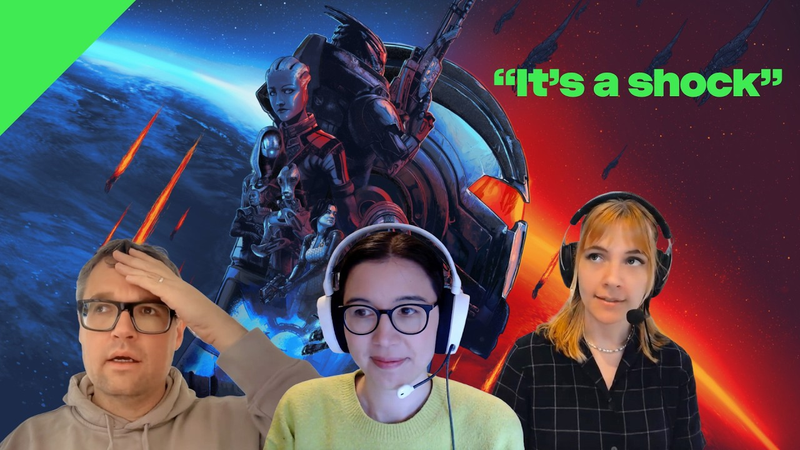
Where now for Mass Effect? Plus, Ken Kutaragi’s console fears and the rise of Poki
The gaming industry is currently navigating a period of profound structural transition, marked by the consolidation of major publishers and the emergence of alternative distribution models.
- Major publishers like Electronic Arts are pivoting toward live-service titles like EA Sports FC and Apex Legends, leading to studio closures such as BioWare and the cancellation of the Mass Effect franchise.
- Web-based gaming platform Poki has reached 100 million monthly users by utilizing an ad-supported, low-friction browser model that bypasses traditional mobile app store fatigue.
- Industry veteran Ken Kutaragi has expressed concerns regarding the long-term viability of high-end hardware, suggesting a shift toward lightweight, network-based systems that prioritize accessibility over raw processing power.

Apple app review woes, EA job cuts, Supercell, Monopoly Go and more
The mobile gaming industry is currently navigating significant operational shifts, ranging from platform-level bottlenecks to major corporate restructuring.
- Apple’s App Store review times have extended from 24–48 hours to several weeks due to a surge in AI-generated submissions, disrupting developer roadmaps while Google Play remains unaffected.
- Scopely emerged as the top-earning U.S. publisher in Q3 with $507 million in revenue, bolstered by Monopoly Go, which generated $41 million in Q3 licensing earnings for Hasbro.
- Electronic Arts is cutting 400 jobs, representing 3% of its global workforce, as part of a restructuring plan following its transition to private ownership.
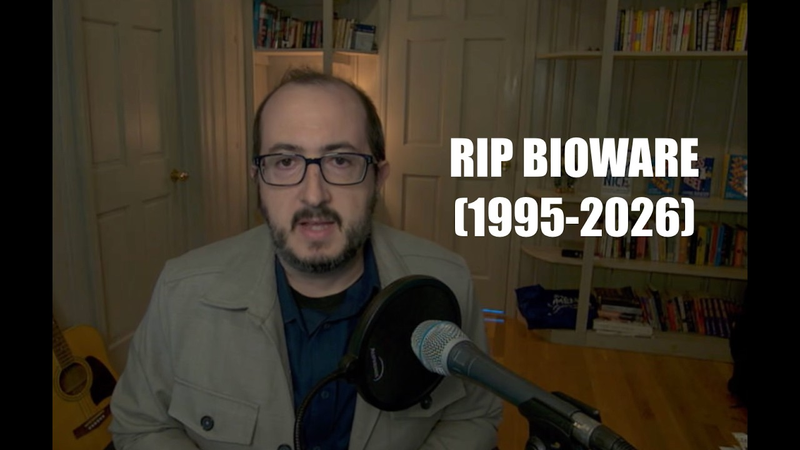
EA Shuts Down BioWare
Electronic Arts has officially shuttered the legendary game studio BioWare as part of a broader corporate reorganization and workforce reduction.
- Electronic Arts has officially closed BioWare as part of a corporate reorganization that includes 400 total job cuts, with 50 positions eliminated at the studio.
- The closure of BioWare results in the cancellation of the next entry in the Mass Effect franchise, which was in early-stage development.
- Dragon Age: The Veilguard sold approximately 1.5 million copies, failing to meet Electronic Arts' internal performance targets.
Why None of Us Saw Cyberpunk Coming Apart I Michal Nowakowski. joint CEO, CD PROJEKT RED
CD Projekt Red’s evolution from a regional distributor to a global AAA powerhouse is rooted in a strategy of intellectual property ownership and creative independence.
- CD Projekt Red restructured its development operations by abandoning proprietary technology in favor of Unreal Engine 5 to mitigate technical risks and streamline production.
- The studio transitioned from a siloed, waterfall production model to a unified, multi-platform approach that utilizes rigorous gating milestones to prevent future launch failures.
- Despite a 75% decline in stock value following the technical failures of Cyberpunk 2077, the studio achieved long-term commercial recovery with 35 million base game units sold and 10 million expansion units sold.

The Miraculous Story Behind Baldur’s Gate 3
The development and release of Baldur’s Gate 3 represents a significant anomaly in the modern video game industry, characterized by a complex history of licensing, financial instability, and creative perseverance.
- Larian Studios' success with Baldur's Gate 3 is attributed to its status as a rare, large-scale, privately owned developer, which allows it to avoid the short-term pressures of quarterly earnings and investor demands faced by publicly traded companies.
- The development of Baldur's Gate 3 required a massive scaling effort, with the studio growing its workforce from 140 to 450 employees to manage the complex production pipeline required for full cinematic integration.
- Baldur's Gate 3 has achieved significant commercial success, selling over 20 million copies and winning multiple Game of the Year awards despite facing major external challenges, including the COVID-19 pandemic and the forced relocation of staff due to the 2022 Russian invasion of Ukraine.

Larian Loses the AI High Ground, Farewell to Anthem, and Minecraft Goes Mini! | Games For Breakfast
The gaming industry is currently navigating a period of intense friction between corporate efficiency mandates and a deeply skeptical player base.
- The gaming industry is experiencing a widening divide between AAA studios prioritizing shareholder-driven cost-cutting and indie developers who maintain a focus on human-led creative innovation.
- Generative AI integration in game development is facing significant player backlash, with critics arguing that reliance on AI tools leads to a regression in emotional resonance and craftsmanship.
- Labor instability remains a critical issue, highlighted by the closure of Ubisoft Halifax following unionization efforts and ongoing allegations of union-busting at Nintendo.

TWIG #347 Call of Duty Movie, Google's New Court Case, De-Monetization of Real-Money Gaming
The gaming industry currently faces a period of significant strategic recalibration, marked by the failure of high-profile projects and the volatility of emerging markets.
- The gaming industry is undergoing a strategic shift away from over-scoped, high-budget projects, evidenced by Rec Room cutting its workforce by 50% due to poor capital deployment.
- Regulatory crackdowns on real-money gaming in India have created significant market instability, leading analysts to advise firms to prioritize the more predictable U.S. and European markets.
- A growing divide exists between Eastern and Western markets, where Chinese players show strong demand for mobile shooters like Delta Force, while Western titles like Destiny Rising struggle with poor cultural fit and aggressive monetization.
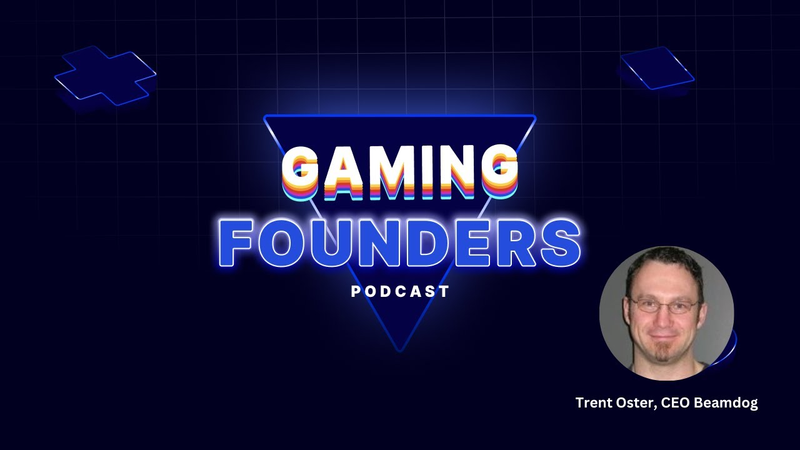
Game Designer to Player Advocate: Trent Oster of Beamdog
The evolution of the gaming industry from the shareware era to the modern live-service landscape is best understood through the career trajectory of Trent Oster, a co-founder of BioWare and current leader of Beamdog.
- Modern game development efficiency is best achieved by adopting standardized engines like Unreal rather than building proprietary technology from scratch.
- Scaling a studio to approximately 70 employees requires a transition from micromanagement to strategic advocacy, specifically focusing on protecting staff from unsustainable labor practices.
- Studios can maintain creative independence from corporate publishers by using the revitalization of legacy titles to generate the cash flow necessary to fund original intellectual property like MythForce.

Quad Mesh Simplification in Frostbite
The Frostbite engine’s quad mesh simplification technology, developed in collaboration with BioWare starting in 2012, addresses the limitations of traditional triangle-based level-of-detail (LOD) generation.
- Frostbite’s quad-based simplification technology, developed with BioWare since 2012, preserves intentional edge flow in character models to prevent deformation issues common in traditional triangle-based LOD generation.
- The system utilizes 'poly-quad' collapse operators that treat sequences of adjacent quads as atomic units, ensuring the structural integrity of the mesh is maintained during reduction.
- Artists can exert granular control over the simplification process through a priority-painting system and sub-poly-quad collapse capabilities, which allow for local refinement in critical areas like faces.


