1 free read left. Create a free account for unlimited reading + AI research.
Create free account
EA shuts down BioWare and Supercell buys Metacore | Week in Mobile Games

Key insights
6 takeaways- 01Electronic Arts is closing BioWare and laying off approximately 400 employees to prioritize established live-service franchises like Apex Legends and Battlefield over high-budget single-player projects.
- 02Publicly traded gaming companies are prioritizing consistent quarterly revenue metrics over the brand legacy of traditional, high-budget studios.
- 03Developers are shifting toward 'IRL' activations, such as concert tours and live events for titles like Wuthering Waves and Pokémon, to drive player retention through exclusive in-game rewards.
- 04Mika Games has launched a $10 million funding initiative specifically designed to support mobile studios during the soft-launch phase by financing user acquisition testing.
- 05The mobile gaming market is increasingly difficult to penetrate, with legacy titles capturing the vast majority of revenue and player attention.
- 06Supercell has fully acquired Metacore, the developer of Merge Mansion, to bring the title under direct management following a long-standing financial partnership.
Ask AI about this video
Transcript
[music] Hello and welcome to pocket gamer.biz's podcast, The Week in Mobile Games, where we sort of dissect the big news stories of the week in mobile gaming and gaming in general. I'm Mariam, editorial director of events here at Pocket Gamer. I'm hosting again this week, and joining me is our features and data editor, Aaron Assel. Aaron, how are you doing? What have we been up to this past week?
Hello. Uh yes, not doing too bad. Thank you. Um the most exciting thing that's been going on this week is um my boilers stopped working.
Oh no.
So in the UK we've had you know unprecedentedly warm summer of not needing the heating on. um you know, super hot most of the summer and we finally hit kind of the cold weather where you know you want some heating on and yeah it turns out my boiler doesn't
work. Um so hence for any um visual listeners I'm in quite a fluffy jumper today. Um and um yeah, so I've been a bit chilly. That's my exciting news um for the past week I guess. Other than that, um, a little bit of gaming, been playing some Pokémon, uh, caught up with a friend, chatted about Fire Emblem, so Nintendoy as usual. But yeah, nothing super adventurous in the past week.
Nice. Um, that is a very UK specific problem, isn't it? A boiler breaking. Yeah, hopefully you get that fixed soon enough. That is a real pain, especially with the weather. Um, as for me, I have, as I told Aaron just off camera a few seconds ago, I just flew back from the UK to the US. So, if I do seem a little slow today, that is why I'm on another planet cuz there is a 7-hour time difference. Funnily enough, I'm on mountain time, which is quite an unusual time zone in general. I think only like
two or three states in America are on mountain time. Uh so yeah uh that's been kind of my what I've been going through just flying and trying to get to grips with the with the time zone. I've also though um I've also restarted Attack on Titan. Uh I tried to I watched it I watched four episodes of season 1 like maybe three years ago and I don't know what went on at the time. I really liked it. I remember really liking it but I think I just had a lot going on so I I fell off. But I' I'm committed to, you know, starting it again. And I've already cried like three times. So, uh
Oh, that's
Yeah,
it's been a great
You're in for a treat, I think.
Yeah, it's been a great few episodes. Just like three episodes alone. I'm kind of thinking, why did it take me this long to get back into it?
Yeah. No, it's one of my favorite shows of all time. There's a poster in the background here of Attack on Titan.
Oh my god, there is. And
how have I never noticed that before?
Yeah, it's been there all along. Um, and then you can kind of you can't really see what they are, but all all of those Funkos along the top of the Attack on Titan characters.
Okay, so I've got a real See, we will have to be discussing this, Aaron. I won't say it on
the podcast because I don't want to spo spoilers, but yeah, for sure.
That's so cool. How have I never noticed that?
Yeah, I will. Um, yeah, so that's been really exciting. Other than that, just been sort of yeah, like I said, getting back to getting to grips back with the sort of US time zone that I'm in. And yeah, so I just before we have a lot to get into in terms of news, but before we do that, I wanted to do a quick look back on this week. So, as everyone knows, Pocket Gamer Connects Nordics just wrapped up yesterday um in Helsinki. It was part of Finnish Games Week. It was our 11th live event in the city. We welcome more than 1,100 delegates from over 450 companies from 44 countries. That's quite a large sort of breath. This year we made a real push to bring in game makers from across the
Nordics and Scandinavia and the wider world. So if you remember, this used to be PGC Helsinki, but we've since rebranded to PGC Nordics. So that sort of reflects that. And yeah, I don't know if you've been keeping an eye on LinkedIn, but if anyone in the industry, a lot of us are on LinkedIn, there's been so much sort of fantastic posts going out by our brilliant attendees and the energy and the sort of appetite for making connections was brilliant. Uh, there was a lot of fantastic panels, sessions. Um, a lot of excellent networking went on as well. So, I just wanted to extend a big thank you to the whole steel media team, all the speakers, sponsors, exhibitors, volunteers. What can I say? I guess Helsinki always delivers and it's got a really sort of special part in the uh steel media and PGC in our hearts. So you can have a head over to the site over the next few days and you'll see various takeaways, learnings from the event. So make sure to check that out. And yes, we've got two more dates for your diary. Actually, we've got PG Connects Jordan. I can confirm that now. Excitingly, we're heading back to Aman on November 7th and 8th. Uh we will
indeed be hosting our big indie pitch and as usual our connector sort of speed match to introduce developers and studios to investors and publishers. And of course we've got our flagship event which is PG Connectnect London which will be returning to our beloved brewery on January 18th and 19th uh next year. So last time a little bit of stats on that. We welcomed around 3,000 attendees from 1,600 companies across 60 countries. Um, and as I mentioned, you can find details for both of those events at pgconnects.com. So those are are sort of shoutouts, but I want to dive straight into the news. And I've got a big piece of news today, so I'll kick things off. And that is, of course, sadly that EA has shut down Boware. This one was really sad for me because I, like many people, loved Mass Effect and was a huge fan and it kind of informed a lot of games as we know and it's kind of legendary. Um, so it was really sad to see it closed down. But we'll start with this story that's sort of shaken the whole industry and it's
happened over three decades. They're closing Boware after 30 years. So EA announced on Wednesday, which at the time of recording was yesterday, that it is closing Boware and its Edmonton office in Canada. It's it's also ending work on the next Mass Effect game, which was first announced in 2020. So only a small team was working on this. It was very much still an early development, but the closure is part of wider cuts. EA is laying off around 400 people, which is about 3% of its staff, and roughly 50 of those were at Boware, according to Bloomberg. The memo that came from EA's Cam Weber and David Tinson. Um, in that memo, they called Boware a legendary studio uh that helped define the RPG RPG genre, they said it they didn't take this decision lightly, but it they took a hard look at the business over several months. And the good news is, if this is in um if we're taking their word for it, they will help affected staff look for other roles within the company. So hopefully those staff won't be affected as badly. Um a bit of a backstory for those who don't know, Boware actually it's kind of
legendary. They've made they made the original Bouldersgate. They made Knights of the Old Republic. They made Mass Effect of course and Dragon Age. EA bought it in 2007, but it last decade has been kind of rough. Anthem failed and was shut down earlier this year. and Dragon Age uh the Veil Guard also missed sale expectations. So the studio was already on thin ice and yeah I guess that was this is sort of the consolidation of that. I guess the bigger context around EA itself that is that it went private as everyone knows its new owners were loaded with $20 billion of debt and according to the staff letter seen by Bloomberg EA will now put most of its money into Apex Legends Battlefield and the new Star Wars and Iron Man game. So, um, yeah, that's kind of the news, uh, that they came out with and why it matters, I think, for our audience. There's three things here that I believe will be kind of relevant to know. Firstly, I think this is a really good example of what debt can do to a portfolio. When a company carries something like $20
million of debt, it needs reliable cash every quarter. Live franchises with yearly revenue like EA Sports F, uh, win essentially, and sort of long risky single player projects lose. Even though Boware's Mass Effect, like I said, was legendary, it's been on it's been kind of teetering for a while now. I read a description of this and I think it sums it up pretty well sadly. When I was doing research on YouTube, I saw a comment that said it honestly feels less like a terrible tragedy and more like putting down a zombified version of your loved one, which is kind of what it feels like. It it kind of feels like they haven't been making a lot of movement for a while. And I guess, you know, as we saw with Squad Busters last week, it's true on mobile, too. Like big IP doesn't uh guarantee a hit. So, yeah, it's also kind of a telltale sign about brand power. Brand power alone these days within our within the context of our industry doesn't really take you far. I mean, Boware was one of the most loved uh names in games, but that didn't save it. Uh I think it a famous studio
name can buy goodwill. I mean, if you saw I was looking through LinkedIn and a lot of people really obviously disheartened by this and kind of heartbroken. Um, it can buy you good build, but I don't think he could buy you, you know, the sort of unlimited time that goes into keeping a studio alive. Um, I also think there's a mobile angle within this. So, EA's mobile team actually sits inside the same company under the same pressure. So, the message to them is also kind of clear. If your game isn't core and growing, it's at risk. And EA has already sort of shown it will close mobile titles, too. Like The Simpsons tapped out in 2024. I actually didn't know that one was still going, so that was kind of surprising to me. Um, and I guess the bigger question to all of this is, is this really just about boware or is it about sort of the whole industry pulling uh pack back from big budget games that are no longer performing? And I was doing research again, the Washington Post framed it as part of a wider contraction in big budget development. And if that's correct, if they're if they're correct on that sort of assumption, that means
that obviously Boware won't be the last famous studio to close sadly. Um, yeah, I just thought this story was really sad. I remember being a huge Mass Effect fan.
Yeah, as you say, I mean, I guess it follows on from, yeah, our conversation last week about IP and as you say, Supercell and we talked about Nintendo as well. um and various games that were closing or announced to be closing at the time. And I think we were saying obviously it was good in those cases they uh there were a few games I think like um one of the Hill Climb Racing games that they said they were keeping the staff on and kind of reassigning them. Um, so as you say, it sounds like, you know, hopefully that kind of thing can happen here if they're kind of going to help people look for roles. But, um, kind of whether everyone gets to stay on or not, I guess, not to be negative, but yeah, like who knows whether that ends up happening. Um, so obviously it's a big shame in the kind of post pandemic
layoff um, era that we still kind of seem to be in.
Yeah. Um, you mentioned IP, Aaron, and I wonder that was one of the things I was wondering as I was kind of reading about this, like what happens to the Mass Effect and Dragon Age IP now? Uh, will someone else use it to kind of create something new or would they could they even come back in mobile form? The IP is a interesting question cuz from my research, I don't think anything was mentioned about that. But yeah, sad news all around. I guess it's the the news of the times. A lot of layoffs due to, you know, acquisition and that kind of thing. a sad one to start, but I felt kind of pertinent and needed to be said. But Aaron, what do you have uh next in terms of of news? What did you what was on your sort of radar?
Yeah, so um I guess to to lift the mood a little bit. So, I um do a kind of fortnightly collabs corner, as we call it, of kind of updating an article on the latest collaborations and just things going on
kind of around games, I suppose. Um, which is a little u well very subtle plug to the article there. Um, and among the things that I spotted that I included this week, although they're not quite collabs, but they kind of fall in the right ballpark, is um there were a few uh kind of game IPs uh that are kind of going IRL at the moment and doing like concert experiences. Um, so like firstly uh Curo Games Weathering Waves has just been to Los Angeles. So on the 17th of October, there was the Weathering Waves concert tour to the New World, uh, which was at the Peacock Theater and was basically a celebration of the game's music, characters. There were like cosplayers and photo opportunities and things. Um, which you know it's it's cool when games
kind of get big enough that they can do these like real world campaigns and you kind of have the audiences that are kind of so invested in your game that you know they're willing to go to to just listen to the music from it. I think that's very cool. It was a weird coincidence in a way though that um so the weathering waves concert happened I say on the 17th of October and then a few days later there was supposed to be an umamuz concert at the same venue. So that's um seeame flagship um you know multi-billion dollar game in Japan and then it kind of expanded globally last summer. Uh, so that was there was supposed to be a concert for that I say at the same place as the Weathering Waves one on so tonight as of us recording October 22nd and the 23rd. Um, but unfortunately that had to be cancelled quite last minute because uh
there were issues securing US visas for the like singers and voice actresses for the characters. So that one hasn't gone ahead. But I thought it's kind of it's interesting they were going to be at the same venue. Um, and then also in Los Angeles, um, on the 24th of October, there is a Pokemon kind of concert type experience happening. Uh, so it's called Pokémon Night Out, which is like an EDM concert to celebrate the series 30th anniversary. Uh, which was technically in February, but the, um, the concert's happening in a couple of days. Um, and this one it's quite an interesting case because I say it's kind of taking Pokemon IRL. Like it sounds quite cool to go to like a kind of club experience of like Pokémon kind of yeah like dance type music. I think that would be quite fun. And obviously Pokémon already has
quite a big kind of IRL style presence in Pokémon Go. So, the the two have kind of been combined. And apparently people that have bought tickets to go to this concert in LA, if you kind of open Pokémon Go while you're there, you can get special like research tasks for kind of being in the right place at the right time and raids with like Pikachu and Gengar. And there's like an exclusive Pokemon Night Out jersey that you can unlock for your character. Um, there's some like music themed Pokemon that might show up. So, I thought that's quite a cool kind of tiein. You know, I'm sure there'll be be people who go that don't play Pokémon Go cuz it's broader Pokémon. But, yeah, I thought that's quite a fun thing to do for, you know, Pokémon fans that do play Go. It's maybe while you're waiting for the Yeah. kind of club night to start, just play
some Pokémon Go, get some exclusive stuff. So yeah, I thought it was just quite interesting that these kind of musical experiences have all kind of landed around the same time.
Yeah, that is really interesting. Don't they have Doesn't the Pokémon um concert don't they have one in London as well at the OT?
Yeah. So there's one in November um at the O2. Are
you going?
Um I was very tempted to get tickets, but I I didn't end up going for it. I didn't really want to go on my own and my friends aren't quite nerdy enough to go to a Pokemon nightclub.
Um
I think it would be quite cool. I think it's like quite like you said like it's such a good way like that's such a good example of like trans media and like how it can be so effective in bringing people back into the game because if you get a you get uh these uh what do you say jerseys? So it's like a it's not just the music. It's kind of a way to bring people back into the game and I think that's a really good thing. Obviously it's Pokémon. They're a huge name, but if you're a studio, that could be a really good thing to sort of
emulate if you're planning a concert. It's a really good way to get people back into the game game and get them excited. I thought that was really, really smart.
Yeah, that's a good point. Actually, I didn't really think of it from that angle that cuz, you know, inevitably most people there have probably played Pokémon Go at some point, but they might not all be active, but then being there might get them to open the game and then they might kind of pick the habit back up.
Yeah, it's a good point. I wonder what um what app magic it'll be interesting to see like if there'll be a spike
in um in downloads or or whatever it might be after the event. I'm sure there will be cuz I'm sure that I wonder how did they say how many people are going to the concert or how many tickets they've sold.
I think so it it probably would have said somewhere on the like if you go to buy a ticket I'm sure you can work it out but yeah I don't know off the top of my head.
Yeah, that'd be interesting. Um, I would be, even though I'm not a super fan, I would actually be interested. Obviously, I'm not in the UK, but I'd be interested to go just to see what it was, what would it would be like.
Yeah. Well, you could go to the LA one on Saturday.
Yeah, I don't know about that one. If I if I was a super fan, maybe. Thanks, [clears throat] Aaron, for that one. Uh, so my next story is also more of a hopeful one uh compared to my last one, and that is that Mika Games has raised $10 million. So, it's a funding story that sort of goes right at mobile's biggest problem, I thought, because it's the issue is getting players to find a new game. So, Cypress based Micro Games has raised $10 million. Flint Capital led the round with new and existing investors also taking part. So, that money will help studios build their games and run paid marketing tests before they're big enough for larger financing deals. That's essentially what this is what this news piece is all about. So how it will work is that Micah will back freeto-play mobile studios at soft launch um and it does two things. It takes an equity stake to fund the act to fund the team and then it provides separate money for bigger paid UA tests and those tests will measure three things. So it will measure retention,
monetization and how fast the studio earns back its sort of marketing spend. Uh basically it pays it's doing the work of paying for the proof that big investors want to see which I thought was quite clever because in these days you got to like we see very clearly from the boware story you have to prove that your game will be worth it and be worth investing in and will ultimately generate profits for for those who sit on the sort of investor board. A little bit of context about mic um games they was founded by a co-founder of Wargaming the company behind World of Tanks. Huge game. In 2024, it announced a $50 million fund for mobile first free-to-play studios. This year, its portfolio grew from three studios to five. The newest are Bulbury Studio, which makes PvP strategy game Wargard and Level app, which makes merge two games, Merge Dale and Seabloom. So, it also backs Goolie Games, maker of Legendale, and Agona Games, maker of Punkco. So some of the numbers he backs a pitch with data as some of the press releases says the global games UA spend hit $25 billion in 2025 and ad
impressions rose 20%. Games older than sort of two years or earn more than 80% of the revenue in most genres. So his argument is kind of early marketing money now decides which games player players ever get to see. So I think this the reason that this is important obviously there's huge funding going into mobile games which is always really exciting for us to see in the industry and I think it's a really interesting model for a few reasons. So firstly it targets a real gap. So as I mentioned studios often raise money to build a game but there's a missing middle at soft launch. Um you need UA money to kind of prove your numbers but you need proven numbers to get UA money. So, he's trying to break through that loop, that sort of incessant kind of aggressive loop that a lot of people can't get past in our industry. And second, we talked about Squadbusters um last week and how it was sort of being shut down. And I think the story ties very much back to that. So, if you remember or maybe you've read the press releases, Supercell actually skipped this long soft launch um and it didn't work out
essentially. Uh, so what this says is kind of that soft launch is where you really do find out if a game is worth it and if it really works. So Micah is betting that's exactly where studios need the most help, which I could probably attest to just by some of the numbers and stats there. And thirdly, if you look at the genres, so we're talking about merge, PVP, strategy, these are sort of proven categories with clear benchmarks. That makes sense for an investor that wants sort of measurable results because these are tried and tested genres that work really well with players. they're appealable. Um, but it also shows kind of how hard it is to fund anything truly new right now. That's the kind of landscape that we're looking at. Um, and I guess maybe the deeper question is if money is even the main problem here. Uh, one of the things I mentioned as I was as that was in the press release is that old games sort of dominate like we see through those stats because they're very good at being sticky and keeping players and they have years of content. So, a new game might be able to sort of buy that sort of
install, initial install, but but can it buy the the stickiness and retention um and the LTV? I'm not quite sure. So, the interesting thing about what they're trying to do here with Micah is that their model will only work if games themselves are actually good enough to compete with Giant. So, I thought this was a really interesting one. It's hopeful, of course, funding is always great. I guess my question would be after reading all of this, is it a problem? Is the problem a lack of UA uh money or is it that most new games just can't match the old ones on retention? I mean, recently I spoke to uh uh the CEO of Cybo, who obviously famously makes Subway Surfers, uh Matias, and he kind of said like, listen, the virality and the popularity of a game like Subway Surfers can never be remade. I'm not one to ever say that it can be. So, I wonder if Yeah, it it'll be interesting to see what what happens with this. And it's definitely a story that I'm going to be keeping an eye on.
Yeah, likewise. Particularly looking at reports and things from this year, like
it seems to be a common trend of like new games are not breaking into the top 10 or even like the top 20 most downloaded or kind of top earning games. Like in a lot of cases, I think it's been a couple of years since anything new has kind of broken into the top of the charts. And I say that's that's not even to be number one. that's just to kind of be um on the board effectively.
Um so yeah, obviously mobile's become a more mature market. Um, but it, yeah, I do kind of wonder what what it will take at this point for something to really, you know, kind of be a a breakout kind of phenomenon, you know, kind of Pokémon Go style, take over the world for a bit and suddenly become massive. It kind of feels like that's maybe the, you know, without being too um hyperbolic, perhaps the level something needs to reach to even get into the top of the list these
days.
Yeah. It almost feels like a distant dream, doesn't it? Like to have those huge numbers again like that, you know, the likes of Pokémon Go or Subway Surfers, like it doesn't feel without sounding too negative, it doesn't feel that achievable. Um,
I guess I guess to close that on a more positive then like obviously the fact there's going to be funding to go towards that makes it more likely than if there wasn't. So like that is it is a good thing.
There's a silver lining. Yeah, there's a lot a lot of funding that goes into this one. So it's not all doom and gloom, but yeah, it um definitely one we'll keep an eye on. But Aaron, what do you have to close us out for today? What's your final news story?
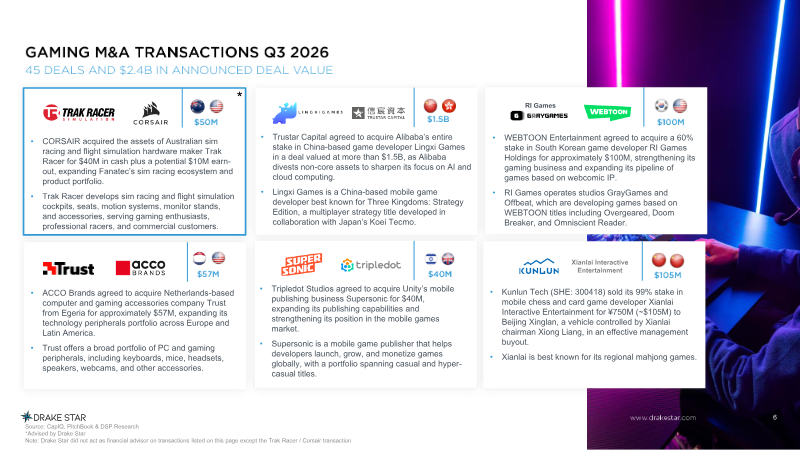
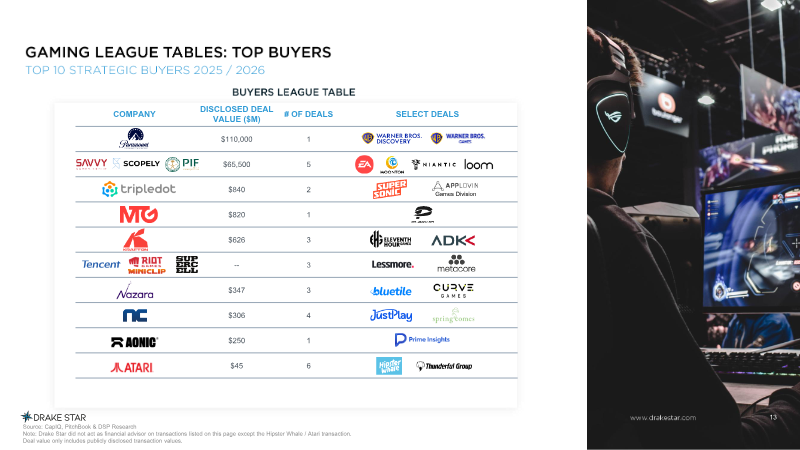
Yeah, so my final piece uh we've mentioned Supercell a couple of times. This is a story kind of centered on them. It's that they have completed um their full kind of 100% acquisition of Metacor now. Um so they've taken 100% ownership of Merge Mansion. I brought Metacor's games team into the fold. They've apparently officially started their journey as Supercellians.
They're going to be continuing to work on Merge Mansion, like the same team. Um, and apparently their goal is to try and get the the game back to the top of the charts. Um, the exact terms of the transaction weren't disclosed. Uh, but these plans were initially announced um, in May this year. Uh, Supercell, I think, was already the kind of biggest shareholder um, I believe. Uh and then yeah they kind of announced intentions to basically acquire the remainder of Metacor. Metactor also announced at the time it would be cutting some roles as part of the kind of and then yeah kind of more recently so a few months later uh Supercell said the deal had been signed and then as I say this week um it's kind of become official. I think it was the 19th of October that yeah, it all kind of fully uh was completed. And yeah, so obviously as you say, like Squad Busters is kind of on the way out, but Supercell
technically now has Merge Mansion in its portfolio. And yeah, quite a big uh news piece happens to obviously these are um Finnish studios. Funny timing coinciding with our PGC event in Finland. Yeah, I thought this was an interesting one as well because it's not the first time. I think Craig talked about it a few months ago. It's not the first time that their paths have met. So, apparently back in 2021, they opened a $180 million credit line for Metacor, mostly to fund user acquisition. So, they had the money and the backing to grow back back then for the game, but the game still plateaued. So it makes me wonder what they think they can do now that that they couldn't do then. The only difference is they have total ownership, but they were an investor back then. So I wonder is it growth? Like I I I wonder what that will look like.
Yeah. I guess again, do they just kind of pump more money into UA or like will will supercales teams actually get
involved in making the game more kind of supercelly? Like yeah, I'm curious what they'll what they're going to do.
One to watch for sure. Um yeah, that is all the time that we have for today and all the stories. Uh I just want to say a massive thank you to all our listeners and to all those who attended PGC Nordics as well. I'm sure we'll be seeing a lot more news come out of that on LinkedIn from our fantastic attendees. And yeah, thank you Aaron. Thank you for being my co-host for today and uh for your for your new stories.
Yeah, it's been a pleasure and thank you. I'm sure everyone will agree you've uh done very well in Craig's shoes the past couple of weeks. [laughter]
Thank you very much. Uh and yeah, thank you for all listening and we will catch you next time. Bye
bye.
Summary
The mobile gaming industry is currently navigating a period of significant structural change, characterized by studio closures, strategic acquisitions, and a shift in how developers approach user acquisition and market viability. A primary development is Electronic Arts’ decision to close BioWare, a legendary studio responsible for iconic titles like Mass Effect and Dragon Age. This closure, which involves approximately 400 layoffs across the company, reflects a broader industry trend where high-debt, publicly traded entities are prioritizing established live-service franchises—such as Apex Legends and Battlefield—over risky, high-budget single-player projects. This move highlights the diminishing power of brand legacy in an environment where consistent, quarterly revenue is the primary metric for survival.
In contrast to the contraction of traditional big-budget development, the mobile sector continues to see strategic investment and consolidation. Mika Games recently secured $10 million in funding to support mobile studios during the critical soft-launch phase. By providing capital specifically for user acquisition testing, the firm aims to help developers prove retention and monetization metrics, addressing a "missing middle" in the current funding landscape. This approach underscores the difficulty of breaking into a market dominated by legacy titles, where older games capture the vast majority of revenue and player attention.
Market consolidation remains a key theme, exemplified by Supercell’s full acquisition of Metacore and its flagship title, Merge Mansion. This move follows a long-standing financial relationship between the two entities and signals Supercell’s intent to revitalize the title under its direct management. Meanwhile, developers are increasingly turning to transmedia and real-world experiences to drive engagement. Concert tours and live events for titles like Wuthering Waves and Pokémon demonstrate a growing reliance on "IRL" activations to foster community and incentivize re-engagement with mobile apps, particularly through exclusive in-game rewards tied to physical attendance. These trends collectively suggest that while the industry is pulling back from speculative, high-budget development, it is simultaneously doubling down on proven genres and integrated marketing strategies to maintain player retention in a mature, competitive market.














Comments