Atlas
Company
Documents about Atlas
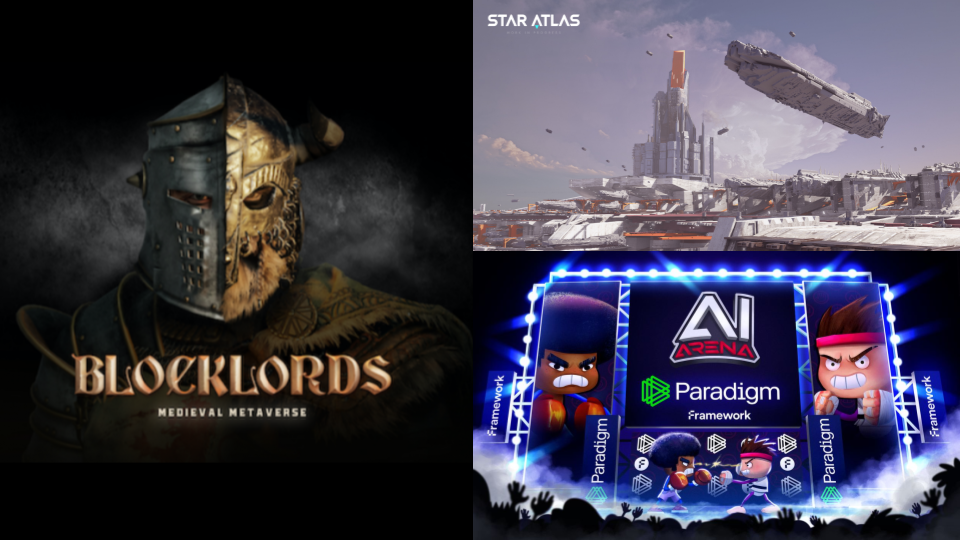
Game Radar: Blocklords, Star Atlas, AI Arena
The current landscape of blockchain gaming is defined by a persistent tension between ambitious technical innovation and the practical realities of sustainable economic design.
- Star Atlas lost nearly half of its operational runway due to the FTX collapse, forcing the team to attempt to raise capital through multi-million dollar NFT ship sales in a bear market.
- AI Arena, developed by ArenaX Labs, raised a $5M seed round led by Paradigm to build a platform that combines AI training with web3 gaming mechanics.
- Blocklords utilizes a dynasty system where heroes have limited lifespans, requiring players to manage bloodlines and pass on unique attributes to descendants to ensure long-term progression.

Pullup Entertainment Half Year 2022/2023 Results
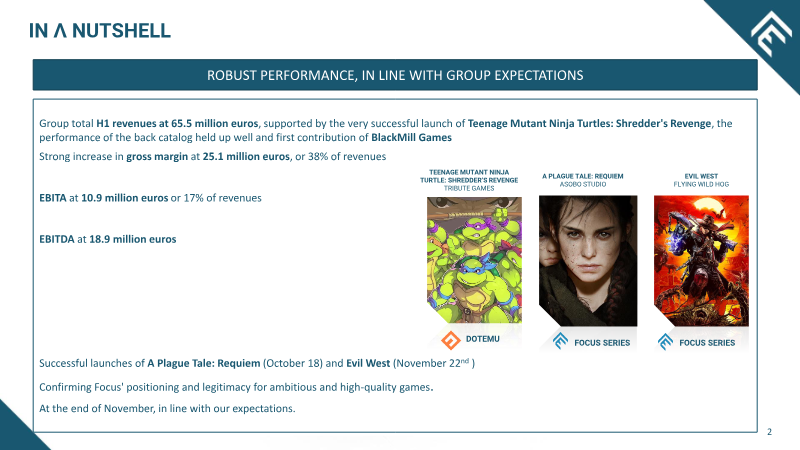
Pullup Entertainment’s half-year results for the 2022/2023 fiscal period demonstrate a robust financial performance aligned with group expectations.
- Pullup Entertainment reported 65.5 million euros in total revenue for the first half of 2022/2023, driven by the launch of Teenage Mutant Ninja Turtles: Shredder's Revenge and the acquisition of BlackMill Games.
- EBITA grew by nearly 50% year-over-year to 10.9 million euros, while EBITDA reached 18.9 million euros, representing a 29% margin.
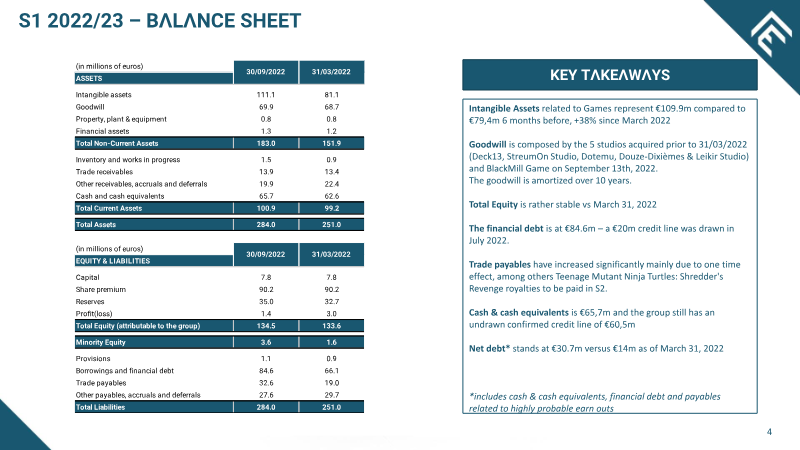
- The company invested 37.5 million euros into intangible assets for game development, signaling an accelerated commitment to its production pipeline.

Beyond Game Design
In this 2019 GDC presentation, Ubisoft Toronto game director Richard Carrillo argues that the primary challenge for game designers is not technical execution, but the cultivation of a positive, collaborative design culture.
- Game design success depends less on technical execution and more on cultivating a collaborative culture that moves beyond the ego-driven 'I am the designer' mindset.
- Designers should replace directive, authority-based management with soft skills like inspiration, patience, and humility to foster team ownership.
- Negative team dynamics often stem from designer insecurity, manifesting as the dismissal of feedback or the demand for blind trust from colleagues.

Atlas of the Video Game Sector in Portugal 2020
The Atlas of the Video Game Sector in Portugal 2020 serves as a comprehensive diagnostic tool designed to map the landscape, economic health, and operational structure of the Portuguese game development industry.
- The 'Atlas do Setor dos Videojogos em Portugal 2020' provides a comprehensive data overview of the Portuguese game development industry, published by the European Games Developer Federation (EGDF).
- The report serves as a primary reference for national industry data, specifically curated by the Portuguese trade association APVP (Associação de Produtores de Videojogos de Portugal).
- The EGDF, which represents the Portuguese sector, acts as an umbrella organization for 24 national trade associations across 22 European countries.
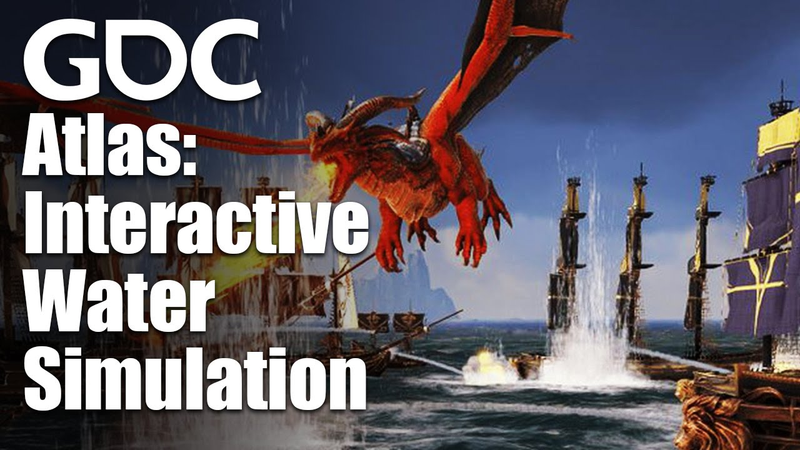
Wakes, Explosions and Lighting: Interactive Water Simulation in Atlas
The development of the ocean simulation for the massively multiplayer online game Atlas centers on balancing high-fidelity visual realism with the rigorous performance constraints required for a seamless, multi-server environment.
- To simulate vast ocean surfaces for Atlas, Grapeshot Games replaced the standard Phillips spectrum with JONSWAP and JONSWAP-variant spectra to avoid unrealistic wave heights in non-oceanic environments.
- The team optimized FFT-based ocean simulation by using larger waves to distort smaller frequency bands, effectively masking tiling repeats without sacrificing performance.
- Buoyancy for rigid bodies is calculated by taking discrete displacement samples along a boat's hull and using an iterative Newton's approximation method to determine height at specific world locations.

Star Atlas | Metaverse Game on the Solana Blockchain
Star Atlas functions as a AAA-quality, space-themed grand strategy metaverse built upon the Solana blockchain.
- Star Atlas is a AAA-quality space strategy metaverse built on the Solana blockchain, which utilizes a high-throughput architecture capable of processing 50,000 transactions per second.
- The game utilizes a dual-token economic model where ATLAS functions as the primary currency for commerce and POLIS serves as a governance token for the project's Decentralized Autonomous Organization.
- The platform operates on an invest-to-play paradigm, utilizing NFTs for all in-game assets to grant players true ownership and the ability to extract real-world value from their digital investments.
Starship Physics and Controls that Feel Real: Bringing the Toys of Starlink to Digital Life
The development of Starlink: Battle for Atlas focused on creating a responsive, physically plausible flight system that translated the tactile experience of physical toy ships into a digital open-world environment.
- The Starlink: Battle for Atlas flight system utilizes a modular architecture that dynamically adapts physics and controls to diverse ship geometries without requiring unique collision hulls for every combination.
- Movement is managed through a layered behavior system that sequences reusable classes—such as thrusters and terrain-following repulsors—to handle distinct navigation modes for space, atmosphere, and ground skimming.
- Procedural animation techniques apply additive offsets to the base ship transform to simulate engine activity and environmental reactions, maintaining tight control while providing high-quality visual feedback.
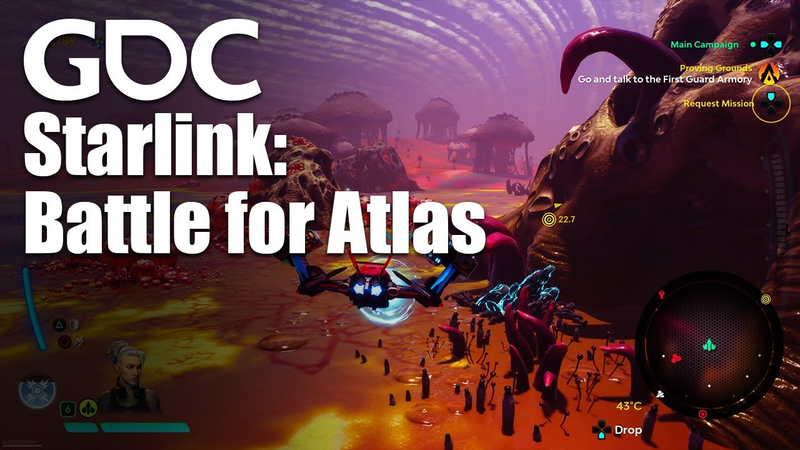
From Game Jam to the Creation of Starlink: Battle for Atlas
The development of Starlink: Battle for Atlas serves as a case study in balancing radical creative experimentation with the rigid demands of AAA production.
- To overcome the challenges of a wide-open innovation mandate, the Ubisoft 'Tomcat' team utilized a two-week iterative cycle consisting of brainstorming, pitching, voting, planning, and rapid prototyping.
- The team scaled brainstorming by starting with individuals, moving to pairs, and then groups of four, which allowed the team to generate hundreds of unique ideas rather than relying on the limited output of individuals.
- The team utilized a 'validate by any means necessary' approach during the one-week prototyping phase, employing diverse methods such as paper prototypes, existing game engines, and physical hardware hacks to prove concepts quickly.
Assassin's Creed Origins: Monitoring and Validation of World Design Data
The development of Assassin’s Creed Origins necessitated a sophisticated approach to quality assurance to manage the complexities of a 120-square-kilometer open world.
- To manage the 120-square-kilometer open world of Assassin’s Creed Origins, the team replaced manual quality assurance with an automated validation framework to address navigation mesh failures and AI pathing errors.
- The development team implemented a daily automated testing suite using C#-based scripts to query over 200,000 individual game objects for objective pass/fail evaluations.
- The integration of a visual interface called Atlas allowed developers to pinpoint specific coordinates of data conflicts, enabling the resolution of issues before they cascaded into systemic failures.
Apple Announces Its Arcade: Can It Get Over Its Own Aesthetic?
The launch of Apple Arcade represents a strategic shift toward subscription-based service revenue, positioning the platform as a curated alternative to the traditional mobile gaming ecosystem.
- Apple Arcade aims to capture 50 million subscribers within its first 24 months through a $4.99 monthly subscription model.
- The service targets casual users and parents by eliminating the aggressive monetization and 'surprise mechanics' found in standard free-to-play mobile games.
- Major publishers like Capcom and Sega are using Apple Arcade primarily for brand building, as they currently derive less than 10% of their total revenue from mobile platforms.
Project Discovery: Lessons From Scientific Research in EVE Online
Project Discovery serves as a pioneering model for integrating citizen science into the AAA gaming landscape, specifically within the massive multiplayer online game EVE Online.
- Project Discovery, a collaboration between CCP Games and MMOS, successfully integrated citizen science into EVE Online, resulting in over 25 million protein location classifications by players.
- The project utilizes a consensus-based validation system where each data sample requires between 15 and 50 independent player submissions to ensure scientific accuracy.
- Scientific outcomes from the initiative include the identification of approximately 100 new protein candidates related to 'rods and rings' structures, which were subsequently published by researchers.

Portside Game Assembly 2026: Success and Future Outlook
Portside Game Assembly 2026, held on June 25–26 in Hamburg, attracted approximately one hundred indie game professionals from thirteen countries.
- The Portside Game Assembly 2026, held on June 25-26, successfully gathered approximately 100 indie game professionals from 13 countries in Hamburg for international exchange, and it will return on June 24-25, 2027.
- The 2026 conference focused on fostering exchange among studio heads through curated participation, impulse talks, and discussions on game development, marketing, sustainable growth, and partnerships.
- Notable speakers at the 2026 event included Rebecca Lautner (Landfall), Tomas Sala, Adrienne Bazir (insertdisc5), Richard Atlas (Clever Endeavor Games), Mark Cooke (Shiny Shoe), and Albert Millán (Digital Sun).