Atlas
Company
Documents about Atlas
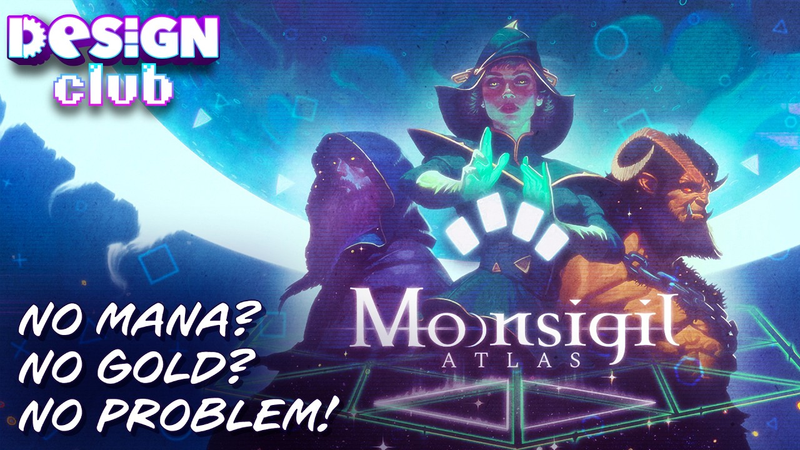
Exploring A New Kind of Roguelite: Moonsigil Atlas | Design Club
The roguelite deckbuilder genre has reached a point of saturation following the success of titles like Slay the Spire, leading developers to seek innovation by moving away from traditional mana-based economies and linear resource management.
- Moonsigil Atlas differentiates itself from the saturated roguelite deckbuilder market by replacing traditional mana-based economies with a spatial, grid-based combat system.
- The core gameplay requires players to physically place and rotate cards on a board, shifting the strategic focus from damage output to geometry and tactical positioning.
- Players manage board presence through unique mechanics like sigils for ongoing effects, defensive wards for damage mitigation, and Eternal cards that remain on the board.
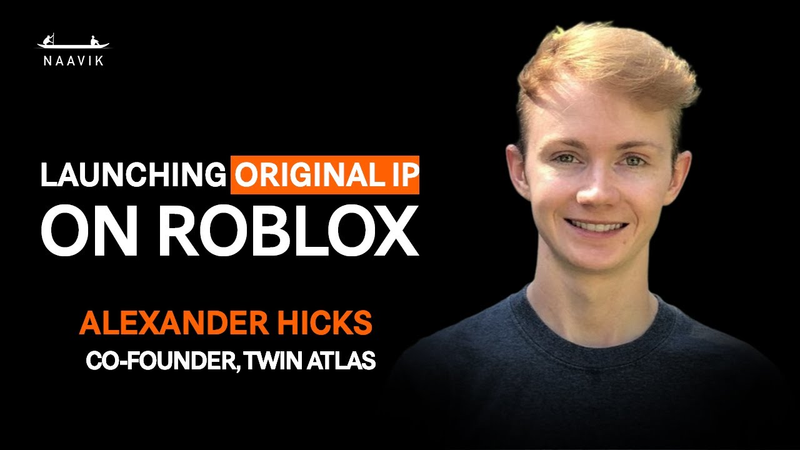
Building Hit Games from Scratch on Roblox with Twin Atlas
Twin Atlas has established itself as a premier developer within the Roblox ecosystem by successfully scaling from individual creator roots into a sustainable, professionalized studio.
- Twin Atlas maintains a portfolio of Roblox experiences that regularly reach 50,000 to 100,000 concurrent players and includes three titles that have surpassed 1 billion total plays.
- The studio prioritizes long-term sustainability over short-term spikes by focusing on recurring revenue and player retention rather than quick, high-churn monetization models.
- Twin Atlas formed through a strategic merger of two existing studios to pool resources and maintain independence, allowing them to compete with venture-backed developers without relying on external funding.

3D Generative AI with Atlas featuring Ben James | 348
Generative AI is fundamentally reshaping the landscape of 3D game development by transitioning the industry away from labor-intensive, asset-by-asset production toward a more agile, goal-oriented workflow.
- Generative AI shifts 3D development from labor-intensive, asset-by-asset production to an agile, goal-oriented workflow that automates technical tasks like UV mapping and texture generation.
- By training models on specific IP requirements and performance parameters, developers can maintain aesthetic consistency and technical fidelity while scaling production.
- Embedding functional constraints, such as line-of-sight logic and level design requirements, directly into the generative process allows for the creation of complex environments that bypass traditional production bottlenecks.
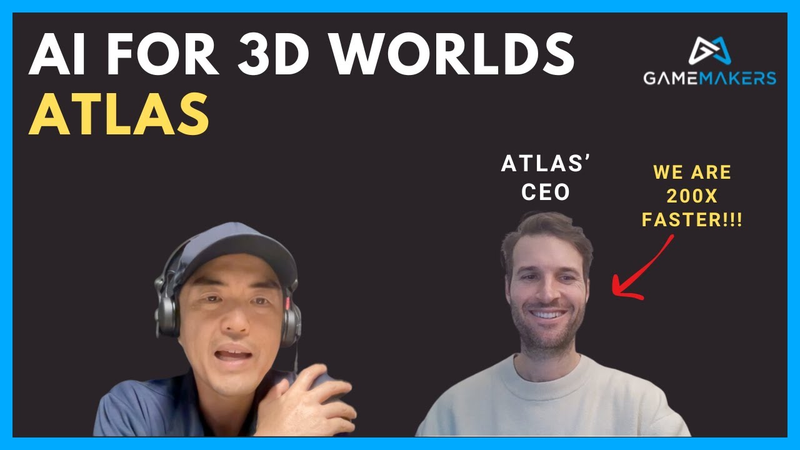
Gaming x AI: How Atlas makes models for 3D worlds 200X faster! (ft. CEO Ben James)
The integration of generative AI into 3D asset production marks a significant shift in game development, enabling the creation of complex, game-ready environments up to 200 times faster than traditional manual modeling.
- Generative AI tools can accelerate 3D asset production by up to 200 times compared to traditional manual modeling methods.
- The technology converts 2D inputs, such as sketches and photographs, into structured 3D geometry that integrates directly into Unity and Unreal Engine pipelines.
- AI-driven workflows are designed to be non-destructive, providing artists with editable, clean assets that allow for rapid iteration rather than replacing human designers.

Beyond Game Design
In this 2019 GDC presentation, Ubisoft Toronto game director Richard Carrillo argues that the primary challenge for game designers is not technical execution, but the cultivation of a positive, collaborative design culture.
- Game design success depends less on technical execution and more on cultivating a collaborative culture that moves beyond the ego-driven 'I am the designer' mindset.
- Designers should replace directive, authority-based management with soft skills like inspiration, patience, and humility to foster team ownership.
- Negative team dynamics often stem from designer insecurity, manifesting as the dismissal of feedback or the demand for blind trust from colleagues.
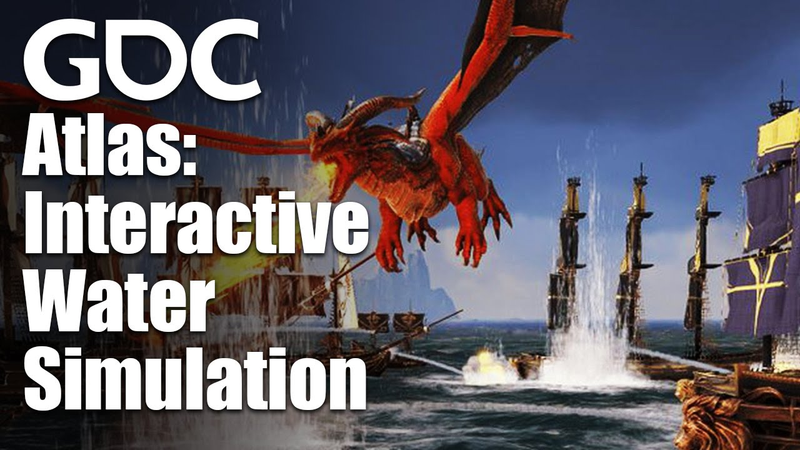
Wakes, Explosions and Lighting: Interactive Water Simulation in Atlas
The development of the ocean simulation for the massively multiplayer online game Atlas centers on balancing high-fidelity visual realism with the rigorous performance constraints required for a seamless, multi-server environment.
- To simulate vast ocean surfaces for Atlas, Grapeshot Games replaced the standard Phillips spectrum with JONSWAP and JONSWAP-variant spectra to avoid unrealistic wave heights in non-oceanic environments.
- The team optimized FFT-based ocean simulation by using larger waves to distort smaller frequency bands, effectively masking tiling repeats without sacrificing performance.
- Buoyancy for rigid bodies is calculated by taking discrete displacement samples along a boat's hull and using an iterative Newton's approximation method to determine height at specific world locations.
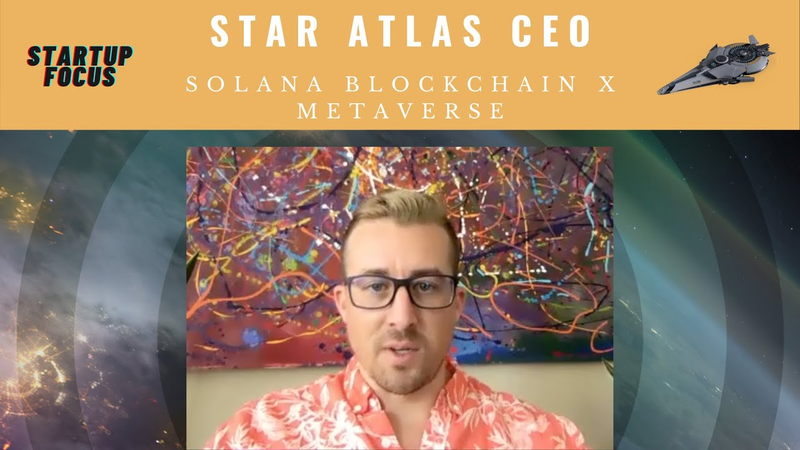
Star Atlas | Metaverse Game on the Solana Blockchain
Star Atlas functions as a AAA-quality, space-themed grand strategy metaverse built upon the Solana blockchain.
- Star Atlas is a AAA-quality space strategy metaverse built on the Solana blockchain, which utilizes a high-throughput architecture capable of processing 50,000 transactions per second.
- The game utilizes a dual-token economic model where ATLAS functions as the primary currency for commerce and POLIS serves as a governance token for the project's Decentralized Autonomous Organization.
- The platform operates on an invest-to-play paradigm, utilizing NFTs for all in-game assets to grant players true ownership and the ability to extract real-world value from their digital investments.
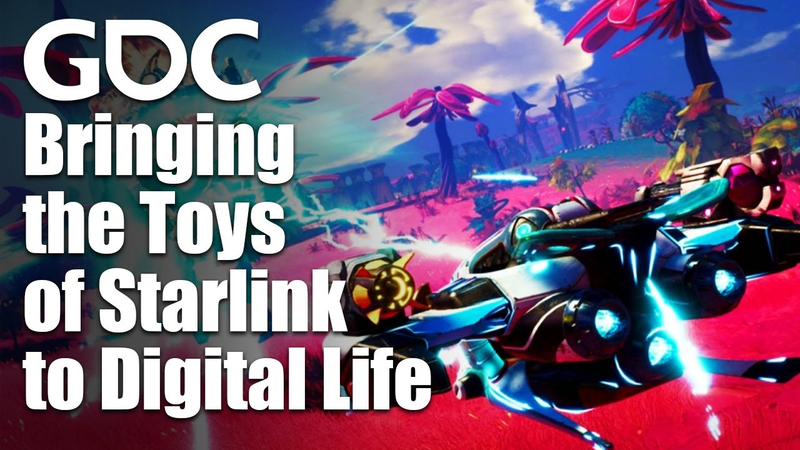
Starship Physics and Controls that Feel Real: Bringing the Toys of Starlink to Digital Life
The development of Starlink: Battle for Atlas focused on creating a responsive, physically plausible flight system that translated the tactile experience of physical toy ships into a digital open-world environment.
- The Starlink: Battle for Atlas flight system utilizes a modular architecture that dynamically adapts physics and controls to diverse ship geometries without requiring unique collision hulls for every combination.
- Movement is managed through a layered behavior system that sequences reusable classes—such as thrusters and terrain-following repulsors—to handle distinct navigation modes for space, atmosphere, and ground skimming.
- Procedural animation techniques apply additive offsets to the base ship transform to simulate engine activity and environmental reactions, maintaining tight control while providing high-quality visual feedback.
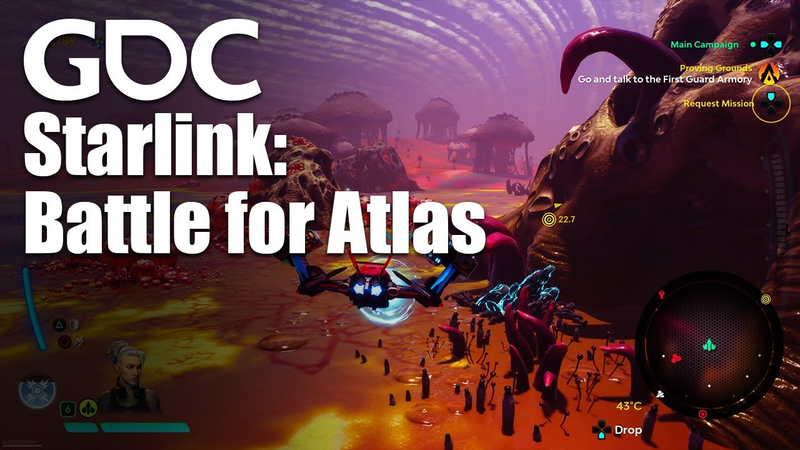
From Game Jam to the Creation of Starlink: Battle for Atlas
The development of Starlink: Battle for Atlas serves as a case study in balancing radical creative experimentation with the rigid demands of AAA production.
- To overcome the challenges of a wide-open innovation mandate, the Ubisoft 'Tomcat' team utilized a two-week iterative cycle consisting of brainstorming, pitching, voting, planning, and rapid prototyping.
- The team scaled brainstorming by starting with individuals, moving to pairs, and then groups of four, which allowed the team to generate hundreds of unique ideas rather than relying on the limited output of individuals.
- The team utilized a 'validate by any means necessary' approach during the one-week prototyping phase, employing diverse methods such as paper prototypes, existing game engines, and physical hardware hacks to prove concepts quickly.
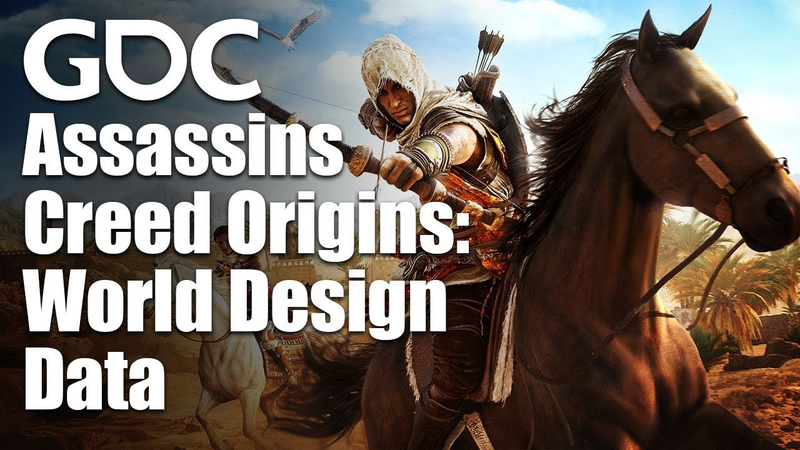
Assassin's Creed Origins: Monitoring and Validation of World Design Data
The development of Assassin’s Creed Origins necessitated a sophisticated approach to quality assurance to manage the complexities of a 120-square-kilometer open world.
- To manage the 120-square-kilometer open world of Assassin’s Creed Origins, the team replaced manual quality assurance with an automated validation framework to address navigation mesh failures and AI pathing errors.
- The development team implemented a daily automated testing suite using C#-based scripts to query over 200,000 individual game objects for objective pass/fail evaluations.
- The integration of a visual interface called Atlas allowed developers to pinpoint specific coordinates of data conflicts, enabling the resolution of issues before they cascaded into systemic failures.
Project Discovery: Lessons From Scientific Research in EVE Online
Project Discovery serves as a pioneering model for integrating citizen science into the AAA gaming landscape, specifically within the massive multiplayer online game EVE Online.
- Project Discovery, a collaboration between CCP Games and MMOS, successfully integrated citizen science into EVE Online, resulting in over 25 million protein location classifications by players.
- The project utilizes a consensus-based validation system where each data sample requires between 15 and 50 independent player submissions to ensure scientific accuracy.
- Scientific outcomes from the initiative include the identification of approximately 100 new protein candidates related to 'rods and rings' structures, which were subsequently published by researchers.