Alex
Company
Documents about Alex

Assassin’s Creed creator Patrice Désilets: “I have two or three games left”
The independent development landscape is currently undergoing a significant shift as veteran creators move away from the constraints of large-scale publishing toward self-determined, iterative production models.
- Patrice Désilets, creator of Assassin’s Creed, is shifting toward a self-determined production model at his 70-person studio, Panache, to maintain creative autonomy over projects like 1666: Amsterdam.
- Désilets estimates he has only two or three major titles left in his career, signaling a move toward high-impact, iterative development rather than large-scale corporate output.
- Independent developers are increasingly rejecting the volatile live-service model in favor of sustainable, player-focused projects that prioritize long-term viability over aggressive monetization.

The Truth Behind Sexual Harassment At Blizzard
The discourse surrounding sexual harassment allegations at Blizzard Entertainment is often reduced to binary, polarized narratives that ignore the complexity of the situation.
- Activision Blizzard settled a California state lawsuit regarding sexual harassment and discrimination allegations for $54 million in December 2023, following the company's acquisition by Microsoft.
- A separate federal lawsuit regarding the same issues was settled for $18 million, though unlike the state settlement, it did not include language regarding the accuracy of the claims.
- Reporting indicates a systemic failure at Blizzard to address misconduct, specifically regarding Alex Afrasiabi, a World of Warcraft director who faced multiple accusations of sexual harassment before his 2020 termination.
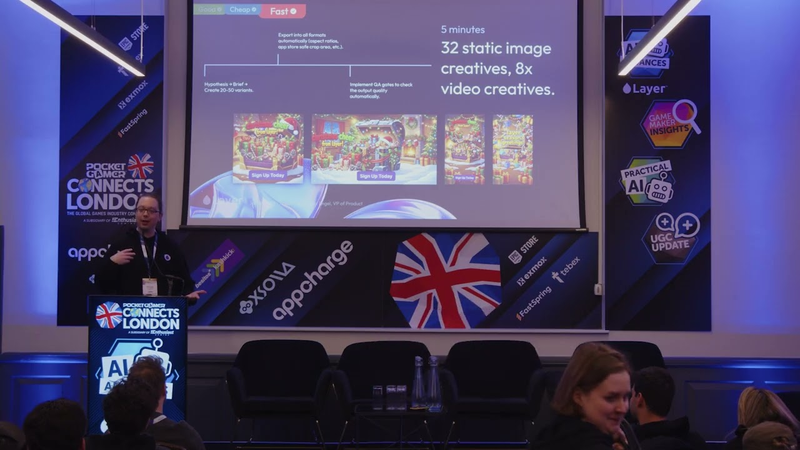
Session: 2026: The Year UA Could Become Good, Fast, & Cheap? - Alex Engel, Layer AI.
The mobile gaming industry is approaching a pivotal shift in User Acquisition (UA) where the traditional constraints of the "iron triangle"—balancing quality, speed, and cost—are being dismantled by advancements in generative AI.
- By 2026, the integration of AI reasoning models and node-based workflows is expected to resolve the 'iron triangle' of UA by enabling the production of high-quality, low-cost, and rapid creative assets at scale.
- The cost of generating high-definition video assets has dropped significantly, with current models like Cling 2.5 costing approximately 10 cents per second and V03.1 costing 27 cents per megapixel second.
- New training frameworks and custom LoRA models now allow for style-consistent asset generation using as few as a dozen images in a training set.
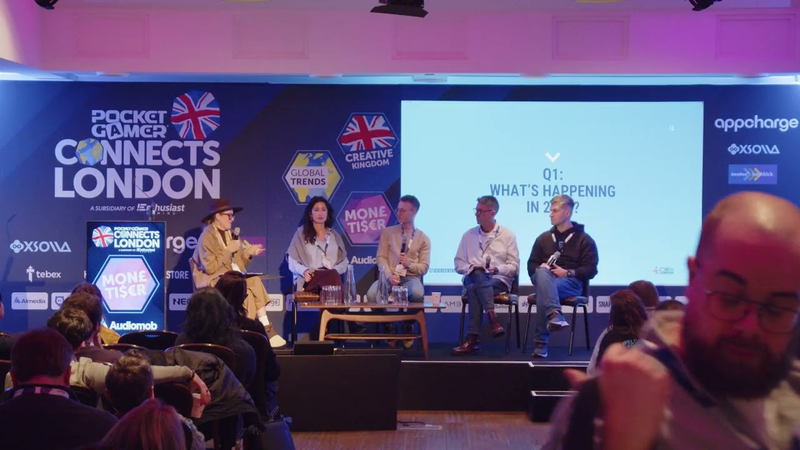
Curated Panel: The Privacy-First Advantage: Smarter Data, Smarter Monetization In 2026.
By 2026, privacy compliance has transitioned from a mere legal obligation into a fundamental operational strategy that dictates the success of monetization and user experience within the gaming industry.
- Privacy compliance has evolved from a legal checkbox into a core component of the monetization stack, with non-compliance leading to significant financial penalties, such as the $1.4 million fine issued to Jam City for CCPA violations.
- Publishers must shift from passive data collection to active activation of first-party data to improve ad targeting, eCPMs, and overall monetization strategies.
- Major ad networks, including Google, have moved toward making the sharing of publisher first-party data a default requirement to improve ad relevance and player journey insights.
Game of Phones: Alex Merutka on the Battles Shaping Mobile Gaming’s Future
Mobile gaming currently functions as the primary laboratory for user acquisition and advertising technology, where the competitive landscape is defined by a relentless pursuit of marginal monetization gains.
- AppLovin has established a dominant market position by focusing on performance-based ad tech and monetization, creating a 'data moat' that makes it difficult for competitors like Unity to challenge them.
- Playable ads have become the industry standard for user acquisition because they allow users to qualify themselves through interaction, providing deeper behavioral data that compensates for the loss of precise targeting capabilities.
- The mobile gaming ad ecosystem is shifting toward dynamic, context-aware creative that adapts in real-time to variables like weather, time of day, and user environment to improve engagement.
Elden Ring Meets A24, ActiBlizz Lawsuit Ends, Lies of P Gits EZ! | Gaming News | Games For Breakfast
The gaming industry is currently navigating a period of significant structural and creative transition, marked by the resolution of long-standing legal battles and the emergence of new ethical standards regarding artificial intelligence.
- The FTC’s challenge against Microsoft’s acquisition of Activision Blizzard has concluded, signaling a shift in regulatory oversight for major industry mergers.
- Fortnite has returned to the iOS App Store, marking a significant victory for developers challenging traditional platform payment ecosystems.
- Embracer Group is undergoing a major restructuring, splitting into three independent entities to increase operational flexibility for its intellectual properties.
Alex Brodsky - Avoiding Common Mistakes in building a Gaming Brand
In a saturated global gaming market where over 11,000 titles launch annually on platforms like Steam, the transition from viewing a game as a mere product to cultivating it as a distinct brand is essential for survival.
- With over 11,000 titles launching annually on Steam, developers must transition from viewing games as simple products to cultivating them as distinct brands to survive in a saturated market.
- Building a brand identity creates emotional resonance that fosters long-term player retention, which performance marketing alone cannot achieve.
- Developers should establish a consistent brand personality, including a clear tone of voice and unique value proposition, as early as the pre-alpha stage.
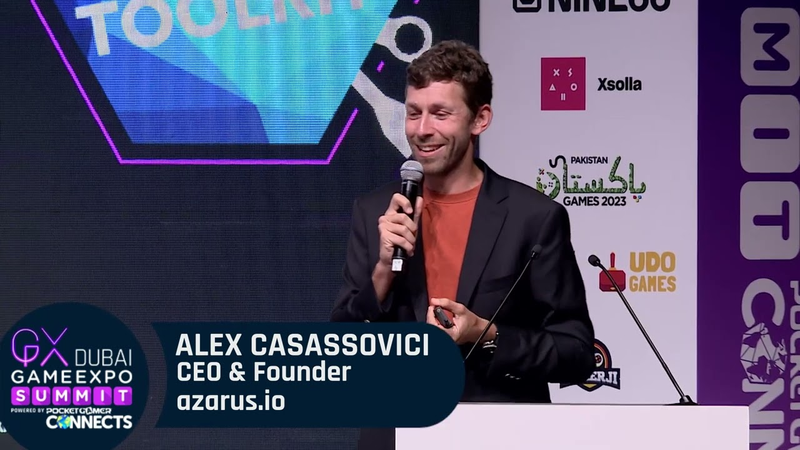
Massively Multiplayer TV - Alex Casassovici, azarus.io
The evolution of television from a passive broadcast medium into a highly interactive, massively multiplayer platform represents a significant shift in digital entertainment.
- Interactive overlays on platforms like Twitch have reached 18 million unique users in a single year, demonstrating the scalability of turning passive video into active participation.
- Modern internet-based streaming allows developers to bypass app store discovery hurdles by embedding lightweight, web-based games directly into video feeds.
- Interactive broadcast experiences, such as trivia and real-time prediction games, have achieved engagement rates as high as 100% during live streams.
Reality, Upgraded: Navigating VR/AR Gaming with Alex Silkin | 323
The virtual and augmented reality landscape is currently undergoing a pivotal transition, shifting from a niche gaming segment toward a broader, more integrated computing platform.
- The VR/AR industry is transitioning from a niche gaming segment into a broader spatial computing platform, driven by competition between Meta’s standalone ecosystem, Sony’s high-fidelity hardware, and Apple’s Vision Pro.
- Corporate-led 'metaverse' strategies focused on productivity have largely failed to gain consumer traction, as users prioritize entertainment and social engagement over top-down virtual environments.
- Platforms like Roblox and Fortnite demonstrate that successful virtual interaction is built on gameplay-first design and organic, user-generated content rather than speculative corporate branding.
The Halo Effect, 3x Gaming Entrepreneur Alex Seropian
The evolution of the gaming industry over the past three decades reflects a transition from garage-based bootstrapping to complex corporate integration and mobile-first strategies.
- Scaling a studio requires transitioning from early-stage creative risk-taking to organizational maturity, specifically by hiring specialized leadership early to manage operational complexities.
- The evolution of the Halo franchise from a real-time strategy concept to a first-person shooter demonstrates that long-term success relies on rigorous playtesting and active community engagement.
- Large conglomerates like Disney have struggled with vertical integration in gaming, suggesting that licensing models are often more pragmatic than attempting to build internal development capabilities without institutional experience.
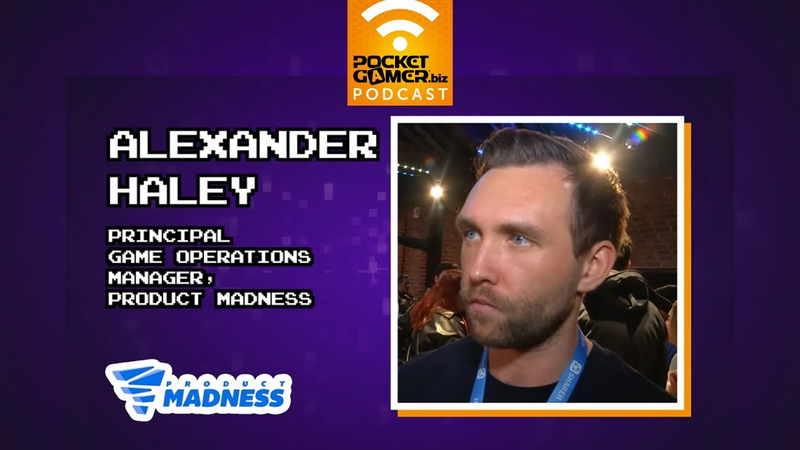
Looking to TikTok For Trends and Product Madness' Alex Haley On Live Ops Made Simple
Successful live operations strategy in the mobile gaming sector centers on the principles of simplicity, agility, and rigorous documentation.
- Successful live operations rely on simplifying technical workflows and documentation to shift team focus from maintenance to rapid experimentation and iteration.
- Building a flexible infrastructure is essential for scaling, as it allows developers to test new concepts quickly and respond dynamically to shifting market demands.
- Effective live ops management requires a dual focus on fostering strong cross-departmental relationships for realistic roadmapping and maintaining analytical, enthusiastic internal teams.

The value of a user is not only monetary | Alex Pham from Adjust
Mobile marketing analytics requires a strategic shift toward privacy-first infrastructure and holistic performance measurement.
- Mobile marketing must shift from deterministic tracking to privacy-first infrastructure, utilizing predictive modeling and aggregated intelligence to navigate regulations like GDPR and Apple’s SKAdNetwork.
- Success requires moving beyond cost-per-install metrics to evaluate long-term user value, specifically focusing on retention, virality, and delayed monetization patterns.
- Developers are increasingly adopting all-in-one platforms that integrate analytics, visualization, and campaign automation to improve efficiency and manage leaner teams amid industry consolidation.