ReportNiko Partners
Access for All: Expanding Opportunities for Players and Publishers Worldwide
202515 pages~22 min full read
This analysis explores the strategic shift toward out-of-app monetization in the global gaming industry, with a specific focus on Southeast Asia and China. The primary thesis posits that while Apple and Google have historically dominated distribution, publishers are increasingly adopting alternative channels—including third-party web stores, first-party direct-to-consumer platforms, and alternative app stores—to bypass high "take rates" and better serve unbanked populations in emerging markets.
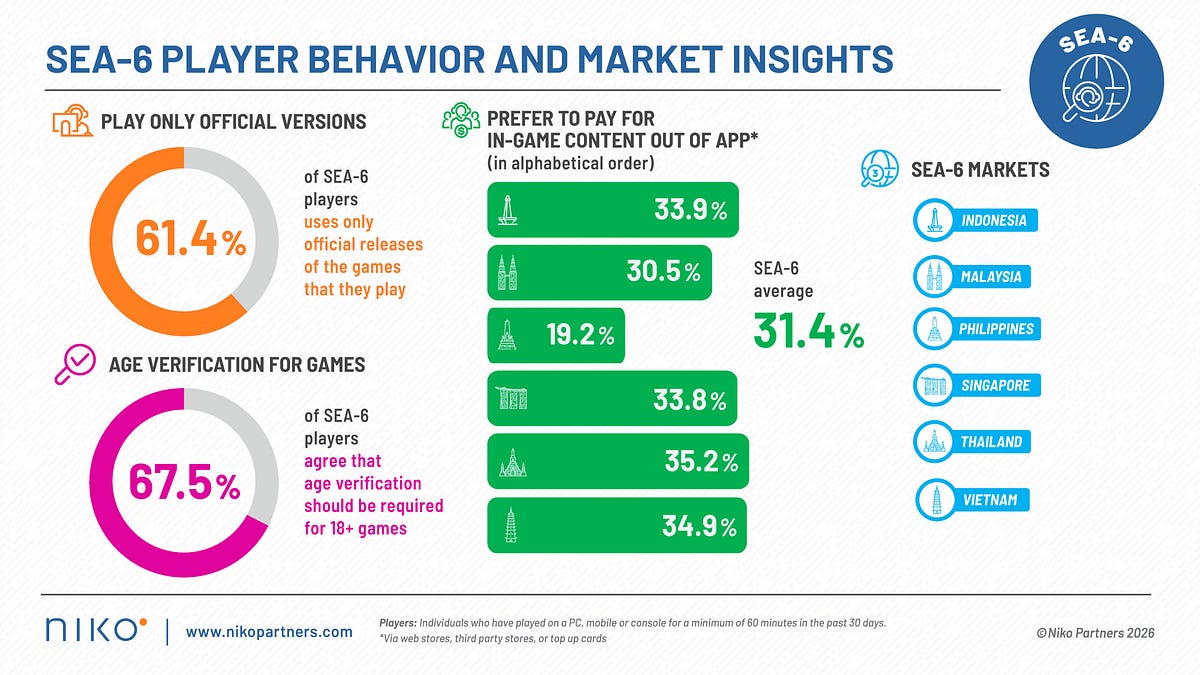
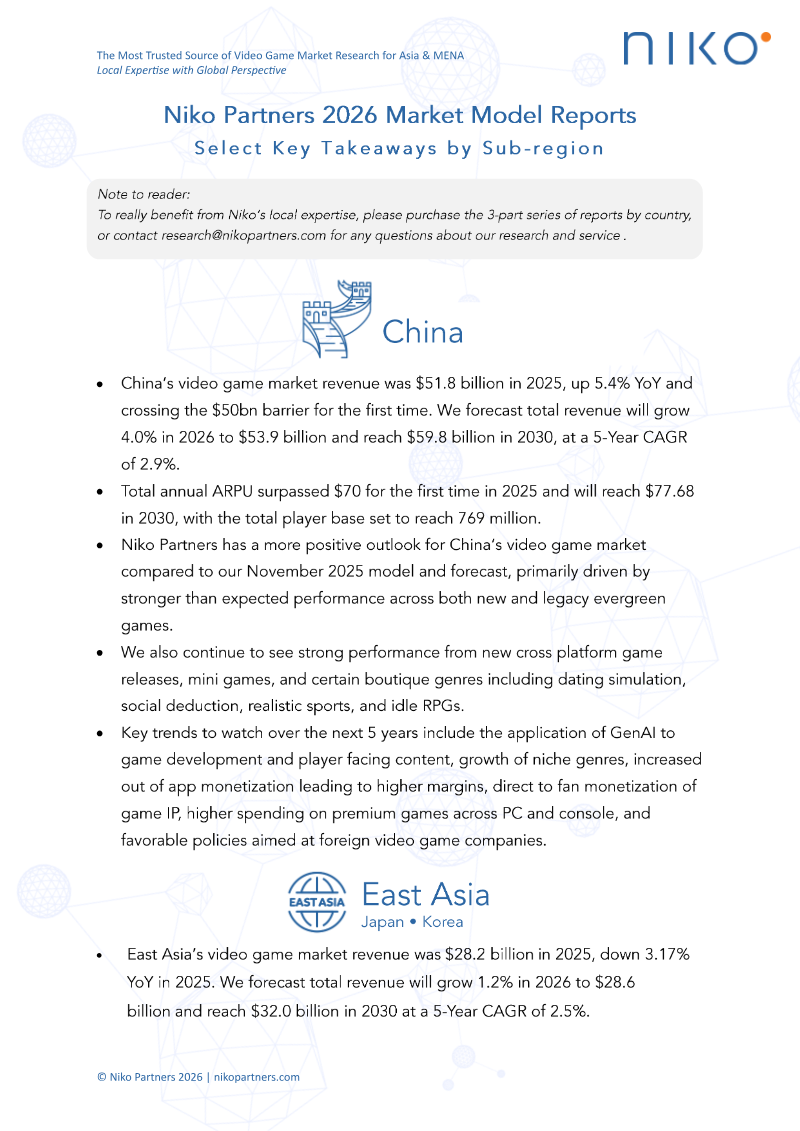
Key findings indicate that out-of-app monetization is already a mature practice in Asia. In Southeast Asia, these channels account for 21% of mobile game revenue, while in China, they represent 53% of the market. Data from 2023 highlights that in the "SEA-6" countries (Indonesia, Malaysia, Philippines, Singapore, Thailand, and Vietnam), 40-50% of the adult population remains unbanked, making the credit card-centric models of primary app stores ineffective. Consequently, gamers in these regions prefer e-wallets, carrier billing, and physical vouchers. A case study of Mobile Legends: Bang Bang in the Philippines demonstrated that a localized promotion using an e-wallet partner led to a 133% increase in daily purchase volume and a 167% rise in transactions.
The scope of the research covers the evolution of digital distribution over the last 15 years, with a forward-looking projection through 2027. It emphasizes the impact of regulatory momentum in the EU, UK, South Korea, and Japan, where new legislation is forcing primary stores to allow alternative payment systems. Methodology relies on Niko Partners’ 2023 market model, gamer surveys, and proprietary data from Coda Payments. The findings conclude that publishers who fail to localize their monetization and discovery strategies risk losing significant market share to regional competitors who offer more flexible, lower-cost payment solutions.

Niko Partners · 2026
Niko Partners · 2026
Niko Partners · 2026
Niko Partners · 2026
Niko Partners · 2026
Niko Partners · 2026
Niko Partners · 2026

Deconstructor of Fun · 2026

Niko Partners · 2026

Niko Partners · 2026
Niko Partners · 2025
Niko Partners · 2025

Almedia · 2026

Gamesight · 2026
Sensor Tower · 2026

Sensor Tower · 2026
AppLovin · 2026

Sensor Tower · 2026
Newzoo · 2026
Modern Times Group · 2026
InvestGame · 2026
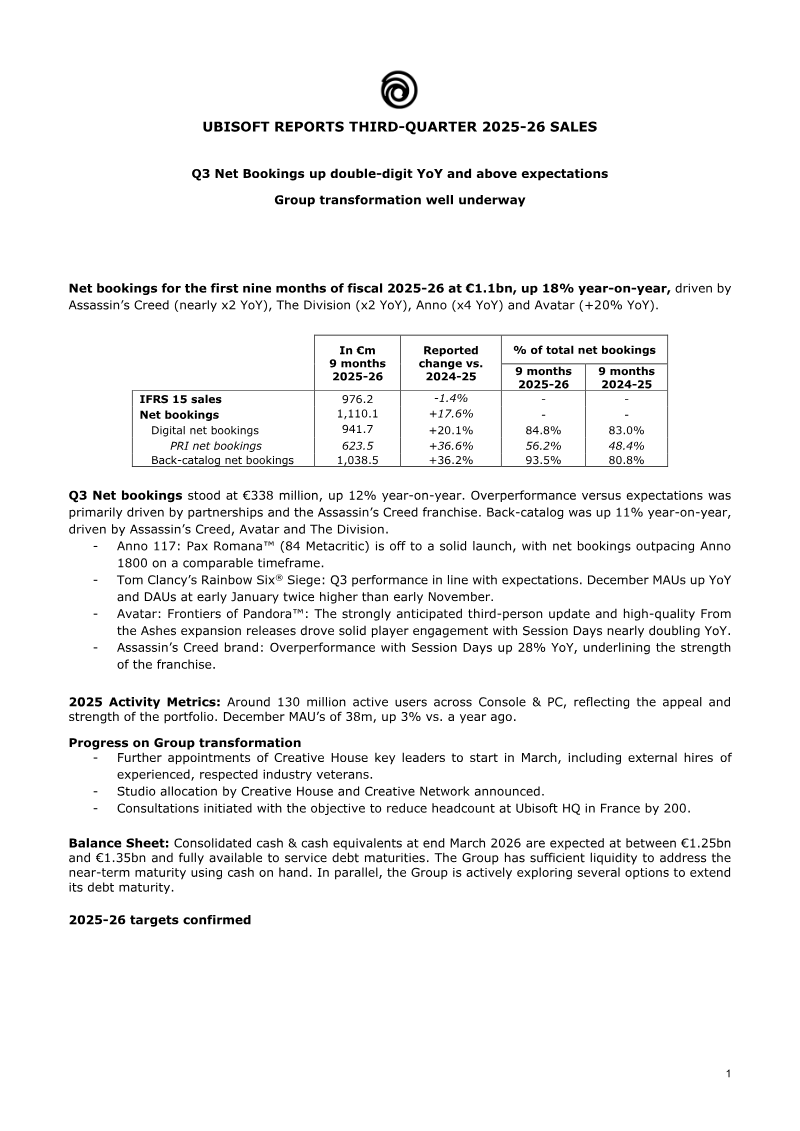
Ubisoft · 2026
AppMagic · 2026
InvestGame · 2026