
Journal of Games, Game Art, and Gamification
Open-access journal of Bina Nusantara University on games, game art, game design and gamification.
Documents
What Does the Perfect Companion in Games Look Like? Development and Validation of the Companion Design Scale
The Companion Design Scale provides a standardized, psychometrically validated framework for quantifying the influence of non-player character characteristics on the overall gaming experience.
- The Companion Design Scale provides a psychometrically validated framework of 20 distinct design factors to quantify how NPC characteristics influence player engagement and enjoyment.
- Developers can use this standardized instrument to transition from subjective intuition to a data-driven approach for evaluating and iterating on AI-driven companion design.
- Research indicates that many current game companions fail to achieve true autonomy, a deficiency that negatively impacts the quality of the player-companion relationship.
YOLO-based Mobile Legends Match Result Parsing
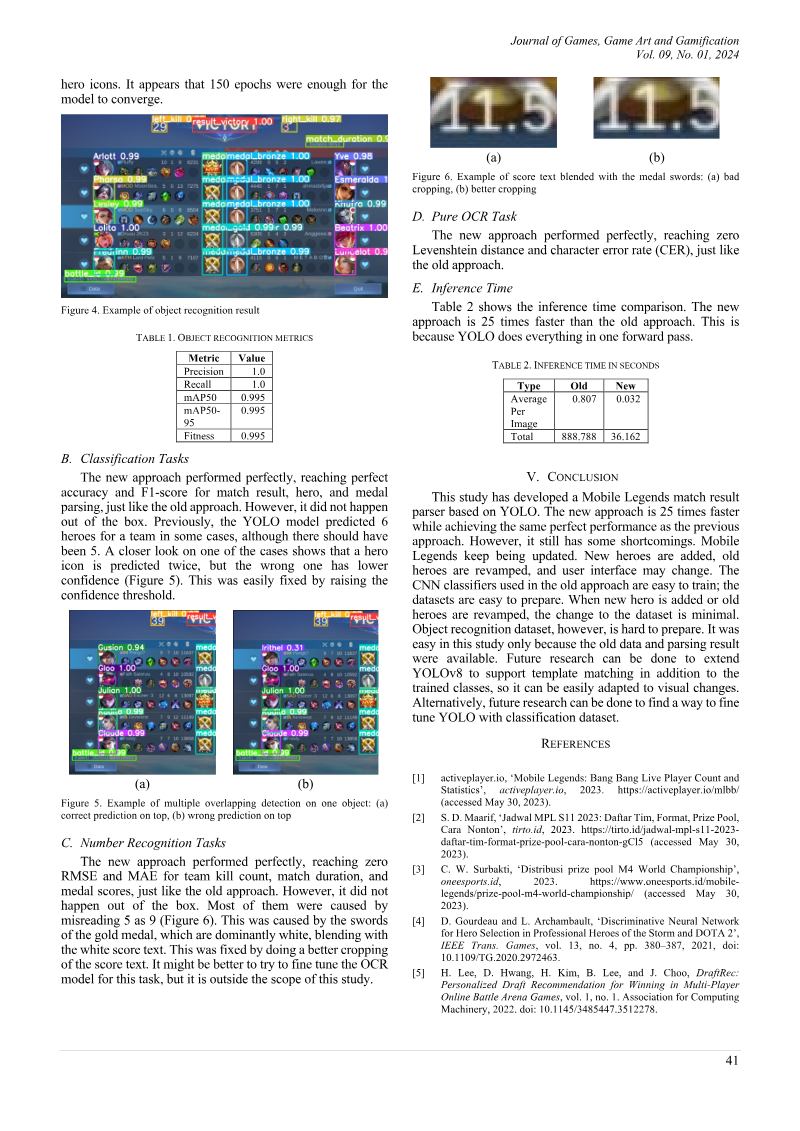
This study addresses the scarcity of accessible game data for the popular MOBA title Mobile Legends by developing an automated system to parse match result screenshots.
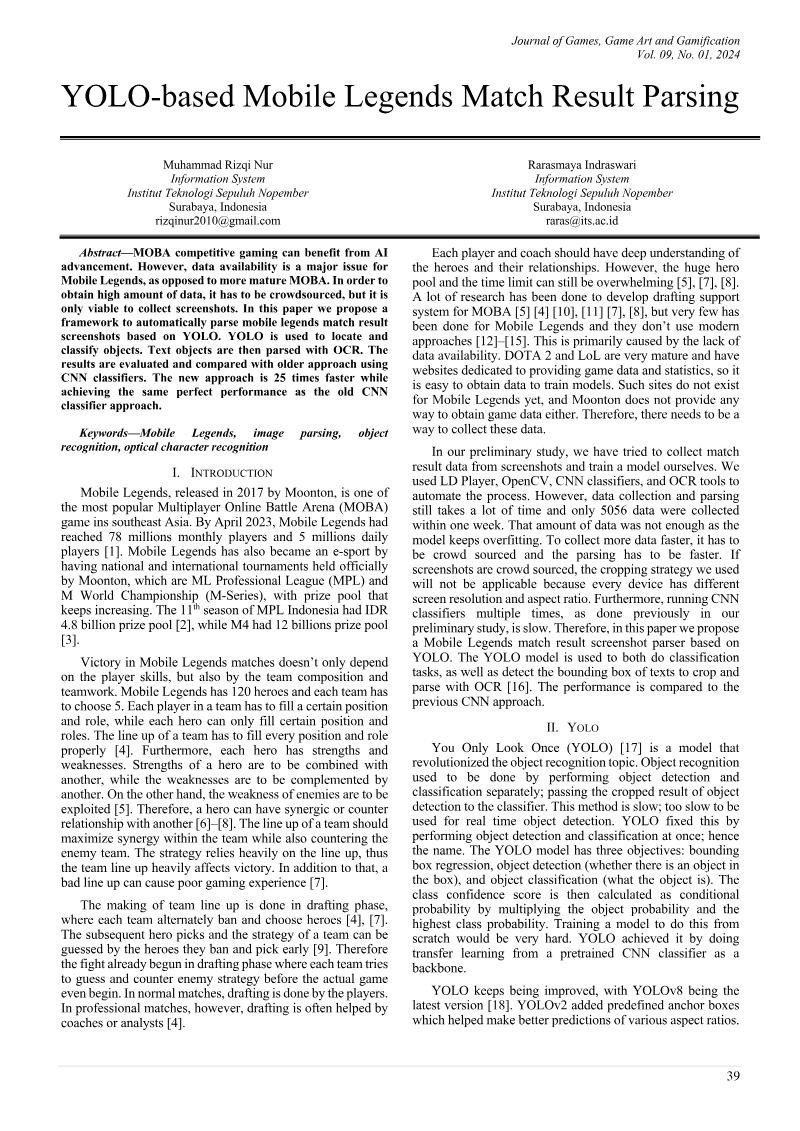
- The YOLOv8-based parsing system achieves a 25x increase in processing speed compared to traditional multi-stage CNN methods, reducing inference time from 0.807 seconds to 0.032 seconds per image.
- The model maintains perfect accuracy and F1-scores while automating the extraction of hero icons, team medals, and match statistics from Mobile Legends screenshots.
- The framework utilizes a hybrid approach, combining YOLOv8 for object detection in a single forward pass with PaddleOCR for extracting text-based data like battle IDs and scores.
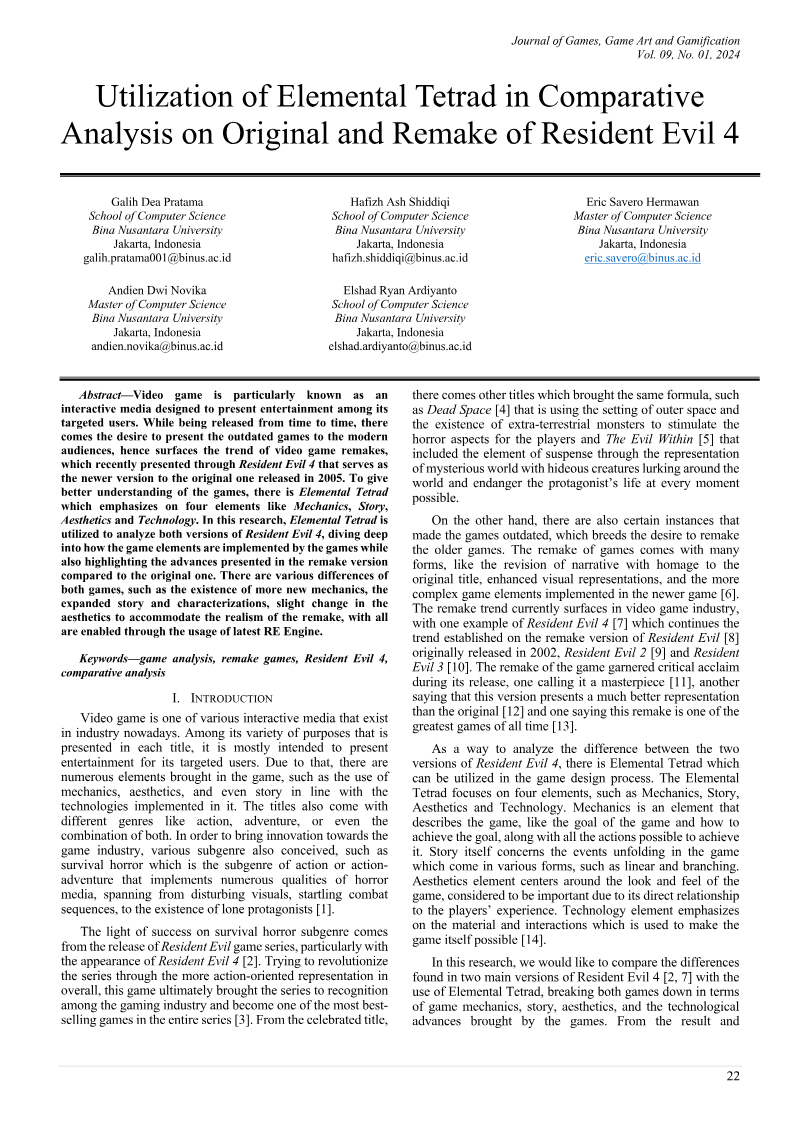
Utilization of Elemental Tetrad in Comparative Analysis on Original and Remake of Resident Evil 4
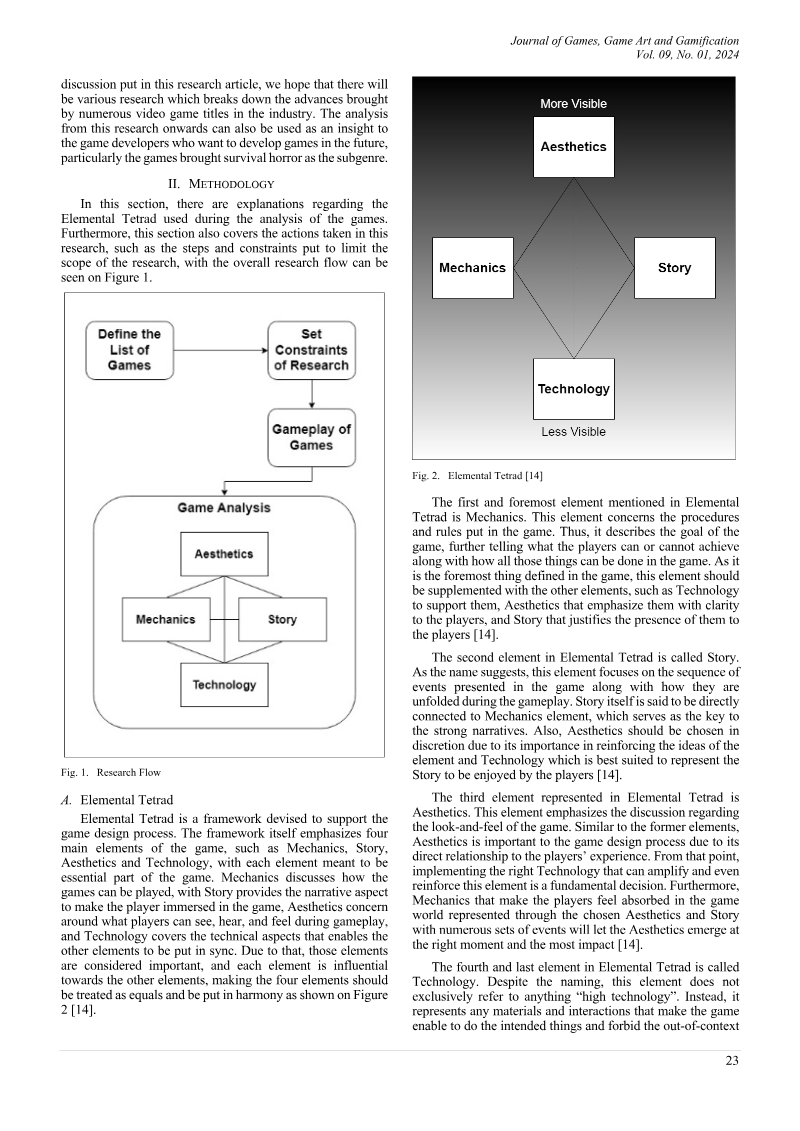
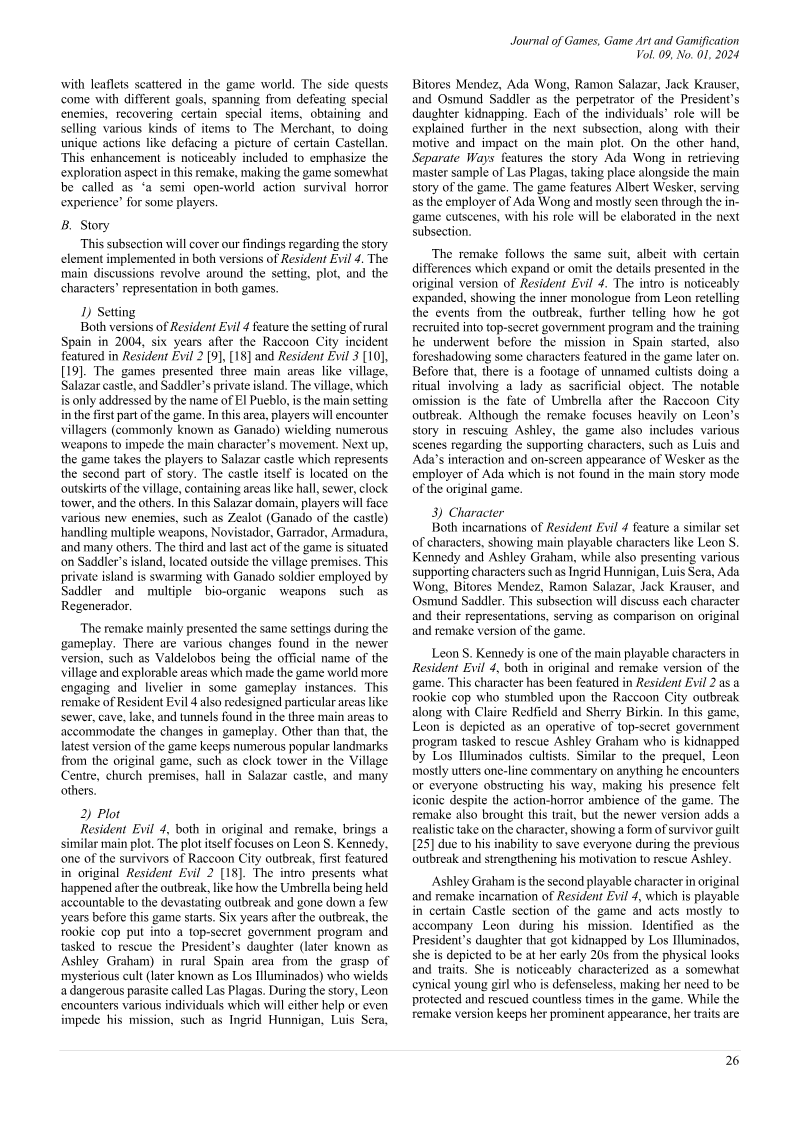
The Elemental Tetrad framework serves as a comprehensive lens for evaluating the evolution of survival-horror design through a comparative analysis of the 2005 and 2023 iterations of Resident Evil 4.
- The transition from the 2005 MT Framework to the modern RE Engine enabled significant technical and mechanical upgrades that define the 2023 Resident Evil 4 remake.
- Mechanical depth was expanded through the introduction of a robust parry system, stealth-oriented crouching, and refined crafting mechanics to increase player agency.
- The remake shifted the visual aesthetic toward a darker, cool-bluish palette to align with the series' current, more somber narrative trajectory.
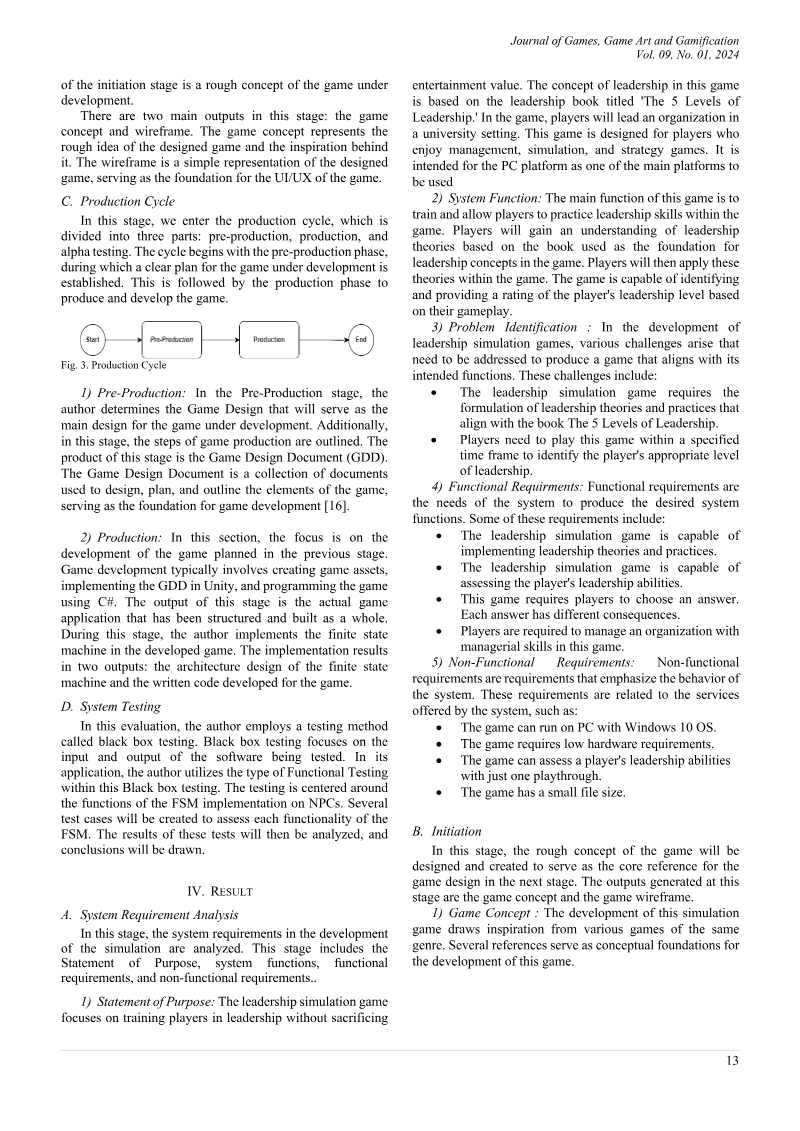
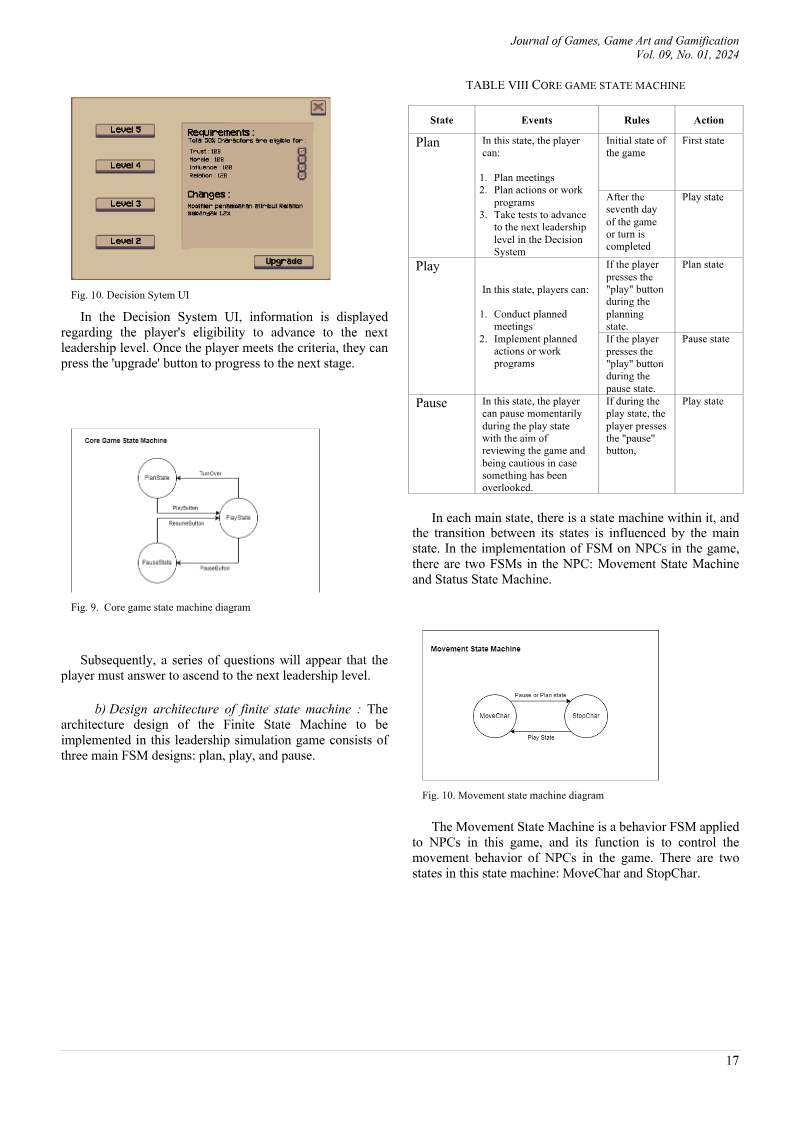
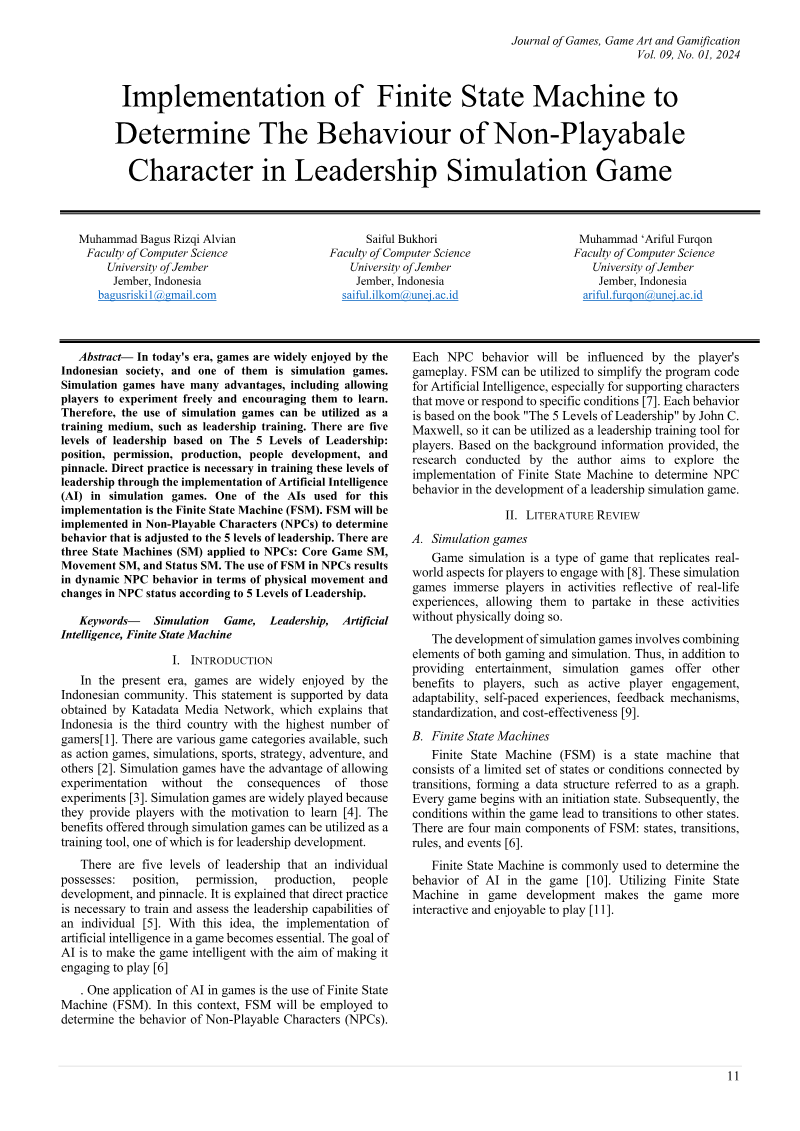
Implementation of Finite State Machine to Determine the Behaviour of Non-Playable Characters in Leadership Simulation Games
Leadership simulation games serve as effective pedagogical tools when integrated with structured behavioral frameworks.
- Finite State Machine (FSM) architecture effectively translates John C. Maxwell’s 5 Levels of Leadership into a functional, turn-based digital simulation.
- The simulation utilizes three concurrent modules—Core Game, Movement, and Status—to track four key performance metrics: trust, influence, relation, and morale.
- NPC behavior is governed by dynamic state transitions triggered by player decision-making, ensuring responses remain contextually relevant to the player's leadership level.
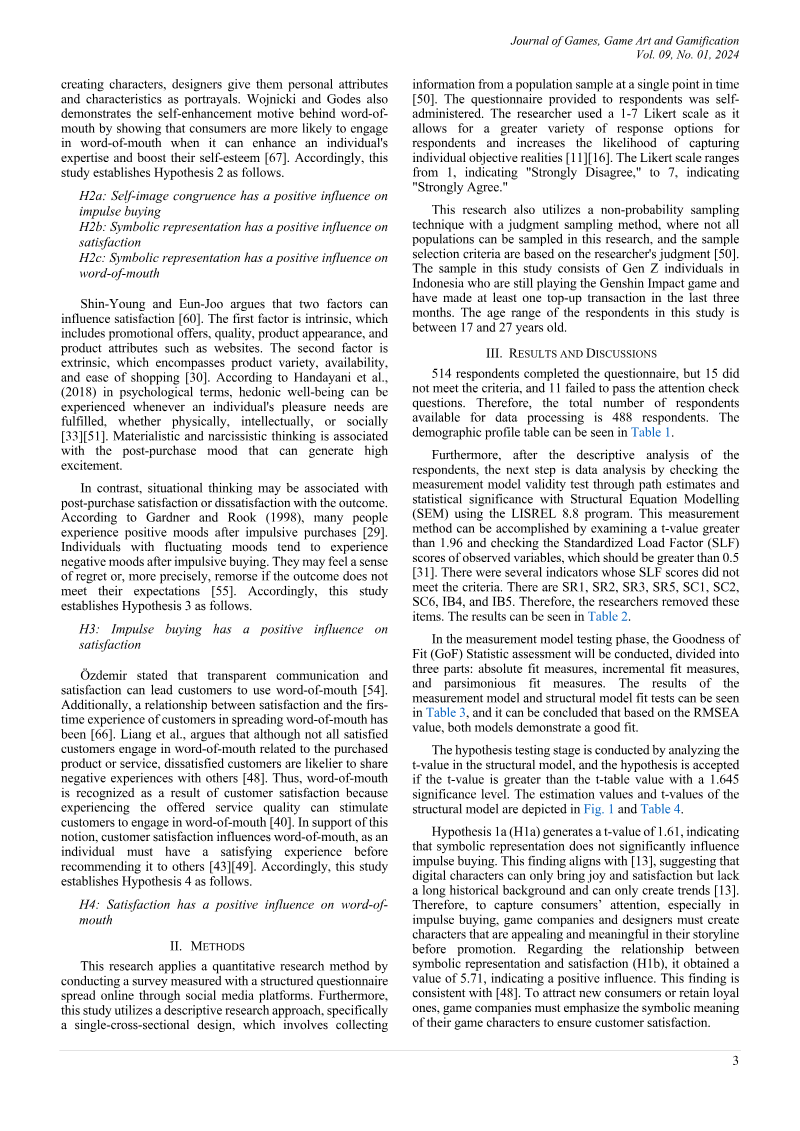
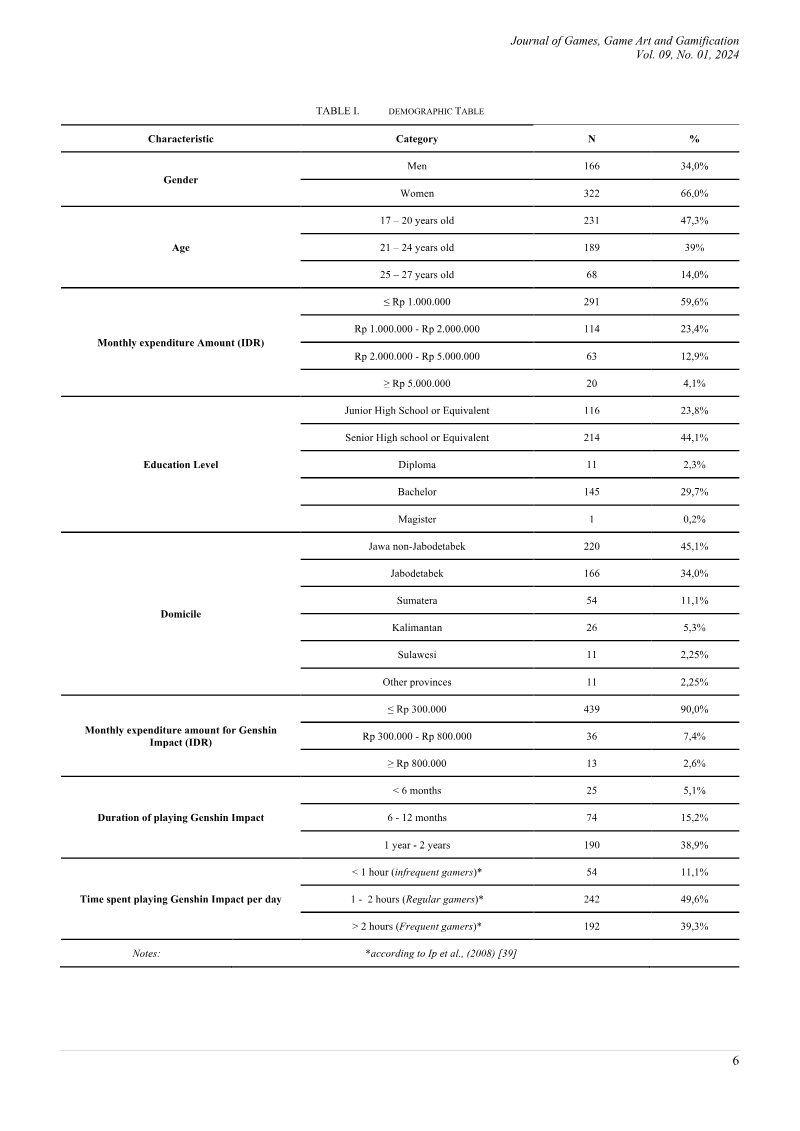
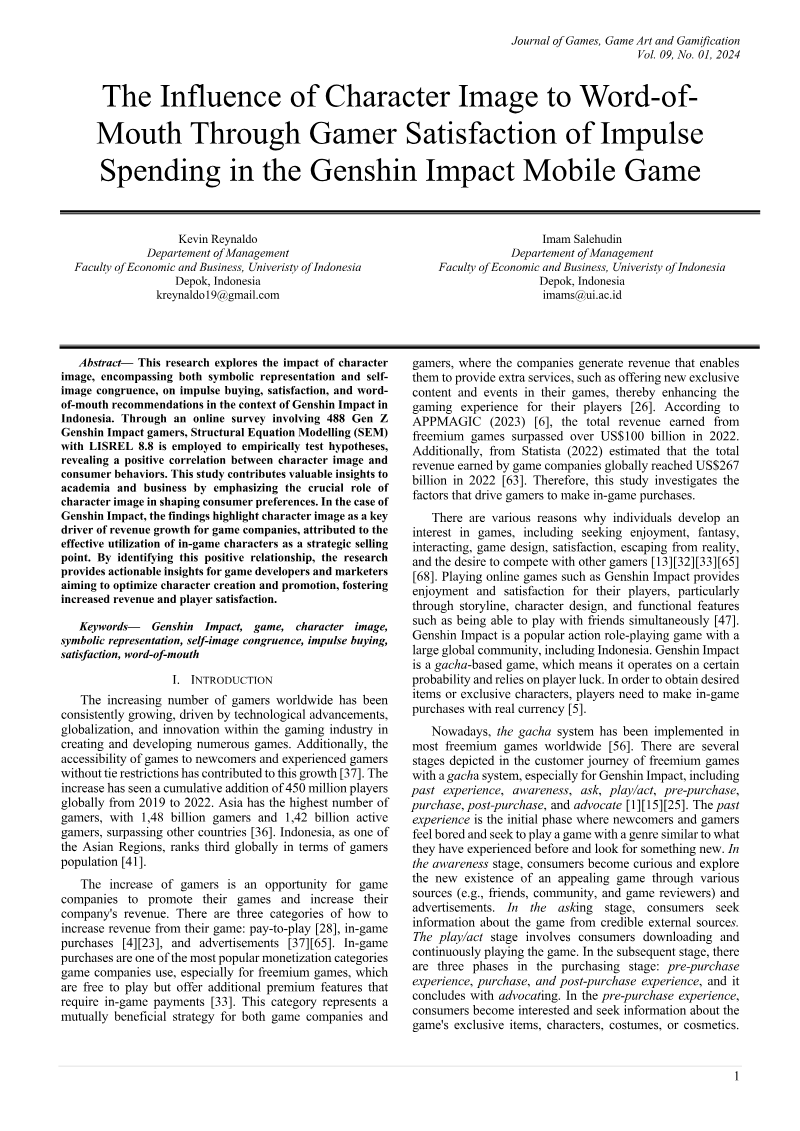
The Influence of Character Image to Word-of-Mouth Through Gamer Satisfaction of Impulse Spending in the Genshin Impact Mobile Game
Character design serves as a primary catalyst for revenue generation and consumer engagement within the competitive landscape of freemium, gacha-based mobile gaming.
- Character design that fosters high self-identity congruence—where players see themselves in the character—is the primary driver of impulse spending and player satisfaction in Genshin Impact.
- A study of 488 Generation Z players in Indonesia confirms that while aesthetic appeal builds long-term brand affinity, it is insufficient on its own to trigger financial transactions.
- Impulse spending does not inherently increase player satisfaction, indicating that players maintain deliberate decision-making processes even within gacha-based mechanics.
Interactive Horror Story Games and Its Core Drive Implementations: Case Study on The Dark Pictures Anthology Season One Games
This research examines the motivational drivers behind player engagement in interactive horror games, specifically focusing on the first season of The Dark Pictures Anthology.
- The Octalysis framework analysis of The Dark Pictures Anthology Season One identifies Narrative, Progress Bar, and Instant Feedback as the primary game techniques used to drive player motivation.
- The game series effectively utilizes specific gamification mechanics including Plant-Poison Picker, Count Down Timer, Visual Grave, and Rightful Heritage to maintain player engagement throughout its branching narrative structure.
- The research demonstrates that interactive horror games leverage branching narratives as a core design technique to increase the complexity and challenge level for the player.
Development of Android-Based Plane Figure Educational Game: A Case Study at SDN 1 Brobot
This research focuses on addressing student disengagement in mathematics by developing an Android-based educational game centered on plane figure geometry.
- The implementation of an Android-based educational game for grade IV students resulted in a 48.4% improvement in learning outcomes regarding plane figure material.
- The game development utilized the ADDIE model (Analysis, Design, Development, Implementation, Evaluation) and was built using Unity 2D with the Fisher Yates Shuffle algorithm.
- Media expert validation of the educational game achieved a score of 82.8%, while material expert validation reached 87.5%.
Synergy Magic Chess Optimization for 3 Evolution with Binary Integer Programming
The study explores the application of mathematical optimization techniques to improve strategic decision-making in the Magic Chess mode of the game Mobile Legends: Bang Bang.
- Binary Integer Programming (BIP) can be applied to optimize hero selection and synergy formation in Magic Chess (v.255.1) to achieve 3-evolution synergies.
- The optimization model uses binary variables where 1 represents a selected hero and 0 represents an unselected hero to manage limited hero slots.
- The objective function of the model is designed to minimize the number of heroes required to complete a specific synergy combination.
A Sense of Belonging: Today's Pinball Playing as a Contribution to Good Mental Health
The article examines the intersection of pinball gaming and mental health, specifically focusing on how the activity fosters a sense of belonging.
- Engaging in pinball playing fosters a sense of belonging, which is defined as a subjective feeling of deep connection with a social group and is linked to improved mental well-being.
- Pinball serves as a historical and developmental link to modern digital and video gaming, specifically regarding the encouragement of social connectedness.
- The practice of playing pinball in arcade settings promotes social participation and provides a mechanism for individuals to experience community integration.
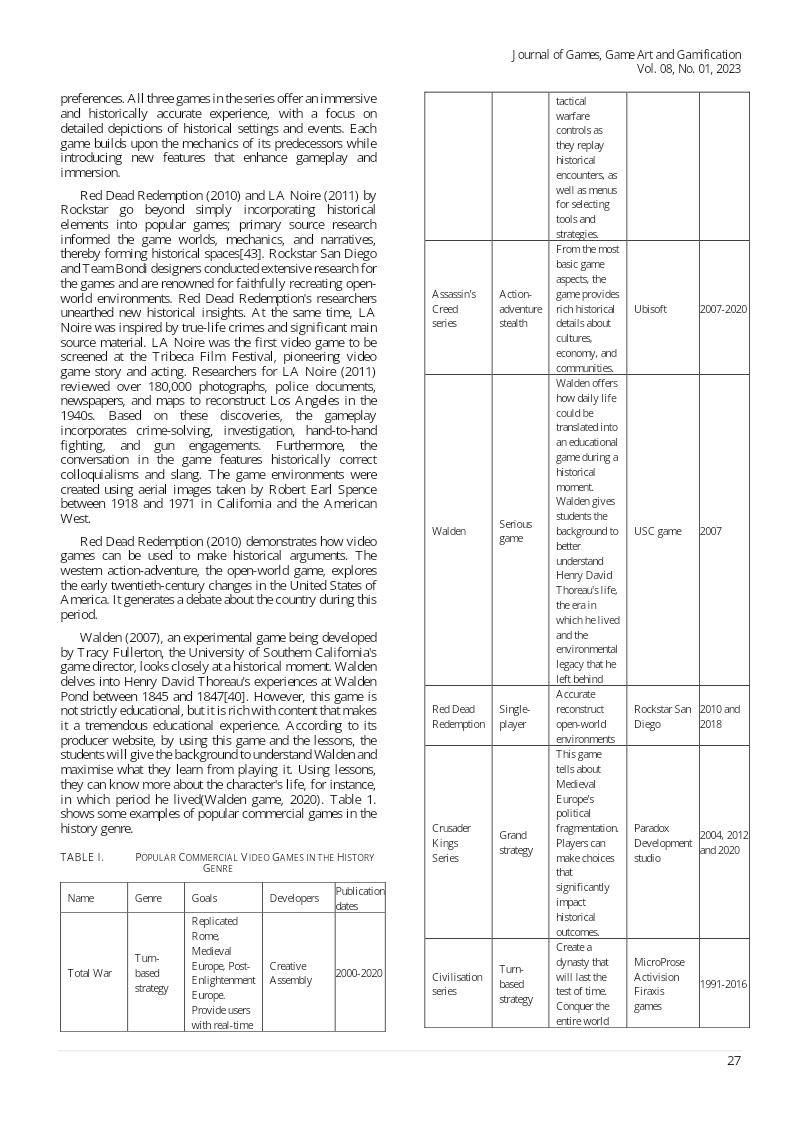
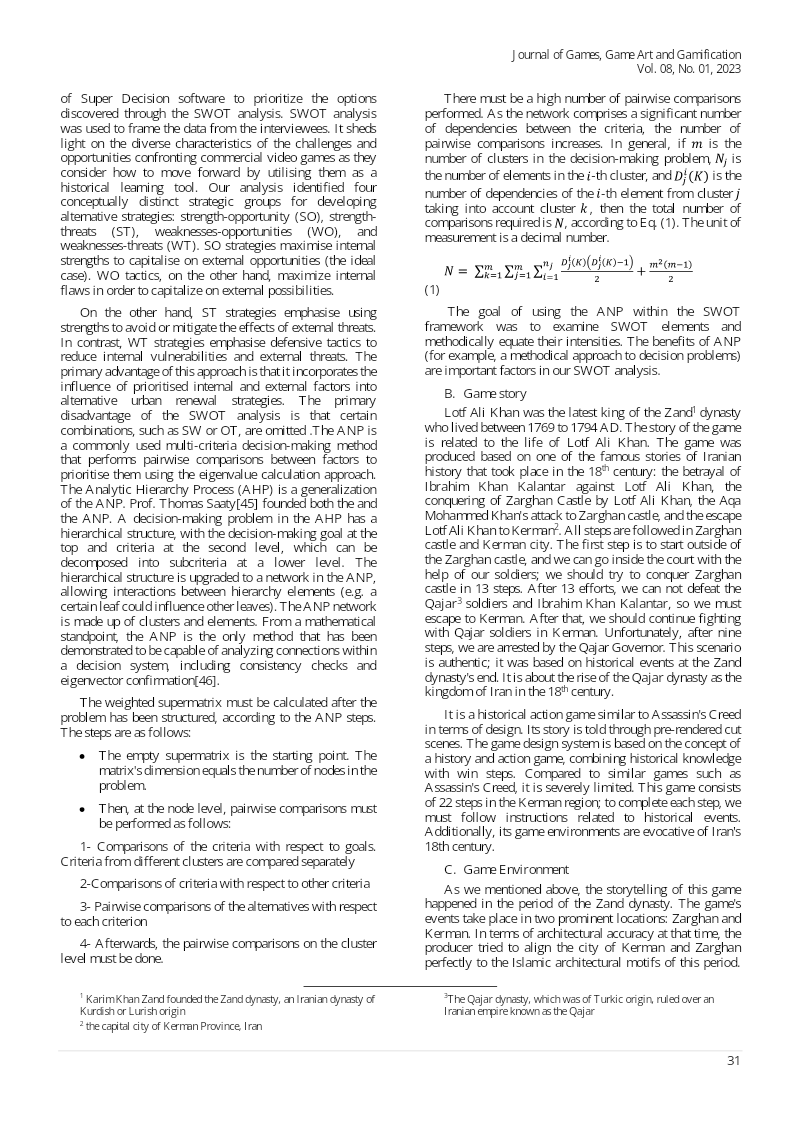
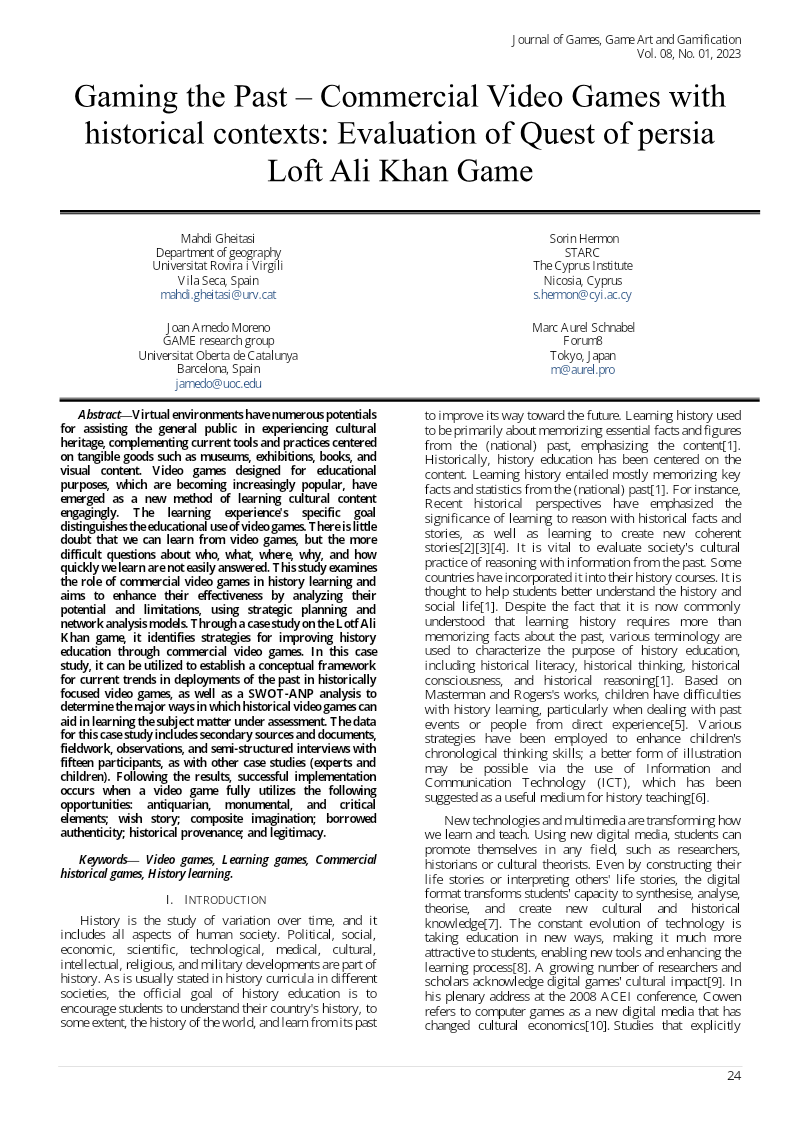
Gaming the Past: Evaluation of Quest of Persia
Commercial video games serve as potent instruments for historical education, shifting the pedagogical focus from rote memorization toward the development of historical reasoning and consciousness.
- Commercial video games like 'Quest of Persia' can shift historical education from rote memorization toward the development of active historical reasoning and consciousness.
- Effective educational outcomes in gaming require a strategic balance between historical accuracy and engaging, interactive gameplay mechanics.
- The integration of antiquarian, monumental, and critical narrative elements allows games to function as sophisticated tools for cultural heritage instruction.
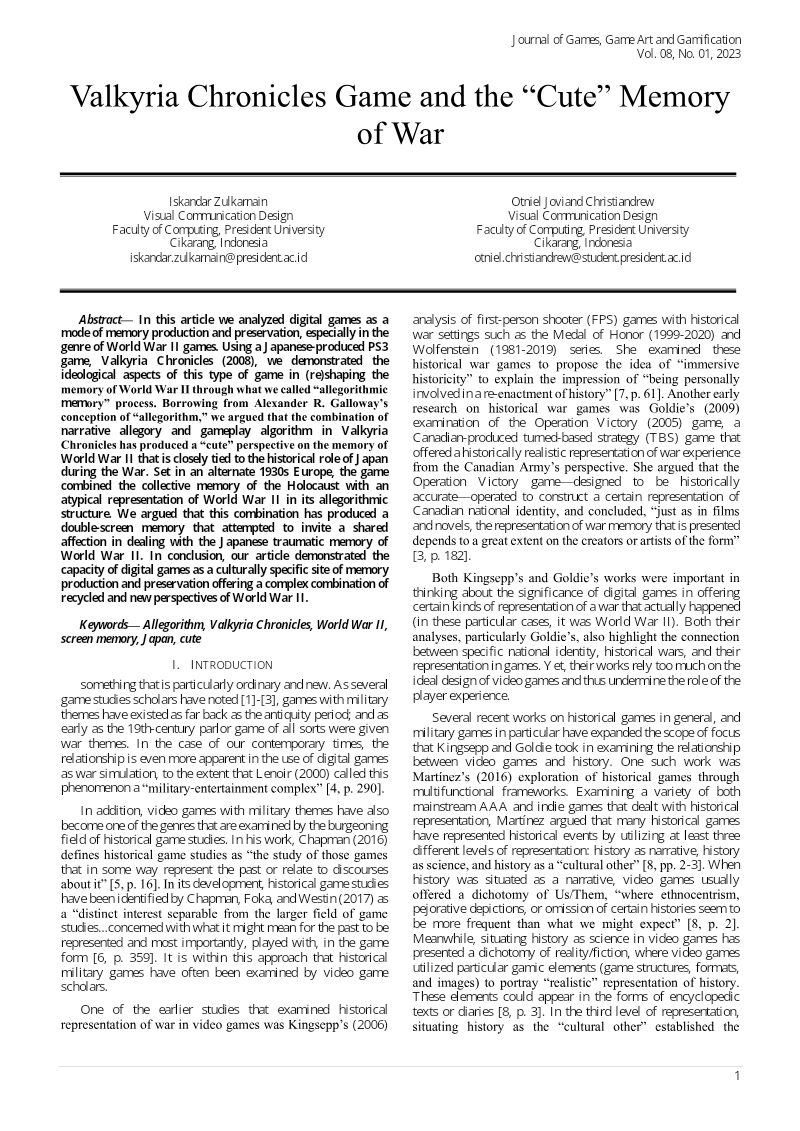
Valkyria Chronicles Game and the "Cute" Memory of War
Valkyria Chronicles functions as a sophisticated digital site of memory that reframes the historical trauma of World War II through an allegorithmic structure.
- Valkyria Chronicles functions as a digital site of memory that reframes World War II history through an allegorithmic structure, blending narrative allegory with specific gameplay mechanics.
- The game uses a stylized, 'cute' anime aesthetic to create a controlled distance from historical wartime atrocities, allowing players to engage with the gravity of conflict without relying on binary depictions of heroism.
- This design serves as a 'double screen memory' that simultaneously addresses Japan’s internal post-war disillusionment and the expectations of the international gaming market.
Educational Game Scenario Model Based on Imperative Game Goal Typology
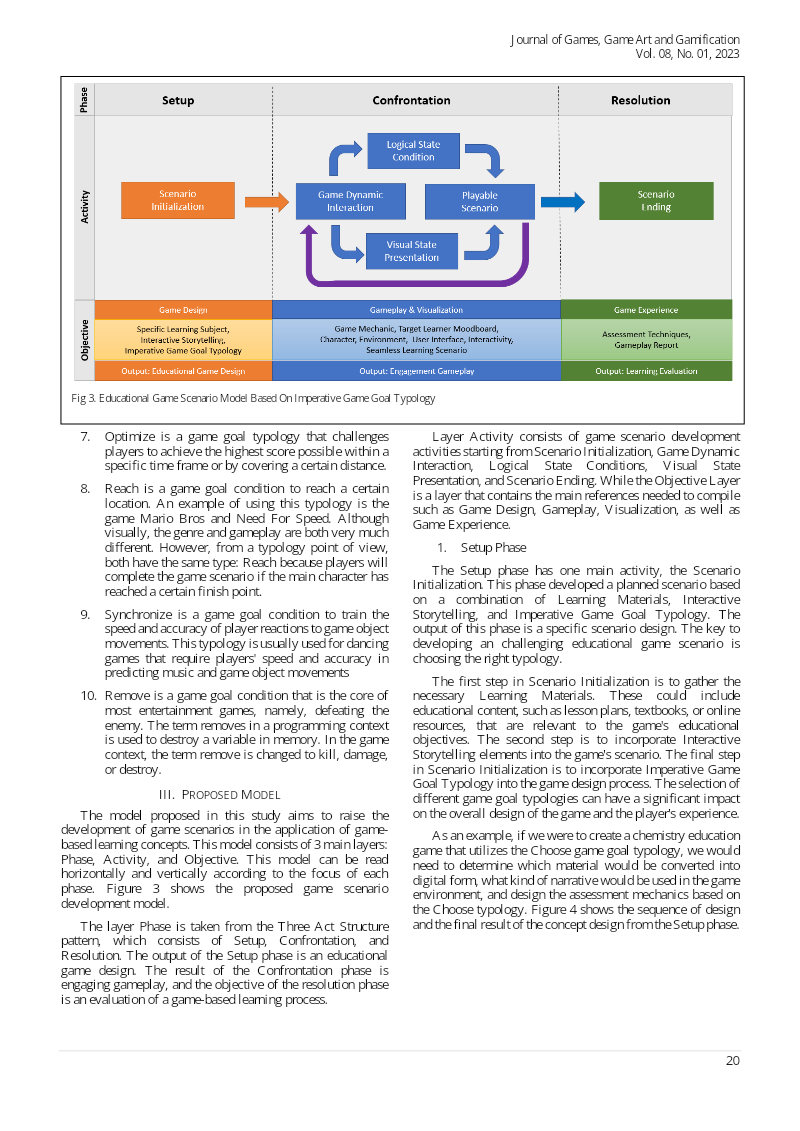
The educational game scenario model presented in this research addresses the common limitation in serious games where mechanics are often restricted to repetitive quizzes or simple puzzles.
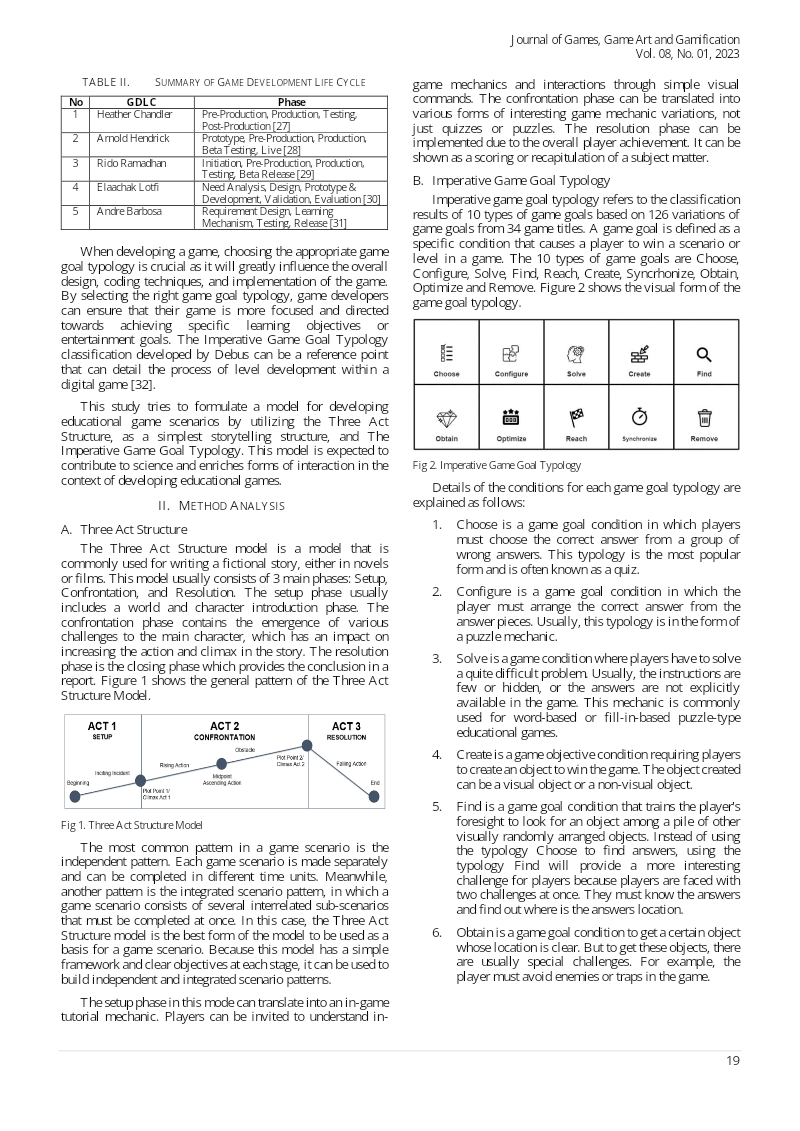
- Integrating the Three-Act storytelling structure with a ten-part imperative goal typology allows developers to move beyond repetitive quizzes and simple puzzles in educational game design.
- The model utilizes ten specific goal-oriented mechanics—choosing, configuring, solving, finding, creating, obtaining, optimizing, reaching, synchronizing, and removing—to map learning materials to interactive gameplay.
- Prototypes developed using this framework, 'Chemical Labs' and 'Kitchen Labs,' achieved high attractiveness scores of 1.632 and 1.542 respectively on the User Experience Questionnaire (UEQ) scale.