1 free read left. Create a free account for unlimited reading + AI research.
Create free accountWhitepaper Journal of Games, Game Art, and Gamification
1 free read left. Create a free account for unlimited reading + AI research.
Create free accountWhitepaperJournal of Games, Game Art, and Gamification
The educational game scenario model presented in this research addresses the common limitation in serious games where mechanics are often restricted to repetitive quizzes or simple puzzles. By integrating the Three-Act Structure—a classic storytelling framework—with an imperative game goal typology, the study provides a structured approach to designing more engaging and varied educational experiences. The primary thesis is that applying diverse, goal-oriented mechanics from entertainment gaming to educational content significantly enhances player engagement and learning outcomes.
The proposed model organizes game development into three distinct phases: setup, confrontation, and resolution. Within these phases, developers utilize ten specific game goal typologies, including choosing, configuring, solving, finding, creating, obtaining, optimizing, reaching, synchronizing, and removing. This framework allows for a more nuanced design process where learning materials are mapped to specific, interactive mechanics rather than relying on linear, passive delivery methods. The model emphasizes that the selection of a specific goal typology directly dictates the programming requirements and the overall player experience.
To validate the model, the research team developed two prototypes: Chemical Labs, a chemistry-focused game, and Kitchen Labs, a hospitality training simulation. Testing involved 70 university students aged 18–20. Using the User Experience Questionnaire (UEQ) scale, both games achieved high attractiveness scores of 1.632 and 1.542, respectively. These results indicate that incorporating varied, goal-driven mechanics successfully bridges the gap between traditional educational tools and the immersive nature of entertainment software. The study concludes that this model provides a robust, repeatable framework for developers to create educational games that are both pedagogically effective and intrinsically motivating.
Journal of Games, Game Art, and Gamification · 2026
Journal of Games, Game Art, and Gamification · 2025
Journal of Games, Game Art, and Gamification · 2025
Journal of Games, Game Art, and Gamification · 2025
Journal of Games, Game Art, and Gamification · 2025
Journal of Games, Game Art, and Gamification · 2025
Journal of Games, Game Art, and Gamification · 2025
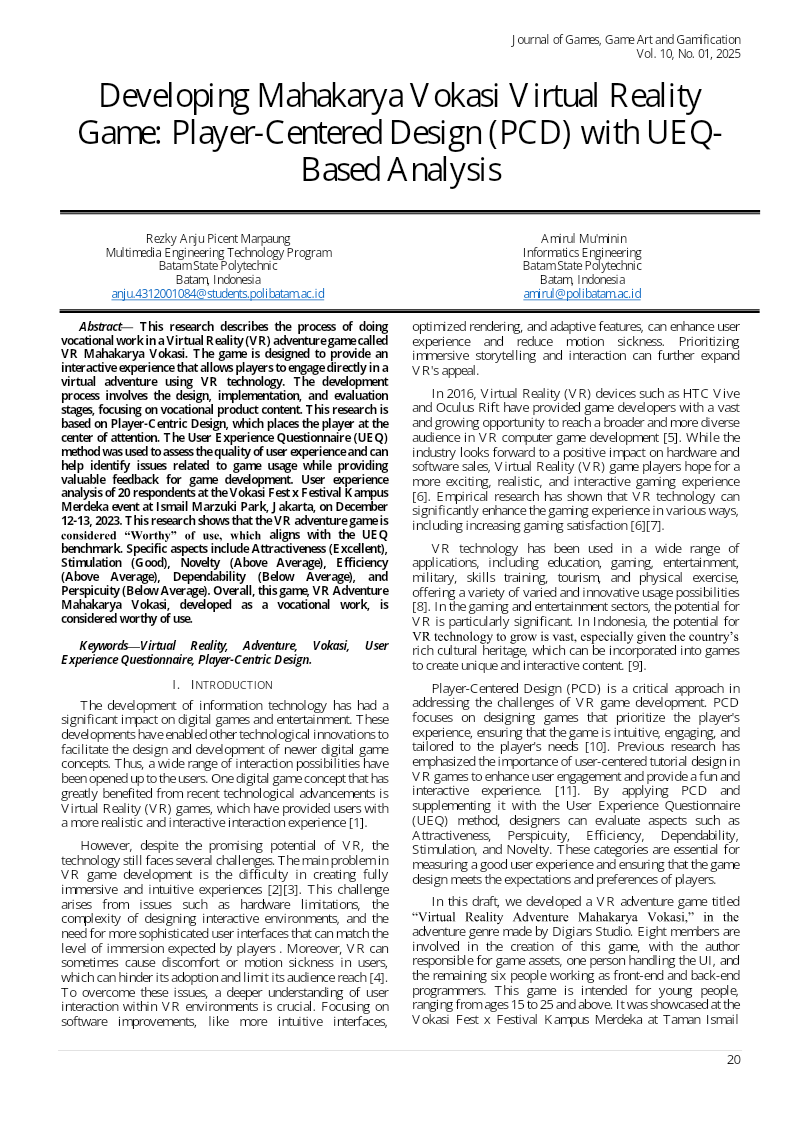
Journal of Games, Game Art, and Gamification · 2025
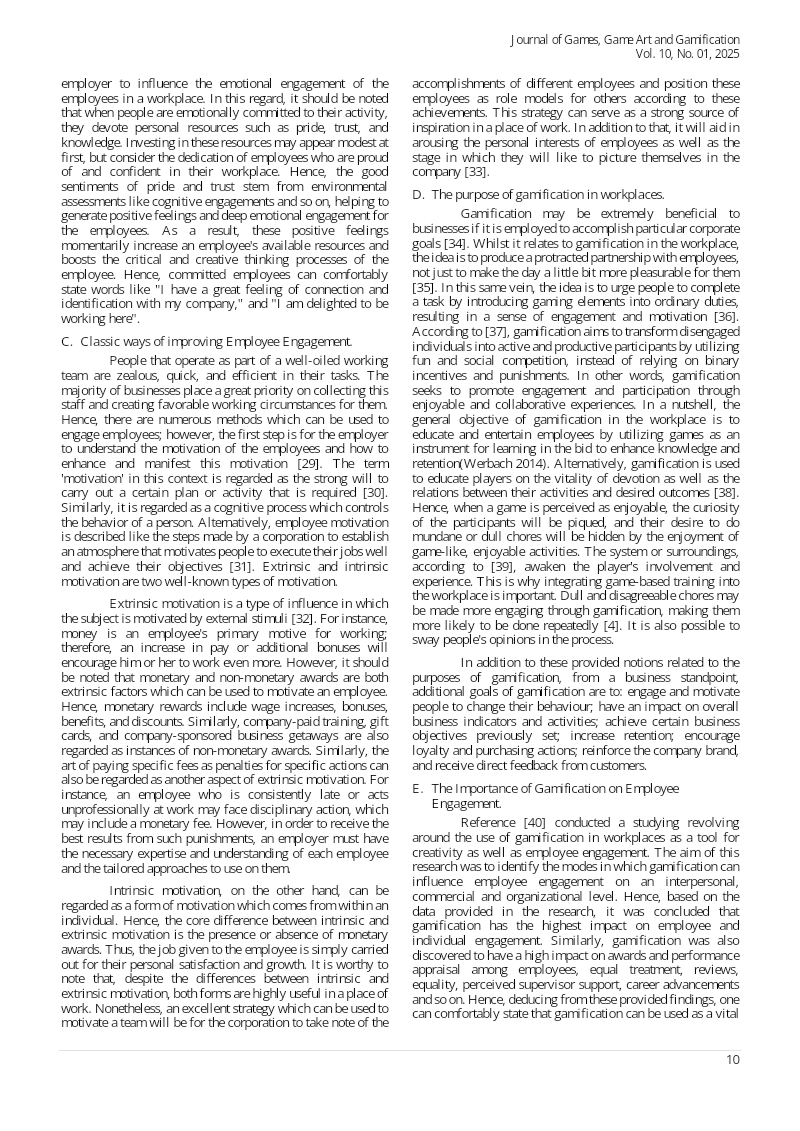
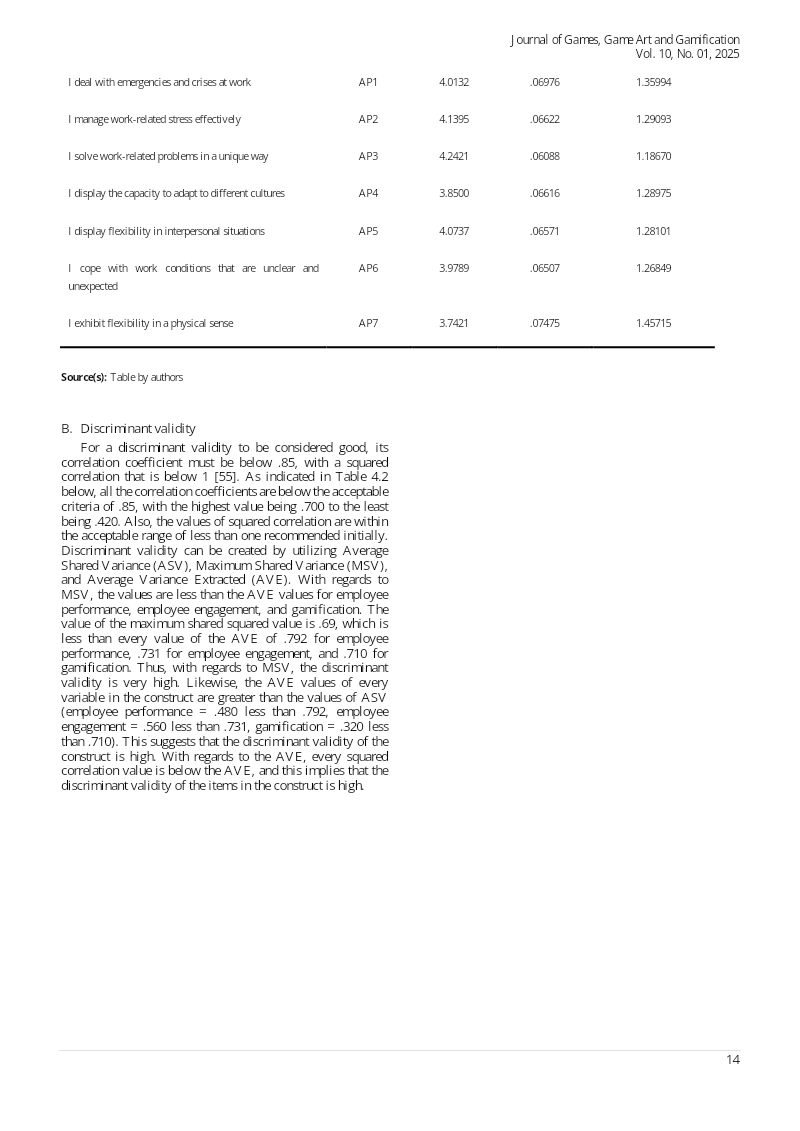
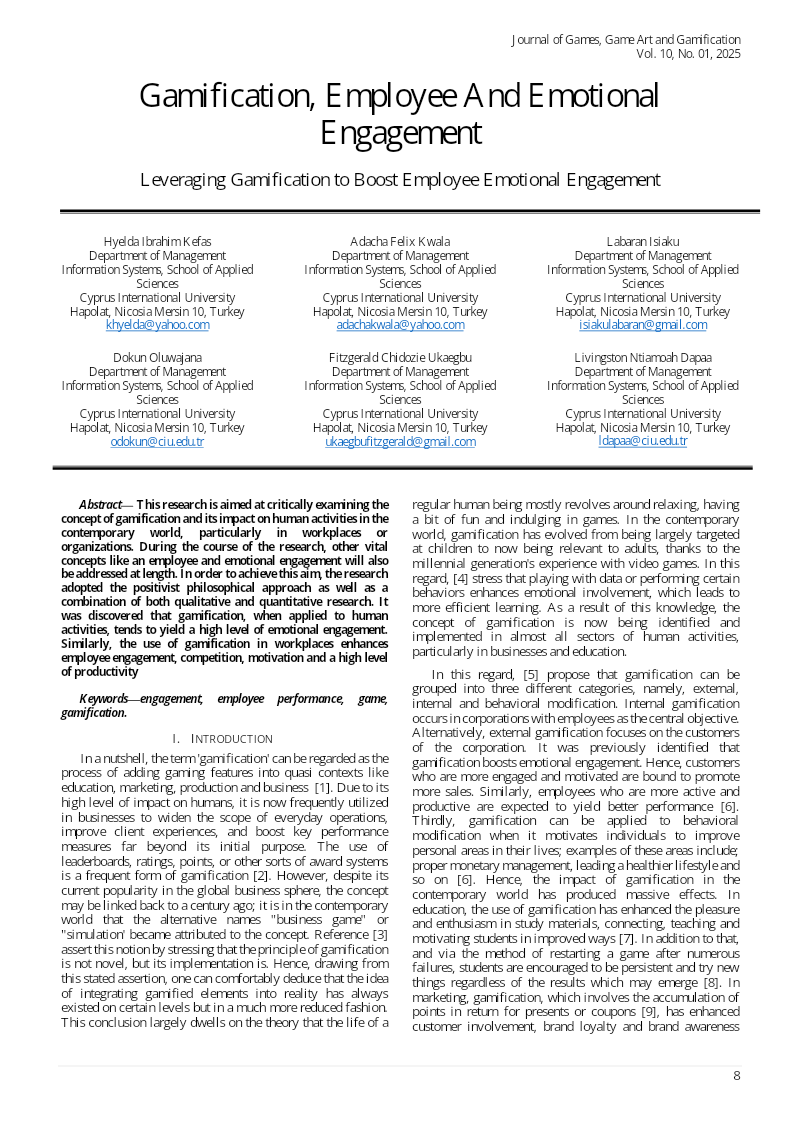
Journal of Games, Game Art, and Gamification · 2025
Journal of Games, Game Art, and Gamification · 2024
Journal of Games, Game Art, and Gamification · 2024
Journal of Games, Game Art, and Gamification · 2024
Pamulang University · 2025