1 free read left. Create a free account for unlimited reading + AI research.
Create free account
Key Challenges for Blockchain Gaming ft. Lars Doucet
Key insights
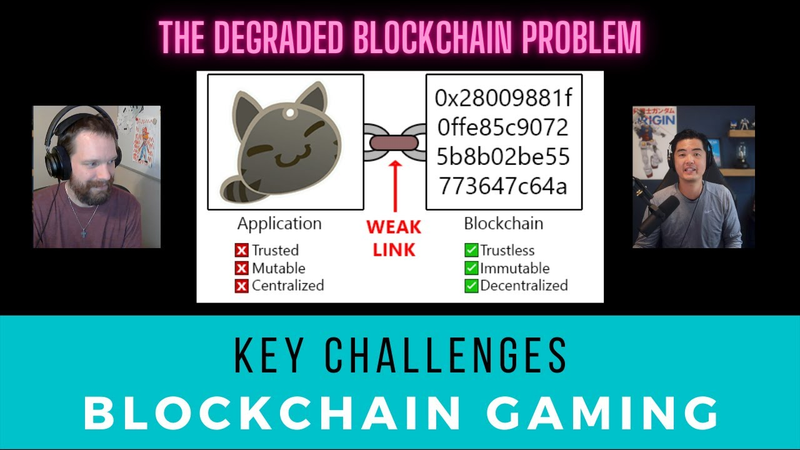
6 takeaways- 01The 'degraded blockchain' problem occurs when game assets rely on centralized servers, nullifying the benefits of decentralization because a central authority can still arbitrarily alter or remove user assets.
- 02True innovation in this space requires moving away from blockchain dogma and instead acknowledging the inherent trade-offs between trust, decentralization, and functional game design.
- 03The current industry trend of prioritizing speculative investment over game design hinders innovation and prevents the technology from solving actual, practical problems in gaming.
- 04Play-to-earn models frequently function as unsustainable finance-driven schemes that rely on continuous new investment rather than genuine gameplay value to maintain economic stability.
- 05Digital land speculation creates artificial scarcity that mirrors real-world housing crises, leading to rent-seeking behaviors that alienate the broader player base.
- 06Blockchain integration is often forced into game development as a 'solution in search of a problem' rather than being applied to address specific, identified design challenges.
Ask AI about this video
Transcript
hey everybody today we are going to be talking about potentially fundamental problems with blockchain technology applied to gaming and with us to talk about this is lars do say one of the most thoughtful and insightful game industry thinkers i know of and unlike a lot of other experts talking crypto and blockchain he actually is a technologist meaning we will finally get an opinion by someone who actually understands the technology behind crypto and blockchain so essentially this talk is a bit of the bear case on blockchain gaming but probably better framed as lars puts it as the key challenges that will need to be addressed this conversation was excepted from a longer discussion on blockchain including bitcoin including the investment thesis behind cryptocurrencies for another youtube channel so if you're interested in the full conversation i'll also have links to
that full interview in the show notes but otherwise let's get into it welcome to the game makers youtube channel and here we have a really great conversation with lars dusay i will i will have to say that um i i like to think i understand this stuff i don't want to pretend like i'm the world's foremost expert or anything um mostly my background is i'm a technologist i'm a programmer mostly in the video games world i'm a consultant so i help people consult on strategy and stuff i like to think i understand the economics and i've read a lot of the white papers i like to think i understand them um and so that's kind of the basis on which you know um folks like joseph say nice things about me um and to be clear i want to take i definitely am a big critic of blockchain but that is not to say that i am just taking a big dump on the whole space i love i read the bitcoin paper when it first came out it's one of the most beautiful white papers i've ever read
honestly it's just um and i love the promises and basically my my whole philosophy can be summed up as i'm waiting for the promises to arrive and i'm not ruling out the possibility that they that that someone won't be able to figure it out and so i like to pose my criticisms not so much as just don't be on the space so much as challenges right like these are the breakthroughs people are gonna need to really solve these problems rather than just kind of papering them over and and then and hope they don't matter because i think the bill does come due one day and that's kind of the the space i'm coming from and i just want to make that clear right at the start got it and just for the audience uh there were a couple of really in my opinion very insightful posts that lars did write about uh blockchain including a concept he calls degraded blockchains which we will talk about but i will put a link to those to those blog posts in the show notes as well but maybe we could start there lars with blockchain technology and that that post that you wrote on
degraded blockchains and in that post you kind of alluded to potential issues right around immutability uh trustlessness and decentralization and maybe can you talk to us about those issues and how do they not deliver on the promises that you talk talk about in terms of that original white paper yeah um can i share my screen does that work on your magic yeah i i think so yeah okay so uh let me know if this is in frame here but this this little illustration here is the degraded blockchain problem and it's not the fundamental problem at the root of all blockchain stuff but at least most of it that i've seen um and the problem is not that blockchain can't deliver on its guarantees and bitcoin in specific and also ethereum but it's that there's this weird kind of shell game i see a lot where you have a blockchain stores a record right um and it fulfills within the
boundaries of the blockchain all of its guarantees um trustlessness immutability decentralization you know like let's just let's just grant that the blockchain is magically perfect and can actually do those things because there's some there's some vulnerabilities sometimes but let's just say in the main it does even then the problem tends to be when you scratch the surface of any application that needs to consume a blockchain or interface with a blockchain you have what i call the degraded blockchain problem whereas there's this very weak continuous link that requires you to trust a central authority with immutable database to actually get the thing you care about like a classic example is all these nft apps with little like cute little wiggle kitties or whatever it is um the thing you actually care about is the application the thing like an actual normie who doesn't understand blockchain cares about is like the little virtual critter or whatever virtual wealth they've purchased and that they supposedly own what they
own is the only thing they immutably own is a number on a blockchain and the only thing that connects it to the thing they care about is convention and trust and so i feel like the problem is whenever a blockchain has to talk to the outside world you have this what i call the degraded blockchain problem where all of the things that a blockchain is supposed to guarantee those promises get degraded because the connection to the outside system is is in some cases completely arbitrary and can be swapped out almost at any time so you're trusting someone whether you want to or not and i've yet to see and i pose this as a challenge rather than like blockchains over forever it's like hey if you can solve this this is like the hard problem you got to solve like the hard problem used to be solving the byzantine generals problem and we solved that so maybe someone will solve this but i've kind of yet to see it and it keeps resurfacing in so many different ways throughout things oh and just an fyi um the reason my voice sounds so scratchy is because i have a cold so um
just just i'll be i'll be fingering the mute button whenever i cough just fyi for the audience and then in terms of that weak link uh what what about things like smart contracts and things like that so is is do you think that things like that could potentially be expanded so that that weak link doesn't exist and more is put into like the blockchain or am i thinking about that in the wrong way no it's a good example um one of the it's a really good example to bring up because these are like solutions people keep offering it's like what if we do this what if we do this but you gotta zoom out and just look at the inputs and the outputs to the system right and um the problem is is that the blockchain is only an authority of information within the blockchain like until you can find some way to cram an entire app completely within the confines of the blockchain like anytime it needs to call out to some external service for anything then um like and then people's like source of
caring is in interacting with the outside system then that degrades the blockchain now smart contracts like i mean i've seen people who've claimed to stuff an entire app within the blockchain such that applications that consume it are really just thin clients that don't do anything other than just choose to visualize that information somehow um and of course bitcoin is like one of the most fundamental examples of a self-contained blockchain it's like you've got 10 bitcoin yep and um and so um i think smart contracts alone are not magical enough to do it um because usually those smart contracts especially when those smart contracts care about outside information right that's where you have these systems like um i've been reading up on them a little bit called oracles where it's like um like chain link supposedly does this and these other services where it's like okay we're gonna have these oracles that like like um for instance stable coins right that are pegged to the dollar well how does the blockchain know what the value of a dollar is you need an outside
authority to tell you and for the outside authority to tell you it's like okay well how do we solve that trust problem and then that you scratch the surface most of the analysis of those will show that ultimately there's more trust in the system than people realize and um i just feel like it is really really really hard to create a system that has no trust that has no immutability and that is completely decentralized and like even the lightning network is more centralized than people give it credit for and my kind of take is we need to just come to terms with these facts rather than denying them and just accept what tradeoffs are willing to make for certain different applications rather than just kind of deny that they exist because of the magic pixie dust of blockchain you know um like the dream is beautiful and maybe someone will come up with some magical fancy math solution that does deliver on all these promises everywhere but um the more complicated the systems get the more vulnerability seem to creep in and the more it kind of feels a little bit
like a magician trying to distract you from well like you're still trusting somebody you know and do you have good grounds for trusting that person it is basically my fundamental case um with all of these extra systems um and we can talk about the particulars of each system and how that caches out um because i think there can be application and value in some of these systems depending on what choices they make okay games so i think you are alluding to it lars but there does seem to be a little bit of a craze in terms of the of crypto and gaming and the word on the street that i'm hearing is that it's not just startups trying to get funding it's from what i'm hearing literally every like major gaming company has some effort in this area and from my perspective one of the things i wanted to test with you lars is just in terms of when we speak about the different applications in gaming and so the way that i understand it is like let's say first is ability to create on-chain game items
main benefit which is to enable easier transactability and ownership of an item outside of a game second is more about the business model and the enablement of peter earns system you mentioned axes and you know i mean whether you you say that's good or bad i you know in terms of are they playing for the money are they playing for the fun but like that model it enables that model and then finally would be the enablement of some type of player governance model through through dao and yeah i don't know how do you view kind of crypto applied to gaming i think it's really it's potentially really interesting you know like none of those things have to be bad um i think they tend to be in practice because there's just a lot of naivety in this space honestly um yeah but it's a lot like the bitcoin white paper there's a lot of promise and i hope those promises get fulfilled um but in the short term i don't see a lot of that happening and let me give you an example
i get a lot of pitches across my desk because i'm a consultant and so people come to me like help me advise on my company and i i see two things i see gang people getting into crypto who don't understand crypto and crypto people and finance people getting into games you don't understand games and this is very familiar for me because i started my career in educational games right a field where the two sides do not understand each other at all and the products largely reflect that with very few beautiful exceptions you know um like i mean on my part like i kind of when it's like i'm going to teach these morons how to teach and then i realized how little i knew about pedagogy and how humble i needed to be and then at the same time you would have like administrators and stuff who had never understood like a computer program let alone a game trying to preach to me about game design i was like oh god and all of the garbage fires you would expect that come from that um through no real fault of your side just from ignorance and so the game industry can be a little navel gazing and we do need fresh blood and we
do need fresh blood but it's kind of like when someone comes in and is like i don't know a thing about games and that's why i'm so valuable is because i'm not like hide bound i i get worried because the pitches i inevitably get are basically just like finance schemes with like no gameplay right or very paper-thin gameplay or like some little like oh we put in this little mini game and then you earn some money and it's like well if i do the math i could just invest in like like spiders or etfs on the stock market and earn more than this game is making me so what's what's the point here um well they don't give me half the money or whatever you know what i mean it's like i've seen like so many pitches along um those lines um where um a good example is it it mostly comes in the form of people trying to charge digital rent and digital rent seeking you know so the way this tends to
manifest and it's like and these are not unique i see dozens dozens dozens of these all exactly the same like a really good example is earth 2. it's just google earth with a bunch of plots of land and you can just buy nebraska if you want what does that mean well now you own nebraska on earth too and you can like supposedly like charge people rent in the future for it and your your share is gonna i'm not sure if this was earth to or some other scheme like this like i see so many of them are all the same it's like your ownership in this system is gonna give you basically like um dividends or rent or whatever um axi is a special case again and actually specifically later but like all these systems it's like okay you put money into the system you get money out but it will take me like 100 years to make 30 bucks on 100 investment why would i do that um or it's like when this gets big and it will
then you can make money off of all the other suckers who get in after you and i'm like now how is that sustainable right you know um and and it's like if it's just predicated on number go up it's like well number has to go up forever for it to work and i just come back to with with it's just really simple if you're making a game of pay to earn like pay to earn doesn't have to be bad play to earn that's freudian slip pay to earn right kind of revealing but like if you're making a play a true play to earn game you need to create genuine value i mean i mean if you think about it photoshop is a play to earn app right microsoft word is play to earn you know it's like i use this app i play around in this app and then i get some money why because i created some productive value that someone else is willing to exchange money for right someone else is like willing to do an honest trade with me is like i enjoyed that paper you wrote for the think tank
that i employ you to work at so thank you for playing microsoft word here is your urn you know and you can do this in a game right if you make it a platform ecosystem a good example is roblox right you know and they don't have any blockchain magic it's 100 you got to trust roadblocks and they take monopoly rents off of everybody's cut because they own the whole system top to bottom and maybe we could improve on that but um the point is like you've got to have a basis of consumers right like if you're making some app where you're paying people dividends or rent or whatever that money cannot just come from other investors because then it only is sustainable while the system is growing and um like right like the the the you know that's kind of where people get off calling on ponzi schemes i don't think they're exactly the same but you know you need to have a sustainable basis of people who are like i'm gonna put five dollars into this ecosystem because i had fun and why did i have fun because i rode this ferris wheel someone
built and so that ferris wheel creator is going to get a cut of the digital ticket i'd play like you can't have a carnival that's all carnies and like no attendees right it needs to be like 90 attendees and 10 carnies is actually pushing it you know and most of the games i see is it's like yeah there's people who play axey um but most of them are are either people on scholarship or or whatever like like there's an actual game in axio and i'll give it credit for that but um most of it is predicated on on on basically more people continuing to buy into the system and that doesn't have anything to do with blockchain at all right and i think in terms of blockchain i think axi is more centralized and trusted than people give it credit for um especially with their their own inside chain um but the thing that really concerns me about axi is just uh the digital land grab aspect of it that's supposed to be coming that we see in other games is that right so in axi the axes
themselves can be bred there's more axes that can be made but what's concerning is there's going to be a land phase of the game and then like earth 2 is same way like all these other land grab games it's like we want a platform where people build right we want to encourage creators like they have all these grandiose plans to be like second life you know and um but there's a fixed amount of land and that's great because you can do a pre-sale of land and fomo kicks in and everyone knows that land in real life is a great source of rent so people buy up all the land but in the game the land is scarce and it's necessary to do all the creator stuff and so i've i wrote this paper called uh digital land speculators will kill your game's growth for game developer magazine and where i detail like the 30 year history of mmos and this is why it's important that you know a lot of these crypto and d5 folks coming in don't understand games a lot of game developers don't understand the history games but if you go back and look at the 30 year history of mmos
every mmo that has had land-like assets blockchain or no um has had a digital housing crisis which is a lot like the housing crisis we have in real life where the rent goes up people can't buy houses and so san francisco rents go up until you have a crisis and um it's because you're incentivizing to hold scarce productive assets out of use and um i mean economists have written about this for over a century like 150 year history going back to adam smith and thomas payne david ricardo henry george all wrote about this and you know what you implement their solutions in mmos and it works um there was uh what were some of the games eve online had a digital land recession in 2003 right when it launched and they implemented uh digital land tax and it fixed the problem like you can't create scarce assets that you need to use to participate in economic activity and then
like like it's digital like it doesn't have to be scarce but people do that because they can have this massive pre-sale and the problem with that is that you then set up a dilemma that you can't fix because now you have a class of aristocrats landed aristocrats literally who own all the land and there are some of your and this is going to get into the dao thing is they're like your most invested player base like literally right and they own all the productive assets and they have an incentive to collect rent on it or wait for someone else to pay more rather than um then use it and put it to productive use rather than build on it and then you have people who actually want to use it but they're unlanded peasants and so you have to now now that you've done that huge pre-sale on a fixed asset you have a dilemma of which side you want to favor do you want to break your promise that land will forever be fixed and just print more land and appeal to the peasants in which case these people will be pissed don't probably leave your game for something else
or do you want to kind of suck up to the people that you made all those promises to and that probably are the source of most of your income in which case no new people want to come into your system because there's no way to get the rights to participate in it it's like i don't want to move to medieval france where i get to be a surf you know or whatever like i want to move to the frontier of america where there's land available now granted that land was forcibly taken from people um but the reason that people came to america is because it's like you can not be a surf you know i mean granted we also enslaved all these people history is horrible and complicated but um that's that's kind of my deal about that and when it comes to dao and governance tokens i love that idea in one sense like i love this idea of and this just comes full circle to like i like the idea of having a way to give control to players and you can see in the open what the assets are and so you can see if we try to rug pull you and maybe you can have control over
that so we can't rug pull you and then it would be nice if you know you could have a vote right you could vote to decide what happens in the update to world of warcraft you know so like we have to agree to stuff the challenge then becomes is if you said it like like you have to be aligned on the philosophy because otherwise the aristocrats all vote um yeah we are never going to change the economic system in a way that doesn't favor us and then the game's no fun and it stagnates and there's no growth and this is kind of bitcoin's problem is i don't think bitcoin can ever move to proof of stake even if a lot of people thought it wanted to because so many people are invested in proof of work that you're you're gonna have a hard time switching it over um until like maybe 10 years from now where the writing is absolutely on the wall and it's too late um i think that's kind of the challenge with the aos is in game design in general like i mean i mean there's always this tension in game design it's like you want to listen to your players but players don't always know what they want and sometimes like i mean players will complain about this this gun's
overpowered this gallon's underpowered this gun is lame this gun is cheese this gun is op and then they're like okay well the still and so sometimes like democracy is not a good way to design a game but um i mean i think you just have to i think it is a cool idea and the problem is it kicks the problem down the road the philosophical problem of what do we want and why still remains that thorny unresolved issue and you know that's something people are free to work out i love people experimenting and as long as we're not burning up the world in the process i say experiment some more that's kind of um my full kind of take on everything um lars would you say there's a specific example or a way in which you think that blockchain could be used well in a game yeah that's a good example clearly not land yeah well i mean it's like i mean there's no reason digital land has to be scarce that's the thing
that confuses me so much is it's like i mean anyway but like blockchain way could be used in the game like i think so like what is blockchain blockchain is a shared ledger that nobody owns right if we think of blockchain like that and it doesn't necessarily have to guarantee the other things um you can do a lot of cool stuff with that um i'm not entirely sure right you know like yeah you could you could create a protocol you know it's like i mean it's like you look at the system like but i think the challenge is like the blockchain's fundamental problem is it's always been a solution in search of a problem right i always like to rather than have some massive loyalty to this one idea is to just look at the problem and see what the solution is that way that's the way i always like to think so like you see platforms like loot and that are clearly trying to like find a usage for nfts and of course there's these you know i mean i may be misunderstanding it i've only looked at
it a little but there's like 7000 json files with like diablo rarities of items and then people are building cool applications on top of it but it's like i don't want to pay four hundred dollars for a json file no matter what kind of cool applications that and what stops us from creating some other system where it's just i mean i just have a github repository with some json files on it and we just kind of have a jam and yeah maybe you have to kind of trust whoever owns that one github repository with all those json files but if you don't like theirs you can fork it to bob's and start playing in that ecosystem like i think i think the obsession with um getting rich and the obsession with deflation and hodling and immutability are some of the things that limit what we can do with blockchain and i think um like i think velocity of trust is more important than just like ironclad trust like the ability for me to change who i
trust is a little more important than the fact that then pretending like someone can never screw me you know um and i mean i think we just ultimately have to grapple with the fact that um we're just trying to align incentives and every time we do anything we're trusting somebody every time i get on a plane i'm trusting laws of physics i don't understand and a pilot i've never met not to kill me you know and everyone on the plane not to murder me and take my money because i couldn't stop them um and to take me to the country i want and not somewhere else you know like that's kind of um i know i'm kind of meandering here but um i just probably have a fevers that's why yeah and i mostly just think you know just to sum it up just i am not a complete downer on blockchain i do think we shouldn't be dogmatically tied to the promises made by bitcoin we need to be honest about the limitations we
have and we need to step back away from the implementation details right you said you wanted me on because i'm a technologist but i can say as a technologist that although i claim to understand at least some of the details the really important stuff is just zooming out and be like what is this for in the first place what problem does this solve right um and who can say where the world is going to be we're going to have some digital currency in the future somehow some way we already do effectively um and whether we keep calling it blockchain or not i think there's a lot of brilliant people working a lot of interesting stuff and as long as they can find a way to not burn down the planet and not have to lie to each other about what promises things can and can't do i mean i say do your weird experiments make cool stuff and um but maybe start with your problems rather than your solutions right start with your problem and think about how to fix it rather than like what can this cool tech be bent towards today um and i think just the fact that there's so much fomo from investment is pushing it the other way it's like
blockchain is a way to get funded solving a boring problem in a way that doesn't manage to take the blocks is that get people to call it blockchain kind of doesn't and i think that's the real problem is people need to expand their imaginations um basically anyway okay all right great lars that was incredible insights thank you so much for your time and for the rest of our audience we'll catch you next time bye everybody thank you so much [Music] [Music] you
Summary
This analysis examines the fundamental challenges facing blockchain technology within the gaming industry, focusing on the disconnect between theoretical promises and practical implementation. The discussion centers on three primary issues: the degraded blockchain problem, the limitations of play-to-earn models, and the negative impact of digital land speculation.
The degraded blockchain problem arises when applications rely on external systems to provide utility to blockchain-based assets. While a blockchain may maintain immutability and decentralization within its own ledger, the connection to the actual game experience often requires trusting a central authority. This creates a weak link where the promised benefits of trustlessness are effectively nullified, as the external application can arbitrarily alter or remove the assets users believe they own.
Regarding economic models, the industry faces significant hurdles with play-to-earn systems and digital land sales. Many current projects function as finance-driven schemes rather than sustainable games, often relying on continuous growth and new investment to maintain value, which risks creating unsustainable economic structures. Furthermore, the implementation of scarce digital land mirrors real-world housing crises. By creating artificial scarcity and incentivizing rent-seeking behavior, developers risk alienating the broader player base, as a small class of landed aristocrats accumulates productive assets while new players are excluded from meaningful participation.
Ultimately, the analysis suggests that blockchain in gaming is currently a solution in search of a problem. While the technology offers potential for shared ledgers and decentralized governance, the industry’s current focus on speculative investment and rigid adherence to blockchain dogma hinders genuine innovation. A more effective approach would prioritize solving specific game design problems rather than forcing blockchain integration, while acknowledging the inherent trade-offs regarding trust and decentralization.