
GameMakers
F2P product management, game design, and monetization strategy by Joseph Kim.
Documents
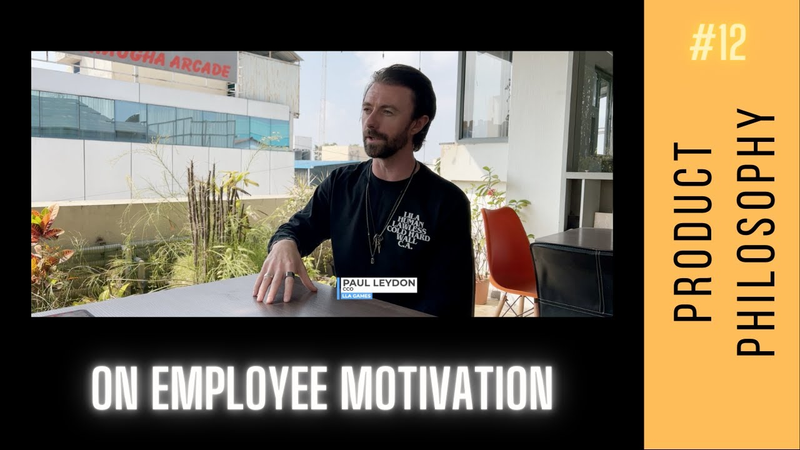
On Employee Motivation (Product Philosophy #12)
Effective employee motivation in the gaming industry relies on a nuanced understanding of individual drivers rather than a one-size-fits-all approach to management.
- Employee motivation in the gaming industry requires aligning individual drivers—such as professional prestige and skill acquisition—with the organization's broader mission rather than relying on a one-size-fits-all management approach.
- Financial compensation serves only as a baseline necessity, as high-level productivity is more effectively sustained through tangible incentives like equity, skill-based promotions, and professional recognition.
- Strategic urgency and the pressure inherent in startup environments act as catalysts for focus and commitment, provided they are balanced with transparent incentive structures.

GameMakers 2021 Drunk Awards Show
The year 2021 served as a transformative period for the global gaming industry, characterized by a stark divide between companies successfully navigating the metaverse and subscription-based models and those struggling with internal cultural crises and product execution. miHoYo emerged as a dominant force, with Genshin Impact…
- The legal battle between Apple and Epic Games emerged as the industry's most consequential event, signaling a long-term shift in the operational model of app store marketplaces.
- The deprecation of Apple’s IDFA forced a fundamental industry-wide pivot in user acquisition strategies, disrupting traditional mobile marketing models.
- miHoYo’s Genshin Impact established a new benchmark for revenue efficiency and global engagement, while Roblox solidified its metaverse leadership through strong stock performance and brand integration.

2021 Review | Key Trends & Lessons Learned (Product Philosophy #11)
The digital landscape is undergoing a fundamental shift in power, moving away from traditional corporate institutions toward individual personal brands.
- Personal branding has replaced traditional corporate marketing as the primary driver of competitiveness, making authentic and vulnerable communication more effective than scripted campaigns.
- Professional credibility is increasingly determined by a robust digital footprint and demonstrated creative output rather than traditional resume-based credentials.
- Sustainable success requires a ten-year strategic horizon to filter out speculative market volatility and short-term hype cycles like NFTs or the metaverse.

Recruiting Like A Pro | Games Industry (Product Philosophy #10)
Effective recruitment in the games industry requires a transition from subjective, personality-driven hiring toward structured, evidence-based evaluation.
- Replace subjective 'culture fit' hiring with structured, evidence-based evaluation methods like standardized scoring frameworks and assessment matrices to reduce bias and improve performance prediction.
- Prioritize objective work samples and skill-based take-home tests over theoretical interviews to ensure fair, apples-to-apples comparisons of candidates.
- Avoid the 'rockstar' talent trap, which creates dangerous single points of failure, by instead operationalizing knowledge through playbooks, coaching, and robust support systems.
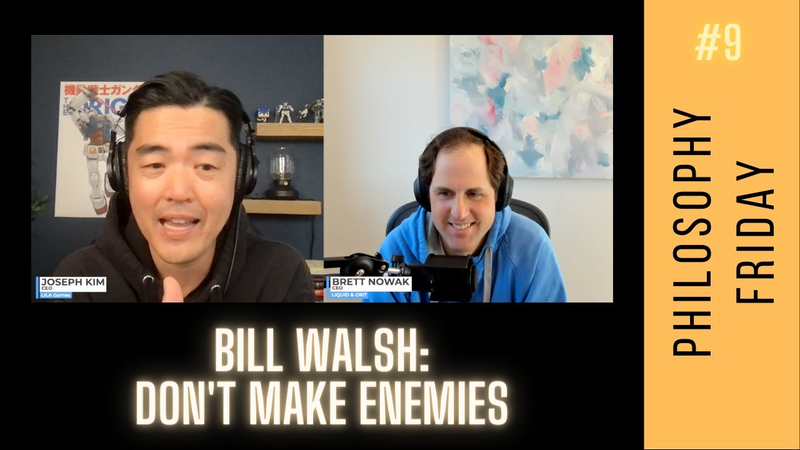
Bill Walsh | Don't Make Enemies (Philosophy Friday #9)
Professional success relies on the strategic management of interpersonal conflict and the preservation of organizational energy.
- Prioritize long-term organizational objectives over interpersonal conflict to prevent the significant resource drain caused by harboring professional enemies.
- Treat the gaming industry as an infinite game focused on innovation rather than a zero-sum competition, as collaboration consistently yields superior results compared to aggressive rivalry.
- Maintain professional distance from toxic individuals rather than engaging in retaliatory behavior, as these issues typically resolve themselves without active intervention.
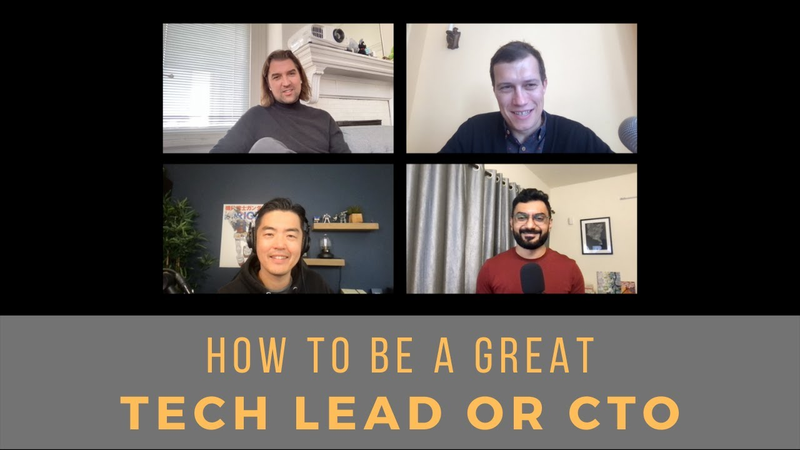
How To Become A Great Tech Lead or CTO ft. Niklas Herriger, Tommy Krul, and Avinash Pandey
Technical leadership in the gaming industry requires a dynamic evolution of roles, shifting from hands-on technical contribution to high-level strategic management as companies scale.
- Technical leadership requires a transition from hands-on coding to strategic management, where the leader's primary goal is to foster team output that exceeds the sum of individual contributions.
- Effective leaders must maintain a flexible workload balance, typically allocating between 30% and 70% of their time to hands-on technical tasks depending on the project phase and organizational needs.
- As companies scale, leaders must shift their focus from technical optimization to managing human dynamics, which requires active listening, empathy, and providing honest, timely feedback.
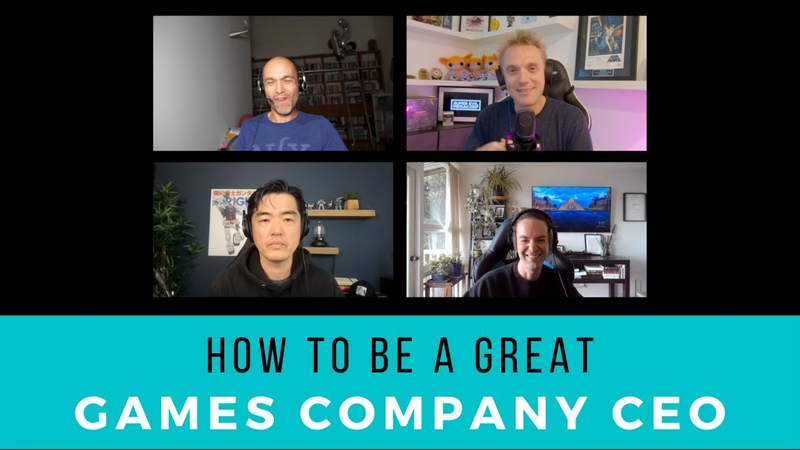
How To Be A Great Games Company CEO!
The primary responsibility of a gaming company CEO centers on talent management, with successful leaders dedicating up to half of their time to recruiting and cultivating a robust organizational culture.
- Successful gaming CEOs dedicate up to 50% of their time to recruiting and cultivating organizational culture, identifying human capital as the primary driver of long-term success.
- Leadership effectiveness requires transitioning from an individual contributor with a technical 'superpower'—such as design or monetization expertise—to an architect who builds and manages high-performing executive teams.
- CEOs must balance operational oversight with visionary leadership by defining clear KPIs and iterating based on data, while strictly avoiding micromanagement of product development.
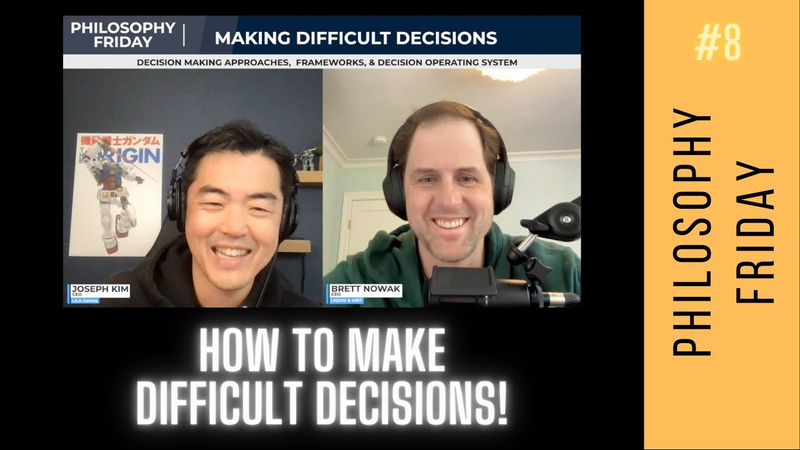
How to Make Difficult Decisions (Philosophy Friday #8)
Effective decision-making serves as a fundamental driver of organizational velocity and operational efficiency within the games industry.
- Organizations should replace consensus-based, democratic decision-making with structured frameworks like the Directly Responsible Individual (DRI) model to increase operational velocity and reduce production friction.
- Distinguishing between reversible (two-way) and irreversible (one-way) decisions allows teams to act autonomously on low-risk tasks while reserving leadership escalation for high-stakes commitments.
- Pushing decision-making authority to the lowest possible level fosters autonomy and speed, provided staff operate within clear guidelines rather than rigid, bureaucratic rules.
How To Fix Axie Infinity | Sustainability & Future of Sky Mavis
Axie Infinity serves as a critical case study for the challenges inherent in early play-to-earn blockchain gaming models.
- Axie Infinity’s initial economic model failed due to a reliance on continuous user growth to fund token payouts, which created unsustainable inflation and a lack of sufficient asset sinks.
- Sky Mavis is pivoting from a single-game economy to a platform-based ecosystem by leveraging the Ronin sidechain and Mavis Hub to capture transaction fees and foster network effects.
- The developer is transitioning from a 'play-to-earn' model to a 'play-and-earn' framework that prioritizes gameplay quality and user-generated content over speculative financial incentives.
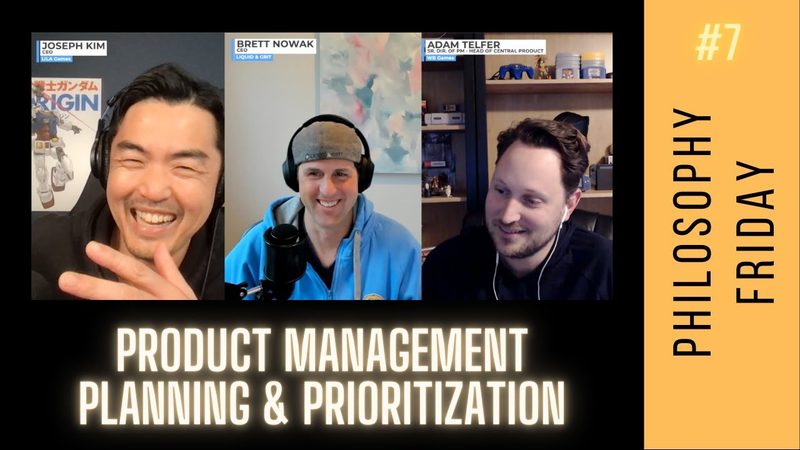
PM Planning & Prioritization in Game Development (Philosophy Friday #7)
Product management in modern game development centers on the necessity of a rigorous, thesis-driven strategy to ensure market viability and operational success.
- Product planning should begin with a clear, research-backed thesis that identifies a latent human desire, such as the need for progress or social connection, to align marketing and development teams.
- Opportunity sizing for new concepts should use top-down analysis by comparing the proposed game to market competitors using data from tools like Sensor Tower or App Annie to estimate potential organic volume and revenue.
- Sensitivity analysis using Excel data tables is an underutilized but powerful tool for product managers to resolve team debates regarding key performance assumptions and project viability.
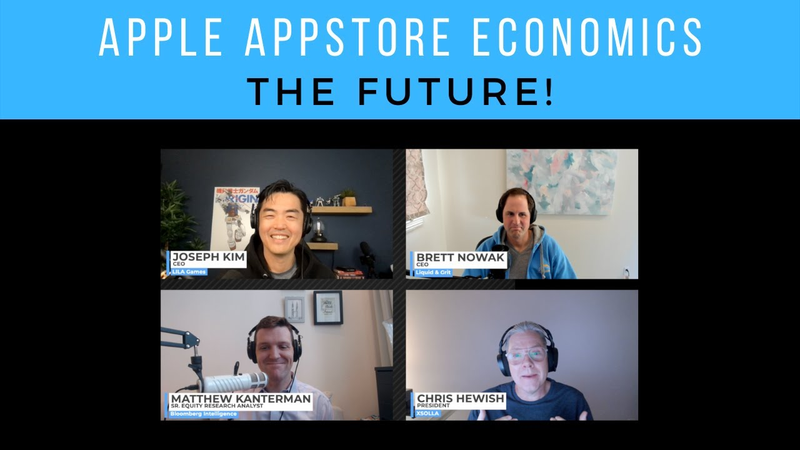
The Future of Apple App Store Economics
The current landscape of mobile application economics is undergoing a significant transformation as developers increasingly circumvent traditional platform commission structures.
- Developers are increasingly bypassing Apple’s 30% in-app purchase commission by shifting to direct-to-consumer web shops that utilize third-party payment processors charging approximately 5% plus transaction costs.
- Industry consensus indicates that a more equitable platform fee structure would fall between 7% and 12%, significantly lower than the current standard.
- Despite the user friction involved in moving outside native app environments, alternative payment channels are already demonstrating strong performance and occasionally outperforming traditional store revenue.
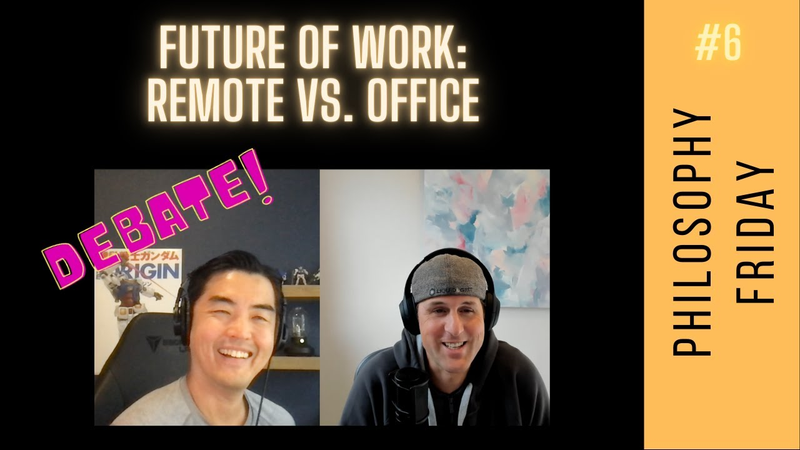
The Future of Work: Remote vs. Office | The Debate! (Philosophy Friday #6)
The transition from traditional office environments to remote work models represents a fundamental shift in management philosophy, moving away from monitoring physical presence toward evaluating specific, measurable outcomes.
- Management philosophy must shift from monitoring physical presence to evaluating specific, measurable deliverables to ensure accountability.
- Scaling a game studio requires transitioning from a reliance on individual talent to implementing repeatable, systemized processes that ensure operational predictability.
- While physical proximity may benefit the 'zero-to-one' phase of creative ideation, remote work expands the global talent pool and encourages more thoughtful, documented contributions.