1 free read left. Create a free account for unlimited reading + AI research.
Create free account
Apple vs Epic Games Trial: Who Won?
Key insights
6 takeaways- 01While the court rejected Epic Games' claim that Apple is an illegal monopoly, it ruled in favor of Epic under California’s unfair competition law.
- 02The court ruled that Apple must allow developers to include external links and buttons that direct users to alternative payment methods, effectively challenging the App Store's long-standing payment monopoly.
- 03The U.S. Congress is considering the Open App Markets Act, which proposes more aggressive regulations, including the potential mandate to allow third-party app stores on mobile platforms.
- 04The mobile gaming industry is shifting toward a more decentralized marketplace as judicial rulings and global regulatory trends in regions like South Korea and Japan pressure platform gatekeepers.
- 05The ruling enables developers to leverage a wider array of global payment methods and gain deeper access to user data by moving transactions to web-based shops.
- 06Transitioning to external payment models could potentially increase revenue for mobile developers by 30% to 40% by bypassing Apple’s 30% commission on in-app purchases.
Ask AI about this video
Transcript
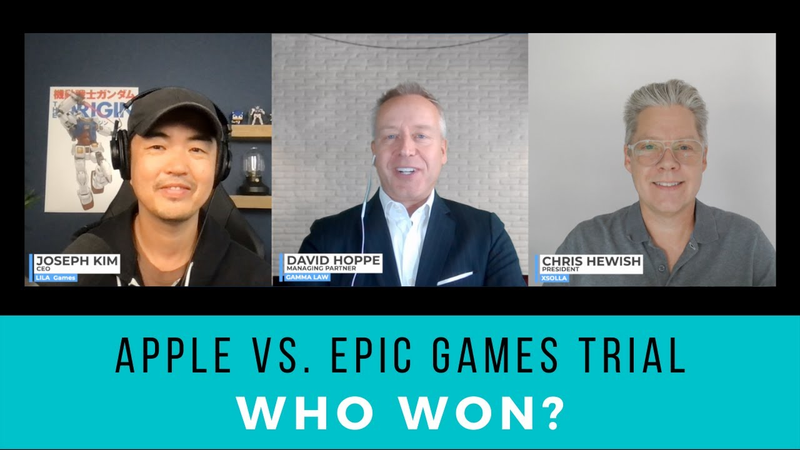
hello everybody last week judge javon gonzalez rodriguez has ruled on the apple versus epic games case in what seems to be a split decision but primarily in favor of apple as a summary epoch's key win was that the court cited in favor under the california unfair competition law and issued an injunction which would enable app developers to link out to external purchasing mechanisms on the apple side the court ruled most importantly against epic's claims of apple as a monopoly in that it's up to apple whether to allow fortnite back onto the app store finally epic must pay apple as 30 cut of fees it collected directly from customers using epic direct payment on ios with us today to talk about the case results we have first david hoppy managing partner at gamma law a law firm focusing on the video games industry in addition to various other verticals and finally chris hewish president at exola who specializes in app store and other payment methods
welcome guys thanks so i thought we could go ahead and start with like the initial discussion is in in terms of the court ruling and as a lawyer in our group i thought we could start with you david uh can you add a bit more color to the court ruling and can you confirm whether my understanding of the ruling is correct or not what do you think sure yeah and thanks for the opportunity to to be on the show so it seems to me this is a pretty strong outcome for epic and i'm a little confused about tim sweeney's tweet that seemed to be a sort of declaration of defeat by epic apple's pr of course uh declared victory as you would expect but epic uh seems to me had a good basis on which to make the claim uh also and you know you would expect them to say something like well there's more work to be done we'll keep fighting etc but um any event under the court's decision epic can at a minimum provide fortnite users and users of other apps with a
purchase link in the apps that would go to the epic game store and depending on how you interpret the judge's decision which is something we're going to be talking about here they may even be able to include a side-by-side payment option for the epic game store right in the app um you know viewed from the perspective of a year ago it seems to me this is a major change to the status quo that we've had since 2008. right but um what's happened you know and the the context here of this decision is that there's been a really dramatic change just in the last few weeks that uh seems to have indicated that uh the so-called anti-steering uh policy is uh is not going to survive much longer anyway so the decision in this case that requires apple to allow links to alternative payment methods in the apps doesn't have the impact that it would have had a year ago or over a year ago now when that case was filed
so epic here may not be getting the credit it deserves for taking on this issue last last august okay and david can you confirm whether the initial action for which fortnight was taken off the store is now permissible on ios or not and by that i mean like they originally had an alternative payment at a discount and then the purchase was done actually in-app well this is a really interesting question and you know you would think with uh with with an opinion that's 180 pages long uh we would know for sure if what epic did uh you know was okay uh but we actually really don't so what the court said is that developers must be able to include in their apps quote buttons external links or other calls to action that direct customers to alternative purchasing mechanisms so they took this language right from apple's developer agreement which of course says that you can't include
buttons links or calls to action so the question is i think we all know what links are and what calls to action are what what is meant by buttons you know it could mean just links but that probably you know uh seems to have not have made much sense in a very carefully worded uh legal opinion um so you could you could say well buttons suggest a sort of in-app functionality where users can easily enter payment information rather than being taken out of the app onto an external web page and then potentially having to try to figure out how to get back in the game it certainly would have been helpful if the court had clarified this you know does the decision mean only that apps can direct users to outside payment alternatives uh or does it mean that apps can include alternative payment mechanisms right so sorry just a little bit more on the legal side so the apple developer agreement it says that developers must use in-app purchase
and by that of course they mean their app store but the course the court didn't address that directly the court just said you know you can't stop uh apps from including these buttons links or calls to action so we're just not really clear if the course decision means that this basic rule that you must use the apple app store still applies uh and whether that alternative functionality can be right in the apps great and chris from your perspective at xola what do you guys think with respect like how are you interpreting the the court ruling and what products are you kind of getting ready for for folks who want to do external payments yeah you know i think we have kind of a conservative view on the ruling at the moment really it breaks down into two parts there's what's happening now and what do we think is really defensible and allowable and what are we getting feedback from some of our partners on who have done their own legal reviews and then there's sort of
the future which is the holy grail of you know as david had been talking about the side-by-side in-app purchases so for now we view it as the first part of a wall coming down and the ability to really make a connection between the app and commerce outside of the app whether it's through top-up pages mobile web shops things like that and that's something that we're really leaning into and preparing and can go into that a little bit more later but this whole idea of a mobile web shop and doing commerce on the web and it's linked to your app and keeping players in-app while you're doing it is sort of where we're looking at at the moment got it and then in terms of like your interpretation of who won this court case maybe we could go around and kind of get your interpretations of who do you guys think won and maybe david since you're the lawyer we can't start with you uh sure so i think as chris just said you know this is a uh this is a you know the first step let's say but um
it comes in the context of a number of other events that have occurred just in the last few weeks in korea in japan a settlement of the uh the malcolm class action lawsuit which is being held in the same court as the epic apple uh lawsuit so you know it seems to be you know as well as some concessions by apple you know reader apps can now include links to outside um uh uh uh payment uh links for renewals um so you know we've seen we've seen the the tide change here really just uh very recently probably you know as the as the clerks in in the judge's court here we're just uh we're just finalizing this opinion which i think a year ago would have been fairly significant now we've had this uh this change in you know coming from from various uh uh uh various angles right and chris what about you um yeah i mean i think
sorry joseph so how how are we looking at it right who do you who do you consider this a win for is is it an epic one is it an apple win do you think it's more of a split sort of situation what do you think yeah you know i think this is kind of a a split i think overall it's a win for developers you know it is just further confidence for developers that they can start to monetize their users beyond just the in-app purchase system and i know that's something that a lot we've had some companies already doing that right with top-up pages or running uh sort of cross-play games on the web to mobile that they're directing players too but you had a lot of companies that were kind of sitting on the sidelines waiting to see because they didn't want to be get in violation of any of apple's guidelines so what we're hearing is that this is giving those companies that were on the sidelines the confidence to sort of dip their toes into this new way to monetize users um you know i think it's kind of also a win for apple uh because
they were not deemed to be a monopoly and yeah i'm not a lawyer david can absolutely correct me and guide on all of this but from my understanding this still leaves apple the power to tax their ecosystem so even if they're going to lose revenue through in-app purchases and that 30 fee they're still going to be able to find other ways to apply attacks right for being within in their ecosystem and then at the end of the day epic you know tim sweeney obviously is not super happy with the outcome um you know it doesn't get them everything opened up the way they wanted in that monopoly designation so i think epic kind of comes in uh third place on that list got it okay and i think from my perspective and this this may differ from a lot of the game industries i actually think into your points you know tim sweeney has been upset uh in his you know tweets and things like that but my personal view is that this was in my opinion a huge win for epic with a huge caveat and i i the way that
i view this is that if we're focused on outcomes i think epic is getting or will eventually get everything that they're seeking and these outcomes in my opinion are the direct results stemming from this case so even if we get like so let's consider like three levels of externalization the first is external payments off app such as in a web browser the second would be a seamless in-app alternative payments experience so and then the third would be alternative app stores without kind of like the google like you know 100 warning pop-ups and things like that in order for you to be able to to install that alternative app store and at the very least from the current court ruling it seems like we got number one it's questionable to david's point about whether number two might still be allowable or not so for me i feel that this this whole case and whether epic or apple one kind of hinges around
something that hasn't been talked about which is differentiated pricing right so it's not if you looked at the original payment flow in fortnite with epic direct payments it wasn't great it was it was not much better than if you did kind of go to an external link in my opinion and so i think that in a scenario in which apple does not allow epic direct payments to give players like a 20 discount as they were doing before then i would agree that this is not a win and i know tim sweeney is going to continue to rail against apple until he gets exactly what he wants which is alternative app stores but from my perspective i think like you know if not for this case we wouldn't have all of the focus and attention on apple we wouldn't have things like legislation around open app markets act and things like that and so for me i i personally view this as a huge one for epic so maybe moving on to the next question
about so how does this play out for apple and what are the likely scenarios and legal or business impacts and maybe i can also david i don't know if you're familiar with the open app markets act but you know it might be good to kind of discuss that if you have some for our audience if you have some some background or context on that sure so the the open app markets act which was introduced to the us congress last month in august has some fairly broad terms with respect to opening up the platforms to alternative not just alternative payment mechanisms but in fact uh alternative app stores themselves so it's um it's uh it's quite a it is somewhat surprising i would say that this legislation was introduced to the us congress with such broad terms but in fact apple google and any other platform with 50 million or more u.s users not sure if there is one would be required to allow not just to
allow alternative app stores but even to this level of detail to allow users to set those alternative app stores as their default app stores it includes a number of other terms as well for example they can't uh mfn pricing cannot be uh mandated for developers um the um the the the platform operators cannot use information that they collect from users outside of apps to improve their position with respect to their own apps or their own app stores and a number of other terms it's uh it's certainly a a legislation a bill that has been prepared you know in close consultation with um you know with uh with parties that uh that want to see these uh a major change in how consumers experience uh mobile apps and how they're purchased
got it and chris what do you think yeah i mean i i this is where i'm really interested to see how things play out um you know i think legislation not just here in the u.s but around the world right we're seeing it in russia south korea japan right there's been movements i think this is where the real opportunity to get that full win exists and to really break open the app stores in a way that you know epic is trying to do through the courts so i'm really interested in that i also was surprised at the breadth of the language um i thought it was much had much more power or it could have much more impact than i would have expected out of some legislation so i'll be keeping an eye on that very closely okay and maybe the next question i can ask you guys is what do you guys think is the outlook on app store payments and the store i mean do any of you not think that we eventually get to alternative app stores or to get getting full
support for in-app purchase or what do you guys think uh well i personally think that we're going to see within let's say two to three years we're going to see completely open platforms whether that comes about through court decisions whether that comes about through legislation whether that comes about you know perhaps as a result of you know just an initiative on one or both major platforms to sort of be the leader i think that's what we're going to see there certainly is a trend you know as as chris has noted globally which is picking up inertia now or over the last few months towards a deep deconsolidation of these uh of these major players that have aggregated really quite a lot of power you know for a variety of reasons one is that uh certainly united states over the last several years there's been this feeling that you know we don't want to legislate uh internet companies too much we don't want to um you know we don't want to destroy this nascent new uh industry and
and this you know great new tool but um you know we're pretty much past that uh that sentiment i think at this point and certainly europe uh probably never really you know uh uh had that sort of uh premise in terms of their regulation of uh internet-based businesses so what we're seeing now is a trend towards you know uh critically evaluating the market power that these companies hold across various sectors not just the ones they started in but they had successfully leveraged across uh across uh boundaries and evaluating whether those powers are legitimate whether they're legal whether they're good for consumers yeah yeah i totally agree and you know it was interesting i ran a survey super scientific survey on linkedin uh with this question right you know do we think the app store will open up or not and uh over 60 almost 63 65
of the respondents felt that within two years it would actually open up fully to side-by-side payments alternative payment methods and just a small minority thought that it wouldn't or it would be further off in the future so you know take it take it for what it's worth but it's an interesting crowdsourced data point that i think mirrors what we're what we're saying here right and i actually ran a survey myself in terms of like what would what would epec's app store market share on ios b if they were able to compete in the market and it was just like all over the map it was like almost an even distribution between like less than 10 10 to 25 25 to 50 50 75 so it seems like nobody really knows if epic were able to get on like how much uh how much app store revenue they would how much market share they would be able to gain so maybe the one last question i can ask here and chris it's great to have you on as potentially a major player in the space in terms of winners
and losers based upon this ruling and things that are playing out but who do you guys consider to be some of the biggest winners and losers in this and maybe you know i'll go ahead and start but i actually think that the other angle that i don't think people consider is is apple itself right like people are thinking that apple is a loser in all this but i actually think that apple could be a winner if this opens them up to be able to compete more at the apps level i kind of felt like apple may have been picking spots or at least that's my speculation so if they were able to go full on assault and you know this would assume that they have the resources people to do it they'd be able to compete you know across the board and you know if they were to start like an m a apps team and just basically pick off number two in every category make them number one like that so it's not you know i guess apple doesn't necessarily need to to be a full loser in all this but what do you guys think in terms of winners and losers
yeah yeah i think look i think apple is um they've won in the sense that they've gotten time you know i think this ruling gives them time to really focus on what their life is like after the app store is opened up you know so they can continue to do business as usual take the next year or two to really figure out a new business model that can meet or exceed the revenue that there are that they're going to lose right off of the app stores and potentially come up with a model to tax uh everybody within their ecosystem that is a lot more sort of friendly to the public and isn't going to draw uh the ire of you know whether it's consumers or governments or whatever it might be so i think in that sense this is a win for them it gives them time they can play it out and then like i said i think it is also a win for developers it's a it's a big win as david mentioned a year ago it probably would have been bigger news and i think we're all starting to open up to the possibilities but this really is a chance for developers to
earn significantly more revenue whether it's through higher margins being able to convert non-spenders to spenders because you have much more data that you can get on them now if you implement different types of payment methods so i think it's a real win for developers and then also just the chance for developers to get a closer relationship to their players if they can start to put in buttons or links to uh not just commerce things and payments payment options but but stuff that that is based on the data they've gathered about that player they can start to build that closer relationship so i think it's a big win for developers especially in light of you know idfa taking away some of the advertising opportunities to target certain players you know if you can start to connect that link between the web and the app deeper you can start to benefit from a lot of the data you would get on the web about who your best players might be so in that sense there's a whole realm there marketing influencers all of that starts
to open up a little bit more as well and then yeah epic i mean obviously they don't have what they have aspired to but i think it's it's potentially a win on the individual game level um but to get a score in there is right that's that's what they're looking for so any thoughts david well i would say you know one thing interesting that that you saw at the time that this dispute uh broke out now uh last year was lots of people saying you know don't ruin the apple ecosystem um and uh you know personally as a consumer you know i certainly can understand that sentiment from a legal perspective it does seem to be to me to be uh you know very questionable that uh that a company that i that i bought a piece of hardware from you know uh is is always in the background deciding what you know i can and can't you know put on that device that i purchased
um but certainly you know you can appreciate why a lot of people are concerned about what it might mean to have you know all these different app stores is it security is it user experience what you know what what about these concerns so you know i've no doubt that um that whatever approach apple decides to take that it's going to be you know very well thought out and um and and we're not going to see the the user experience uh compromised uh too much but uh i think you know regardless of what the court's saying what the regulators say in various jurisdictions at the end of the day i mean people like the convenience that they have now they like the the fact they don't have to worry about viruses um you know they like the the way the user experience works and and and the way it looks so uh we'll have to see how it plays out all right okay and maybe just to wrap chris what are you guys at xola doing is there are
there any specific new initiatives or new things that you are doing given the the recent court ruling absolutely so we have um sort of redirected a lot of our resources to this we had already been working for the past year on a number of different solutions that would work with mobile developers and we've taken that and sort of really packaged it all up into this sort of uh web shop for mobile that we're calling it and it brings together all these methods that allow you to monetize uh off of the app store on a web page but connect it directly to your app and you know whether this is micro transactions subscriptions whatever it may be probably most importantly is opening up to developers over 700 different payment methods worldwide and that's something that apple you know with their app store have been a little you miss out on right you don't actually cover you only cover maybe 70 percent of the the players out there and their ability to spend so you know
we're bringing in the ability to cover the entire world so that obviously right away can converts a lot of non-spenders to spenders and um a number of other things that go into this i won't bore you with all the the salesmanship of it except for one thing what we are seeing with partners that we're working with is significant uh revenue increases in the 30 to 40 percent range uh by doing what apple or the court is now saying you're allowed to do with apple um so i think you know there's a lot of opportunity and and would love to talk with people about it all right awesome okay guys thanks so much for your thoughts and opinions and for the audience until next time catch y'all later thanks bye me
[Music]
Summary
The recent court ruling in the Apple versus Epic Games case represents a complex, split decision that carries significant implications for the mobile gaming industry. While the court rejected Epic’s claim that Apple operates as an illegal monopoly, it ruled in favor of Epic under California’s unfair competition law. This outcome mandates that Apple must allow developers to include buttons, external links, or other calls to action that direct users to alternative purchasing mechanisms outside of the App Store. Consequently, the ruling effectively challenges the long-standing status quo of the Apple ecosystem, though the precise technical implementation—specifically whether developers can integrate side-by-side payment options directly within apps—remains a subject of legal interpretation.
Industry experts view this decision as a pivotal shift, particularly when considered alongside broader global regulatory trends in regions like South Korea and Japan. Although Epic did not achieve its primary goal of forcing the inclusion of alternative app stores, the ruling provides developers with newfound confidence to explore external monetization strategies. By enabling links to web-based shops, developers can potentially bypass Apple’s 30% commission on in-app purchases, leverage a wider array of global payment methods, and gain deeper access to user data. Some estimates suggest that transitioning to these external payment models could yield revenue increases of 30% to 40% for mobile developers.
The broader landscape is further complicated by the introduction of the Open App Markets Act in the U.S. Congress, which proposes even more aggressive requirements for platform operators, including the potential mandate to allow third-party app stores. While Apple maintains its position as a dominant gatekeeper, the combination of judicial pressure and legislative scrutiny suggests a move toward a more decentralized mobile marketplace. Ultimately, the industry is transitioning toward a model where developers have greater autonomy over their monetization and customer relationships, even as platforms like Apple work to adapt their business models to maintain ecosystem integrity and revenue stability.