
DiGRA
The Digital Games Research Association: the international association of academics and professionals who study digital games. Its Digital Library holds the proceedings of the DiGRA conferences since 2002.
Documents
Role-Playing Games: The State of Knowledge
This panel document, presented at the DiGRA 2009 conference, offers a state-of-the-art overview of role-playing games (RPGs) research across tabletop, live-action, digital, and alternate reality formats.
Design Guidelines for Learning Games: The Living Forest Game Design Case
The "Living Forest" design case presents a set of guidelines for building purpose-specific learning games, using a sustainable forest management game developed for a science museum as its worked example.
The Order of Play: Seeing, Teaching, and Learning Meaning in Video Games
Hung's "The Order of Play: Seeing, Teaching, and Learning Meaning in Video Games" examines how players collectively make sense of a game and pass that understanding to others.
Contextually-Ambiguous Pervasive Games: An Exploratory Study
This exploratory study examines "contextually-ambiguous" pervasive games, a category in which game rules are externally defined by the game system but internally validated by the player, meaning players interpret the rules according to their own everyday circumstances.
A Literary Excursion Into the Hidden (Fan) Fictional Worlds of Tetris, Starcraft, and Dreamfall
This academic paper, presented at the 2009 DiGRA conference, examines fan fiction written about three games representing different genres: the puzzle game Tetris, the real-time strategy game StarCraft, and the adventure game Dreamfall: The Longest Journey.
Glitch Game Testers: African American Men Breaking Open the Console
This paper presents preliminary findings from the Glitch Game Testers project, a research initiative that seeks to engage urban African American male high school students through paid game testing work and a contextualized computing curriculum.
Emulation as a Strategy for the Preservation of Games: The KEEP Project
The paper presents the KEEP project, a European initiative launched in January 2009 and funded through the Framework 7 program, aimed at building an open emulation access platform for preserving digital games.
Player Perception of Context Information Utilization in Pervasive Mobile Games
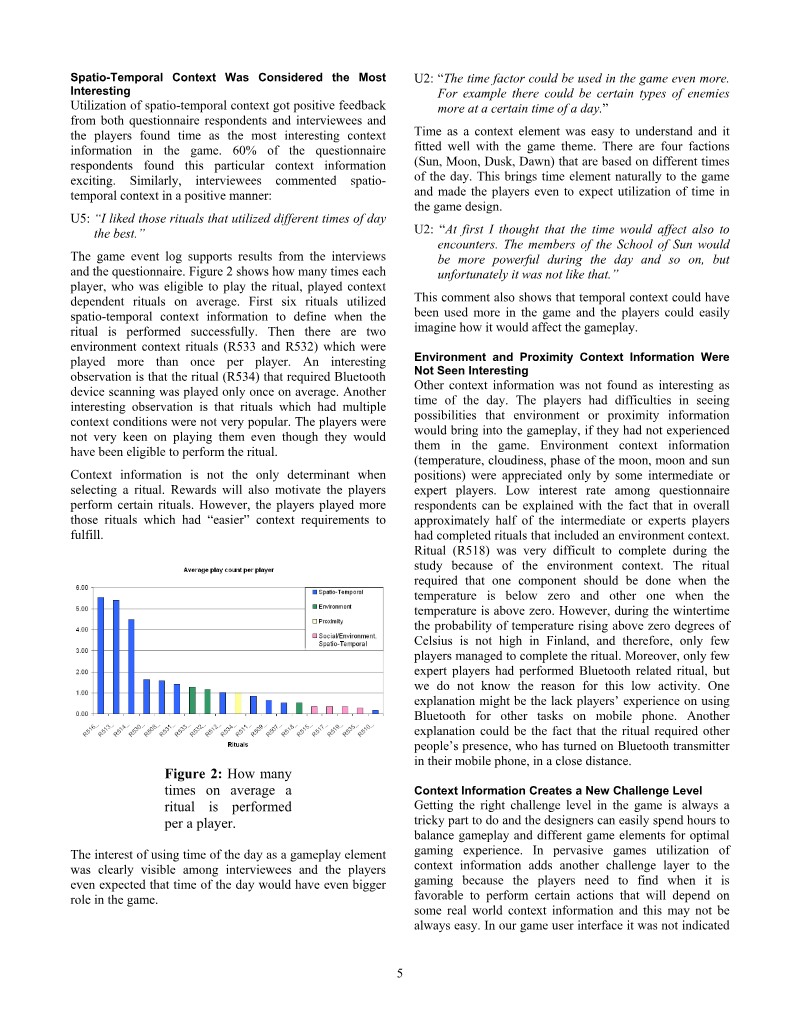
This study examines how players perceive the use of context information, including environmental, spatio-temporal, proximity, and social context, in Mythical: the Mobile Awakening, a pervasive mobile multiplayer game.
Towards Data-Driven Drama Management: Issues in Data Collection and Annotation
This work argues for a data-driven approach to intelligent drama management, moving away from hand-authored top-down systems toward models learned from real human play.
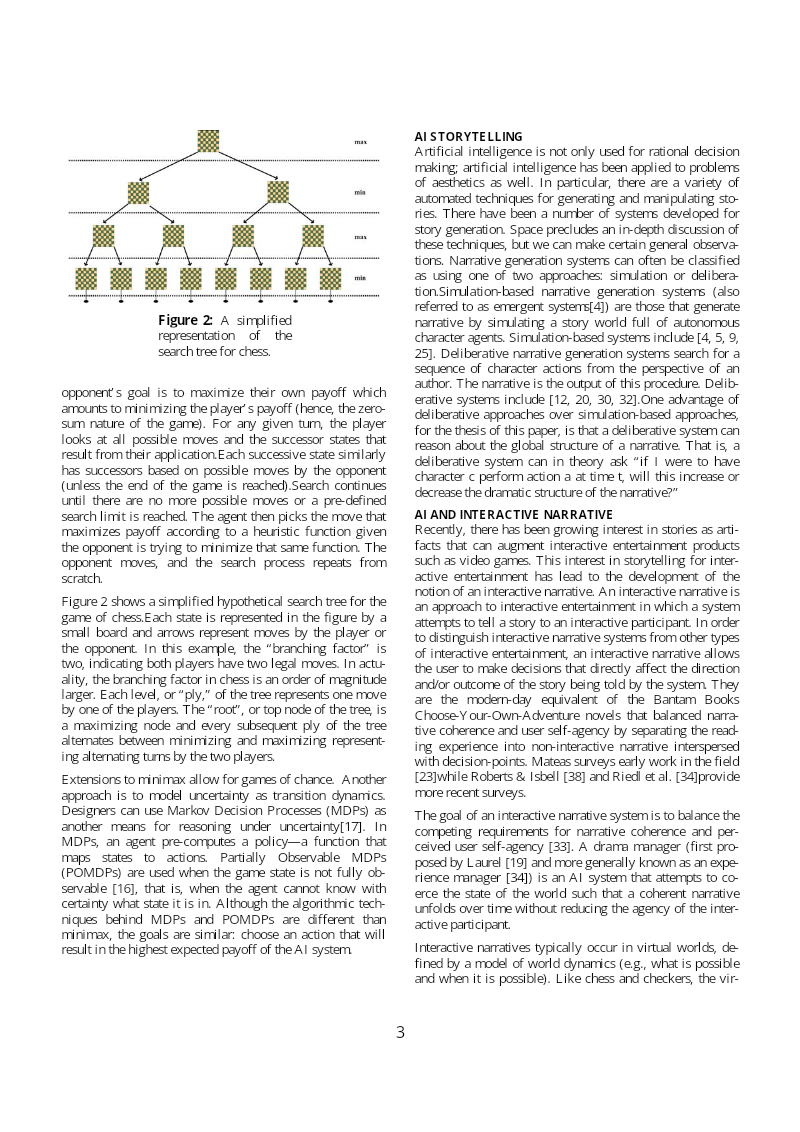
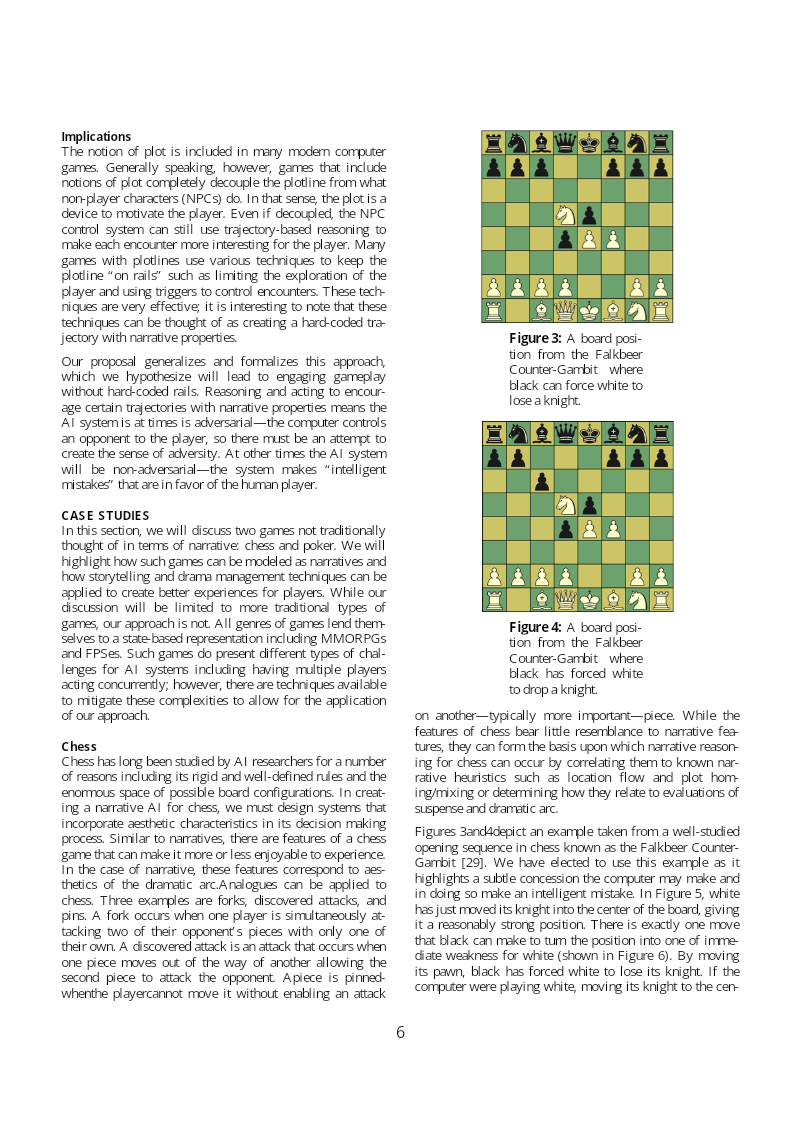
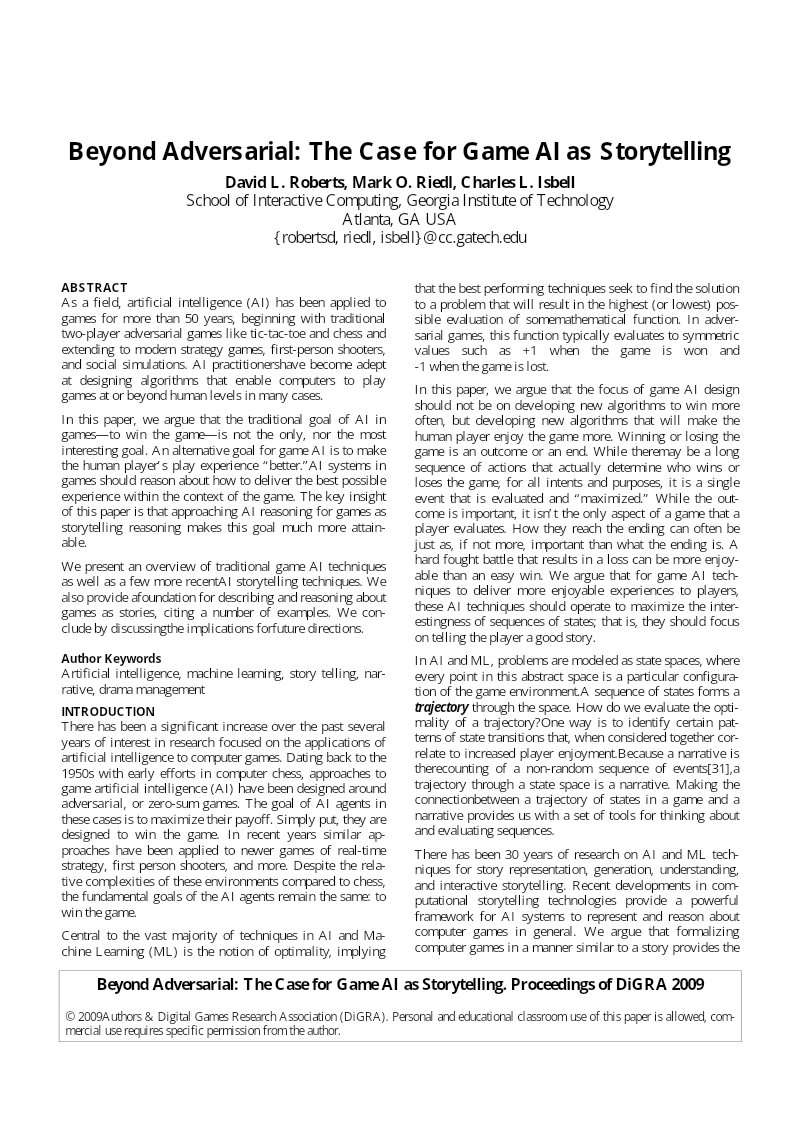
Beyond Adversarial: The Case for Game AI as Storytelling
The paper argues that game AI should move beyond the single goal of winning and instead aim to craft satisfying player experiences.
Textual Analysis, Digital Games, Zombies
This paper argues that textual analysis is a valuable tool for digital game studies, because meaning in games emerges through situated play rather than residing fixed within the game itself.
Experiential Narrative in Game Environments
Calleja's "Experiential Narrative in Game Environments" argues that the notion of narrative in games has been over-generalized, and that meaningful analysis requires distinguishing the specific forms games take rather than applying narratology developed for literature or film to every game, from chess to GTA IV.