1 free read left. Create a free account for unlimited reading + AI research.
Create free accountWhitepaper DiGRA
1 free read left. Create a free account for unlimited reading + AI research.
Create free accountWhitepaperDiGRA
Distilling the key insights…
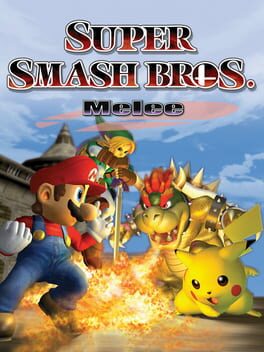
Hung's "The Order of Play: Seeing, Teaching, and Learning Meaning in Video Games" examines how players collectively make sense of a game and pass that understanding to others. Drawing on ethnomethodology and conversation analysis, the work centers on Asian American adolescent players in New York learning the fighting game Super Smash Bros. Melee. Its central argument is that breakdowns in interpretation, and the corrections that follow them, expose the implicit rules of play and the social work through which meaning is established. A novice's reading of the game's damage-percentage indicator as "more is good," though mistaken, was internally coherent and grounded in embodied experience, and experts corrected her not because her logic failed but because they treated their shared interpretation as the accountable norm.
The study also documents the practical conditions of learning. Through a novice's fragmented, often unanswered instructions from friends who spoke a different dialect of play, the authors show that situated learning in a community does not guarantee mechanical mastery, and the novice ultimately abandoned the game when instruction failed to meet her needs. The authors find that effective teaching requires suspending gameplay to create a dedicated instructional space, and that breaking moves into small incremental steps works better than advice delivered mid-match. Even so, the novice absorbed the community's norms and rules.
The final section extends these findings by treating instruction as an interactional achievement built through trial and error, in which play is paused and a new space opened for learning that remains situated within the game. Drawing on Gee's concept of Big-D Discourse, the work frames learning to read a game as analogous to learning a language.
Each row is a game or company this document names, each column a document, oldest first. A mark means that document names it. Select a row to see those documents.



DiGRA · 2016



DiGRA · 2016



DiGRA · 2016



DiGRA · 2016



DiGRA · 2016



DiGRA · 2016

DiGRA · 2015



DiGRA · 2015



DiGRA · 2015



DiGRA · 2015
DiGRA · 2015
DiGRA · 2015