
DiGRA
The Digital Games Research Association: the international association of academics and professionals who study digital games. Its Digital Library holds the proceedings of the DiGRA conferences since 2002.
Documents
Should I Stay or Should I Go: Boundary Maintaining Mechanisms in Left 4 Dead 2
Linderoth, Björk, and Olsson's study examines how players of Left 4 Dead 2 manage the boundary between their in-game identities, defined by gaming skill, and their social identities outside the game.
- The study is autoethnographic, based on roughly 200 hours of observed public, anonymous, short-session pick-up matches in Left 4 Dead 2, with the researchers participating as observers.
- Players continually negotiate the game's frame through informal soft rules, such as waiting for teams to fill and improvised tactics like "go before they all drop," to manage the risk of collapse from dropouts and bot substitution.
- Design patterns Symbiotic Player Relations and Helplessness generate emotional pressure that drives rage-quitting and blame, while players use face-saving excuses such as citing "lag" or calling others "noob" to avoid the loser role, consistent with Goffman's frame analysis.
Domesticating Play, Designing Everyday Life: The Practice and Performance of Family, Gender, and Gaming
Enevold's paper argues that digital gaming is best understood through the domestic arrangement of its material objects, including screens, consoles, and handhelds, which families position and move around the home in ways that domesticate play and reflect broader norms of family, gender, and gaming.
Buy and Share! Social Network Games and Ludic Shopping
This paper introduces the concept of "ludic shopping" to describe how social network games (SNGs) blend consumerism with playfulness, centring gameplay on the symbolic purchase of virtual goods.
Framing Games
Annika Waern's "Framing Games," presented at DiGRA Nordic 2012, is a conceptual and theoretical work that seeks an essential, permissive definition of games capable of bridging digital and non-digital game studies.
The Stereotype of Online Gamers: New Characterization or Recycled Prototype?
This study examines whether the stereotype of online gamers, characterized by social ineptitude, reclusiveness, obsessiveness, and maleness, is a distinctive modern characterization or a recycled prototype shared with other groups.
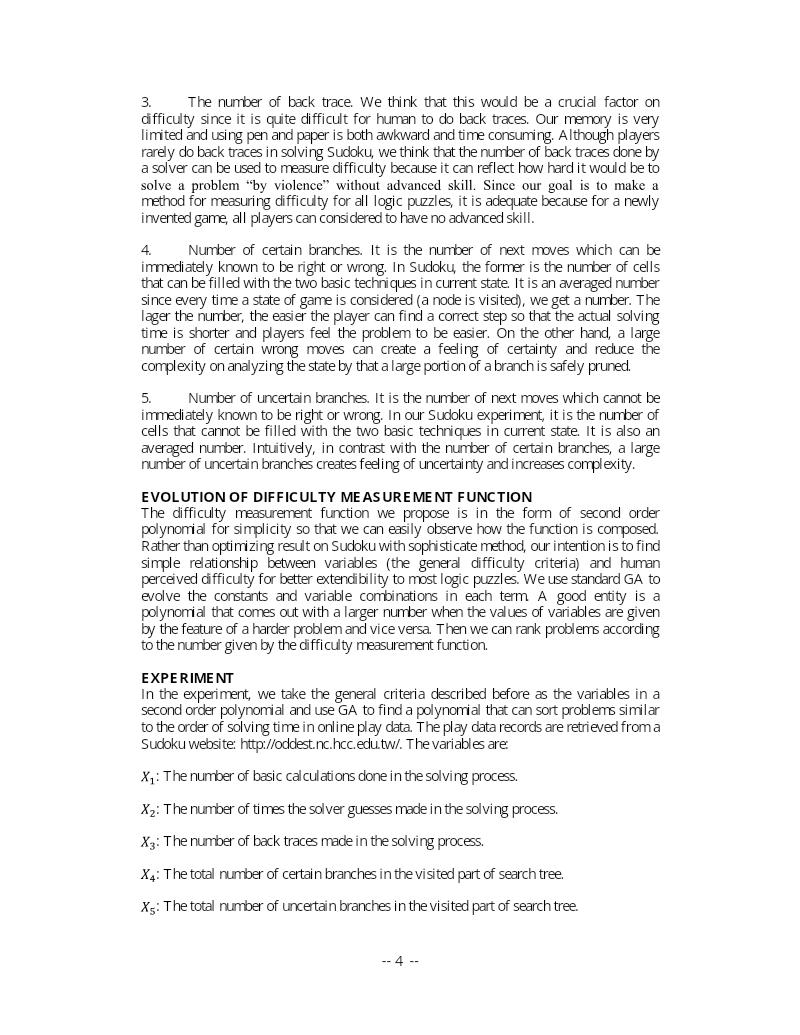
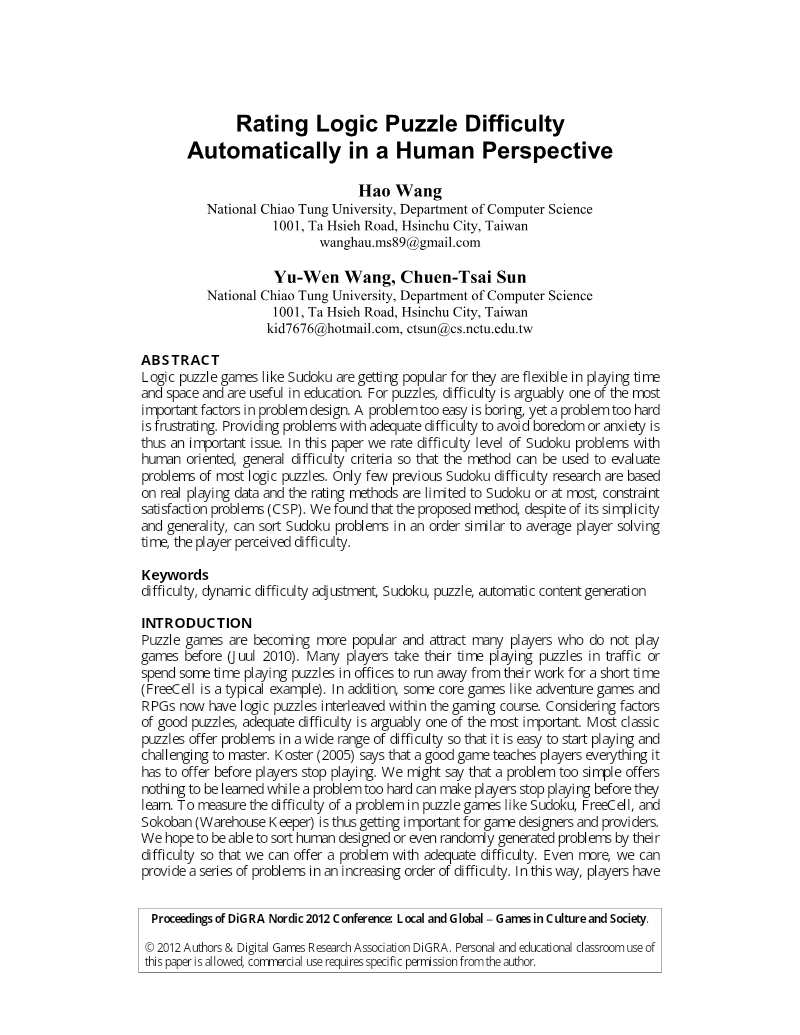
Rating Logic Puzzle Difficulty Automatically in a Human Perspective
This paper proposes a method for rating the difficulty of logic puzzles from a human perspective, using Sudoku as the test case.
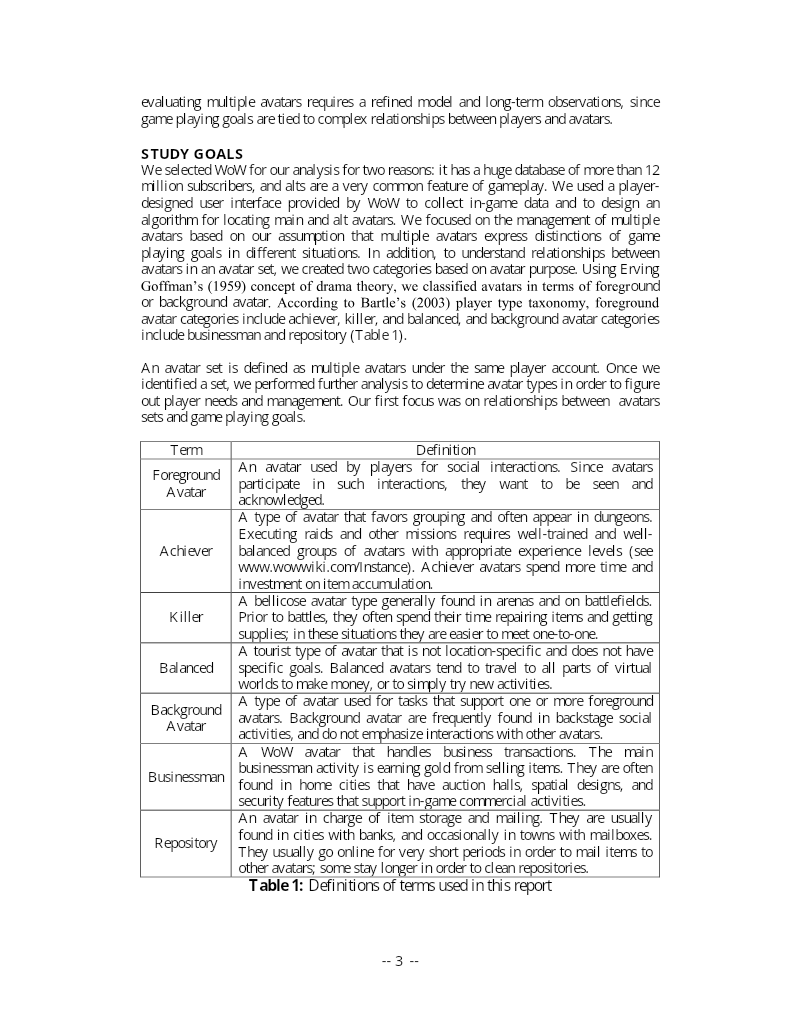
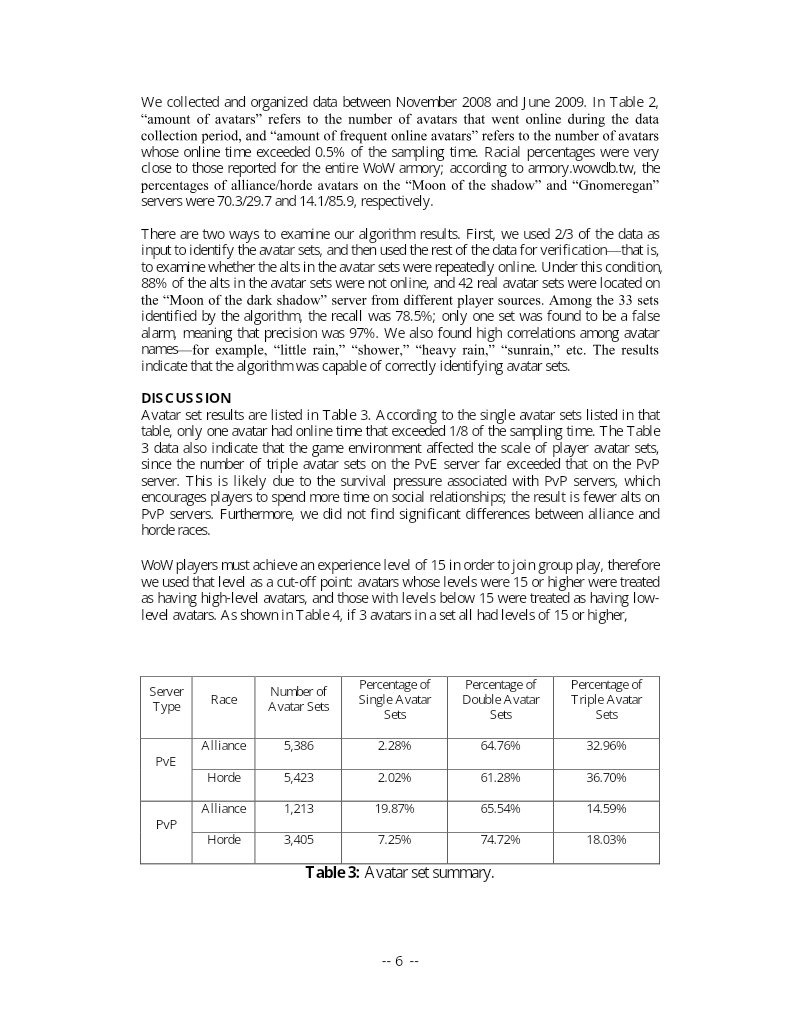
Main(s) and Alts: Multiple Character Management in World of Warcraft
This study examines how players manage multiple characters, or "mains and alts," in World of Warcraft, focusing on how account owners group their avatars into sets and what those groupings reveal about player goals.
Age-Restriction: Re-examining the Interactive Experience of 'Harmful' Game Content
This document challenges New Zealand's approach to classifying video games, which currently applies film-based rating models that treat interactivity as a secondary concern.
Motivation of South Koreans Who Engage in Person vs. Person Gameplay in World of Warcraft
South Korean player-versus-player (PvP) participation in World of Warcraft is examined here as a question of motivation: whether it reflects psychopathic tendencies, the appeal of sport, or an effort to validate masculinity.
Gambling in Social Networks: Gaming Experiences of Finnish Online Gamblers
Online gambling in Finland has moved from a solitary activity played against an operator toward a socially connected pursuit, and this study argues that the boundary between gambling and other forms of online play is increasingly blurred.
Tackling the Metaphor-Simulation Dilemma
Sebastian Möring's "Tackling the Metaphor-Simulation Dilemma" addresses a persistent puzzle in game studies: the terms "metaphor" and "simulation" are frequently invoked together and often defined in strikingly similar ways, raising the question of whether one is superfluous.
flâneur, a Walkthrough: Locative Literature as Participation and Play
The study examines textopia, a locative literature system in which users geotag texts that play as audio while they walk through a city, and the flâneur game built on it as a way to sustain participation in such a project.