
Breda University of Applied Sciences
Dutch university of applied sciences in Breda with a large games programme (Academy for AI, Games & Media). Its research portal publishes open papers and reports on game design, serious games and the games industry.
Documents

The (R)Evolution of Animation: Current Challenges and Future Directions
The CAGA 2024 conference proceedings, "The (R)Evolution of Animation: Current Challenges and Future Directions," assemble research presented in Viborg, Denmark, in September 2024, and argue that the field's disruptions, including generative AI, virtual production, platform obsolescence, and systemic inequality, are generating…
- Proceedings from the CAGA 2024 conference in Viborg, Denmark argue that disruptions in animation, including generative AI, virtual production, platform obsolescence, and systemic inequality, are generating innovation and critical engagement rather than only obstructing progress.
- Generative AI can compress 3D location building from ten weeks to about twenty minutes, but generative tools offer limited stylistic control, reproduce narrow representational norms, and leave authorship and labor questions unresolved.
- Virtual production is valuable only when matched to realistic budgets and skills, with a low-budget rear-projection setup consuming about 5 kWh per shooting day against a far costlier LED wall.
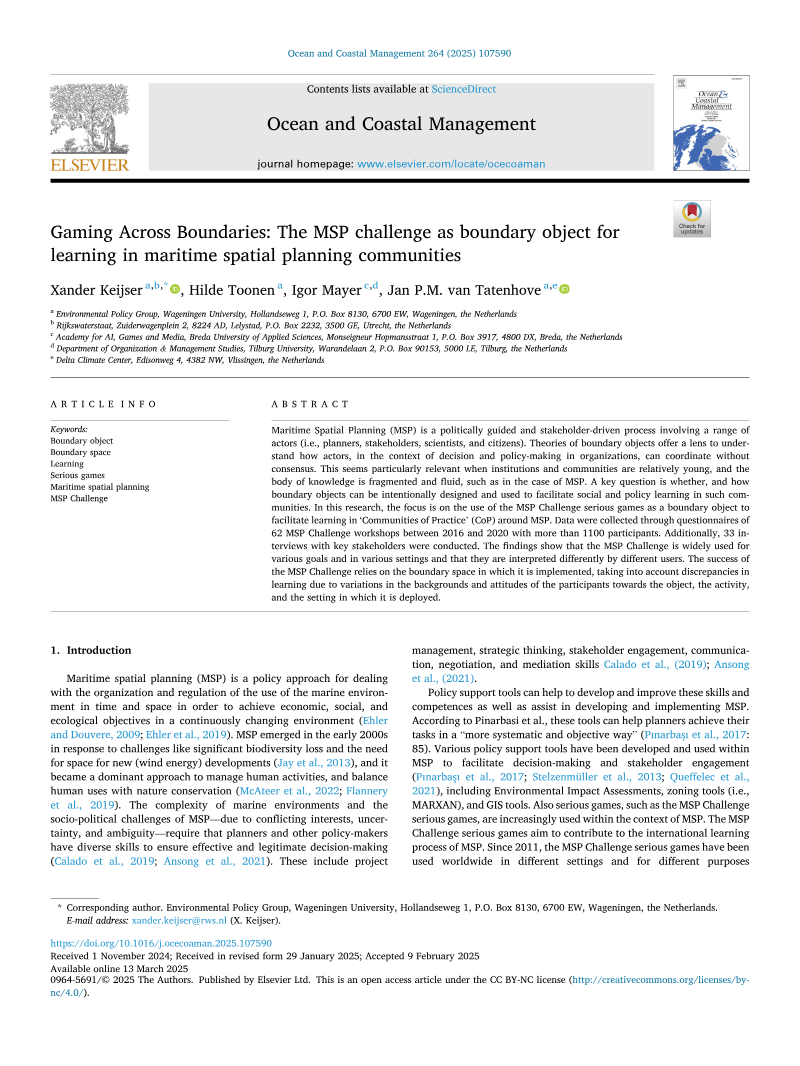
Gaming Across Boundaries: The MSP Challenge as Boundary Object for Learning in Maritime Spatial Planning Communities
The MSP Challenge serious games are examined as boundary objects that support learning in maritime spatial planning (MSP), with the central argument that their effectiveness depends on the interplay between the game object, the activity design, and the boundary space in which participants interact.
- The study is a mixed-methods qualitative case study of the MSP Challenge serious games, drawing on 62 workshops held between 2016 and 2020 with over 1,100 participants, 935 questionnaire responses, and 33 stakeholder interviews.
- Effectiveness is framed as depending on the interplay between the game object, the activity design, and the boundary space in which participants interact, rather than on the game alone.
- Board game workshops generally produced high enjoyment and improved MSP understanding, with MSP Global 2030 sessions scoring highest, though outcomes varied with group size, workshop duration, facilitation quality, and participant background.
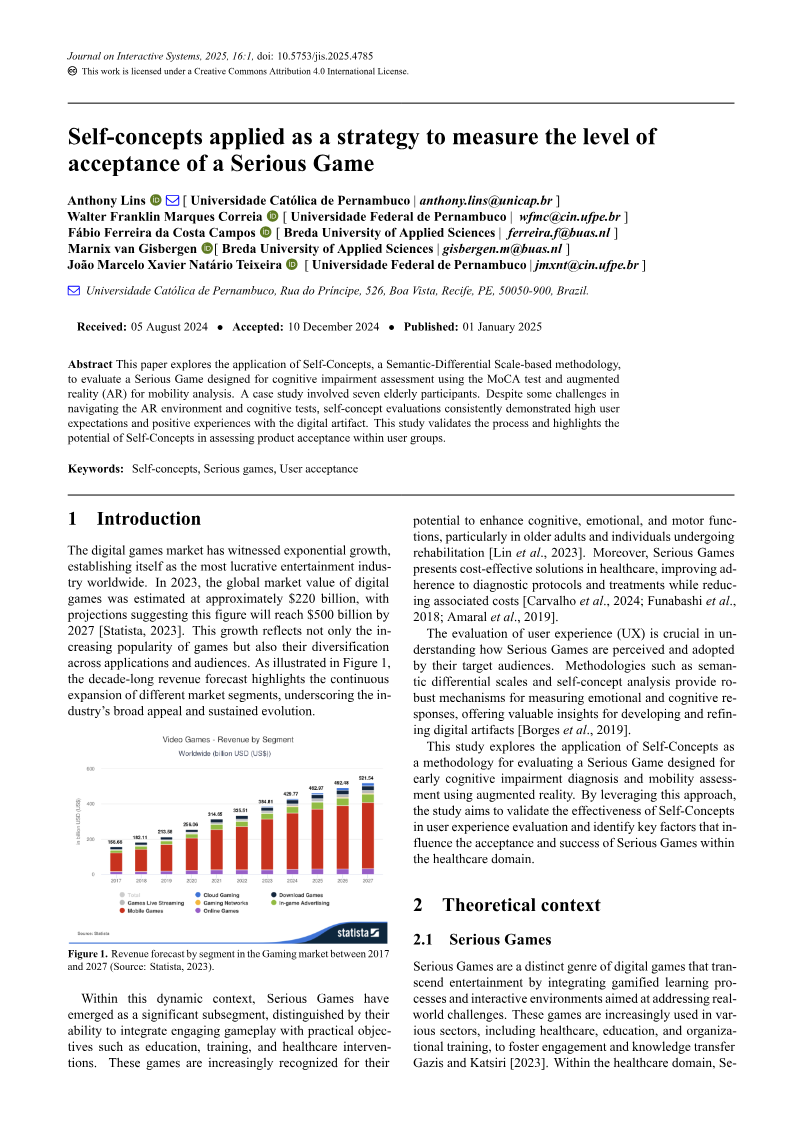
Self-Concepts Applied as a Strategy to Measure the Level of Acceptance of a Serious Game
This study proposes and tests Self-Concepts methodology as a means of measuring user acceptance of a serious game, with a focus on healthcare applications.
- Self-Concepts methodology uses Semantic Differential Scales to compare users' real and ideal self-images against a serious game, grounded in Self-Congruence Theory, which holds that alignment between self-image and product image predicts adoption and preference.
- In a case study of BrainTest, an augmented reality cognitive assessment app, seven participants aged 61 to 78 rated their Real self-concept at a mean of 3.58 versus 2.97 for Ideal, suggesting a generally positive user experience.
- Usability analysis of BrainTest found difficulties with memory recall and ordering tasks, which the authors identified as the main weak points of the experience.
The Case of Cities: Skylines Versions: Affordances in Urban Planning Education
This study examines how three versions of the city-building game Cities: Skylines (the computer, board game, and virtual reality editions) support urban planning education, using affordance analysis grounded in Anderson and Krathwohl's four knowledge dimensions: factual, conceptual, procedural, and metacognitive.
- Each version of Cities: Skylines supports a distinct profile of learning: the computer edition best supports conceptual and procedural knowledge, the VR edition supports factual and metacognitive knowledge through realistic first-person scale, and the board game excels at metacognitive reflection and collaborative role-based discussion.
- The computer version simulates interrelated urban systems such as zoning dependencies and the decay of public transport catchments, and its modding capability allows real-world buildings to be introduced.
- The authors conclude that no single version is universally superior; the right choice depends on the domain taught, with transportation and logistics suiting the computer edition, public policy and citizen participation suiting the board game, and design-focused fields suiting VR.
Better Futures with Games and Immersive Media: Self-Evaluation Report 2018-2023
The R&D@AGM self-evaluation report from Breda University of Applied Sciences (BUas) assesses the performance of its games and immersive media research group over 2018–2023, a period marked by a campus relocation, the COVID-19 pandemic, and frequent leadership and staffing gaps.
- Total R&D funding for the games and immersive media group rose from about €860,000 in 2018 to about €1.47 million in 2023, cumulatively around €5.8 million, with external sources (about €4.2 million) far exceeding the internal base budget.
- The group secured the NWO-SIA SPRONG DIGIREAL.XL programme (€1 million for 2022–2025) and €3.5 million in grants committed for 2024–2027, and participated in 23 European and 20 national consortia working with 229 unique partners.
- Over 2018–2023 the group recorded 653 outputs in PURE, including about 43 peer-reviewed journal articles, 30 conference papers, 48 books or chapters, roughly 60 digital products and more than 50 games and immersive productions.
Serious Gaming to Stimulate Participatory Urban Tourism Planning
A 2020 study examines whether a serious game can stimulate participatory urban tourism planning, using a multiplayer policy game built on the Smart City Hospitality Framework.
- A 2020 study tested a multiplayer serious game built on the Smart City Hospitality Framework with 73 stakeholders across six European cities (Amsterdam, Belgrade, Darmstadt, Gothenburg, Stavanger, and Valencia), using pre- and post-game surveys, in-game observation, and interviews six months later.
- Participants rated the game as fun, creative, and valuable for stakeholder collaboration, with mean scores of roughly 4.0 to 4.5 on a five-point scale, and enjoyment was significantly associated with learning.
- Players initially competed and performed suboptimally but became more cooperative and holistic after reflecting on their results, with Northern European cities engaging more quickly.
Gamification and Public Space Co-Creation
This document is a presentation slide deck from the PLAY advanced Public Play Space project, a Creative Europe Programme initiative led in part by Breda University of Applied Sciences.
- Games and playful mechanisms are framed as tools for co-creating public spaces, using "play with a purpose" to make participatory placemaking more engaging for citizens, designers, and planners.
- The core argument is that combining planning with play-generated data offers new opportunities for urban design practice.
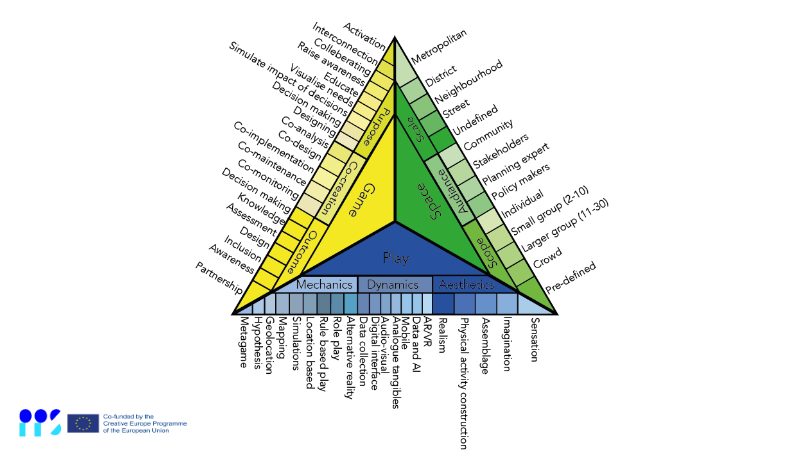
- The deck organizes game mechanisms for placemaking into a taxonomy: physical activity, role play, mapping, data collection, AR/VR, mobile interfaces, and location-based play.
Four Categories for Meaningful Discussion of Immersion in Video Games
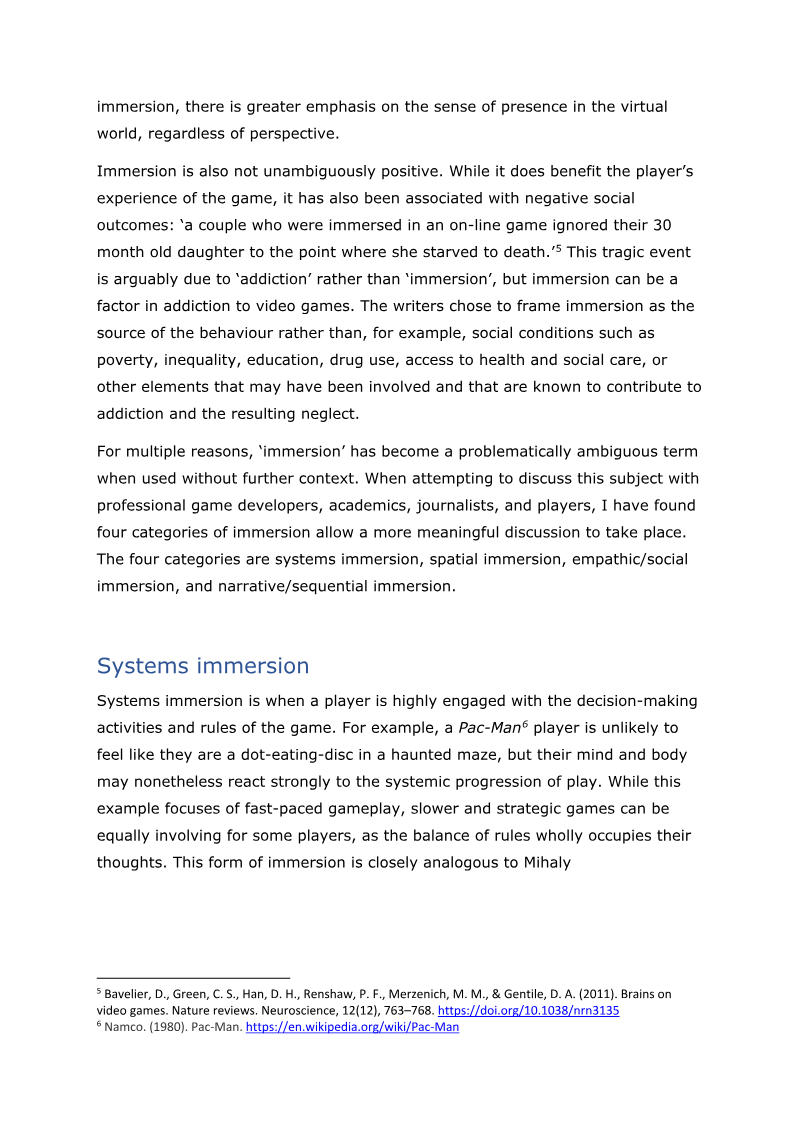
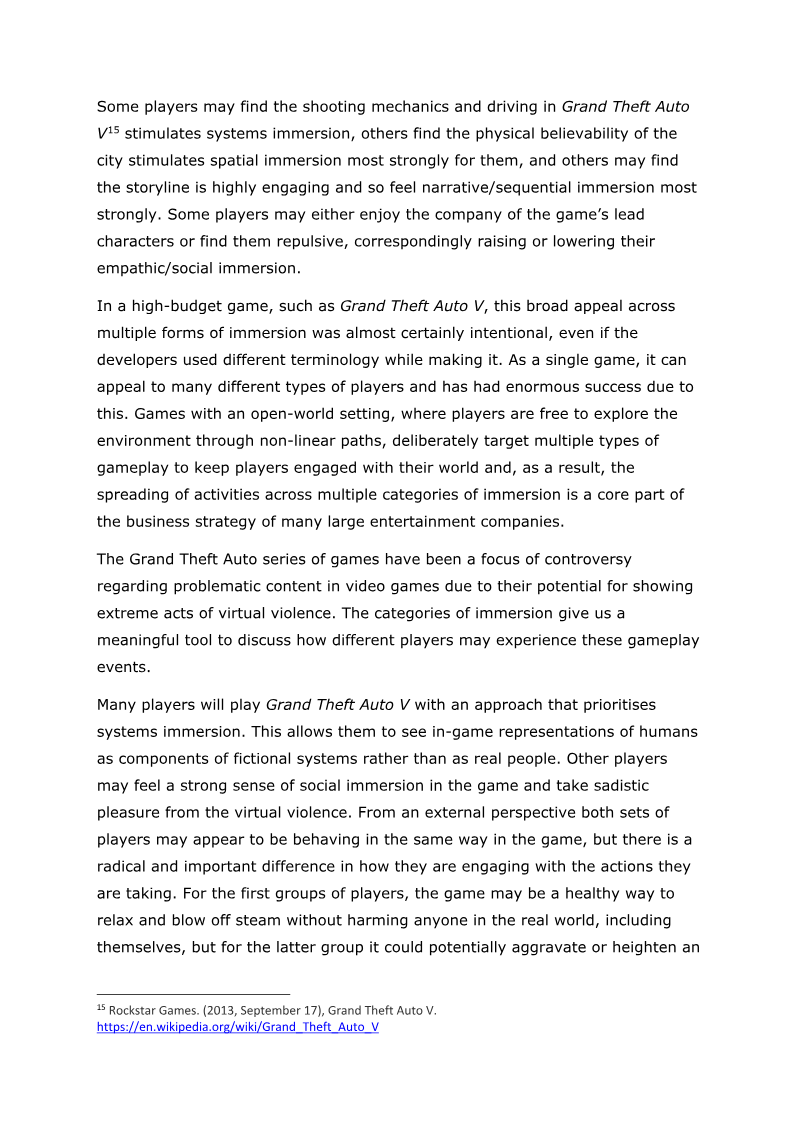
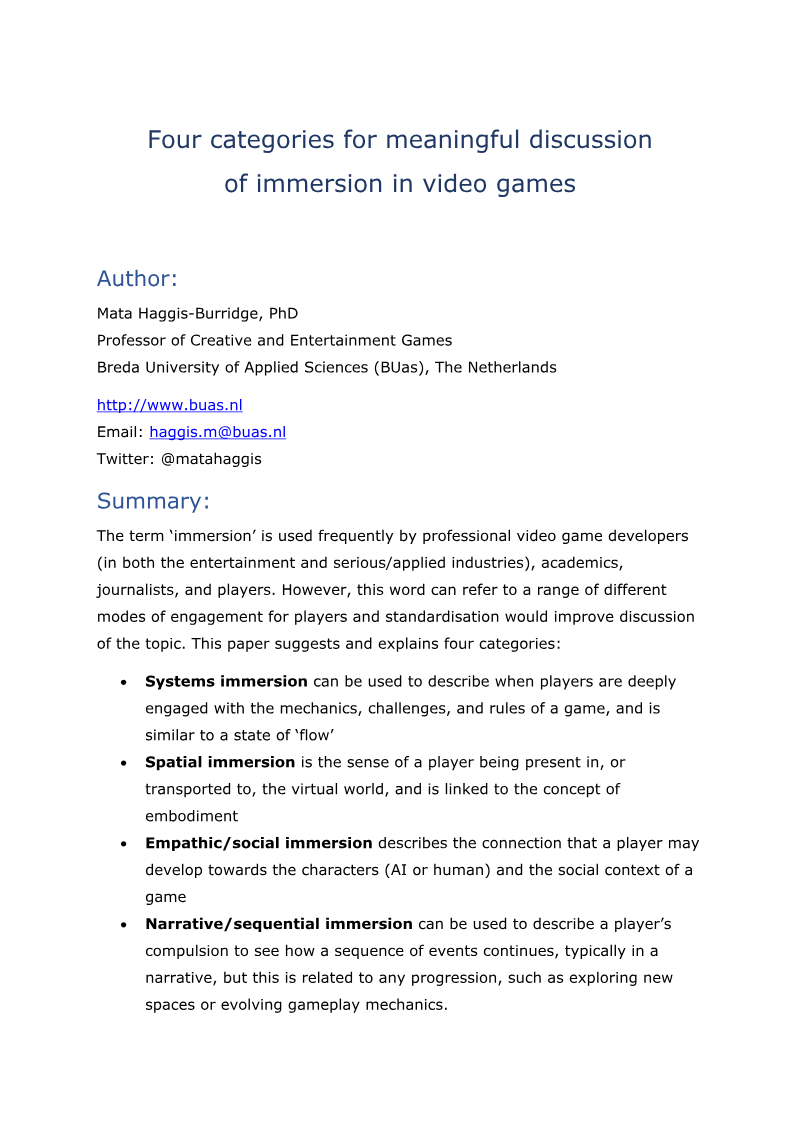
Mata Haggis-Burridge's paper argues that "immersion" is used so loosely across game development, academia, journalism, and player discussion that it obstructs meaningful analysis, and proposes four distinct categories to replace the single term.
- Mata Haggis-Burridge argues that 'immersion' is used so loosely across development, academia, journalism, and player discussion that it obstructs meaningful analysis, and proposes replacing it with four distinct categories.
- The four categories are systems immersion (engagement with rules, challenge, and decision-making, closely related to Csikszentmihalyi's flow), spatial immersion (presence and embodiment in a virtual world), empathic/social immersion (emotional bonds with characters or other players), and narrative/sequential immersion (compulsion to discover what comes next).
- The categories are treated as an interacting network rather than fixed proportions, and a game's success typically depends on balancing several of them at once.
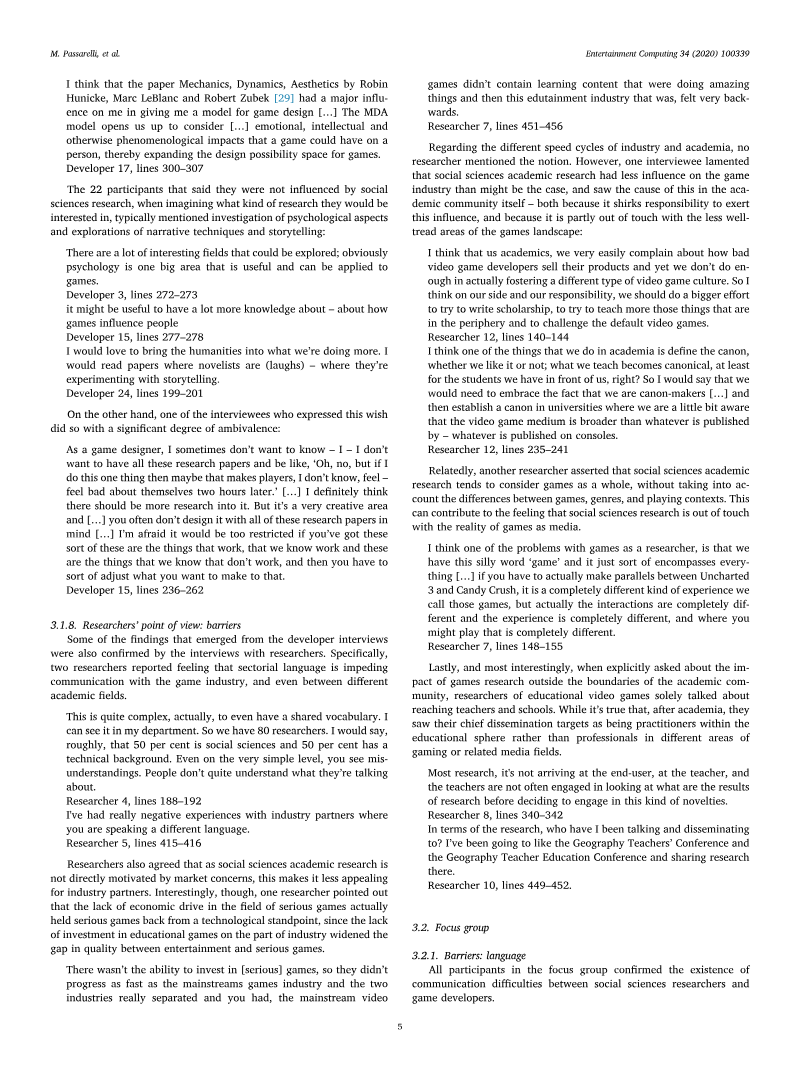
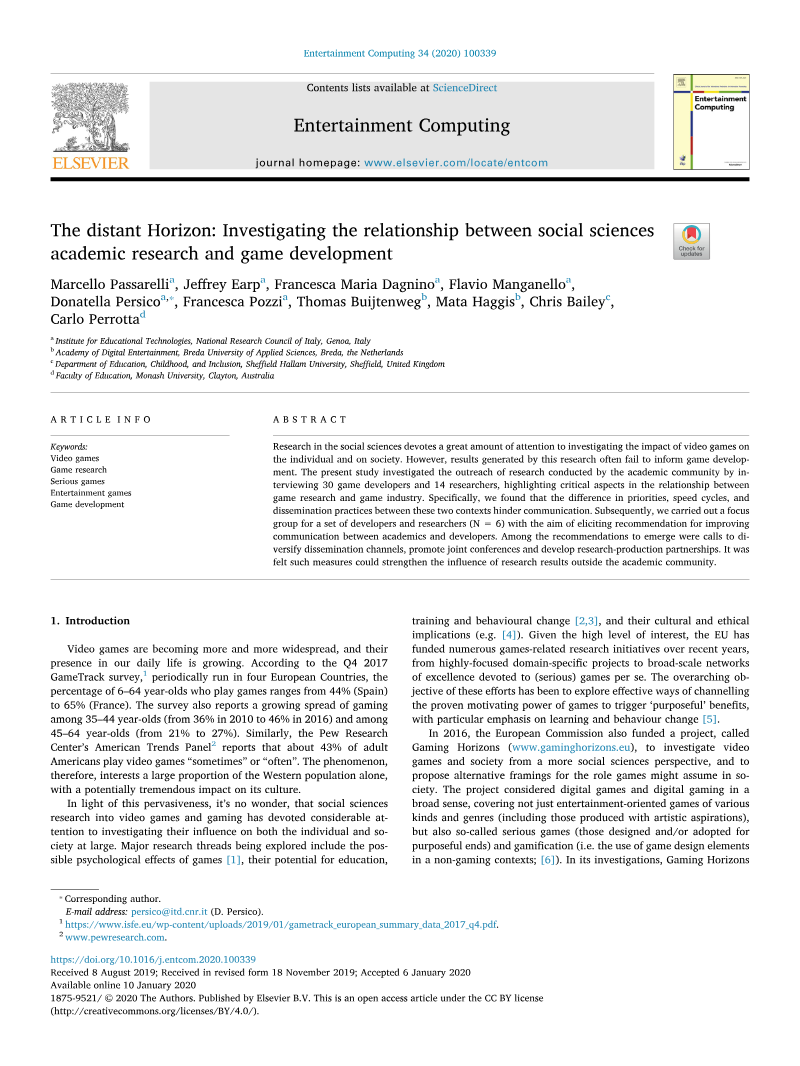
The Distant Horizon: Investigating the Relationship Between Social Sciences Academic Research and Game Development
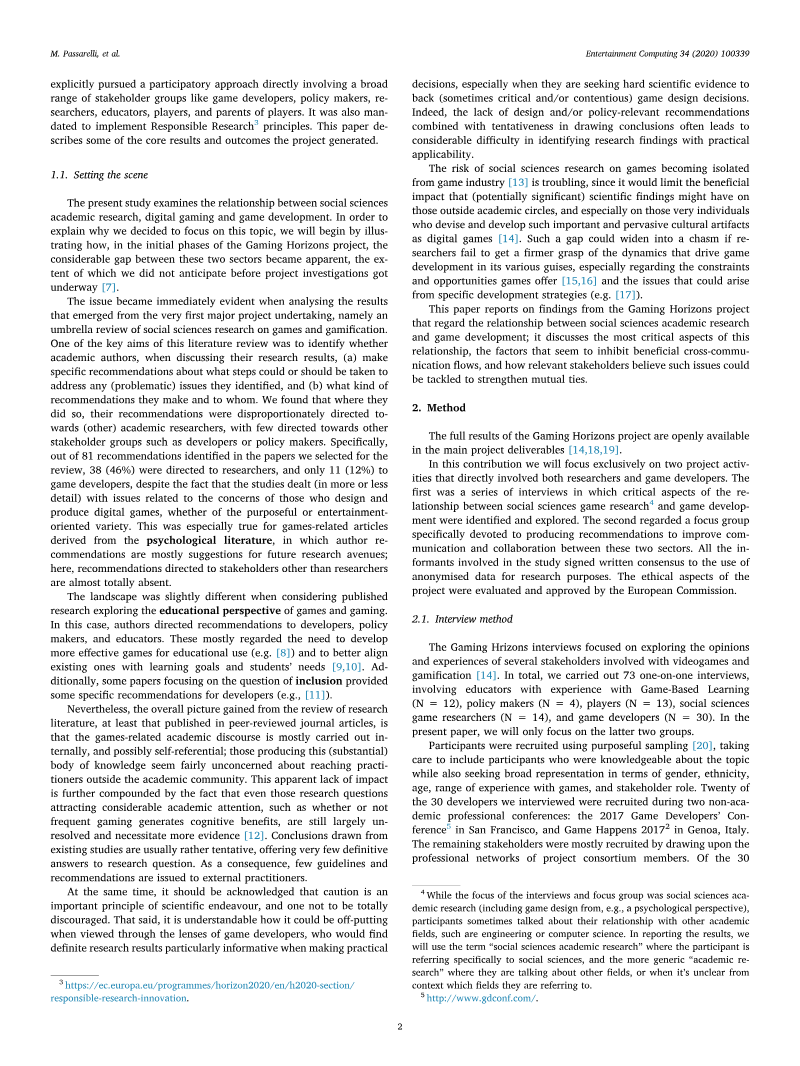
"The Distant Horizon" examines why social sciences research on games rarely reaches the people who make them.
- Academic social sciences research on games rarely reaches the people who make them: the study, based on 73 interviews and a six-person focus group, finds academic findings often fail to influence development practice.
- The gap is visible in the literature itself: 46% of recommendations in the reviewed research are addressed to other researchers, while only 12% are addressed to developers.
- Developers mostly rely on industry websites and conferences rather than academic journals, and face obstacles such as paywalls, including one participant citing an €80 article fee.
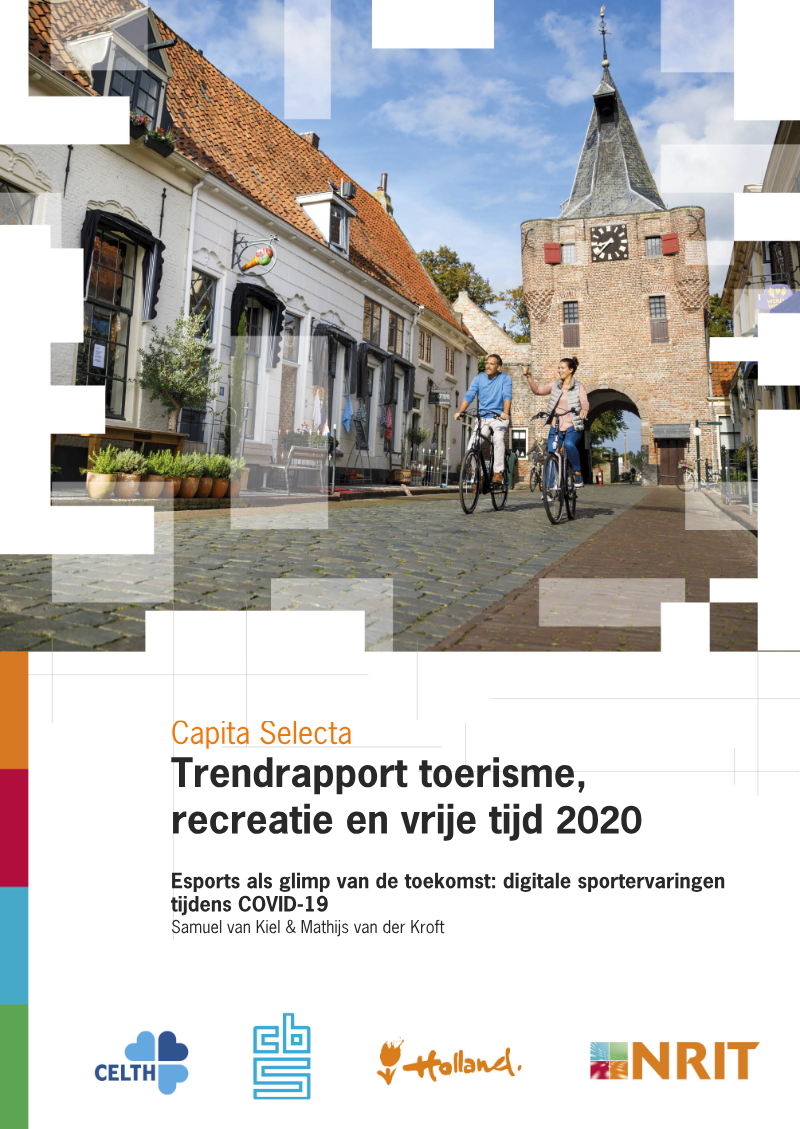
Esports als glimp van de toekomst: digitale sportervaringen tijdens COVID-19
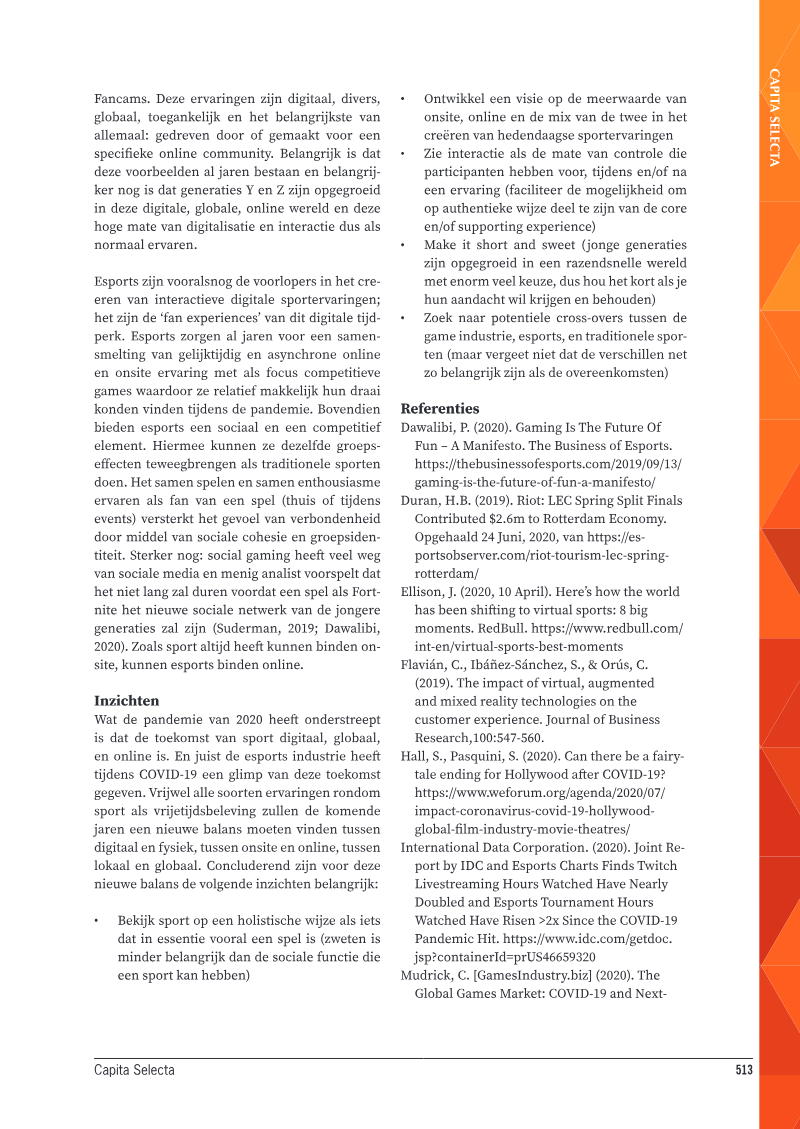
Esports is presented in this article as a preview of how sport and leisure may evolve in a increasingly digital world, with the COVID-19 pandemic having accelerated that shift.
- Global game industry revenue was estimated at $159.3 billion for 2020 by Newzoo, far exceeding the music industry's $21.5 billion in 2019 and the film industry's $136 billion, with 2.7 billion gamers worldwide growing about 6% annually.
- COVID-19 lockdowns accelerated the shift toward digital sport: competitive gaming could continue when traditional sport was suspended, making esports a preview of how sport and leisure may evolve.
- Live game-stream viewing reached roughly 12.3 billion hours in 2019 according to the Technology Policy Institute, and IDC reported over 1.72 billion hours of esports viewing during the pandemic period.
Understanding Game-Based Approaches for Improving Sustainable Water Governance: The Potential of Serious Games to Solve Water Problems
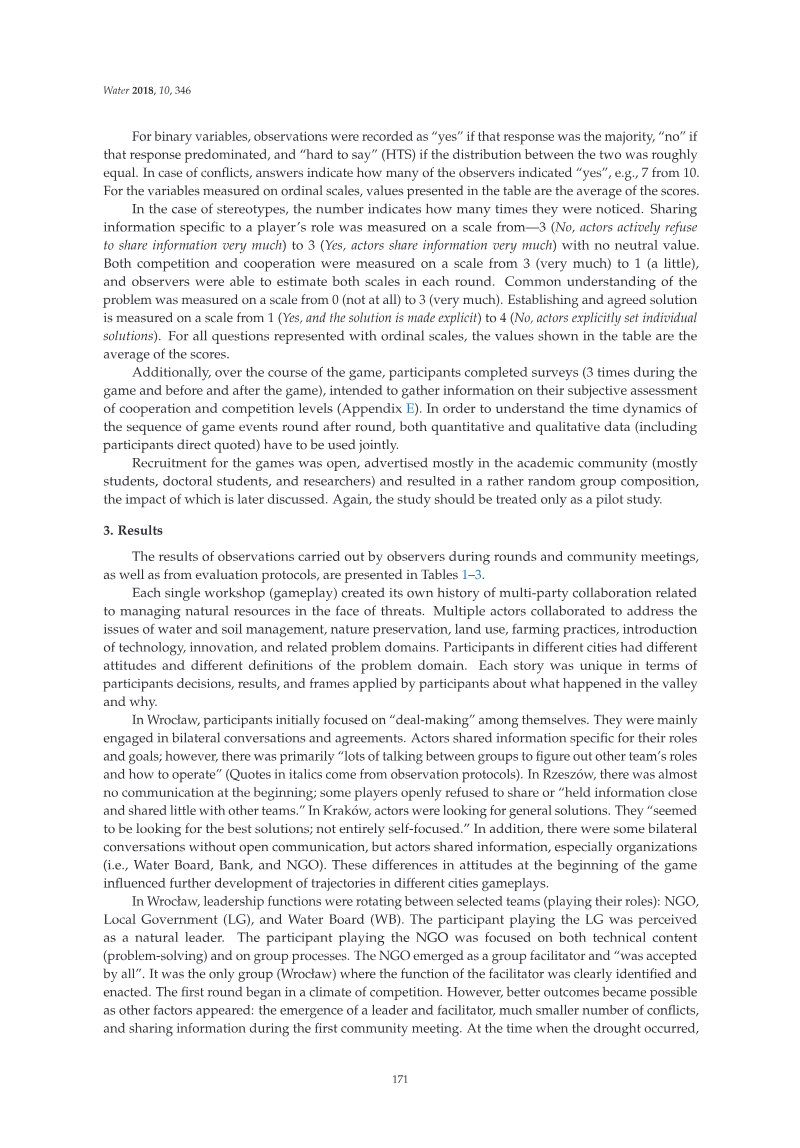
This special issue of Water (2018–2019) examines whether serious games can advance sustainable water governance, and it argues that the field is promising but still lacks coherent conceptual foundations, rigorous evaluation, and attention to ethics and power imbalances.
- The editors argue serious games for water governance are promising but lack coherent conceptual foundations, rigorous evaluation, and attention to ethics and power imbalances, and propose targeting transcendental values such as universalism and benevolence (drawing on Schwartz's Theory of Basic Human Values) to align with Integrated Water Resources Management's equity goals.
- A Millbrook, UK flood game found that changes to farming systems could reduce flooding far more than drainage investment, though a pre/post study with only 22 mostly expert participants limits how far that finding generalizes.
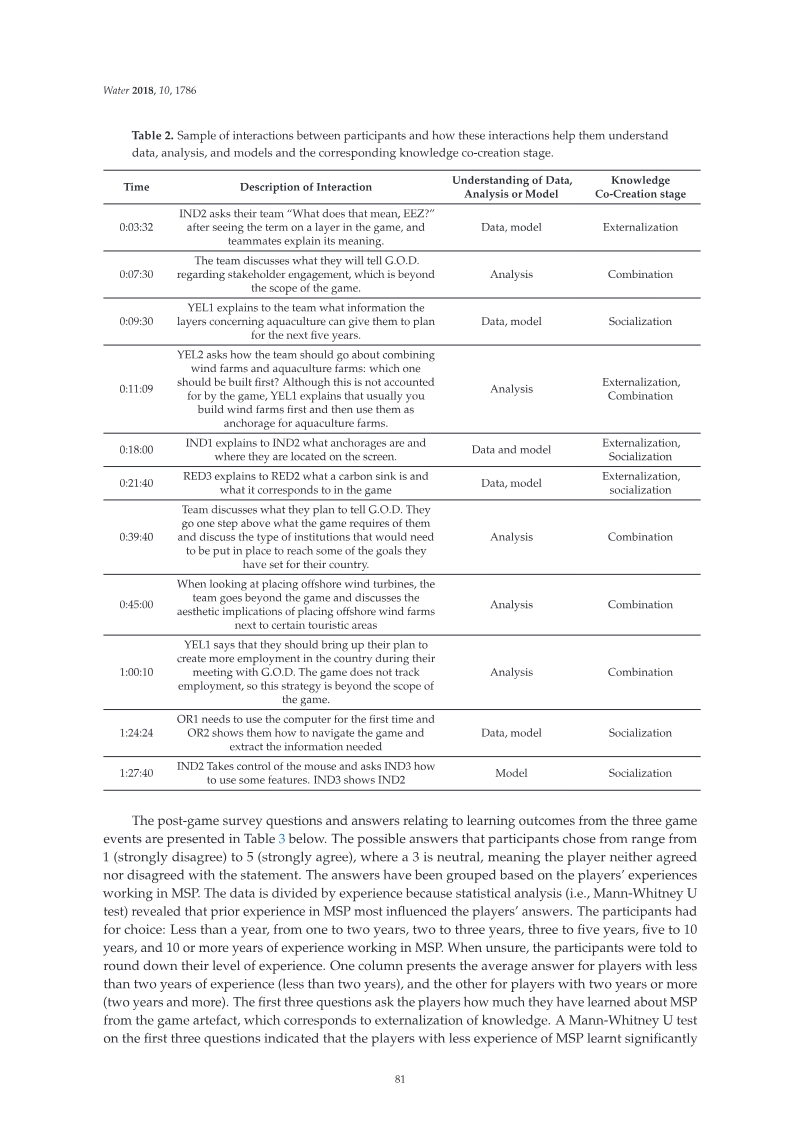
- The MSP Challenge 2050 maritime planning game, tested in Newfoundland, Venice, and Copenhagen, produced the largest learning gains among less experienced players, and a 310-respondent survey across 19 sessions reported increased interest and understanding.
The Potential of Serious Games to Solve Water Problems: Editorial to the Special Issue on Game-Based Approaches to Sustainable Water Governance
This editorial introduces a 2019 Special Issue of the journal Water (MDPI) on game-based approaches to sustainable water governance, asking what potential serious games hold for solving water problems.
- The editorial introduces a 2019 Special Issue of the journal Water (MDPI) comprising twelve peer-reviewed articles drawn from more than twenty submissions, most of them empirical case studies, and was prompted by the Canadian SSHRC-funded UPSWING project focused on the Great Lakes-St. Lawrence River Basin.
- The authors argue that serious games suit water governance because water problems are complex, stakeholders hold competing values, and scientific uncertainty complicates policy decisions, and that games can reshape rule-based player interactions and build the mutual understanding collaborative governance requires.
- The issue's guiding questions examine how social learning connects with game-based learning, which games are used in water and sustainability contexts, what role games play at the science-policy interface, and whether game play measurably affects social learning.