1 free read left. Create a free account for unlimited reading + AI research.
Create free accountArticle Breda University of Applied Sciences
1 free read left. Create a free account for unlimited reading + AI research.
Create free accountArticleBreda University of Applied Sciences
The study proposes Self-Concepts methodology as a way to measure how users accept a serious game, with a focus on healthcare applications.
This study proposes and tests Self-Concepts methodology as a means of measuring user acceptance of a serious game, with a focus on healthcare applications. Grounded in self-concept theory (actual, ideal, social, and situational selves) and Self-Congruence Theory, which holds that alignment between a user's self-image and a product's image predicts adoption and preference, the authors use Semantic Differential Scales to compare how users perceive their real and ideal selves in relation to the game. The framework situates this approach within broader evaluation practices for serious games, including Likert and Semantic Differential instruments, and acknowledges the known limitations of the Semantic Differential Scale.
The central empirical evidence comes from a case study of BrainTest, an augmented reality cognitive assessment app, involving seven participants aged 61 to 78. Mean "Real" self-concept scores (3.58) exceeded "Ideal" scores (2.97), suggesting a generally positive user experience. Performance and usability analysis revealed difficulties with memory recall and ordering tasks, while the authors also observed that the methodology showed promise despite the small sample. A subsequent study with elderly participants using a MoCA-based cognitive game reinforced these patterns, with real self-concept scores again exceeding ideal expectations, naming and attention tasks scoring highest, and memory recall and AR tasks presenting usability challenges.
The authors conclude that Self-Concepts methodology is a valid and useful tool for evaluating user experience in serious games, particularly those designed for healthcare. They recommend iterative improvements to task design, broader participant demographics, and further statistical validation linking task-specific scores to overall performance. Raw data and questionnaires are made publicly available through a repository to support replication and further validation.
Breda University of Applied Sciences · 2026
Breda University of Applied Sciences · 2026
Breda University of Applied Sciences · 2026



Breda University of Applied Sciences · 2026
Breda University of Applied Sciences · 2026
Breda University of Applied Sciences · 2026
Breda University of Applied Sciences · 2026
Breda University of Applied Sciences · 2026
Breda University of Applied Sciences · 2026
Breda University of Applied Sciences · 2026
Breda University of Applied Sciences · 2026
Breda University of Applied Sciences · 2026
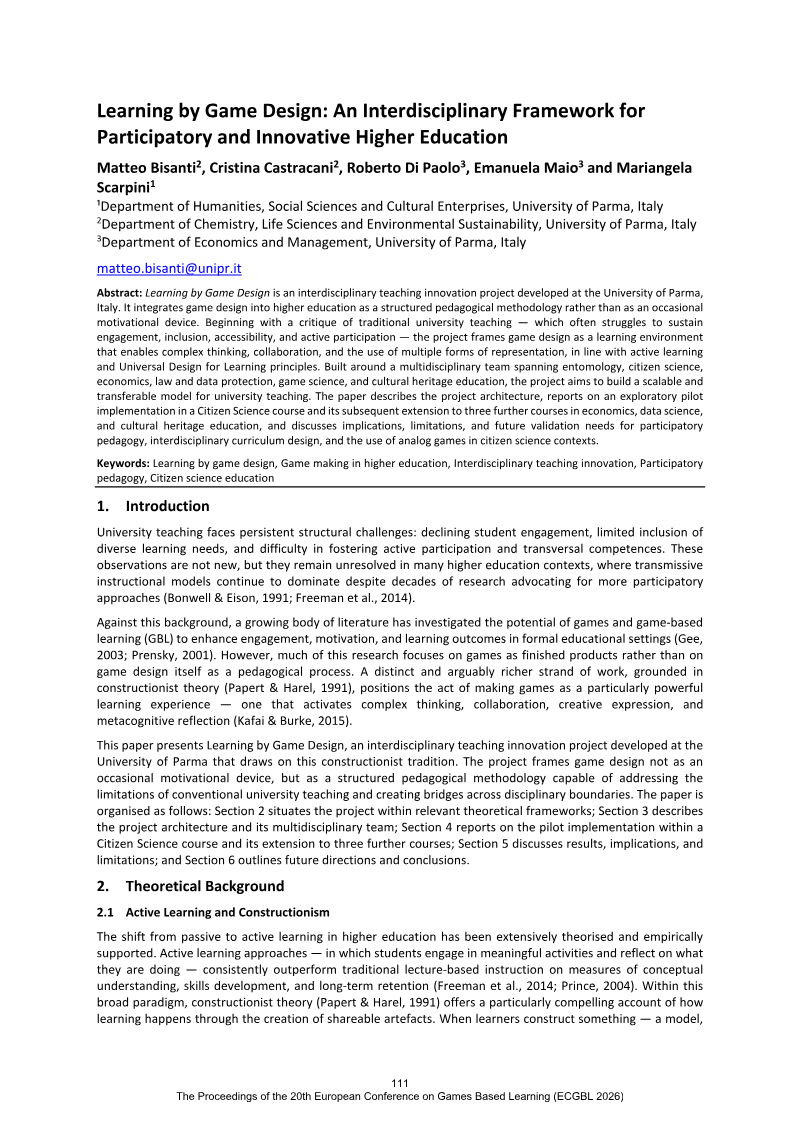
European Conference on Games Based Learning (ECGBL) · 2026



European Conference on Games Based Learning (ECGBL) · 2026
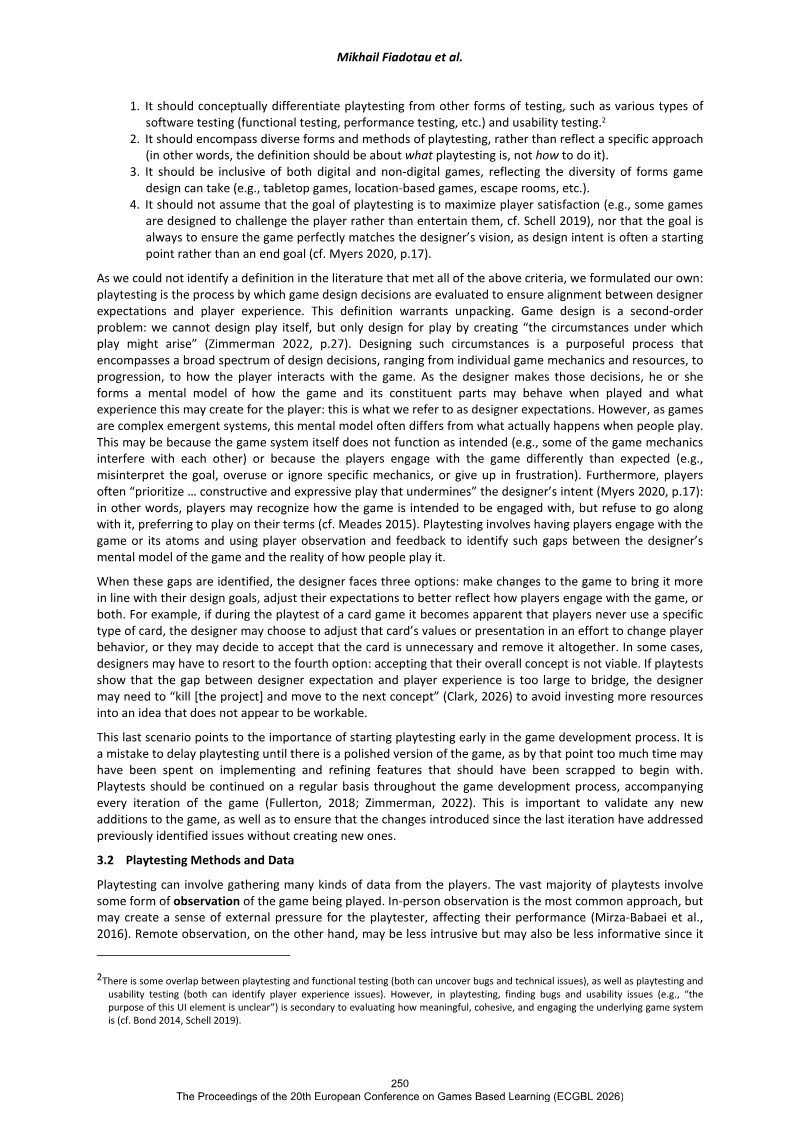
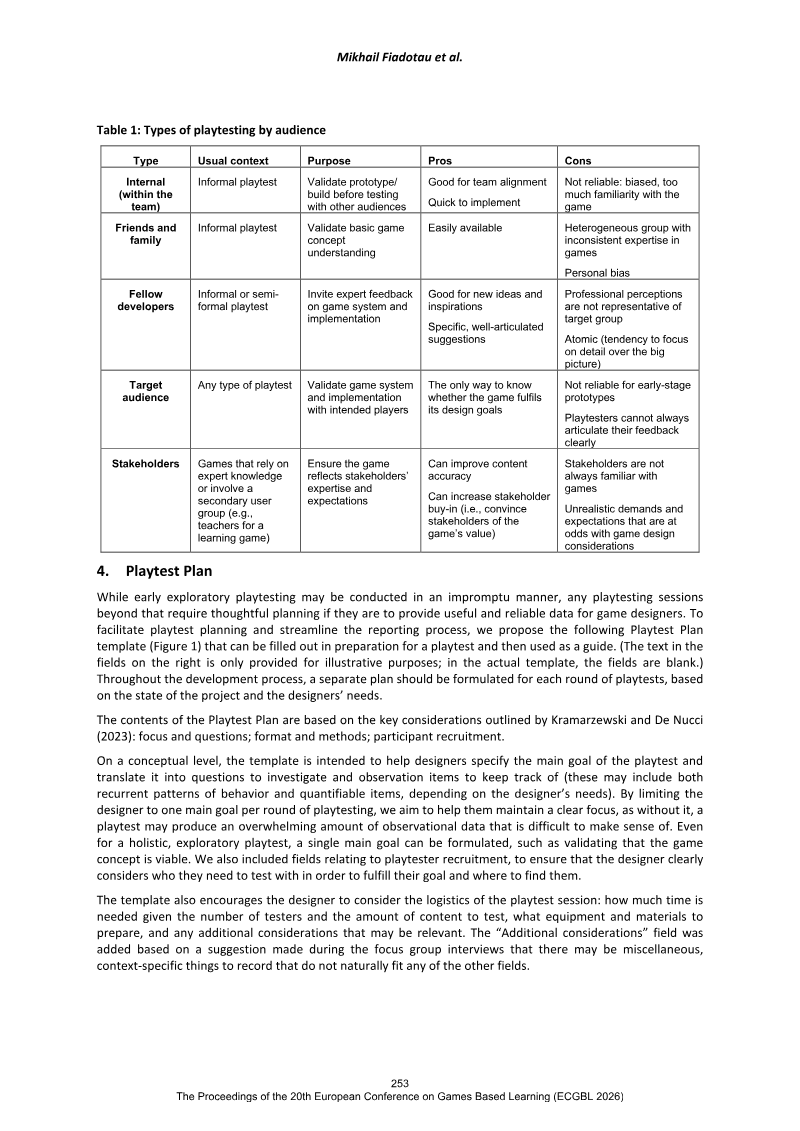
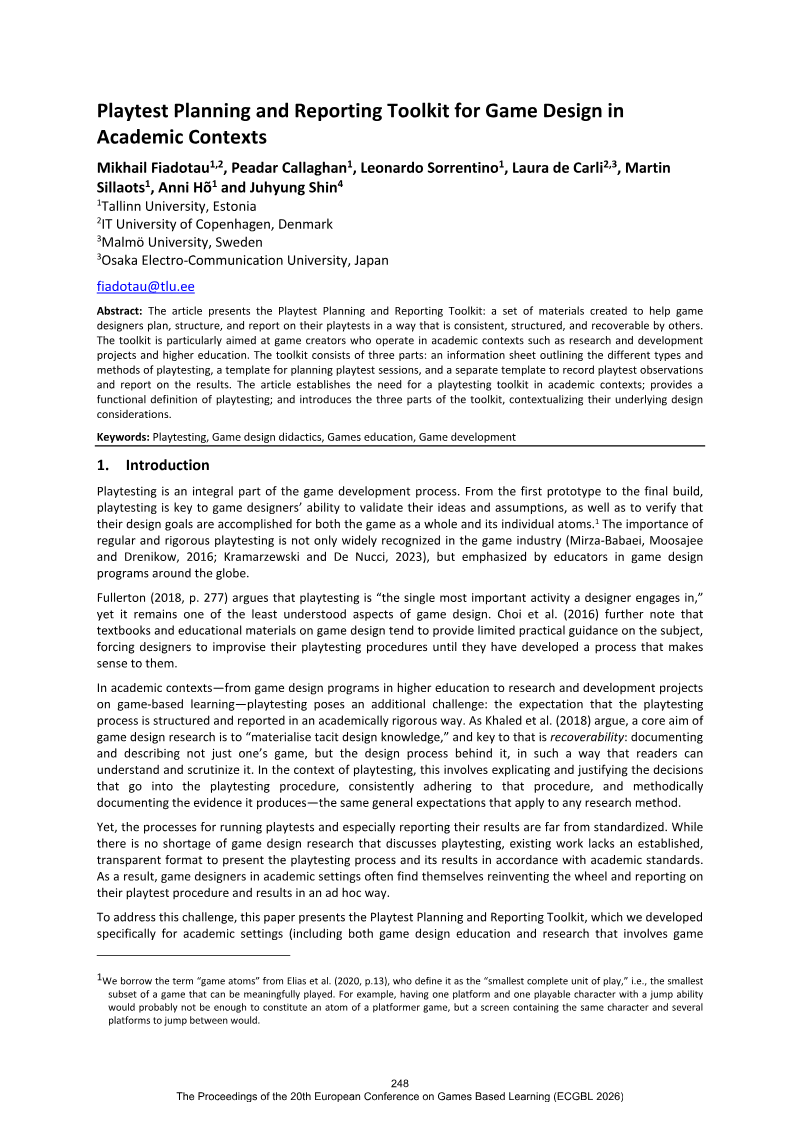
European Conference on Games Based Learning (ECGBL) · 2026