1 free read left. Create a free account for unlimited reading + AI research.
Create free accountReport Breda University of Applied Sciences
1 free read left. Create a free account for unlimited reading + AI research.
Create free accountReportBreda University of Applied Sciences
Drawing on Schwartz's Theory of Basic Human Values, the editors propose that games target transcendental values. These values align with the social and intergenerational equity goals of Integrated Water Resources Management.
This special issue of Water (2018–2019) examines whether serious games can advance sustainable water governance, and it argues that the field is promising but still lacks coherent conceptual foundations, rigorous evaluation, and attention to ethics and power imbalances. The editors frame the intersection of complexity, social learning, and game-based approaches as the central problem, and they draw on socio-psychological theory, particularly Schwartz's Theory of Basic Human Values, to propose that games should target "transcendental" values such as universalism and benevolence, which align with the social and intergenerational equity goals of Integrated Water Resources Management. Authors caution, however, that value change is hard to induce, that players may resist persuasion, and that intergroup conflict and individual differences in empathy can limit what play achieves.
The collection's empirical contributions span several settings. A Millbrook, UK flood game found that farming-system changes could reduce flooding far more than drainage investment, and a small pre/post study with 22 participants showed statistically significant shifts in views and improved justifications, though the sample was small and mostly expert. The MSP Challenge 2050 maritime planning game, tested in Newfoundland, Venice, and Copenhagen, showed learning gains that were largest among less experienced players and collaboration that varied with prior team ties, while a 310-respondent survey across 19 sessions reported increased interest and understanding. Role-play studies in peri-urban Khulna, Bangladesh, revealed institutional barriers to drinking water access and improved community understanding of multi-actor problems, and a Polish "Lords of the Valley" pilot linked relational practices such as information sharing and leadership to governance outcomes, though its results were not statistically significant.
Several evaluative and comparative studies complement these cases. A quality review of 20 water-themed educational games found that game genre alone does not determine quality and that most titles inform rather than support attitude or behavior change, while a Q-method study of Dutch and Chinese professionals showed that the same terms, such as "modelling and gaming," carry sharply different meanings across and within countries. Taken together, the issue concludes that serious games can build understanding, dialogue, and cooperation, but that their transformative effects remain largely untested, that evaluation often neglects outcomes and longer timeframes, and that design should be driven by specific governance problems and local context rather than by technology.
Breda University of Applied Sciences · 2026
Breda University of Applied Sciences · 2026
Breda University of Applied Sciences · 2026



Breda University of Applied Sciences · 2026
Breda University of Applied Sciences · 2026
Breda University of Applied Sciences · 2026



Breda University of Applied Sciences · 2026
Breda University of Applied Sciences · 2026

Breda University of Applied Sciences · 2026
Breda University of Applied Sciences · 2026
Breda University of Applied Sciences · 2026
Breda University of Applied Sciences · 2026
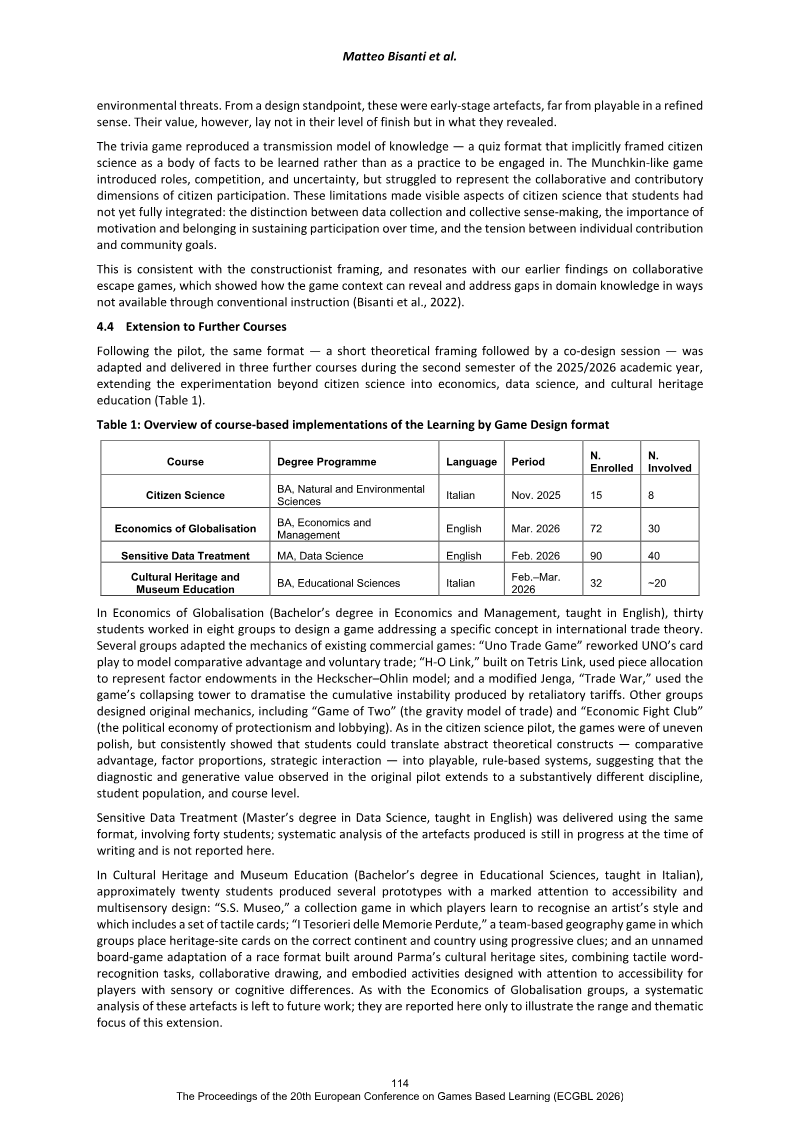
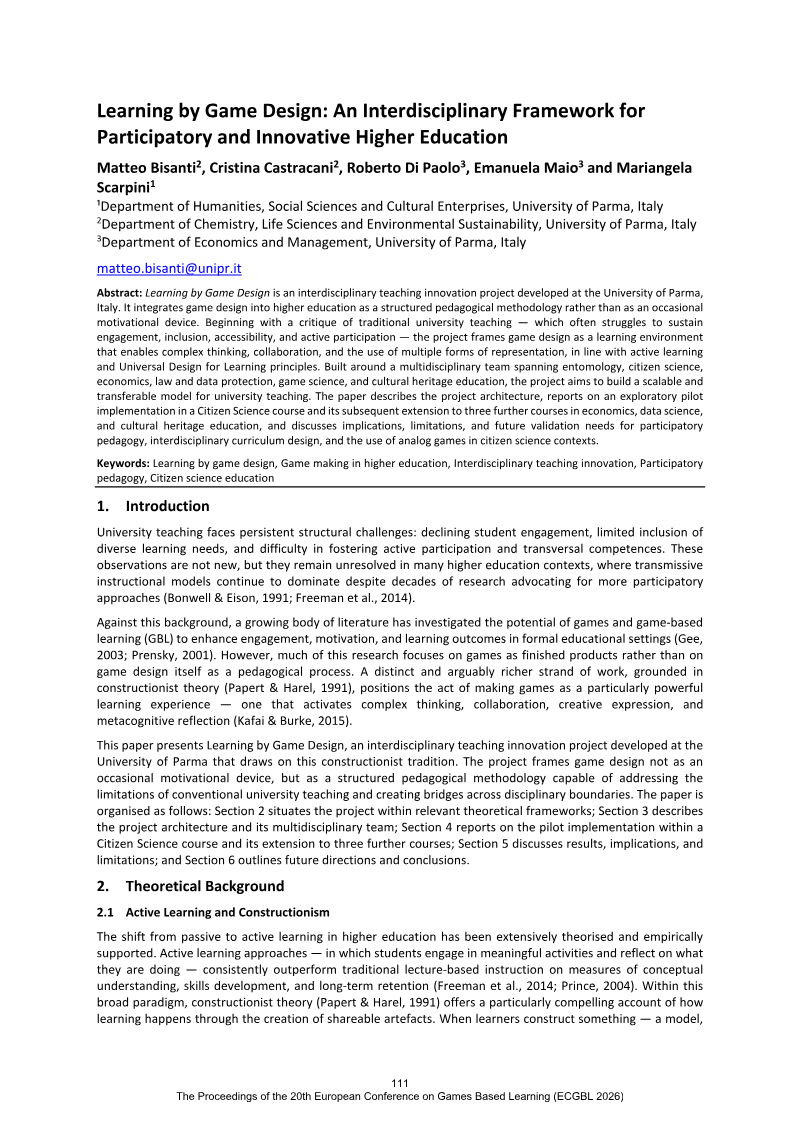
European Conference on Games Based Learning (ECGBL) · 2026



European Conference on Games Based Learning (ECGBL) · 2026
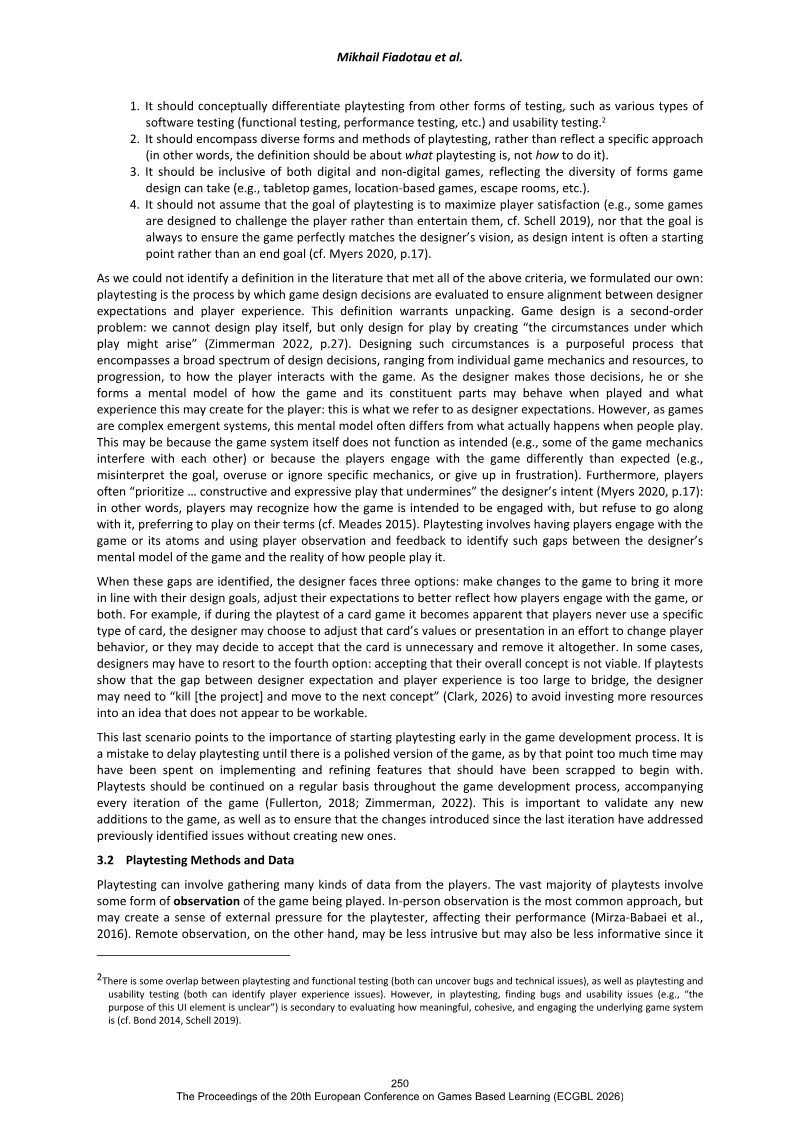
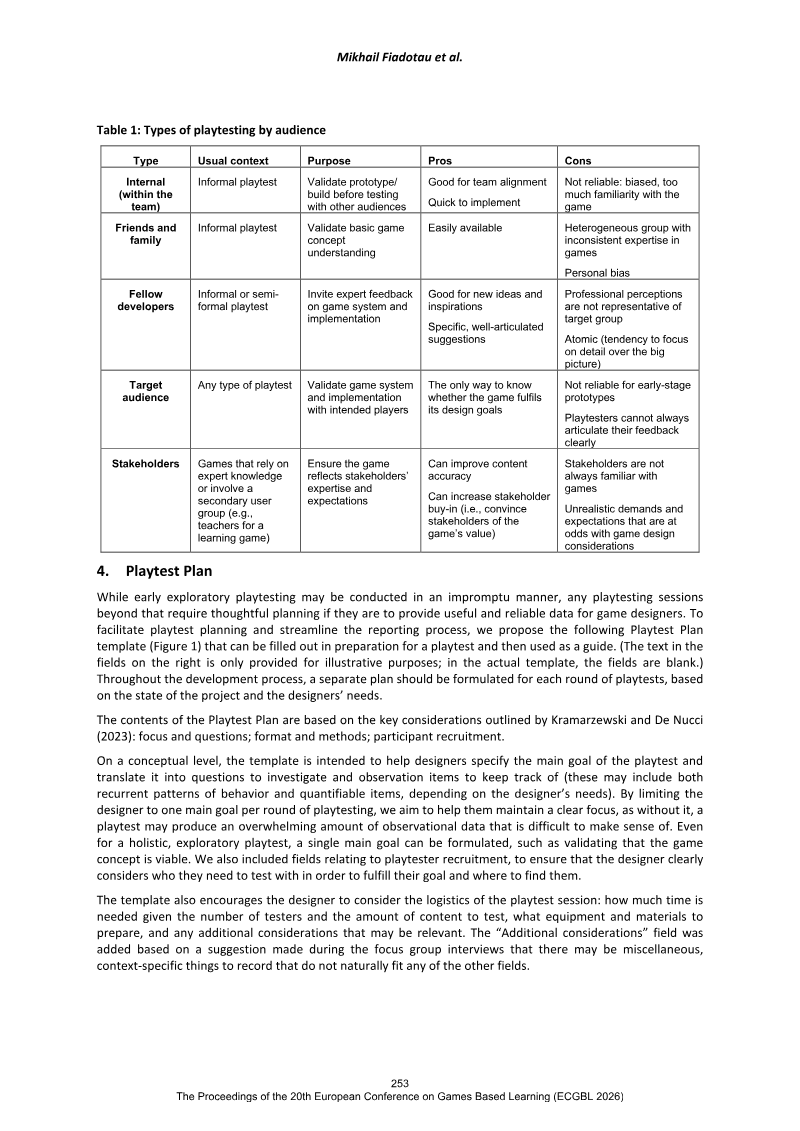
European Conference on Games Based Learning (ECGBL) · 2026