1 free read left. Create a free account for unlimited reading + AI research.
Create free account
Superstar Session: Practically Personalized – Building Experiences Beyond Ad Monetization
Key insights
7 takeaways- 01The deprecation of Apple’s Identifier for Advertisers (IDFA) has made the collection of first-party data the primary requirement for maintaining effective ad targeting and user personalization.
- 02Developers are increasingly using gamification tactics, such as offering in-game currency or ad-free periods, to incentivize users to share the first-party data necessary for segmentation.
- 03Monetization managers must now function like game designers, using user-level data to balance brand and performance-based advertising to prevent ad fatigue and reduce churn.
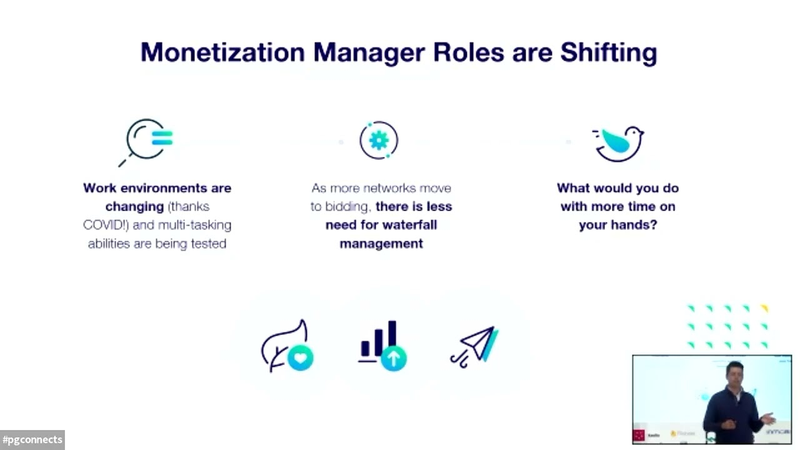
- 04The mobile monetization landscape is shifting from manual waterfall management to automated bidding, requiring growth managers to focus on strategic audience segmentation rather than operational tasks.
- 05Publishers are segmenting audiences to distinguish between users who prefer in-app purchases and those who engage with ads, ensuring monetization strategies align with individual user behavior.
- 06The industry is moving toward native, integrated ad experiences that prioritize the user journey to ensure monetization supports rather than disrupts core gameplay.
- 07There is a growing industry demand for mediation platforms to provide mid-tier and indie developers with the data science tools currently reserved for large-scale publishers.
Ask AI about this video
Transcript
[Music] how's everybody doing today good starting to get to the tail end of it two days a lot of sessions good right let's dive let's dive right in i'm going to quickly introduce myself i'm going to ask a couple questions to get a better sense of the audience that's here and then we're going to dive into a little conversation around monetization mediation where we stand today kind of where we came from and kind of the future and what we expect to see and i'm hoping to make this interactive but my name is james hughes i'm the vice president of supply at
digital turbine digital turbine is a austin texas based company publicly traded on the nasdaq you may know them from the acquisitions of fiber which is where i was prior to joining digital turbine as well as ad colony to add networks and appreciated esp digital turbine their core product was a user acquisition tool via pre-install so they partner with uh verizon at t uh to distribute apps via pre-install on mostly android devices right my background is i've been in the industry for about 12 years focused on the supply side i started off at a startup called millennial media that was then acquired by aol and verizon which then acquired yahoo i spent 10 years there working as anywhere from an account manager to sales to running the global sales and account management teams focused on mobile monetization so i've worked with app developers essentially for the last 12 years and my entire career so with that quick question for everybody of the
people in the room who has an app in the app store not a ton of those people have an app in the app store how many are monetizing that app through display monetization great all right so we'll start there quickly i just want to go through the history of where we got to today and where it all started mostly because i've been in this industry for a long time uh at the at the get-go right when the iphone first came out right 2009-2010 we we had app store uh and that obviously opened up an opportunity to monetize uh those apps and at the time it was google apple which no longer has an in-app monetization solution uh there were companies like mo pub uh burstly so some old names i'm dating myself some that you may know some that you may not know we fast forward to today and the landscape is completely different right and so this is what we're looking at right now a ton of consolidation in the
market right uh for the last call it almost 10 years uh well yeah 10 years mopab was kind of the de facto mobile mediation platform in the space they were owned by twitter applovin acquired them earlier this year which was a big disruption to the space and so currently we're looking at uh much smaller uh you know options when figuring out who am i going to partner with who's going to be the technology that physically delivers the ads uh on my app and so applovin iron source google admob those are the three names that really dominate the space chart boost unity fiber fairbid there are others that are in there as well but i would say applovin especially with the acquisition of mopub have become really almost a monopoly-esque type solution in the way they work with app developers right and then we continue to look at the consolidation that happens around all of gaming and many of the biggest names in gaming now fall into just a few small larger
companies and and parent companies which has been interesting to see um i'm gonna stop there any questions so far on anything that i've talked about so keep it keep it interactive so that brings us to kind of the current state of monetization right how interested are mobile players and the content they see in games they see 65 have answered that question of not really that interested or moderately interested right so inherently that's a problem uh and i know the last panel for anyone that was sitting on it i caught the tail end of it talked about innovative disruptive new ways to be able to gather attention of users so that ads become something that is more enjoyable right i mean they're not going anywhere it's a it's a means to be able to drive revenue right and if not then all apps would have to be paid for but what we do see is obviously a really good mix of publishers that do it well with in-app purchases advertising when done tastefully and done the right way but where we stand today i think there's a lot of opportunity to grow and really change
the way in which we present ads to our users right we're going to fly through that so leading into uh you know kind of where i see the future of monetization and mediation going i think it's important to talk about some of the headwinds that are hitting the industry today and moving forward into the future right um specific to advertising data has always been a big player in that understanding who your user is how to target that user uh how to put ads in front of users that they actually care about right i mean show hands how many people are getting ads on a daily basis in a in kind of a gaming environment that they're actually interested in not a ton right so you know i think that's another inherent area that can easily be not easily but an area that can be changed and made better so there's more you know personalized idea of the type of ads that you're getting you look at instagram right you look at facebook they have all the data in the world and therefore within those mediums you see
targeted ads that work really well and maybe it's unique to me but i find myself more than likely clicking on an ad on instagram or facebook or even tick tock more than if i'm playing a hyper casual game or i'm playing words with friends or so have it but doesn't mean that we can't get to a point where the advertising is as focused in those mediums as it is in some of the the larger obviously players in the space right um so over the last say year we've obviously seen uh apple uh almost get rid of id uh of idfa right and idfa was a way in which we were able to track a user we know that opt-ins are low 20 15 so that's going to inherently change the way that advertisers dsps agencies are finding a user to put an ad in front of that they actually care about right it was a lot easier to do when you had that data so uh what's next right first party data collection and i think this is an area that everyone wants to be involved in but the barrier to entry is a bit tough and when
i say first party data collection it's having a user if you know understand the user profile of your users right collecting data specifically from those users in a utility it's a little bit easier right if i'm if i'm on a texting app and they want to know my age location if i'm on a weather app they want to know my location that all makes sense right that's an easy way to collect that data because i'm getting a service from that in the gaming environment and again i focus on gaming because that's a lot of where we see ad monetization and media and mediation being um being seen a lot more difficult for a user to want to give data right when when logging into that app so what are what are companies doing we're seeing the gamification of first party data collection if you're a app developer a gaming developer you have a currency within that title there's an easy way potentially to grab user data that a user might be comfortable sharing with you by offering up coins offering up a free ad experience
ad free experience for for a week right but that allows the publisher yourself to gather very important data that as third-party data collection becomes more and more difficult to grab understanding your user base is really important right not only just for advertising but for also giving specific type of journeys and experience to your user and that's where i'm going to kind of hit on now we're really starting to piece together a robust picture for advertisers i'm going to kind of fly through this one and i want to talk about the monetization manager role right so if you are an app developer and you have a robust audience that you are monetizing a lot of the larger players have a monetization manager and their day-to-day job is to look after the type of ads they're showing to their users the revenue the yield user churn making sure that users aren't leaving because of the ads that they're seeing making sure that the sdks that are delivering those ads aren't causing crashes aren't causing you know issues
that again the last thing you want to do is ruin user experience you got to find that happy medium of driving revenue while keeping the user engaged in the app and wanting to be there right so as monetization managers and we move into bidding right and for those that don't know kind of bidding versus where kind of monetization has been waterfalls have been historically how you how you monetize a user right you have 5 to 10 if not 15 different demand sources that are all vying for your traffic and wanting to deliver the highest yield possible we're now getting to a point where we're seeing bidding which has been historically prevalent in mobile web and desktop but slower to adopt into the in-app landscape but what that allows is that you don't have to manage a waterfall managing waterfall means changing price floors it means constantly updating who's where within that waterfall and as we get to a point where everybody's bidding then you don't have to worry about that everything kind of just happens more automatically which will inherently leave more time for
monetization managers to focus on better things when i say better things better ad experiences right where we see or kind of where i see and a lot of people that i've talked to in the industry the whole world of monetization going is really understanding your user you you may have in-app purchase within your app you may have in-app advertising within your app if you have a user that is a heavy in-app purchaser more than likely you don't want to deliver ads to that user because you're going to be generating revenue from them through in-app purchases no need to double dip no need to ruin their user experience you're monetizing those users to that media vice versa you're going to have users that never click in an app purchase i'm guilty that i don't think i've ever made an app purchase in my life and so okay i'm okay understanding that there's a means to the advertising and the display advertising that comes with that interstitials rewarded video banners what have you but to even get more granular understanding who interacts with each one of those forums uh for for myself i
may watch a rewarded video but if i never click and convert on that rewarded video apparently it's not that valuable back to the publisher because there's no call to action right i'm not driving a download i'm not really getting money back to that publisher so the publisher in turn should never put a rewarded video in front of me right at the same time you may have users that prefer to see brand dollars or brand campaigns versus performance campaigns when i say performance typically app download kind of falls into that world so can you segment out your audiences and this again is where first party data becomes so prevalent can you segment out those audience to deliver a different ad experience based on what you know about them right and and their previous history their previous actions uh and that's really where we see kind of the future of ad monetization going it's today you play a game you probably see the same ad over and over and over again we need to do better about frequency capping making sure that's not happening because that's driving users away from
the game it's causing churn and that's the exact opposite of what i want right i sit here my main goal is to drive revenue to app developers i want to do that in a way that is what we talked about in the previous forum is is seamless but at the same time driving value to the publisher driving value to the user and allowing that user to get the full experience of whatever title they're in whether it's gaming or non-gaming right so what causes mobile players to quit playing games a lot of it is too many ads right and this kind of goes back to tailoring and understanding your user and what they're okay with because the last thing we want is churn because of an ad experience and so when you have that first party data when you have user level data in understanding uh how that user typically operates within the app then we can avoid this situation right we don't want to put too many ads we know there's a happy medium of being able to drive value through the advertising experience
but not to a point where you're driving users away from your app because of that whatever you're doing right and we've seen this before like if you look at the hyper casual type of games and quick raise of hand are people playing hyper casual games in this room yep pretty pretty disruptive ad experience right almost every level you're getting an interstitial ad you have a consistent banner that runs on the bottom you have a rewarded video solution those ads may be 10 seconds five seconds then you click through you get an end card that's another five seconds then you click the x right so all of that inherently will lead a user out of the app right and i think we've conditioned people uh users to that experience you know the the example i use is my my nine-year-old niece plays a lot of hyper casual games and she is just conditioned to get through that ad experience versus why don't we come up with something that's a little bit more achievable and enjoyable by the end user
right and again it's that happy medium of being able to find value while also giving a quality user experience so how do you optimize ltv across iep and ads right we just talked about this understanding that user and understanding where in the process you kind of focus the way in which you give a certain user experience right and so we want to see more of that in the space we want to see more innovation in the space because if we look back 10 years ago into where we are today there hasn't been much change right it's a lot of the same ad formats that are being used we're starting to see some disruption we're starting to see you know we talked about it in the last panel um the same way that if you're playing you know madden there might be an ad experience that's kind of built into the game there are companies now that are starting to do that right which is exciting because that's what we really call native ads for anyone in the room that's been in the industry there is such thing as native ads they're just glorified banners a true native ad would be something that fits into the game play
uh and you see it while you're you know if it's a running game kind of in the walls of the game right so i think you're going to see a lot more of that opportunity come to the picture which is exciting more brands i think brands in general have always been a little bit nervous on buying in-app and especially in-app gaming what brands need to quickly realize is that the same person that reads the new york times is probably playing that runner game on the train on the way to work and so understanding how to find that user find them in the right way and not be afraid to buy specifically in the gaming world and i think we're starting to see those barriers come down there's better targeting available there's open measurement sdks that allow brands to really understand the engagement metrics that are coming with the ads that they're putting within on device and on phone um which wasn't always the case right i think it was a bit of the wild wild west until we started to see some more of these initiatives come to play that are really helping us all from the user to the publisher and everyone in between right so we've got about five minutes left you
know i wanted to save about five minutes to make this a little bit more interactive and open it up to questions a couple of the key takeaways i'd say from from just what we went over today is choose a partner you can trust right more and more data becomes all important first party data is extremely important if you're handing that first party data off to someone that's your direct competitor maybe not the best move for you because they're going to be trying to take some of your users so be be mindful of who you're partnering with and make sure you trust you know what they're doing with with any of the data that you might be sending right and that that pairs into number two move your focus away from waterfall management to the user experience let's get away from day-to-day price floor optimizations and figure out how do we put a better overall monetization experience in front of each one of my users and tailor that monetization experience to the user with data that we have and see a comprehensive platform that allows you to grow your business across ua monetization and retention right pause there we got three minutes 55
seconds and i'll take any questions that anyone might have i'll i'll throw one you know it's more of a kind of comment i guess but it's a discussion point so sure one of the things i think is really interesting but you mentioned hyper casual and we're they're inundated with that absolutely what is interesting about that is that the mode of use of a hyper casual game means i'm very intensely playing the ad provides a relief moment right and i think that's one of the reasons why in hyper casual that system works much more effectively than if you try to replicate that in say a long-term casual play game correct and i think that to me is really underlines i think some of the stuff you talk about you know thinking about what you're doing and why how much do you think it's actually about if we're making games we're using ads in games we need to think more like game designers correct in that process absolutely yeah i mean i think if you look at hyper casual the shelf life of a user is is low right and so if churn rates are that high then the publisher probably isn't as nervous about losing a publisher because of the bad additional loss for the friction from
the ad isn't math doesn't matter it doesn't matter um which makes me nervous about kind of the life can can that can that continue on forever and ever will hyper casual continue to be as you know prominent as it has been over the last call even five years right um yeah it's not a market for me i want long-term life you want you're you're a gamer you want something that's sticky and enjoyable but i actually think we've learned tons from that market but what i think we've learned most is the reduction in cost of production right rather than the ads itself ironically the the what i'll kind of kick back there with is imitation right i think that's that's what's happening more and more is that there is something [Music] borrowing we'll call it uh where there's lack of innovation as someone who's called an expert witness against voodoo uh and i won the case for the for homer games apparently i don't know whether that's true or not but that's what i was told by their lawyer um their what is defined as imitation is
actually a really interesting fine line and a lot of claims being made about imitation which aren't true but also we know a lot of claims about imitation are very much true so that is a difficult thoughty subject there's a question over here sorry i'm enjoying the chat sorry hi james hi i have a quick question uh so you mentioned um taking a look at users and segmenting them based off of how they interact with like performance or brand ads so how can like publishers kind of go about doing that when we sometimes don't have a full view into like the type of ads being served inside our apps and i think that's a great question and i think that's where availability of data is probably limited today but hopefully we get to that point where you can get to the layer of user level impression understanding that user's historic click-through rates right on a user level versus just kind of like a generic ctr that you have for your specific app right and if you can get to that level of data all right ctrs are very low on this specific user where
brands aren't nearly as concerned about ctr they're more focused on cpm then maybe this is a better brand experience for that user versus where someone's a heavy clicker maybe performance is better i think i think age plays a lot a big role in that as well right i mean i don't have specific data to back it up but i would imagine i'm 35 35 and older probably aren't going to be as quick to click on a performance campaign to download a new game versus wanting to see a brand that i'm more interested in right so i think it's a mix of a little bit of that and hopefully more innovation that comes over the next couple of years that give us insights to allow us to make those decisions oh let me just post them back to you are you seeing that being done though by any other like publisher right now i think some of the larger publishers that have very robust uh data science teams are able to dig into that but it requires um having that team in place it requires
having a deep knowledge it requires being able to pull in a ton of data and manipulate that data and understand it what i'd love to see you know and then you know where i work with my product team is how can we make that easier as a mediation platform for you as a publisher to be able to access that data without needing all of that right because the zyngas and the scopley's of the world are always going to have more robust teams than some of the indie developers and mid-tier developers where they would equally you know benefit from having a solution in place there so i think it's on us some of the mediation platforms and ad networks that are out there to bring those solutions to the table to make your life easier i think we're gonna we're out of time unfortunately i'm really sorry thank you so much for that i think it was great in some ways i'm kind of happy that we're in the state where we can't rely because we've been super lucky i think having such a performance successful process for the last five ten years and this that's changed because of privacy yes but what it means we have
all the old gits like me who used to do brand marketing now have some value well maybe uh maybe not um but more the personalization matters and then paying attention to data matters then paying attention to privacy matters and i think then we can be more successful james thank you so much thank you so much oscar appreciate it
Summary
The mobile app monetization landscape is undergoing a significant transition, moving away from manual waterfall management toward automated bidding and personalized user experiences. As the industry matures, the primary challenge for developers is balancing revenue generation with user retention. The current market is characterized by high levels of consolidation among major ad tech providers, which has shifted the focus for growth managers from menial operational tasks to strategic audience segmentation and data-driven monetization.
A central thesis is that developers must move beyond generic ad delivery to create more tailored, less intrusive experiences. With the decline of third-party tracking—specifically the deprecation of Apple’s Identifier for Advertisers (IDFA)—the collection and utilization of first-party data have become critical. Developers are increasingly using gamification, such as offering in-game currency or ad-free periods, to incentivize users to share data. This information allows publishers to segment audiences, distinguishing between users who prefer in-app purchases and those who engage with ads, thereby preventing ad fatigue and reducing churn.
The industry is also seeing a shift in the role of the monetization manager, who is now expected to act more like a game designer. By analyzing user-level data, developers can optimize the mix of brand and performance-based advertising to match individual user preferences. While large-scale publishers currently possess the data science resources to execute these strategies, there is a growing need for mediation platforms to provide accessible tools that allow mid-tier and indie developers to implement similar personalization. Ultimately, the future of the industry lies in native, integrated ad experiences that respect the user’s journey, ensuring that monetization supports rather than disrupts the core gameplay experience.



















Comments