1 free read left. Create a free account for unlimited reading + AI research.
Create free account
Keynote: Financing LTV Cycles

Key insights
6 takeaways- 01Studios should utilize stress-testing tools for LTV assumptions to manage cash flow effectively during the period before a user cohort becomes profitable.
- 02Sustainable and predictable UA spending is critical for maintaining favorable performance within ad network algorithms.
- 03Self-published studios are significantly more likely to be acquired than those relying on third-party publishers, making mastery of internal UA and financial modeling a strategic priority.
- 04Non-bank revolving credit facilities should be leveraged by using verified platform receivables and the present value of existing user cohorts as collateral.
- 05Financing strategies must be aligned with specific game genres, as breakeven timelines vary significantly from rapid returns in hyper-casual titles to 90-day or longer delays in mid-core and social casino games.
- 06Developers should adopt a 'capital stack' hierarchy, prioritizing non-dilutive funding like ad network credit lines and existing cash flow before considering revenue-based loans or equity.
Ask AI about this video
Transcript
[Music] so i'm martin mcmillan i'm the founder of pondvc as a company what we do is provide revolving credit facilities so debt financing to help companies uh scale we do that alongside uh most of alongside venture capital and the kind of the mission behind what we're trying to do and why we do a lot of these talks is to try and improve the overall financial literacy of mobile game developers so many people are always thinking raising money is just about raising equity uh and actually there are you know increasingly um different options around that you can make you know better and more informed choices um so in terms of financing ltd cycles
we're going to think about um ltv is a journey ltv is not a number i mean it's of course a number but if you think of it as a journey of like you know where i start and where i end up um so in order to kind of model our journey uh it's basically if you think of a co-or a user or specifically a cohort of users typically you can observe how they spend money over time and then gradually they're going to get bored of the game and then they're going to go and do something else so as a finance guy there's two things i really care about um in this point so first of all is you know i invest money in user acquisition do i break even if i don't break even there's no point in doing it right so then the question is like when do i break even that's the first point that's like the first lily pad i know okay i'm actually you know i'm actually investing positively and then where do i go on to where you know when do i achieve my ltv and how do i think about that how do i model it so ua again as a finance guy it's a really simple thing it's an investment formula of how much in when do i break even
how much yeah what's the overall time frame so often people don't think about the times here they just think about an absolute number which is which is really um uh you know really important to do properly so so once we've got this down to like distilled it down to a simple thing of um we always think about the ui machine so the first question is obviously the one where most people fall over is can i invest profitably into user acquisition or not so most people and probably eighty percent of the people we talk to are in soft launch trying to get metrics to work and then ultimately find out their acquisition costs are just too high and then therefore there's no um there's no deal to be done however when you can and you can kind of think yeah this you know i've got a sausage machine here i can put i can put you know meet and get sausage out the other side then you turn to the next question which is how do i fund the machine now this is where we see loads of people make the classic mistake of like a marketing budget so typically it could be a cfo you know or a founder whatever
say the right marketing team this is how much money you've got go find me as many high-paying ltv users as you can we think a much better approach is for cfos and ua teams or finance leads founders whoever they say right we've got something special we've created a machine how are we collectively as a company going to fund this machine and put more well hey can we find the capital and if so what sort of capital until basically we keep investing keep investing what's going to happen is at some stage the machine is going to be running at full capacity you can't physically invest more money into it because you know that if you do you've tipped the balance and you're going to be um you're going to be losing money so think of it as a uh as a formula recipe whatever you want to call it so here's a fictitious one a dollar invested results in two dollars after one year um so let's break that down a little bit so first thing we want to know if we go back to that earlier slide is when do we break even in this case we're breaking even you know here's our cash flow right
so we're you know we've spent the dollar and it takes us 120 days to get the dollar back and then we're expecting to make another dollar after um after another 240 days so in investment speak then we're getting our dollar back in 120 days we're going to make two dollars so we're making a profit of a dollar now if i turn a dollar into two dollars and it takes me 12 months that's 100 return so i'm going to break it down to a monthly return i'm making an 8.3 monthly return on capital really good um so always break it down and think about like what sort of return not just like an absolute return of hey i'm making a dollar thinking okay it could be does it take me a week to make a dollar would it take me four years to make that dollar super important now here's the thing so in terms of different um and this this goes back to what sort of games do you actually want to create and very often it was like i love making hyper casual games or i love making strategy games whatever and it
was driven from passion and increasingly what everyone's doing saying well listen where can i make money in mobile gaming is it really short duration or is it really long duration games and this you know it's totally informed by the the the user acquisition so if i look at it as a the two bookends if you like so i've got you know take a hyper casual game here everything happens super quickly the froth is obviously coming off the hyper-casual market now and everyone's everyone wants to go longer but the economics of hyper casual are insane um a typical hyper-casual game may you you may invest that 20 cents and you get your 20 cents back after just five days so insanely sure and then after 30 days you might go on to make a 50 return in a month awesome then you go through different things a mid-core game let's say you might break even day 60 maybe it's a little bit longer and then you recover over a year and you know there's lots of merge games puzzle games that are all trying to figure out their metrics just now d270 although someone told me the other
day just laughed when i said a 270 day return they said you're looking at least a year but i'm going to get my money back in two years or maybe three years so this they're starting to get really long and then you go to social casino um where obviously people have made a ton of money continue to but they're looking at really long breakeven periods like this is like farming right and i'm planting the crop you know more than a year or 18 months later i see the green shoots starting to come through and i can't harvest it for you know or i continue to harvest it but it takes years and years so it's really important to think about the cycles and where you can invest and where it just doesn't make sense because so many people just like just transfer money to facebook and google and then never make a return so thinking about how to finance the overall cycle just bring it back to farming you've got to think about you know i'm planting my crop how long is it before the green shoots come through if i'm hyper casual it's like farming crests right they come through in five days but if i'm you know one of these longer genres it's like i'm just hoping and praying it's like a
bonsai farming or something like it's just going to take so much longer before anything happens um and if you want to spend you know everyone's like i want to spend 10 grand a day 50 grand a day whatever it is you want to spend you're gonna have to finance this until the green shoots start to come through um then the other thing is just to add insult to injury so you think on a p l basis oh yeah my you know my cohort's breaking even okay fine but then the platforms are going to hang onto the cash for another 30 or 60 or even 90 days you've got to factor that in as well and the other thing is just in terms of how the the infamous algorithms of the ad networks work you can't just turn it on and turn it off and turn it on you have to spend sustainably if you want these cohorts and anything predictable to come through so you've got to figure out not just some kind of knee jerk i'm going to spend all my money and i'm going to wait so i'm going to come back they don't like that it's going to get very expensive so they like slow well not slow but they like sustainable spending and that gives you sustainable numbers which you can actually model um so if you think about your cohort
journey so here's another one just to kind of bring it to life because i had so many of these conversations recently everyone's like um everyone recognizes now uh the value of debt financing they say well i want to i want to raise you know all this debt to fund my user acquisition is that possible so let's go back to our fictitious 270-day break-even period you know puzzle-y emoji game so i'm gonna um break even hopefully on my whatever my investment is i'm going to receive my money back after nine months but i'm gonna you know make an 80 return say after two years um so i only start after nine months the first cohort that i'm investing on the first january isn't going to break even until the first of september or whatever may be um and it's only after that only after facebook or google or tick tock whoever have just taken all that cash off the table do you even start to earn any money so your profit comes you know longer as your ltv curve is kind of running out of puff a little bit so you just hope that you know people stay paying for long
enough and you've got to create enough content and have enough you know retention to keep them there the other thing that's never really been talked about talked about is actually really i was thinking about this in the on the plane out i i don't get super technical right but convexity of vltv sounds like what's what i mean all it means is basically how quickly do you start you know if you if you have people that start to like pay really quickly you get 50 in the first seven days or 14 days and then it flattens off that's a totally different profile to something that's like just gonna go on a linear basis where i just get you know 10 of my return every month for 10 months right no one talks or thinks about convexity but it's really important to kind of to to factor in um so um let's say we want to you know we think we've got great metrics we want to go spend spend spend we're pitching the vcs and they're saying i need whatever however many millions to do it what's going to happen in your bank account is if you want to
do a sustained spend over a period of time you're going to need a shitload of money to do it if you want to do if you want to scale your hyper-casual game you need to spend a million bucks in a month or whatever and you're not going to see this money back fridges but for these longer games let's say i want to spend we'll come onto the example but um that's not me okay right so so what's gonna happen at a bank it's uh it's got a mind of its own all of a sudden um i swear i'm not doing this okay so what's going to happen oh no i'll just talk you're going to spend every day however many thousands a day it's just going to cost you a lot of money you're going to have to keep funding keep funding keep funding and then gradually that could be in a month or it could be in six months or it could be in a year or whatever gradually you turn the
corner and you start to make some money and if you're just going to use equity capital you're going to have to spend a shitload of venture money trying to make you know trying to get that so you're pitching vcs and so i know but look at these metrics and it's going to take nine months so i need basically all this money to fund the cycle so then how much money would you need right and this is you know change the num change the numbers of it to protect the innocent but i've had half a dozen of these conversations the last 30 days my early metrics are really good um let's say i'm going to get this idea of like i'm going to get a 270 break even but i think that's probably ambitious i want to spend 100 grand a day and i want to you know how am i going to get there do you want to spend 100 grand you need to spend 27 million dollars of someone else's money before your first cohort even breaks even you think you hope because you're so good at projecting what's going to happen in nine months um and you've got oh i know you don't have perfect attribution anymore
so it makes a little bit more difficult so the it's really important again to take your you know whatever you think your row ass is and then you clearly overestimate it because you're cooking the golden coho or whatever and then just pull it back pull it back to say you know is this actually going to work or not it's a big big number but i mean we have these conversations all the time people think well they thought until about a week ago it was like this free-flowing venture capital environment maybe that's changing maybe then you're going to need to get a bit smarter so how else could you do it stay it's not me um so you could you could right every day you're an open pocket gamer what i spot 55 million dollar seed round see it's definitely not me come on um right so you go and raise it through venture caps well that's the traditional thing i need money i go to vcs i'm going to you know march down sand hill road or whatever it might be i'm going to use money i'm going to give away a share of
my company it's been very traditional and it's absolutely a case and of course you need to raise vc money because you need to build the game you need to hire people you need to do grow your team all that fun stuff but then you could look and say well look i've come across these like factoring companies or particularly revenue based loans right so this is the new the new kind of hot model i'll lend you money you put it into user acquisition and i'm going to take a skim of your revenues over a six month period until i've been repaid but that actually doesn't work especially for free to play gaming because you're paying it down unless that unless that pay down matches exactly the ltv cycle of your game it just doesn't work at all and guess what you take the loan and then month two be like oh you know what this is really working i want to take another loan and they say ah no you need to pay off the first loan with a new loan and then you just get into good old-fashioned loan charging we've seen 40 50 60 interest rates charged for people just by you know signing up to a product they just don't understand so then let's go to the bank
and trust the bank right and the bank really know what they're doing only they don't when it comes to mobile gaming it's going to be a little bit cheaper for sure but you go to your bank and you say great well let's um let's send me a screenshot of the invoices at the end of the month and i'll fax them off to my processing center and then i'll allow you to borrow a percentage of these things of these uh this receivables all this money that's trapped up and then you know but meanwhile you've just lost your opportunity if you're a hyper-casual developer you could have done six row ass breakeven cycles before your bank has even sort of woken up to switch on the fax machine at the end of the month so it doesn't really work you could go to a publisher of course and some people like going to publishers and some people don't want to do it themselves um if you're the sort of studio that wants to you know just make games and it's not really fussed about ua selling your company or the rest of it there are some great publishers out there if however you've got a higher level of ambition you want to do this yourself then
you know using a third party publish is not a great option i'm going to tell just a simple story through data which we actually published through pocketgamer last year we had a hunch um i think it was may maybe june of last year about in in the m a environment what sort of studios are getting acquired so we we looked to the publicly available data from invest game and we just asked a simple question what's the primary business model of all studios that have been acquired between the first of january 2020 and whenever it was mid-21 83 were self-published studios 15 were the publishers themselves and a sum total of two percent of the value of the m a transactions were people who relied on someone else's someone else to get their games to market pretty clear if you want to raise if you want to sell your company you need to do it yourself therefore if you want to raise money why is isa why am i as a vc investor going to put money into your company if you think someone else is going to do the publishing fee doesn't really make sense and then you can do what you know what we do which is non-bank revolving credit
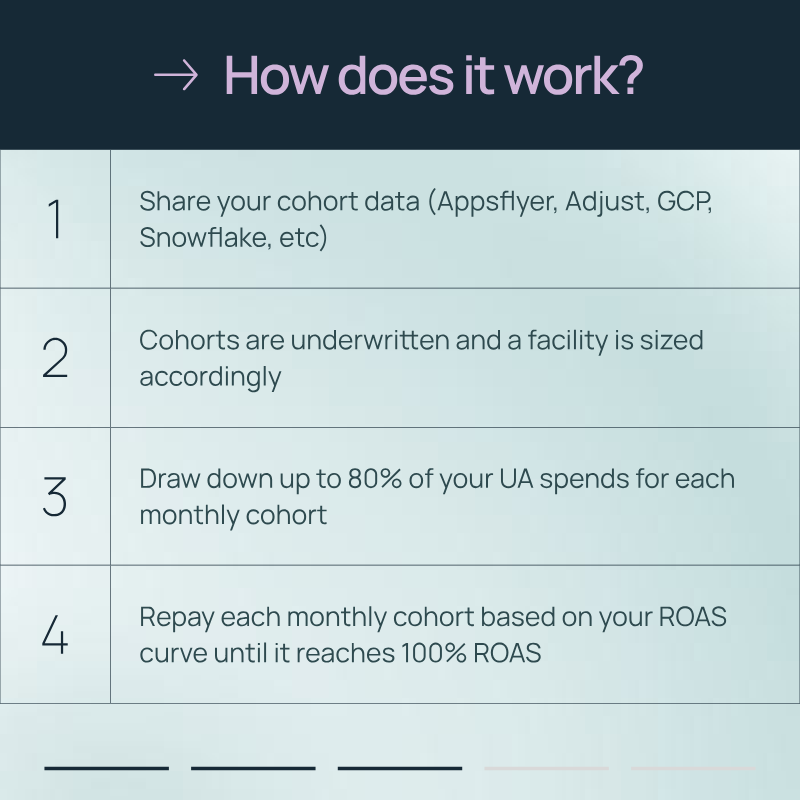
revolving credit enables um very fast verification of data so the way that we do this at poland is we take a feed directly from apple google facebook all of the different um uh platforms and we first of all verify how much is sitting there in the bank of the platform that's not been paid out so that can be like up to 90 day cycles and we make that funding available to you next day you can just draw a line of credit you can just draw down the other um the other thing we started doing is and putting that together so it's just one product but we look at two different things now is we figured out some interesting ways to value the the take the present value of all of your existing cohorts so if you press stop on all ua today how long would it be before your last kind of players and players gradually would take down because that's an asset and we figured out a way to for you to borrow against that asset just on a simple line of credit no financial jiggery pokery just one line of credit you draw you pay it back
um so if let's say go back to our merge game let's say we're going to look at a revolving credit line along with equity i'm not saying you don't need any equity to fund user acquisition maybe you do we're talking long term cycles but looking at it in combination you say well what's the best way what's the most capital efficient way to fund this stuff do i just go and pitch the vc and all my problems go away or do i think okay particularly in an environment that's tightening do i need to get a little bit smarter about it and come and fund this with a combination of equity debt maybe i've just gone and raised the big equity brands well you know what keep it in the bank because you know winter's coming slash winter's here um right so other things to kind of um consider right it's the demand economics of user acquisition the more you buy the more it costs because it's an auction system there's a finite number of people in the world so those are going to go up of course you're going to have credit lines from advertising networks and you should try and screw them into giving you as much available
credit as possible simply because it's a risk transfer of ltv recovery from you on to them so the more they'll give you and the longer you have to pay for it just push it out as far as you can but on the other hand of that you've got the payment terms right so you you know you can be waiting you know up to 67 days on on your apps or receivables up to 90 days on your um uh on some of your ad network receivables so this cuts both ways we talked a little bit about convexity it's just like it sounds fancy it's just basically how quickly do people pay um if you have if you have to or want to borrow money you've got to factor in your cost of capital versus your returns right so like you can say okay great i can do this through debt all debt products are not created equal so what's the cost what's the return and just look at it through a very simple financial lens um sensitivity testing of ltv assumptions we all know this one we all know the golden cohort project where the bowl's going to land and then do all of our financial projections against it you've got to pull it back in because
most likely that's not going to happen and then lastly risk appetite and this comes back to what sort of games do you want to build what are your own personal time horizons do you want to wait a year and see if this thing's going to break even or do you prefer shorter genre games and we've seen this huge move in the last six to 12 months away from hype everyone's like oh i'm done with hypercash i want to do you know these longer term games fine you're creating a lot more value there's lots more m a value but it takes a takes a hell of a long time to actually get there so just i think that the key thing is around just considering all the timing aspects of it and to try and look through the the ltv cycles uh you know inform what sort of games you want to build how long things are going to take how much things are going to cost and then figure out how you're going to you know finance them the way that kind of makes sense you key takeaway longer the ltv of the game the longer the lowest period the more it's going to cost you um and then lastly um when you're talking about am i going
to do this am i going to take equity or debt or whatever it's a really simple equation right we have the concept of the capital stack the well is open for drinking you want to put more money into ua how are you going to fund it well your cfo finance lead founders whatever sit down with a with a growth team and say right what's the cheapest source of capital let's use the cheapest and then let's go through different sources of capital that are available to us until it doesn't make sense anymore you get a credit line from the ad network use it first keep it top top if you've got a bunch of free cash flow that's sitting in silicon valley bank earning you 20 basis points a year use that next provider it's not going to you know go too close you used to see people do the credit card and try and play the interest-free period why not it's transfer of risk and immune to them then you look at your um secured like the the lines of credit the kind of thing that we do which is basically linked to the receivables and residuals um and then look to and then below that you see this tier of revenue based loans
that's like i'm going to give you money you're going to invest it and i'm going to take a shower we've seen like cohort lending and a few other kind of um fancy things in there it gets more expensive the further down the stack and then right at the bottom if this opportunity is just so red hot and you're prepared to dilute yourself and give away a chunk of your company why not but do it in a really measured way it's in a waterfall way um just thinking of this concept of the stack until it doesn't make sense and when you get however far down the stack you get if the ua equation doesn't work anymore switch it off stop doing it your machine's at full capacity it's time to um it's time to stop it's also time for me to stop in 50 seconds um the last thing i want to point you to is on our so we as i said we we spend a lot of time about thinking about capital efficiency modeling of metrics figuring out whether whether stuff makes sense or not so we created a whole suite of tools to model all sorts of different financial scenarios on the website poland.vc it's up there under calculators and encourage you to um to
have a look at that hopefully that's a helpful resource um i just got an extra bonus minute on here i don't know if anyone's got any any uh quick questions or i'm going to be around all of today and most of tomorrow we can always um we can always continue i'm not sure where the bonus minute came from but that's all good it's all good i'm never going to stop you talking about uh well i have to unfortunately but sadly but i mean in reality is that i mean i think this model that you've been talking about for a long time it's something that's actually very we're very fond of it we've only been able to become publishers because of that kind of you know model one of things i think is really interesting is how do you get people to get the data they need so they can know that what that curve looks like for their game do you have any kind of suggestions on that well i mean in order to figure out the curve you have to have retention data there's lots of places you can get that and you have to know how much it's going to cost you and you know how and you have to know how much people are paying but if you've got retention up down acquisition costs you can have a pretty good guess at building building the curve and i mean i think this is getting that analysis is really kind of key so we do
a whole bunch of stuff around even mps testing so user testing to get what would would someone recommend to a friend so we combine that kind of data with cpi with uh day one day three day seven day fourteen anything you can do to bring down that effective acquisition cost through you know through through organic and and extra virality it's super super good yeah exactly and blended um i think for me roes is the blended thing it's not just about paid it's about organic and when we can use influencers like the guys we had previously even better it's just a whole whole mix right martin thank you very much very much fantastic stuff
Summary
The financing of mobile game user acquisition (UA) requires a sophisticated understanding of the lifetime value (LTV) cycle, moving beyond simple equity-based funding toward a strategic, multi-layered capital approach. The primary challenge for developers is modeling the "UA machine"—the process of investing capital to acquire users and waiting for the return on investment (ROI) to materialize. Because different game genres—ranging from hyper-casual to long-duration social casino titles—exhibit vastly different breakeven timelines, developers must align their financing strategies with their specific game’s economic profile.
Key findings emphasize that the duration of the LTV cycle dictates the capital requirements. While hyper-casual games may see rapid breakeven, mid-core and puzzle games often face extended periods where capital is tied up in platform receivables, sometimes for 90 days or longer. Relying solely on venture capital to fund these cycles is often inefficient and dilutive. Instead, developers should utilize a "capital stack" approach, prioritizing the cheapest sources of funding first. This hierarchy begins with ad network credit lines and existing cash flow, followed by non-bank revolving credit facilities that leverage verified platform receivables and the present value of existing user cohorts. Revenue-based loans and equity should be considered only after exhausting more cost-effective, non-dilutive options.
The analysis highlights that sustainable, predictable spending is essential for maintaining favorable algorithmic performance on ad networks. Furthermore, data indicates that self-published studios are significantly more likely to be acquired than those relying on third-party publishers, reinforcing the need for developers to master their own UA and financial modeling. By utilizing tools to stress-test LTV assumptions and understanding the convexity of revenue curves, studios can optimize their growth while avoiding the pitfalls of over-leveraging or mismanaging cash flow during the critical period before a cohort becomes profitable.