User Acquisition reports and market data
Documents
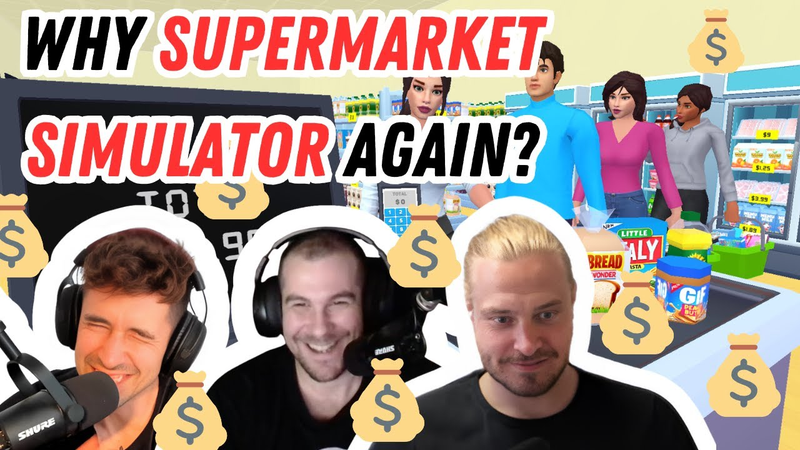
My Supermarket Simulator 3D: The ultimate shop simulator game that makes serious money!
My Supermarket Simulator 3D has emerged as a dominant force in the mobile simulation market, achieving rapid, large-scale adoption following its July 2024 launch.
- My Supermarket Simulator 3D achieved 54 million downloads and nearly 1 million daily active users within months of its July 2024 launch.
- Inefficient ad placements, specifically app-open units and banner mediation, are causing an estimated daily revenue loss of $20,000 to $40,000.
- Profitability can be significantly increased by shifting to higher-yielding interstitial ad placements and optimizing ad mediation without altering the core gameplay.

Winning with Creators: How Gaming’s Marketing Strategy is Evolving
The gaming industry is undergoing a fundamental shift in marketing strategy, moving away from transactional, short-term influencer campaigns toward long-term creator programs.
- Gaming studios are shifting from transactional influencer campaigns to long-term creator partnerships that utilize in-game revenue-sharing systems, such as creator codes, to align financial incentives.
- Integrating creators into the development process through early access and direct communication channels transforms them into community stakeholders, fostering more authentic brand advocacy.
- Creator-led programs serve as a primary growth engine in mobile gaming by effectively driving both new player acquisition and the reactivation of churned users.

New ways of monetization with Bright SDK
Game developers are increasingly adopting bandwidth-sharing as a viable alternative to traditional advertising models.
- Integrating bandwidth-sharing SDKs allows developers to generate consistent, non-intrusive revenue by utilizing idle user bandwidth for public web data collection.
- This monetization model can increase average revenue per daily active user (ARPDAU) by approximately 15%, with some partners reporting total revenue growth of up to ten times their previous baseline.
- Developers can generate approximately $21,600 in monthly revenue from an application with 50,000 daily active users, with earnings based on daily active devices regardless of app usage.

All in Hole: A Stolen Voodoo's lunch. A new (hybrid) casual game on the horizon
All in Hole, developed by Homa Games, represents a strategic evolution in mobile gaming by successfully merging the accessible, satisfying core mechanics of hyper-casual titles like Hole.io with the sophisticated, long-term engagement loops characteristic of casual puzzle games such as Royal Match.
- Homa Games' 'All in Hole' is a hybrid-casual title that has generated $3 million in in-app purchase (IAP) revenue since its soft launch on July 13, 2023.
- The game utilizes a 'hole' mechanic similar to 'Attack Hole' but features significantly higher production values, incorporating meta-game elements like star chests, level chests, and player-driven events such as Star Tournaments.
- Monetization is heavily weighted toward IAPs, with interstitial ads appearing only after level 35 and a notable absence of aggressive ad placements, likely to avoid cannibalizing IAP revenue.

Ad Revenue in Mobile Games: Key Insights and Trends
Mobile gaming monetization is undergoing a structural shift as ad revenue growth, currently expanding at an annual rate of 10% to 15%, outpaces traditional in-app purchase models.
- Mobile game ad revenue is growing at an annual rate of 10% to 15%, outpacing traditional in-app purchase models within a total market exceeding $100 billion.
- The industry is shifting from volume-based user acquisition toward strategies that prioritize long-term retention and high-value user engagement.
- Developers are increasingly adopting hybrid monetization models and AI-driven content to remain competitive as Western markets reach saturation.

Week in Mobile Games E34 - Subscription without upsell is death! And IDFA changes are good now?
The mobile gaming industry is currently undergoing a period of structural recalibration, marked by a shift away from unsustainable growth models toward long-term value creation.
- Netflix has closed its internal 'Team Blue' triple-A studio and terminated contracts with senior hires, signaling a shift in its high-end gaming strategy.
- Apple's IDFA (Identifier for Advertisers) privacy changes, while criticized for their implementation, are increasingly viewed by some industry developers as a catalyst for greater creativity and more sustainable player engagement models.
- Subscription-based gaming models risk failure without robust upsell mechanisms, as the lack of new content incentives can lead to player churn and diminished perceived value compared to games-as-a-service.

How This Game Dev Got 150,000 Wishlists In A Month — Full Time Game Dev Podcast Ep. 021
Transitioning to full-time independent game development requires a strategic balance between creative ambition and financial pragmatism.
- Developer David Wehle achieved 150,000 wishlists for his upcoming game, 'We Harvest Shadows,' within one month by leveraging a high-quality, standalone demo.
- The game's marketing strategy relied on a 'genre-bending' approach that combined farming simulation with horror, a niche identified by analyzing market trends and player fatigue toward 'soulless' games-as-a-service titles.
- Strategic exposure through high-profile influencers, including Jacksepticeye (30 million subscribers) and Gab Smolders, significantly accelerated wishlist growth after they praised the demo's emotional depth and unique mechanics.

The Fingerprinting Problem Destroying Mobile Growth
The mobile performance marketing landscape has undergone a fundamental transformation, moving away from manual campaign optimization toward a model defined by advanced algorithms, high-volume creative production, and sophisticated data science.
- The mobile marketing industry is shifting away from probabilistic fingerprinting toward models built on consented first-party data to counter the decline of traditional deterministic measurement.
- Successful growth strategies now require internalizing data science capabilities rather than relying on external demand-side platforms, focusing instead on primary social platforms and rewarded video networks.
- Studios should adopt a two-stage growth model that validates retention and lifetime value metrics before investing in full-scale marketing organizations.
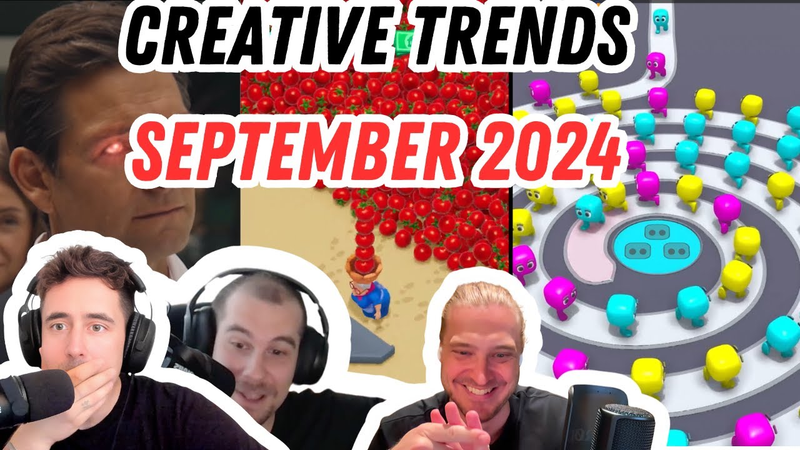
Creative Trends in Mobile Games - September 2024
The mobile gaming landscape is currently defined by a strategic shift toward high-production creative assets and the aggressive integration of hyper-casual mechanics into more complex genres.
- Market leaders like Royal Match and Last War are reducing cost-per-install (CPI) metrics by 30% to 50% by utilizing high-production creative assets and altered gameplay advertisements.
- The mobile gaming industry is increasingly adopting a hybrid-casual model that blends high-fidelity, Pixar-style CGI with familiar, iterative gameplay loops.
- Developers are systematically repurposing legacy mechanics from classic titles such as Zuma, Coin Dozer, and Helix Jump to refresh gameplay through asset swapping.

Exploring Alternatives: Mobile Gaming’s Megatrend for 2025
Alternative distribution channels and app stores are emerging as a critical growth frontier for the mobile gaming industry heading into 2025.
- Nearly 70% of mobile users report they would utilize new discoverability features if they were available, highlighting a significant market demand for alternatives to traditional app stores.
- Alternative distribution channels, including preloads and on-device opportunities, are positioned as a primary growth driver for mobile gaming in 2025.
- Industry leaders are increasingly diversifying user acquisition strategies by treating web-based platforms, manufacturer-integrated stores, and non-traditional partnerships as essential components of a balanced marketing mix.
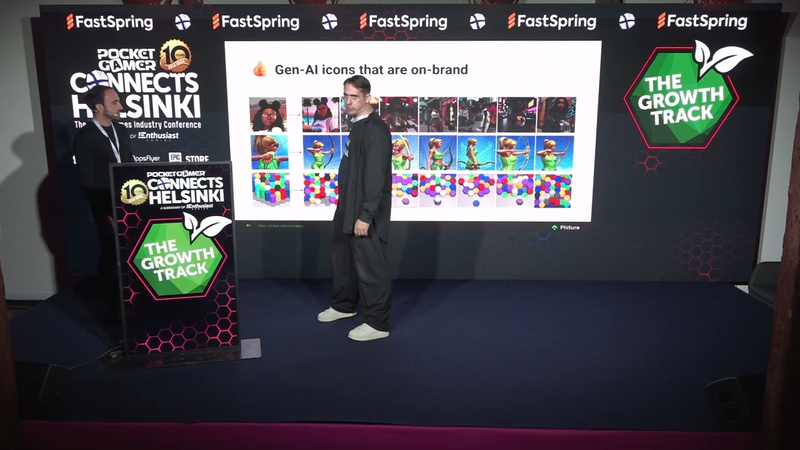
Session: Automating App Store Optimization With Generative AI - Andy Carvell & Livio Marcheschi
App Store Optimization (ASO) is increasingly defined by the ability to conduct high-volume, iterative experimentation to drive conversion rate optimization.
- Automating A/B testing for App Store assets using generative AI can drive significant conversion rate increases, with some implementations yielding up to a 57% improvement over a two-month period.
- Phiture’s 'Press Play' platform automates the testing of icons, feature graphics, short descriptions, and screenshot ordering, supporting up to 50 concurrent experiments per game title.
- The platform utilizes fine-tuned AI models to generate game-specific assets by training on existing brand guidelines, character art, and historical performance data to ensure stylistic consistency.
Panel: User Acquisition in 2024 & Beyond.
The landscape of user acquisition in 2024 is defined by a strategic shift toward channel diversification and the integration of advanced technology.
- User acquisition strategies must shift away from reliance on top-tier platforms toward a diversified ecosystem including web-first launches, alternative app stores, and Connected TV.
- Marketers are transitioning to probabilistic attribution models to address the industry-wide challenges of privacy regulations and signal loss.
- AI should be utilized as a tool for optimizing creative assets and predicting high-value player behavior rather than a replacement for human creative strategy.