User Acquisition reports and market data
Documents

📊 Is 24-Month Payback the New Normal? Real ROAS Benchmarks Revealed!
The mobile gaming industry is currently navigating a period of significant financial strain characterized by a widening gap between user acquisition costs and monetization growth.
- Payback windows for mobile games are extending significantly, with many titles now requiring 12 to 24 months to achieve full return on ad spend (ROAS).
- M1 ROAS serves as the primary predictor for long-term success, where a 40% M1 ROAS typically correlates to a 6-month payback, while under 25% indicates a payback period exceeding 12 months.
- Hybrid monetization is becoming the industry standard, with traditionally IAP-heavy genres like 4X and strategy games increasingly incorporating rewarded ads, and ad-heavy games adopting IAP-focused VIP tiers.

The Evolving Future of User Acquisition with Mistplay's CCO Aaron Thandi
The mobile gaming loyalty sector is undergoing a strategic shift toward long-term engagement, moving away from traditional offer-wall mechanics in favor of AI-driven matchmaking.
- Mobile gaming acquisition is shifting from short-term retention metrics like D1-D7 to long-term lifetime value (LTV) and high-value user cultivation.
- Platforms are replacing traditional offer-wall mechanics with AI-driven matchmaking to provide personalized game recommendations that foster sustainable engagement.
- Strategic success is increasingly measured by time spent in-game rather than session frequency, as the former serves as a more reliable predictor of future player spending.

How Indie Mobile Devs Can Get Noticed: PR Approach That Work
Indie mobile studios can achieve significant market visibility by shifting away from generic marketing tactics toward a strategy rooted in authentic narrative building and consistent brand identity.
- Indie studios should prioritize human-centric communication over AI-generated content to build the trust and credibility necessary to stand out in a saturated market.
- Sharing verifiable revenue figures and user metrics provides the objective data required to attract investment and secure attention from media outlets.
- Studios should diversify media outreach by targeting tech, business, and niche vertical publications rather than relying solely on traditional gaming press.

TWIG #330 The App Store Endgame, Roblox’s Growth Playbook and GTA 6 Trailer Dissected
The gaming industry is currently undergoing a structural transition defined by a shift from high-burn, venture-backed marketing toward disciplined financial sustainability.
- Scopely’s Monopoly Go has surpassed $5 billion in lifetime gross revenue by utilizing direct payment integrations to bypass standard platform fees.
- The gaming industry is shifting from high-burn, venture-backed marketing models toward a focus on disciplined financial sustainability and high-ROI content strategies.
- Roblox is approaching 100 million daily active users by leveraging sophisticated economic modeling, dynamic pricing, and the acquisition of branded content studios to scale advertising.
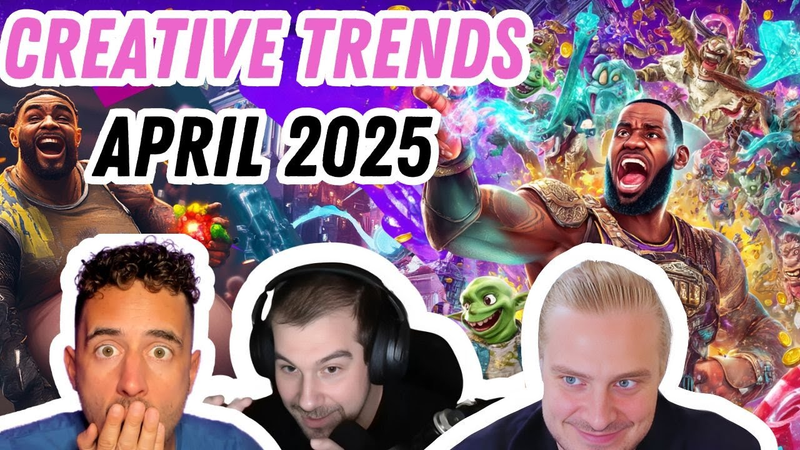
💥 The latest WTF ads pushing the creative envelope: Creative Trends You’ll Regret Missing April 2025
The mobile gaming industry in April 2025 is defined by a rapid shift toward AI-generated creative assets, specifically five-second hooks designed to capture immediate user attention.
- Mobile gaming studios are increasingly adopting a hybrid creative workflow, using AI to rapidly generate five-second hooks before manually refining high-performing concepts into polished assets to fix technical errors.
- Market leaders like Golden Goblins and Royal Kingdom continue to dominate through a combination of celebrity endorsements and consistent in-app purchase revenue.
- Developers are combating user fatigue by prioritizing 'weird' playable formats, such as POV-style interactions and genre-bending mechanics, over original intellectual property.

UNCUT: Co-CEO Javier Ferreira and The Scopely Playbook Behind $5B Monopoly GO!
Scopely has evolved from a modest enterprise generating $12 million in annual revenue in 2014 to a global powerhouse exceeding $2.8 billion by 2023.
- Scopely scaled its annual revenue from $12 million in 2014 to over $2.8 billion by 2023, anchored by the $5 billion performance of Monopoly GO!.
- The company’s growth strategy centers on aligning high-quality intellectual property with product mechanics that specifically honor the established fantasies of existing fanbases.
- Scopely treats M&A as a daily operational function rather than a sporadic event, utilizing shared incentives and long-term alignment to mitigate the risks of scaling.

Royal Kingdom’s Celebrity Ad Blitz: ROI Disaster or Ego Trip?
The recent celebrity-led advertising campaign for the mobile game Royal Kingdom serves as a case study in high-cost user acquisition strategies that prioritize brand visibility over measurable performance.
- Royal Kingdom spent approximately $25 million on celebrity talent, including LeBron James, for a campaign that failed to generate sufficient incremental revenue to justify the massive capital outlay.
- While the campaign drove a 4x increase in installs and an 11% revenue lift in tier-one countries, the resulting user cohorts exhibited low lifetime value and high churn rates.
- The strategy highlights a disconnect between high-cost celebrity brand marketing and the game's core monetization model, which relies on steady, long-term level progression.
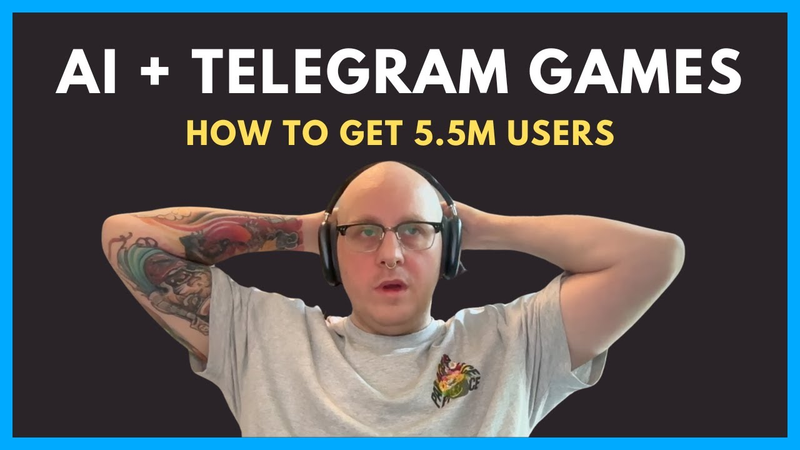
The BILLION User Goldmine: Gaming with AI + Telegram (DEEP DIVE)
Telegram has emerged as a high-growth distribution frontier for the gaming industry, mirroring the viral potential of early social media platforms.
- Telegram serves as a high-growth distribution channel that bypasses traditional app store friction by utilizing HTML5-based architecture and the TON ecosystem for crypto-native transactions.
- AI-native operational models allow studios to accelerate development cycles by five to ten times compared to legacy production methods.
- Messenger-based gaming platforms leverage social mechanics like referral loops and collaborative leaderboards to bridge the gap between Web3 infrastructure and mainstream user accessibility.

Sorry Gamecraft, You Got It WRONG
The central debate concerns whether the mobile game industry’s genre stagnation is a result of platform-enforced distribution duopolies or inherent consumer preferences.
- The mobile game industry's genre stagnation is driven by a whale-centric economy where a tiny fraction of users generates the vast majority of revenue, rather than by platform-enforced distribution duopolies.
- Developers are economically incentivized to prioritize high-monetization genres like 4X, casino, puzzle, and RPG because these formats align with the spending habits of high-value players.
- The current market operates on a performance marketing model where user acquisition costs are bid up to match the lifetime value of whales, creating a cycle that discourages innovative content.

Mobile Game Publishing 101: How to Get Your Game Published
The mobile gaming landscape has reached a state of significant consolidation, rendering self-publishing an increasingly difficult path for independent studios.
- Publishers require specific retention benchmarks for partnership consideration: 35–40% Day 1, 20% Day 3, and 10% Day 7 retention rates.
- Success in the current mobile market is defined by unit economics where the lifetime value (LTV) of a user consistently exceeds the cost per install (CPI).
- Developers should implement hybrid monetization models that combine advertising and in-app purchases to ensure financial stability during the soft launch phase.

TWIG #329: Royal Match Goes All-In, Discord Shifts Gears, Call of Duty Meets Its Match
The mobile gaming industry is currently defined by a tension between aggressive, high-budget marketing strategies and the structural limitations of user acquisition economics.
- The mobile gaming industry is experiencing genre stagnation as developers prioritize high-LTV models like puzzle and 4X games to justify rising user acquisition costs.
- Aggressive, celebrity-led marketing campaigns, such as those for Royal Kingdom, are yielding diminishing returns by attracting low-value users rather than the high-spending 'whales' required for profitability.
- Major industry players are shifting toward operational efficiency, with Discord pivoting to advertising and monetization, and NetEase consolidating resources to reduce the costs of Western operations.
From Dormant to Dominant: How Studios Are Reviving Old Games To Drive New Growth
Studios can achieve sustainable growth and revitalize legacy titles by shifting focus away from expensive, high-risk user acquisition toward the cultivation of existing player communities.
- Reactivating dormant game titles can drive significant financial growth, with one case study demonstrating a 30% increase in revenue through community-focused strategies.
- Studios should treat community engagement as a core business function rather than an afterthought, dedicating at least three months to strategic analysis, content development, and execution to see measurable results.
- Growth strategies should prioritize understanding player sentiment by analyzing community discussions, identifying recurring topics beyond technical issues, and mapping these insights to specific marketing messages.