USA reports and market data
Documents

Machine Zone, Supercell and King spent $200M on US TV ads in 2015
The mobile gaming industry experienced a significant shift in marketing strategy during 2015, characterized by a rapid expansion into traditional television advertising.
- US television advertising spend for video games reached $630 million in 2015, marking a 47% year-over-year increase driven primarily by mobile-only studios.
- Machine Zone, Supercell, and King collectively spent nearly $200 million on US TV ads in 2015, with individual spends of $93 million, $60 million, and $41 million respectively.
- Top-tier mobile developers are utilizing a 'brute force' marketing strategy, leveraging calculated player lifetime value data to justify massive investments in broad-reach traditional media.

Monetizer: Dawn of Steel
Dawn of Steel, a mobile real-time strategy (RTS) game developed by Superweapon and published by Flaregames, represents a refined entry into the competitive mobile strategy genre.
- Dawn of Steel is a mobile real-time strategy game developed by Superweapon and published by Flaregames that differentiates itself from mass-rush competitors through granular, tactical unit control.
- The game utilizes a standard monetization model centered on 'influence,' a hard currency used to bypass time-based gating for building upgrades, unit repairs, and research tasks.
- To drive higher spending, the developers implemented a tiered pricing structure for hard currency that offers increased value for larger real-money purchases.

Concept Art House CEO James Zhang on helping Supercell make its Super Bowl advert
Concept Art House provides high-end art, 3D animation, and pre-production services to the global gaming industry, contributing to approximately 500 games annually.
- Concept Art House supports approximately 500 games annually, providing high-end art and 3D animation services for major developers including Riot Games, Blizzard, and Hasbro.
- Mobile gaming is shifting toward console-quality graphics as developers utilize high-fidelity assets to differentiate products in a saturated market and justify rising production costs.
- The integration of established entertainment intellectual properties, such as Jurassic Park and The Hobbit, has become a primary strategy for securing top-grossing positions in mobile app stores.
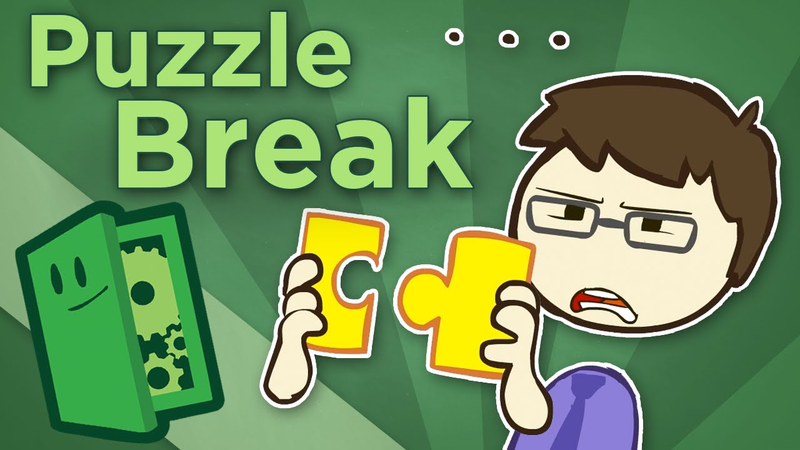
Puzzle Break - Teamwork and Escape the Room Games - Extra Credits
Live-action escape rooms, such as the Seattle-based Puzzle Break, represent a significant evolution in collaborative gaming by shifting the focus from individual logic to collective problem-solving.
- Live-action escape rooms like Seattle-based Puzzle Break function as diagnostic tools for team dynamics by forcing participants to integrate efforts under a one-hour time constraint.
- The core mechanical structure of these games relies on a tripartite design of searching for clues, organizing information, and solving specific brain teasers to ensure accessibility for diverse skill sets.
- Successful team performance depends on the integration of three distinct player archetypes: explorers who discover physical clues, coordinators who manage information flow, and solvers who address logic or spatial puzzles.

Biz Daily: Why iDreamSky invested $10M into Rumble
The Chinese mobile publisher iDreamSky has expanded its global footprint through a 10 million dollar investment in the United States-based developer Rumble Entertainment.
- iDreamSky has invested $10 million for a majority stake in U.S.-based developer Rumble Entertainment to expand its global footprint beyond the Chinese Android market.
- The investment grants iDreamSky exclusive rights to publish Rumble’s titles within China, securing a pipeline of high-fidelity Western content for a market that demands premium graphical quality.
- Rumble Entertainment, which has previously raised over $30 million in seed and Series A funding, required the $10 million infusion to provide the marketing liquidity necessary to scale its current soft-launch projects.
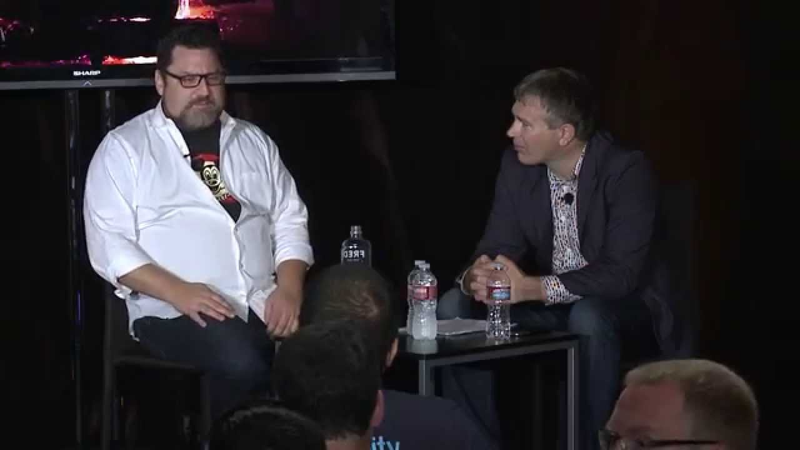
DeNA, Samsung and Disney keynote Pocket Gamer Connects San Francisco 2015
The mobile gaming industry is currently undergoing a strategic shift toward high-value intellectual property, curated distribution, and long-term live operations to combat rising user acquisition costs.
- DeNA plans to launch five mobile games featuring major intellectual properties between late 2015 and March 2017, targeting hundreds of millions of users globally.
- Samsung is shifting its app store strategy toward a curated experience, partnering with reputable media sources to recommend a modest volume of high-quality content rather than hosting hundreds of thousands of apps.
- Disney Interactive utilizes a hybrid development model, balancing in-house production with strategic licensing partnerships, such as their collaboration with Kabam for midcore titles and DeNA for regional expertise.

Biz Daily: GREE restructures with new offices in Berlin and Melbourne
GREE, the Japanese mobile game publisher, is undergoing a significant strategic restructuring of its international operations.
- GREE is restructuring its international operations by closing a significant portion of its San Francisco presence, which recently saw a 30 percent reduction in staff.
- The company is establishing new offices in Berlin and Melbourne to shift its focus toward European and Australian markets and better align with Western consumer preferences.
- GREE acquired the mobile game developer Twiitch in Melbourne to gain expertise in 3D, mid-core strategy games and modernize its portfolio away from traditional card-battle titles.

How to break into the western markets - PG Connects Bangalore 2015
Expanding into Western gaming markets requires a strategic shift toward professional business operations, legal diligence, and a resilient entrepreneurial mindset.
- Successful expansion into Western markets requires treating a studio as a formal business entity by securing robust shareholder agreements, managing cash flow, and utilizing professional legal counsel.
- Mobile game developers should target the casual sector by focusing on accessible, low-stress mechanics like match-three or hidden-object games rather than high-intensity competition.
- Audience demographics in the Western casual mobile market are predominantly older and female, necessitating the avoidance of gender-based design stereotypes in favor of mechanics that prioritize relaxation and social connection.

Biz Daily: Why did GREE sack 30% of its SF office?
GREE, a prominent Japanese mobile gaming platform, has initiated a significant restructuring effort by laying off 30% of its San Francisco-based workforce.
- GREE has laid off 30% of its San Francisco workforce as part of a broader international contraction that previously included closing its London office and Vancouver development studio.
- The restructuring aims to address profitability challenges and recurring project cancellations despite the company generating approximately $800 million in annual revenue.
- The company is struggling to transition from its historical dominance in the Japanese feature phone market to achieving a breakout hit in the global smartphone gaming sector.
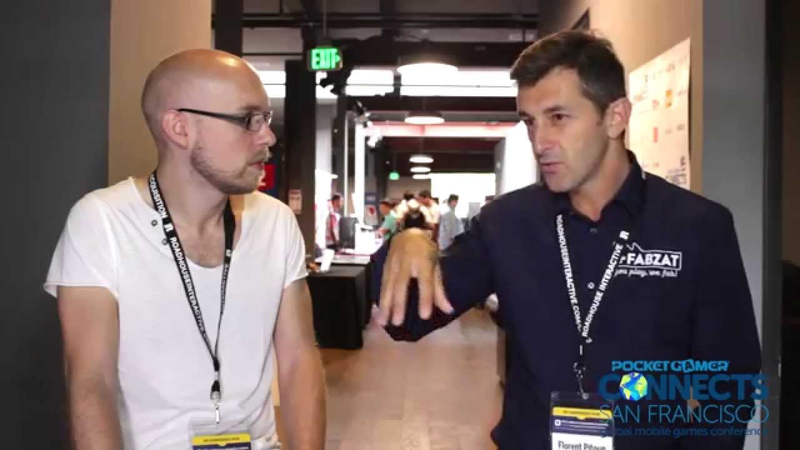
Fabzat's Florent Pitoun on the opportunity for phygital toys
The phygital toy market represents a significant evolution in the gaming industry, characterized by the convergence of virtual in-game assets and physical merchandise.
- The phygital toy market is projected to reach a $10 billion valuation, representing approximately 10% of the total global games industry.
- Bespoke 3D printing technology eliminates the need for traditional high-volume manufacturing runs of 100,000+ units, allowing developers to achieve profitability on the first unit sold.
- By removing high barriers to entry like expensive mold creation, 3D printing enables smaller, independent developers to monetize their player bases effectively.
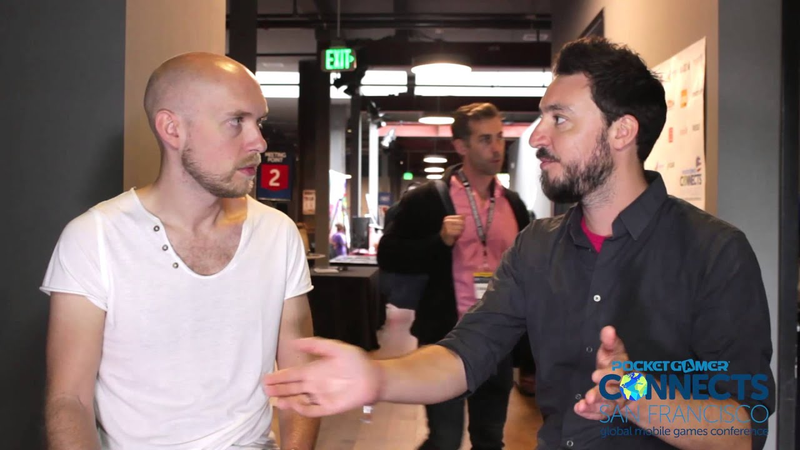
Double Fine's James Spafford on the power and pain of Kickstarter
Crowdfunding serves as a transformative, albeit challenging, financing model for independent game studios, offering greater creative control by bypassing traditional publishers.
- Crowdfunding offers independent studios a pathway to retain intellectual property and creative autonomy by bypassing traditional publisher financing.
- Double Fine’s experience with Broken Age demonstrates that consumer-funded projects face significant risks regarding community expectations and timeline management when development cycles exceed initial projections.
- Transparency is the primary tool for mitigating backer mistrust; studios must document failures, budgetary challenges, and technical hurdles to justify the use of funds.

E3 2015 and lessons from Fallout Shelter's success
The release of Fallout Shelter during Bethesda’s E3 2015 press conference serves as a case study for the evolving relationship between traditional console gaming and the mobile market.
- Bethesda's 2015 E3 strategy demonstrated that leveraging established console IP can effectively disrupt Western mobile top-grossing charts.
- The simultaneous announcement of Fallout Shelter alongside Fallout 4 successfully utilized brand equity to drive immediate, high-volume user acquisition on iOS.
- Fallout Shelter achieved top-ten chart performance despite conventional gameplay mechanics, bolstered by strategic promotional support from Apple.