1 free read left. Create a free account for unlimited reading + AI research.
Create free account
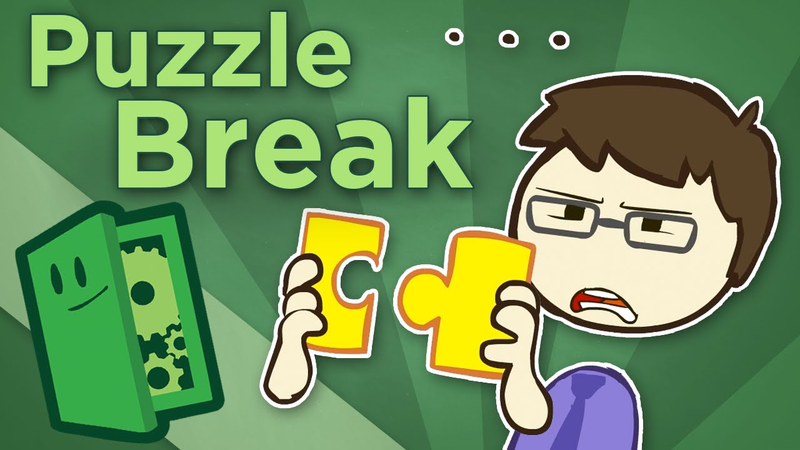
Puzzle Break - Teamwork and Escape the Room Games - Extra Credits
Key insights
5 takeaways- 01The core mechanical structure of these games relies on a tripartite design of searching for clues, organizing information, and solving specific brain teasers to ensure accessibility for diverse skill sets.
- 02Successful team performance depends on the integration of three distinct player archetypes: explorers who discover physical clues, coordinators who manage information flow, and solvers who address logic or spatial puzzles.
- 03These environments effectively highlight breakdowns in communication and individual cognitive styles, as the majority of groups fail to complete the objectives within the allotted time.
- 04Live-action escape rooms like Seattle-based Puzzle Break function as diagnostic tools for team dynamics by forcing participants to integrate efforts under a one-hour time constraint.
- 05The collaborative lessons learned regarding leadership and group efficiency in a high-stakes gaming environment are directly transferable to professional and social settings outside the game.
Ask AI about this video
Transcript
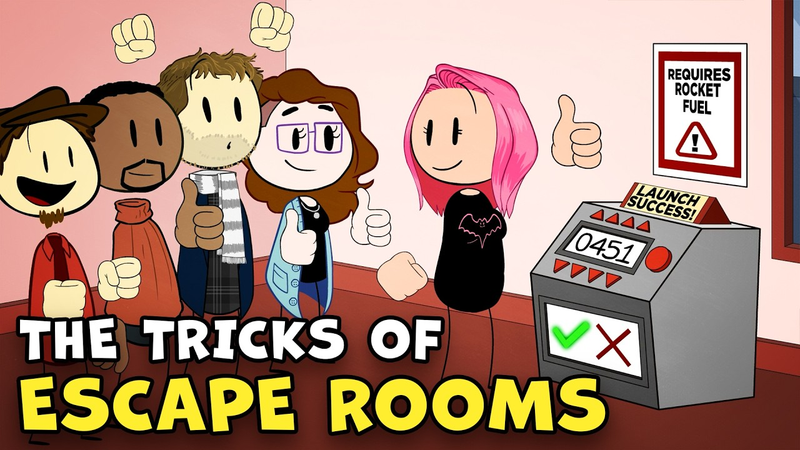
whenever a bunch of us extra credits folk are all in Seattle at the same time we like to get together at a place called puzzle break for a ridiculous awesome team gaming experience we love it so much that this year our party at Pax is going to be doing a giant puzzle break game with as many of you as can make it and as we were talking about it we just got really excited and decided we had to do an episode on it so here we go you know 999 and Zero Escape we're all fans of those which is how we got turned on to puzzle break in the first place because that's what it is a live in-person group escape from the room experience these Escape the Room things are starting to pop up in a lot of places so some of you may already know what I'm talking about you're put in a locked room with 1 hour to find a key to get yourselves out of course the key isn't just hidden under a rug it's secreted away behind a series of interlocking puzzles your group has to scramble about the room looking for pieces to these puzzles trying to figure out how those pieces go together to form a larger puzzle and then finally solve the brain te teers that emerge from
putting all those pieces together in order to get a code or a combination that unlocks some other part of the room then finally after a lot of teamwork and a little bit of luck you desperately fumble with the final lock as the timer ticks down to get out of the room and win of course there's usually somebody in the room with you who will let you out if you don't solve all the puzzles in time and they'll occasionally offer cryptic hints to nudge you in the right direction if you're getting totally off track so the consequences for failure aren't quite as dire as in 999 but still these are hard puzzles expertly built it'll take you every minute you have to get out of this room a majority of the groups who take these rooms on don't finish in time and that's what James and I wanted to talk about not about the design of the puzzles themselves but about what makes the difference between winning and losing the human endeavor that falls out of how these puzzles are built because something very interesting happens when you take Zero Escape and make it multiplayer when instead of NPCs you have real human beings people you know filling all those roles all of a sudden the game moves from being one of raw logic to becoming a collaborative problem solving puzzle while part of the
game is about the pure reasoning of figuring out the puzzles themselves it's your team's ability to coordinate cooperate and communicate that'll make the difference between winning and losing in these events teamwork is so crucial for these rooms that a I'd rather go in with a coordinated team of average puzzle solvers than an uncoordinated group of puzzle solving Masters and B this is seriously the best team building exercise ever so let's talk about mechanics and how the mechanics of the game roll out into the human dynamics there are basically three parts to the puzzle experience finding the clues assembling the clues and using those Clues to solve the puzzles the first great thing that rolls out is that by breaking the challenge down into these three categories you make the game accessible to all sorts of different players while a raw puzzle game may not appeal to those individuals who don't like working their way through brain teasers by having a component where players have to search the environment and interact with the room you create a role for Explorer type players who can now take on the tasks of fiing out hidden locations and digging out the most obscure Clues and they can feel
like a hero when they finally uncover that last piece the puzzle solving team needed to make one of the puzzles all come together at the same time you also need people to coordinate to know what everybody's currently working on and to make sure that the right Clues are all going to the right puzzle solving teams to make sure people aren't accidentally working on puzzles somebody else already solved to always keep information flowing back and forth between all the groups the importance of this role allows another totally desparate set of players to enjoy the game then finally you have the puzzle solver but even here in puzzle break at least the puzzle designers have gone out of their way to provide a number of different types of puzzles from word puzzles to logic puzzles to math problems to spatial challenges which require lateral leaps and perspective shifts this not only allows everyone to highlight their talents but actually rewards coming in with a diverse group of skills but what I find Most Fascinating in doing this is observing your own team because it's hectic and because you're all on the clock you learn a ton about how your team works you learn where communication breaks down what style of communication
works with different members of the team whether the people on your team have a realistic view of what they're good at do you have somebody who thinks they're really good at coordinating but actually isn't it'll certainly come out here you see which people work better in groups and which people work better alone you learn about everyone's different mindsets who's strong in logic who can make wild lateral leaps if you go into one of these Escape the Room experiences with people you work with or even just a group of friends that spend a lot of time together everything you learn inside one of these rooms translates to how you interact outside and that's the incredible thing about this kind of experience it's this beautiful window into how your team works together and from a design perspective what makes it so remarkable is that rather than getting hung up on what most people would probably consider the main stay of the genre pure puzzle solving by breaking the challenge down into three component parts they made it accessible to everyone created a much broader scope of play and set up interpersonal interactions that moved the game from being simply about a bunch of people solving puzzles together in a room to a true team effort to over overcome one
Monumental interwoven task if there's an Escape the Room experience to be found near you I highly recommend giving it a try and if you're in the Seattle area specifically we're fans of puzzle break like I said earlier we're going to do a puzzle break event for our extra credits packs party next week so if you happen to be at packs I hope you'll join us see you next [Music] time [Music] n
Summary
Live-action escape rooms, such as the Seattle-based Puzzle Break, represent a significant evolution in collaborative gaming by shifting the focus from individual logic to collective problem-solving. These experiences typically lock participants in a room for one hour, requiring them to locate and synthesize clues to solve a series of interlocking puzzles. While the primary objective is to escape, the core value lies in the human dynamics that emerge under time pressure. Despite the difficulty—with a majority of groups failing to finish within the allotted time—these environments serve as highly effective team-building exercises.
The success of these games relies on a tripartite mechanical structure: searching for clues, organizing information, and solving specific brain teasers. This design ensures accessibility by catering to diverse player archetypes. Explorers excel at physical discovery, coordinators manage the flow of information to prevent redundant efforts, and puzzle solvers address specific logic, word, or spatial challenges. By diversifying the tasks, the game rewards teams that possess a broad range of skills rather than those relying solely on individual intellectual prowess.
Ultimately, these experiences function as a diagnostic tool for interpersonal communication and group efficiency. The high-stakes, time-constrained environment exposes breakdowns in coordination, reveals individual strengths and weaknesses, and highlights varying cognitive styles. Because the mechanics force participants to integrate their efforts into a single, monumental task, the lessons learned regarding leadership, communication, and collaboration translate directly to professional and social environments outside the game. By moving beyond pure puzzle design, these experiences transform into a sophisticated study of human interaction and collective achievement.


















Comments